

India is a market we have been following for a long time.
It is shaped by a unique combination of culture, policy, and its position as one of the world’s largest and fastest-growing economies, expanding at a mid-teens pace each year. Compared with China, India offers a more investor-friendly environment, making it an attractive destination for global capital.
However, as always, timing remains one of the most important factors in our investment process. Through this piece, we argue that the timing is right and have built an equity basket of high-quality Indian companies set to benefit from the country’s improving fundamentals.
You will also find discussions with locals, including an investment analyst from WestBridge Capital, a firm managing $7B across private and public markets in India, and an India-based investment banker.
Today, India is entering a new phase of growth. For decades, growth was driven mainly by IT services and domestic consumption. Now, a major investment cycle is taking shape. Manufacturing, data centers, power infrastructure, and industrial capacity are set to expand significantly.
We built a framework that we explore in greater depth later in this piece.
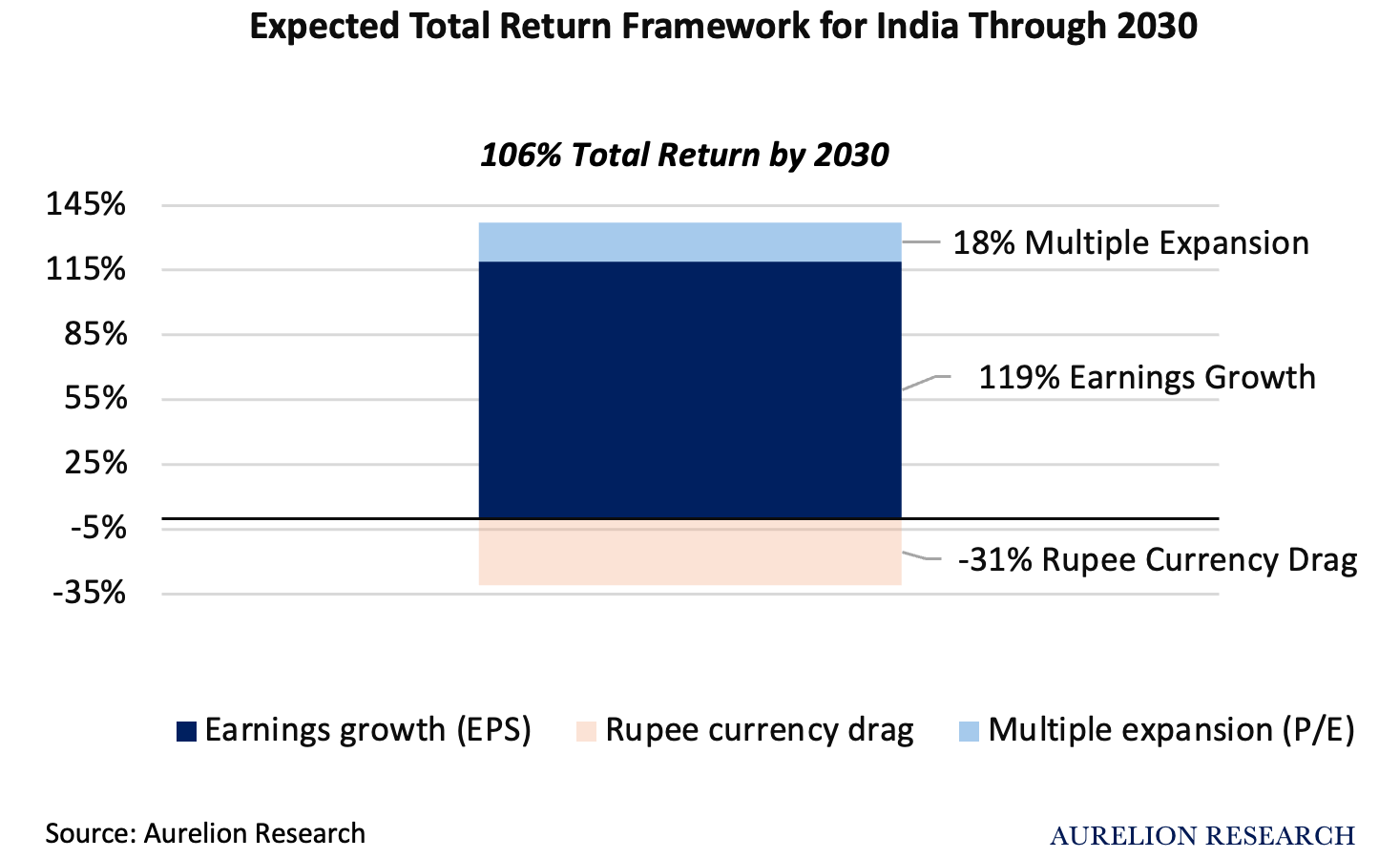
As shown below, our estimates point to a potential 106% total return for the Indian market by 2030. This potential return would be driven by three main factors: earnings growth, valuation multiple expansion, and rupee currency.
Few large economies combine India’s demographics and long-term growth potential.
AI adds another dimension. India could be one of the major beneficiaries through data centers, technology investment, and productivity gains. However, AI also brings challenges, especially for parts of the traditional white-collar workforce that have powered India’s economy for decades.
This makes selectivity more important than ever. India’s next phase will not benefit every company or sector equally. The biggest opportunities will come from identifying the businesses best positioned to benefit from this transformation and finding them before the market does.
Table of Contents
Why India and Why Now?
How We Estimate India’s Future Returns
2.1 India Earnings Growth History
2.2 Our Earnings Forecast
2.3 Currency Impact on Returns
2.4 Current Market Valuations
2.5 India Total Return Potential
The Long-Term Growth Drivers
3.1 A More Favorable Macro Environment
3.2 Capital Flows Return to India
3.3 Multiple Sectors Are Booming
Retail Investors Keep Faith in India Equities
The Presence of Hedge Funds in India
The Rise of Remote Talent in the AI Era
The AI Debate in India
The Growing Influence of Indian CEOs
In Conversation: Key Insights
Indian Equity Basket
What Could Go Wrong?
Final Thoughts on India
1. Why India and Why Now?
The Indian stock market and economy were on a growth path before the conflict in the Middle East began in early March. Conditions were not yet as strong as they had been between 2022 and 2024, but momentum was clearly improving.
A Look at the Indian Stock Market (NIFTY 50) Since 2021
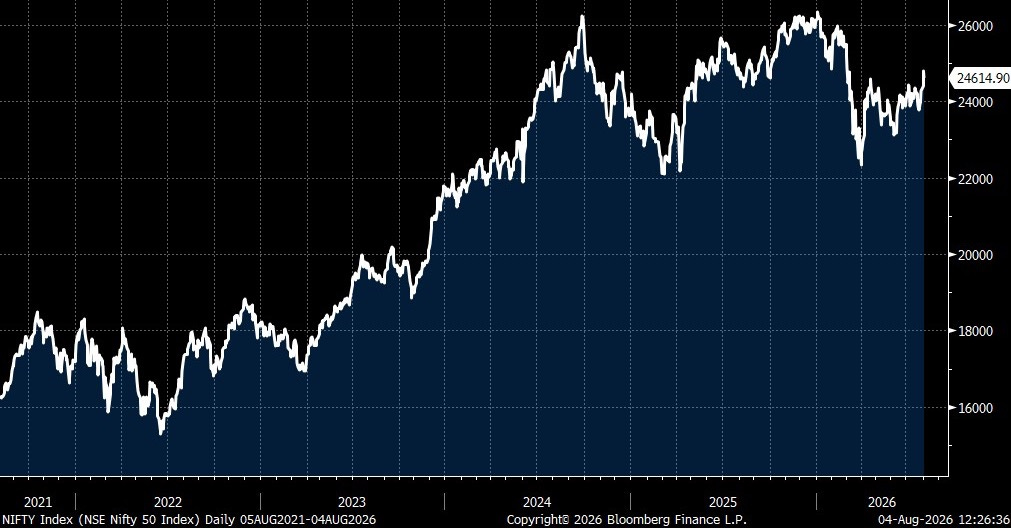
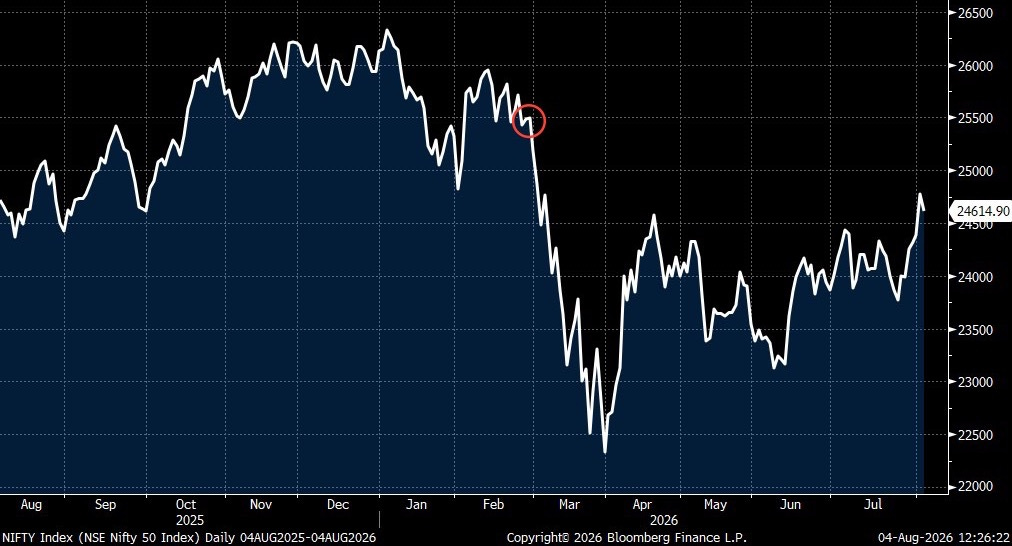
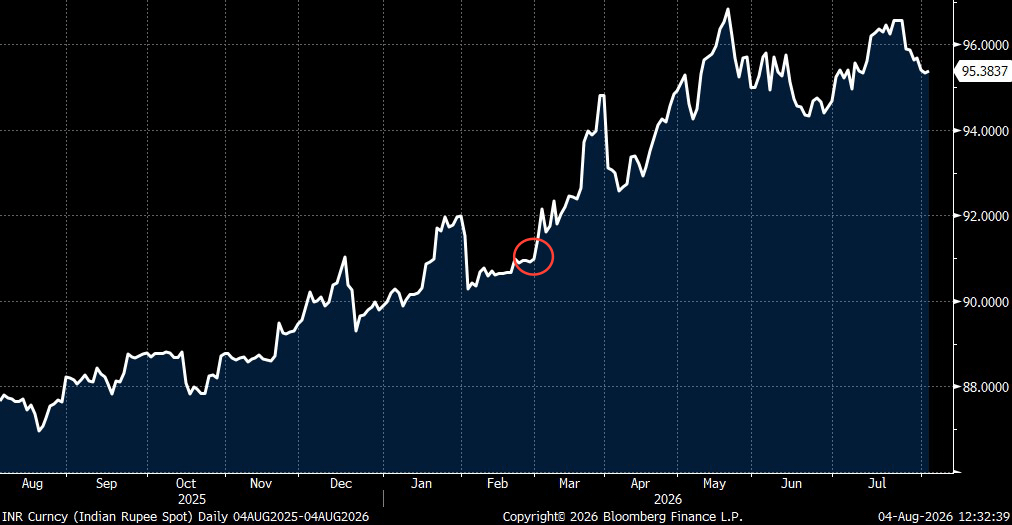
That changed abruptly when the conflict between the US and Iran pushed energy prices significantly higher. As a major importer of crude oil, India saw its energy import bill rise considerably, putting pressure on inflation and weighing on consumers and businesses. At the same time, the higher import bill contributed to a meaningful depreciation of the rupee. The weaker currency and tighter financial conditions slowed economic momentum and hurt investor sentiment, interrupting what had been a steady improvement in the economy.
Indian Stock Market: Before and After the Middle East Conflict
USD/INR: The Rupee Performance Over the Past Two Years
That was the challenging part, but the positive side is that Indian markets have historically recovered well after periods of stress, especially when supported by new government reforms and policy measures. As a result, we believe the current environment presents an attractive entry point for long-term investors in India.
At the same time, we understand that concerns around domestic growth, commodity volatility, and broader geopolitical uncertainty have pushed investors into a wait-and-see approach following the market decline earlier this year.
However, short-term macro challenges do not change the long-term factors supporting India’s growth. Continued infrastructure investment, rising domestic consumption, manufacturing expansion, and policy reforms should remain key drivers of economic growth in the years ahead.
The key drivers of Indian financial conditions give us a good understanding of where things currently stand and help us assess whether the environment is becoming more favorable than what the market currently expects.
Key Drivers of India’s Financial Conditions
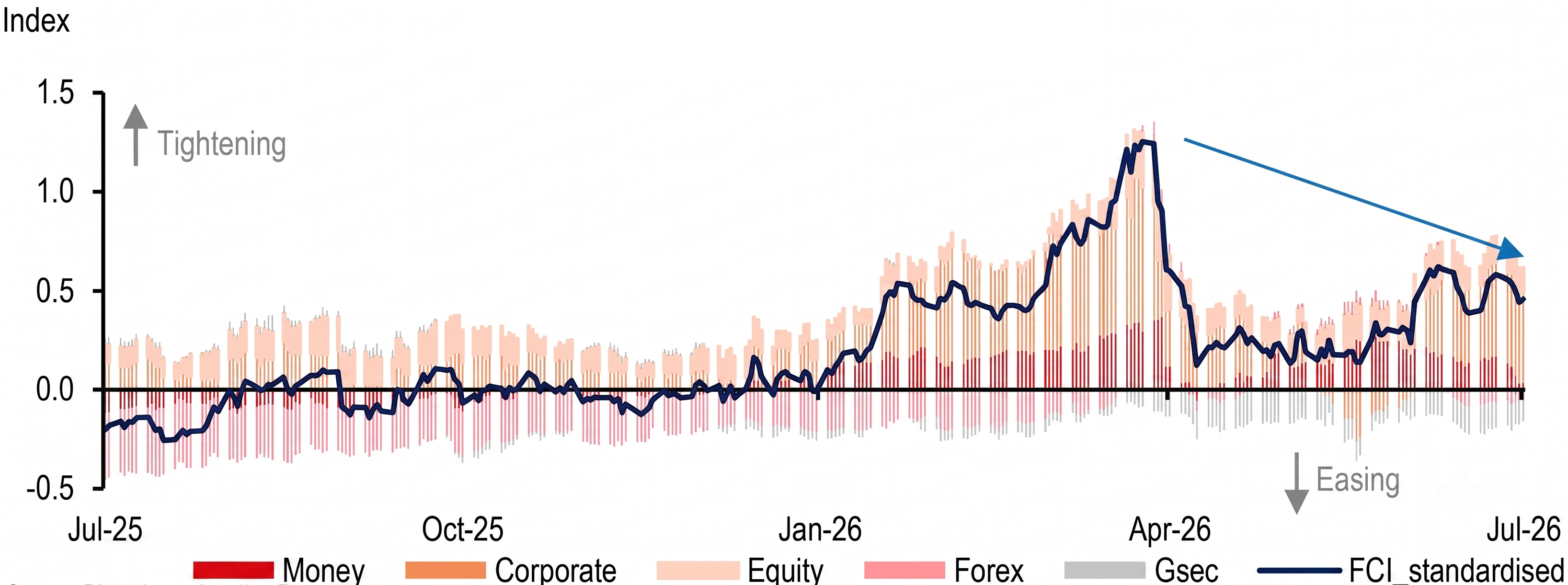
As shown above, almost every indicator of Indian financial conditions is pointing in the same direction: the cycle is gradually easing as we move through the summer. Conditions reached their tightest point when the Strait of Hormuz closed, but since then, the pressure has eased significantly and the overall environment has become much more stable.
To better understand this shift, we also look across different asset classes to see where capital is flowing and which areas are starting to gain momentum.
India Market Performance Across Asset Classes (YTD % Change)
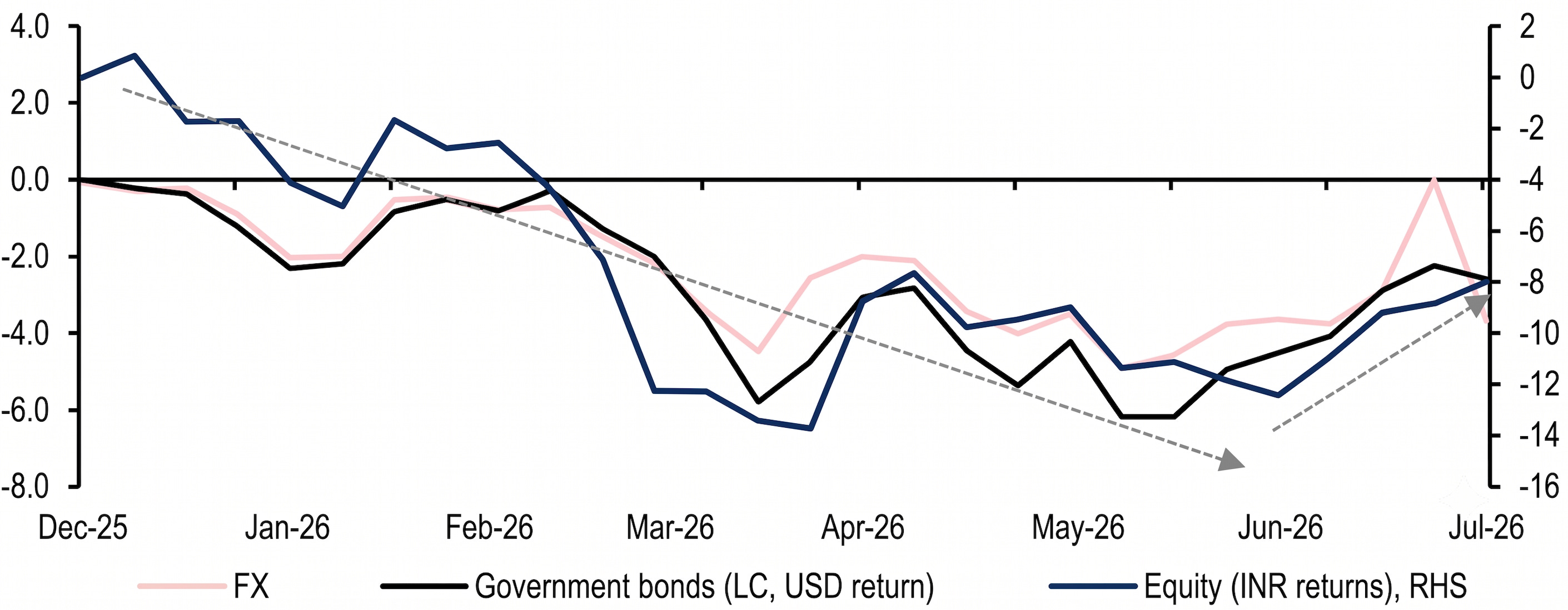
Currently, equities are moving back toward the top of the performance ranking and are closing the gap with government bonds. This relative shift is important because government bonds typically outperform during periods of uncertainty, tighter financial conditions, or weaker growth expectations.
The fact that equities are starting to regain leadership suggests that investors are becoming more confident about a potential improvement in the economic cycle.
For us, this is another signal that India may be approaching an inflection point, where improving financial conditions and stronger growth expectations could begin to translate into better equity market performance.
Indian Equity Market Reaction to the Middle East Conflict
The recent reaction in Indian markets follows a pattern we have seen during previous geopolitical shocks. Higher energy prices, a weaker rupee, and foreign capital outflows have all contributed to the correction in Indian equities.
The March quarter was one of the most difficult periods for Indian markets in recent years, with the scale of the decline comparable to some of the major market disruptions of the past, like the 2008 Financial Crisis.
Why We Think the Current Setup Is Attractive
The key point is that some of the current pressures are temporary.
Energy prices historically normalize over time, and we believe the Strait of Hormuz situation will eventually be resolved. Once energy costs decline, one of India’s biggest external pressures should begin to fade.
India is a strong long-term growth story, supported by domestic consumption, infrastructure investment, and ongoing reforms. As macro conditions improve, investor confidence and capital flows should return to Indian equities.
2. How We Estimate India’s Future Returns
Our Methodology
Investment returns in India are driven by three key factors:
Earnings growth of companies in India (we use EPS).
Change in the value of the Indian rupee.
Change in valuation multiple on earnings (we use P/E).
This gives us an estimated total return CAGR.
Quarterly and annual returns will inevitably be volatile, but this long-term CAGR highlights how attractive the investment opportunity could be over time.
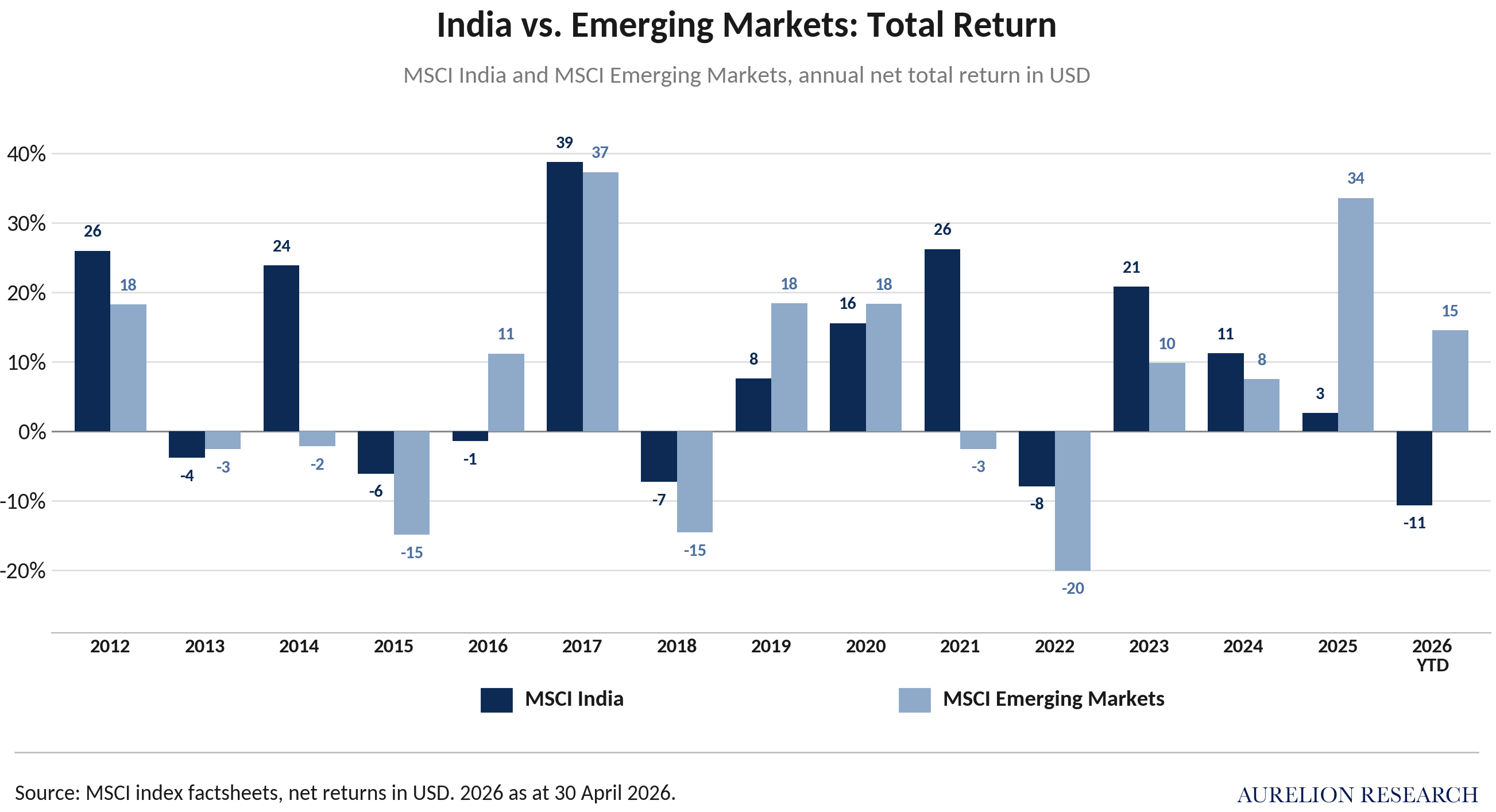
Historical Returns of the Indian Index
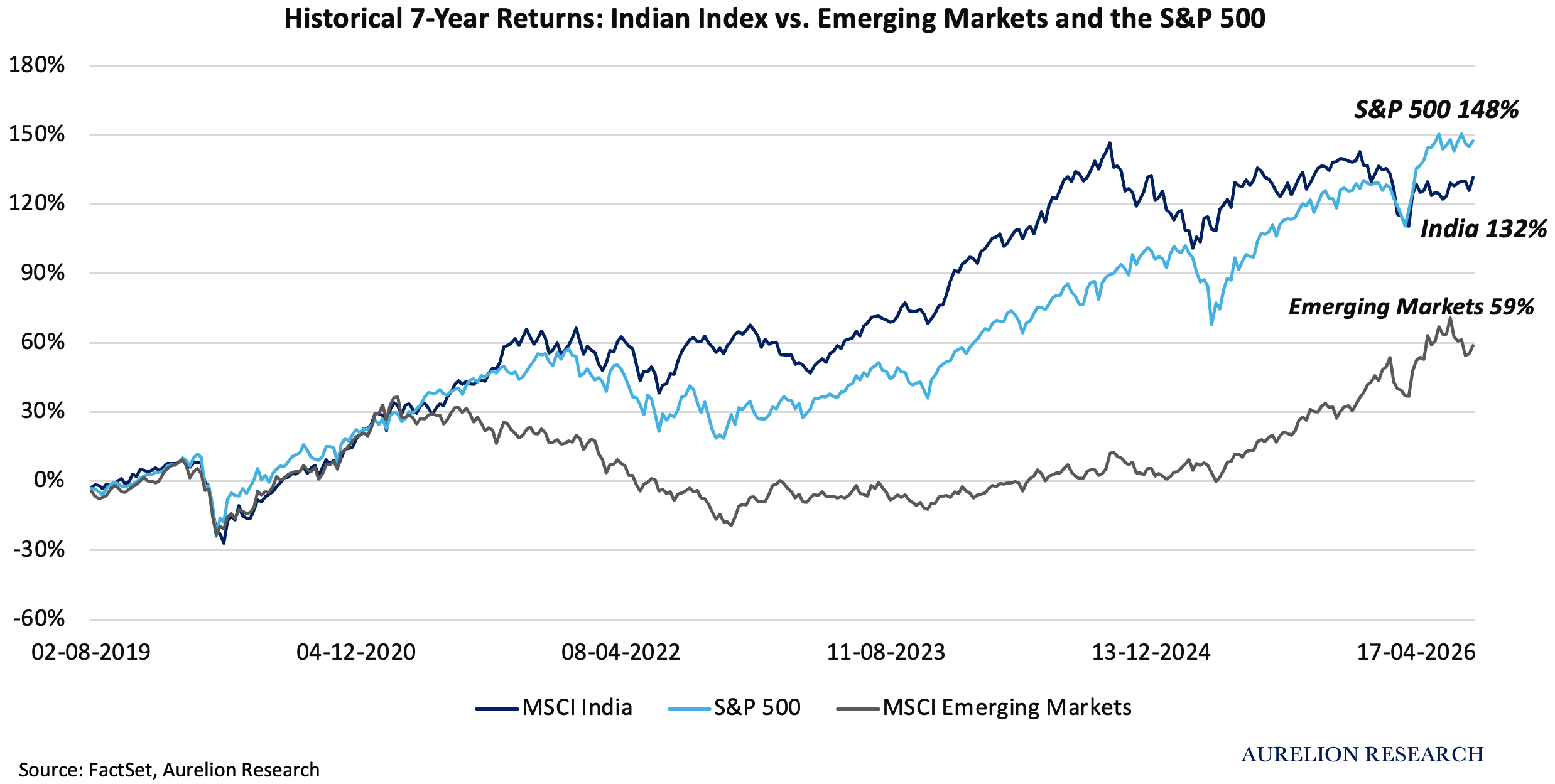
Correlation with S&P 500
India has moved with the S&P 500 for a few reasons:
The same global investors own both markets.
When US stocks fall, these funds reduce risk across their portfolios, so they often sell India as well. A large part of India’s index is made up of IT companies like TCS and Infosys. Their customers are mainly US companies, so when American firms reduce spending, Indian earnings are impacted.
Emerging markets as a group are different. That index is largely driven by China, Taiwan, and Korea, where semiconductors and Chinese policy play a much bigger role. That is why the grey line behaves differently.
One thing to remember: India tends to move in the same direction as the S&P 500, but the magnitude of the moves can be very different. It can also break away for extended periods, as we have seen over the last year and a half.
We did something very similar in our Latin America Primer, where we estimated how far each country's economy could develop over the long term and what that could mean for its respective stock market. You can find the analysis below.

2.1 India Earnings Growth History
We can divide the last 25 years into three distinct periods.
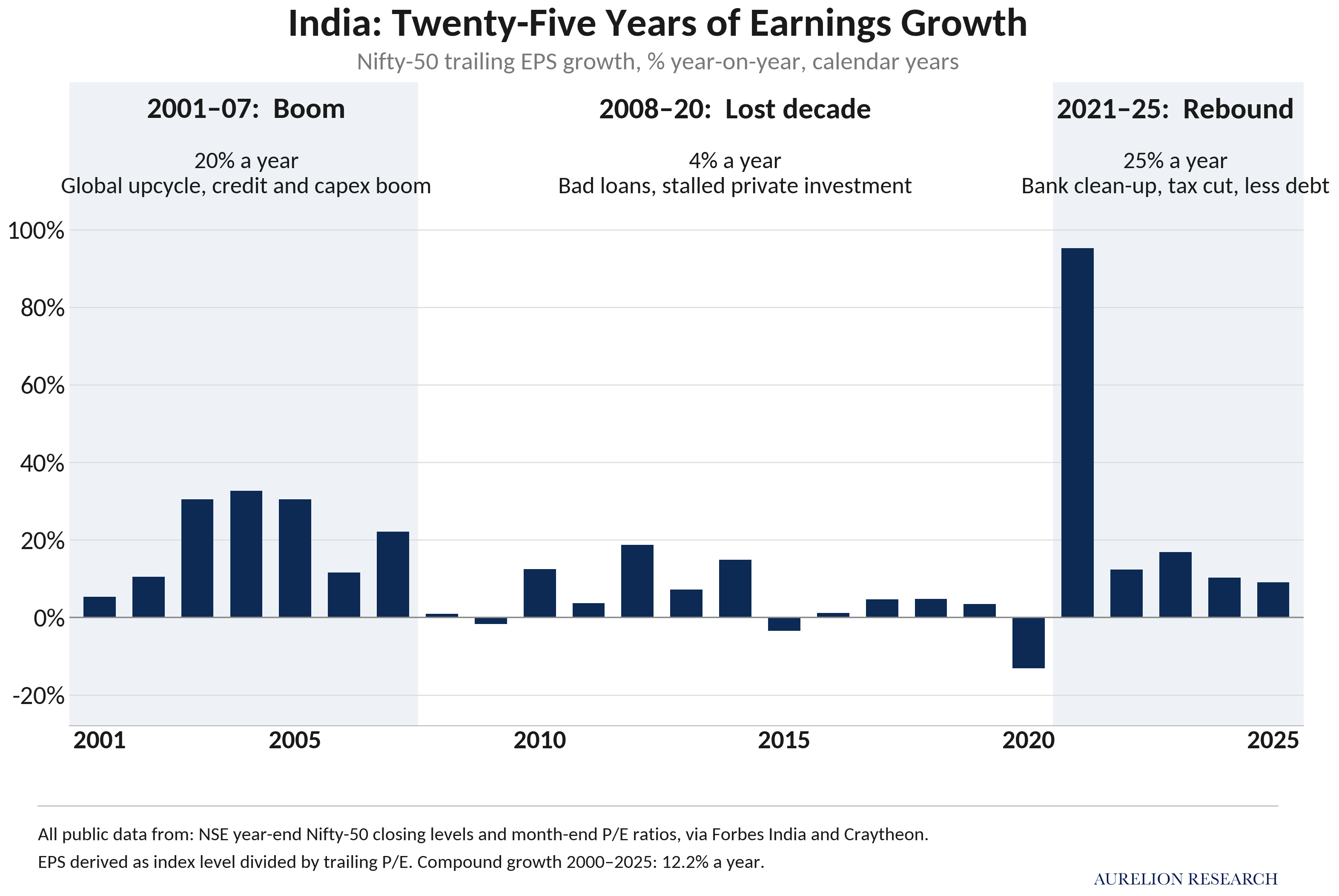
2001 to 2007: 20% Per Year
India benefited from a strong global growth cycle, with rapid credit expansion, companies investing heavily in new capacity, and strong commodity demand supporting the broader economy. During those seven years, Nifty earnings per share increased from ₹65 to ₹231. By January 2008, the Nifty was trading at more than 28x earnings, marking the peak of that cycle.
2008 to 2020: 4% Per Year
The capex boom of the previous decade left the banking system exposed to loans based on assumptions that did not materialize. As these loans turned bad, lending capacity weakened and private investment remained subdued for years.
Corporate profits fell from 7.8% of GDP at the FY08 peak to 1.8% in FY20, the lowest level since at least 1999-2000. Over those thirteen years, index earnings declined four times, with EPS rising only from ₹231 to ₹375.
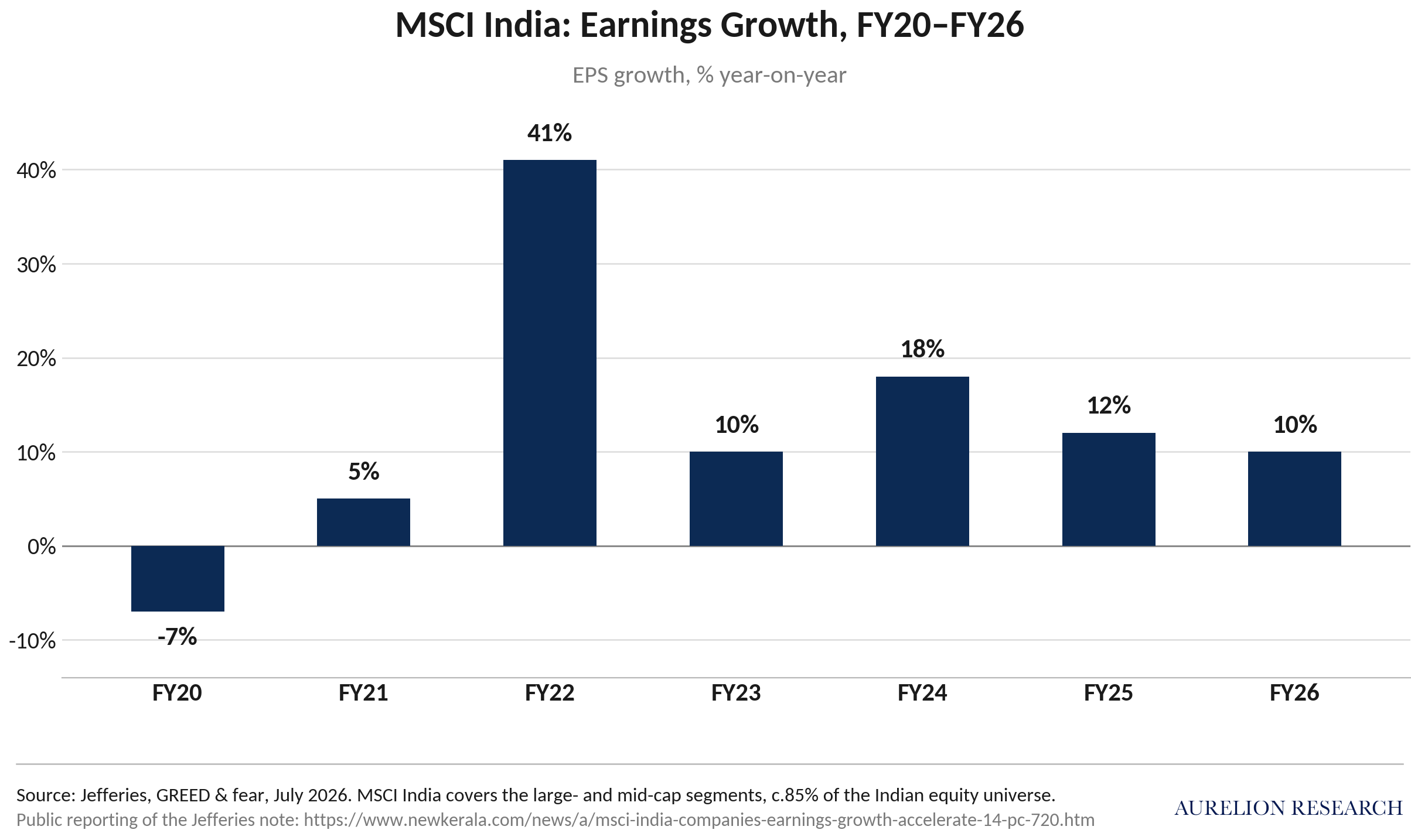
Note the slight difference in historical returns compared with the chart above, as this one uses the MSCI India Index, which more accurately represents the Indian economy than the Nifty 50.
2021 to 2025: 25% Per Year
Three things changed at roughly the same time.
(1) Banks finished cleaning up their bad loan books, provisioning costs fell sharply, and lenders returned to record profitability. Financials represent 37% of the Nifty, so when the largest sector shifts from absorbing losses to compounding earnings, the entire index can be re-rated. That said, this process will likely take time and will not be a straight-line move higher.
(2) The 2019 corporate tax cut reduced the headline rate from 30% to 22%, creating a permanent boost to after-tax earnings for the same underlying businesses. A decade of deleveraging also meant interest costs had declined significantly, allowing more operating profit to flow through to the bottom line.
(3) Corporate profits grew at a 34.5% CAGR between 2020 and 2024, compared with nominal GDP growth of 10.1%. This shows that earnings are gradually recovering from a lost decade and the impact of the COVID period, but there is clearly still more work to be done.
2.2 Our Earnings Forecast
Why EPS Growth Should Accelerate
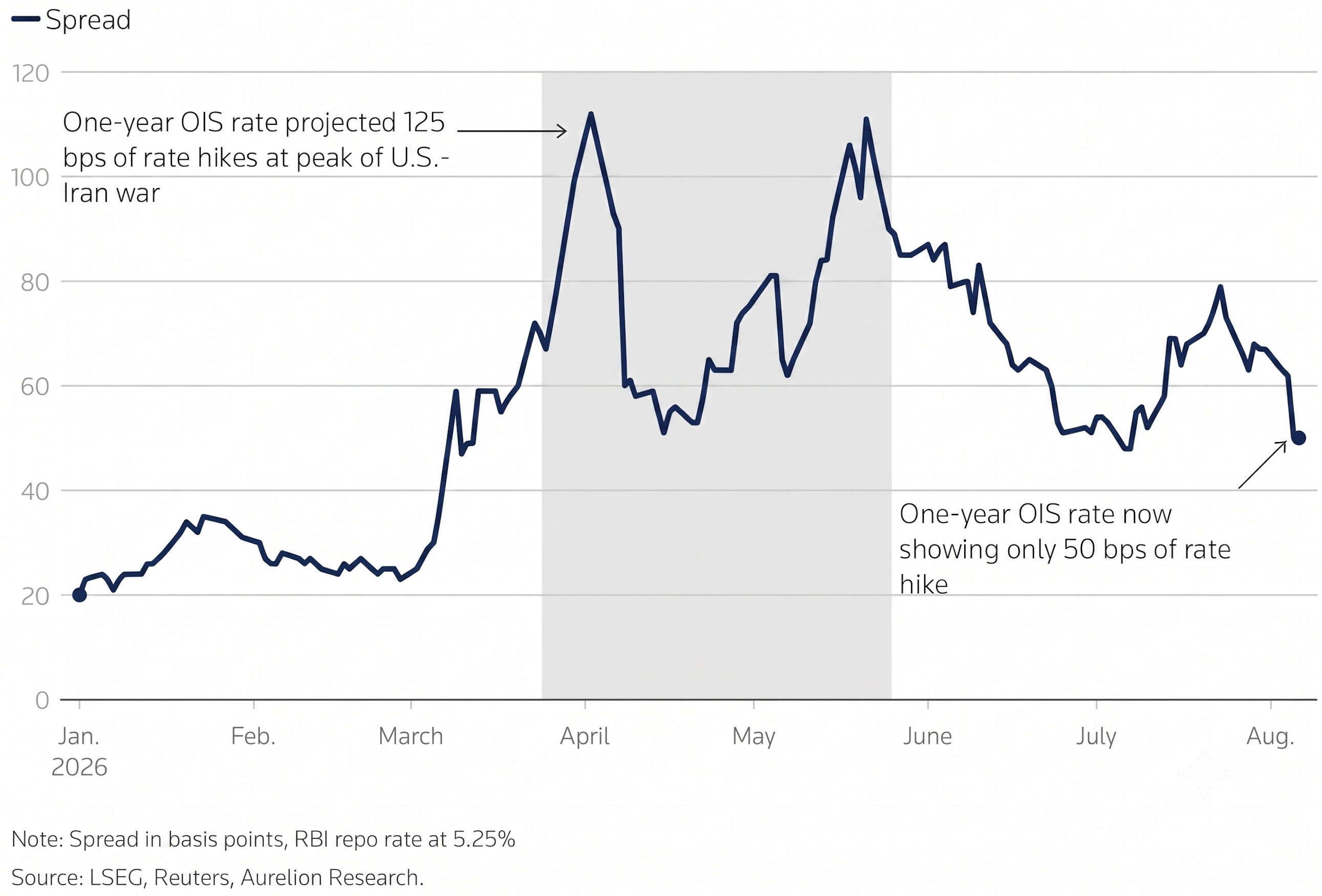
Rates are coming down. The RBI has cut rates by 1.25% since February 2025 and kept the policy rate at 5.25% through June 2026 while maintaining a neutral stance. Lower rates reduce borrowing costs for companies and consumers, supporting demand in sectors such as housing, autos, and consumer durables.
India RBI Interest Rate Outlook
Taxes were cut. GST rate rationalization reduced the tax burden on consumers, putting ₹1.5 trillion back into households’ hands and supporting spending.
The base is low. FY26 was a weak year. Oil marketing companies moved into losses as crude prices rose, autos declined 17.5% versus an expected 4.9% gain, and banks grew only 3.6% compared with 7.1% expected.
Trade uncertainty also weighed on growth, although India has since reached an interim arrangement with the U.S. and a framework with the EU. With a weaker year behind it, FY27 growth should benefit from easier comparisons.
Capex is picking up. Investment currently stands at around 35.3% of GDP. Morgan Stanley expects this to reach 37.5% within five years, driven by energy, defence, semiconductors, fertilizers, and data centres.
For context, investment has averaged 33.6% of GDP since 2004 and peaked at 41.2% in 2011. Reaching 37.5% would represent a strong investment cycle.
Why We Use 17%
First, it is important to note that most reputable banks and market research firms are using a similar range. The consensus expectation is that India’s earnings growth will exceed its 20-year average.
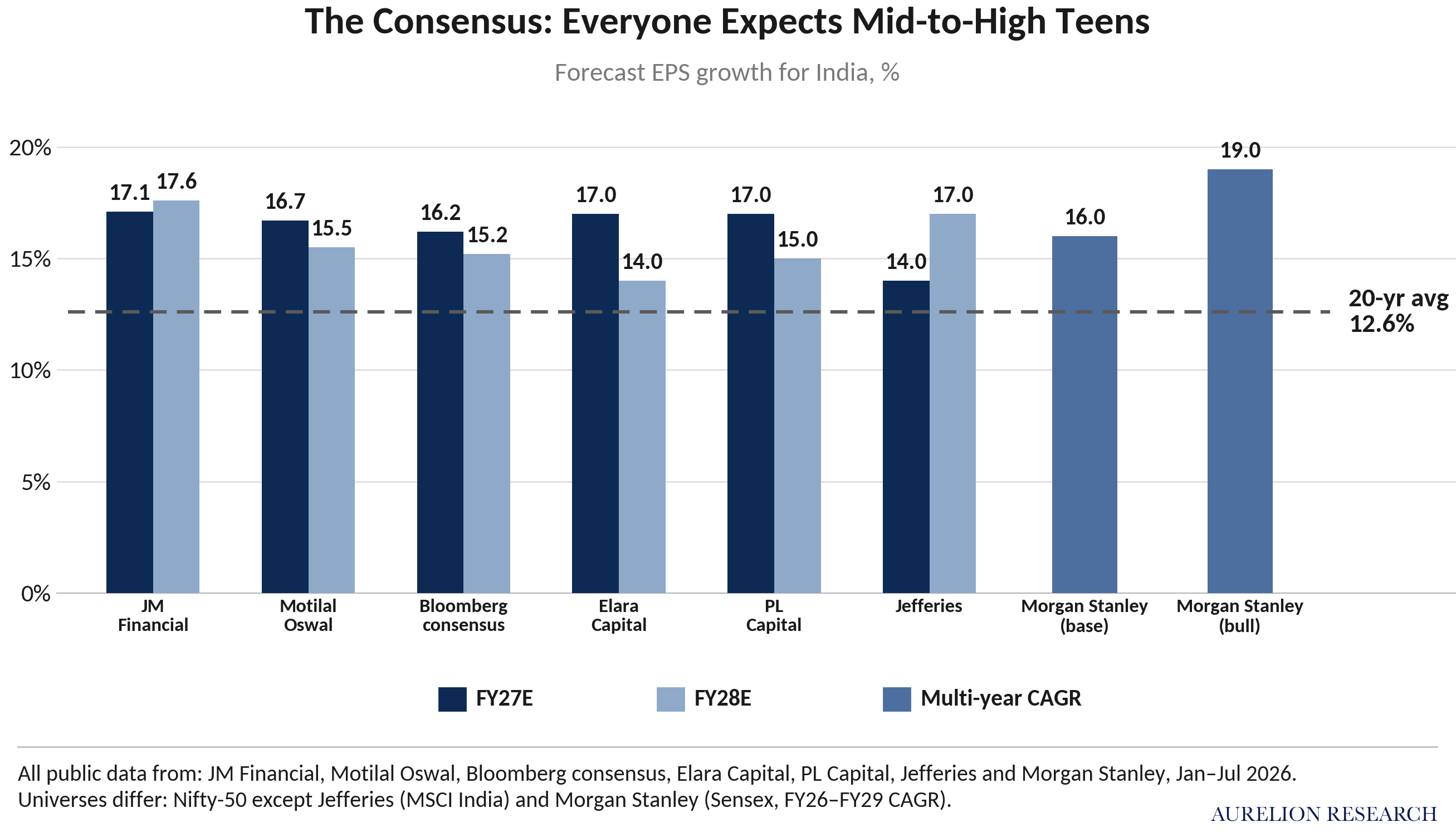
We believe this will be the case and that India can grow faster than its historical average. We estimate earnings growth at 17%, which is close to the higher end of the sell-side range.
We also have a different view on AI. We believe it will be a net positive for India, which differs from many of the concerns raised in sell-side research.
Why we think it will grow? India is entering a period of broad-based economic development, with multiple sectors expanding at the same time. Renewable energy, grid electrification, mining production, manufacturing, defence spending, and healthcare are all areas where significant investment is taking place.
India’s scale creates a unique dynamic.
With such a large population and a rapidly developing economy, the country needs to build, produce, import, and export across multiple industries simultaneously. It is moving quickly and has a strong incentive to make this transformation successful. Both companies and the government are actively investing and working to support this next phase of economic development.
Most investors expect India to deliver EPS CAGR between 14% and 19% over the next few years. Where returns could become significantly more attractive, and where opinions differ, is on the future valuation multiple.
If earnings growth reaches the higher end of expectations while sector sentiment continues to improve, companies could benefit from both strong EPS growth and a potential P/E re-rating, creating a powerful combination for investors.
2.3 Currency Impact on Returns
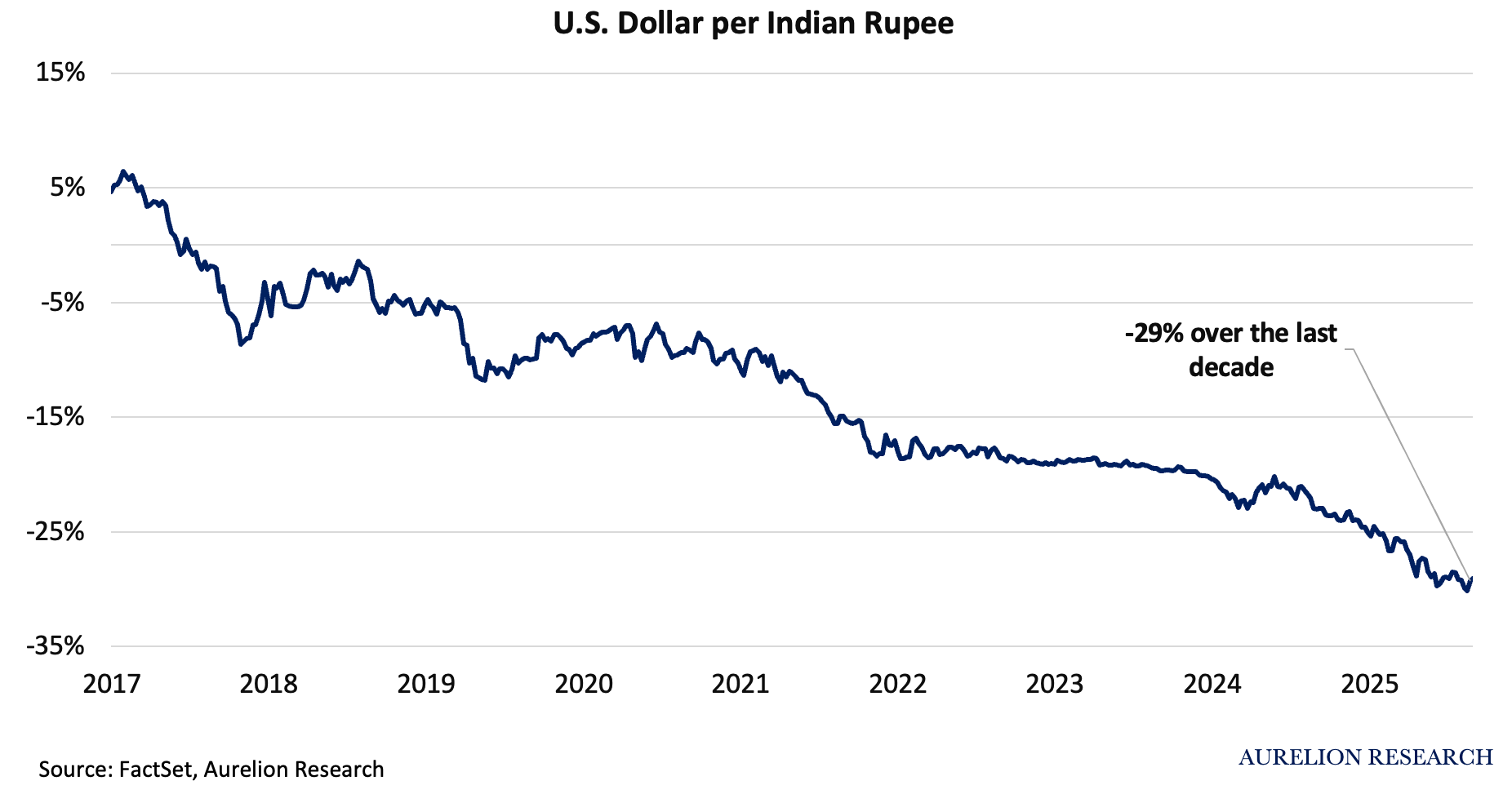
India’s currency has been impacted by its inflation differential versus the US, alongside other fundamental factors such as trade balances and global capital flows. While the rupee’s devaluation versus the US dollar has not been dramatic, its gradual decline over time is still something global investors need to consider.
India Dollar Credit: More Resilient
The recent policy measures are also positive for India’s corporate credit market, although the impact will likely take time to fully appear.
The main benefit is a more stable environment for borrowers, supported by better liquidity conditions, a stronger currency outlook, and improved access to capital.
This is particularly helpful for companies with dollar debt, as global funding conditions remain uncertain. Overall, these reforms improve the resilience of India’s credit market and make Indian corporate debt more attractive.
Now, let's look at the inflation history in India.
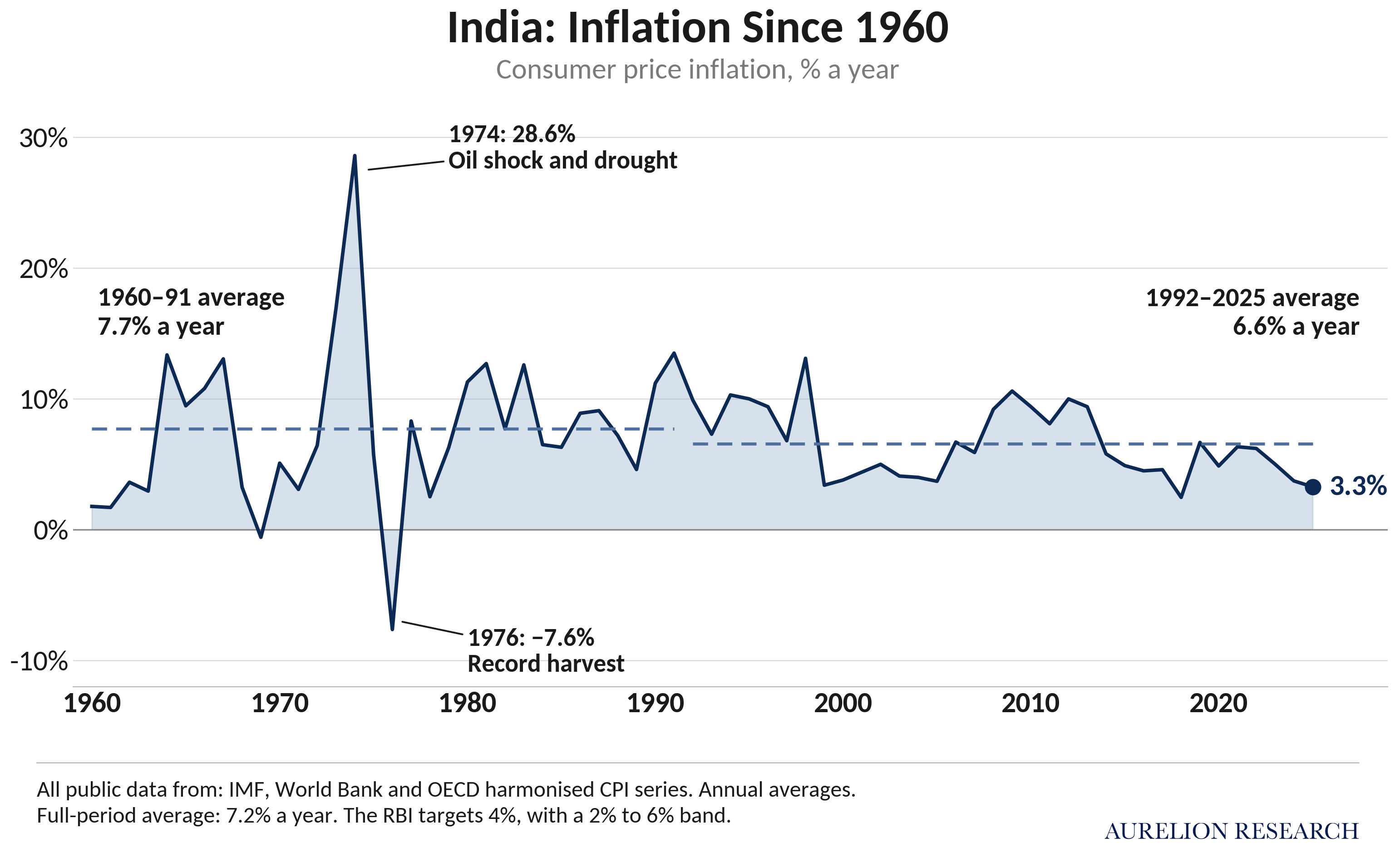
The INR’s depreciation against the US dollar has been modest but consistent, creating a currency headwind for foreign investors over the last few years.
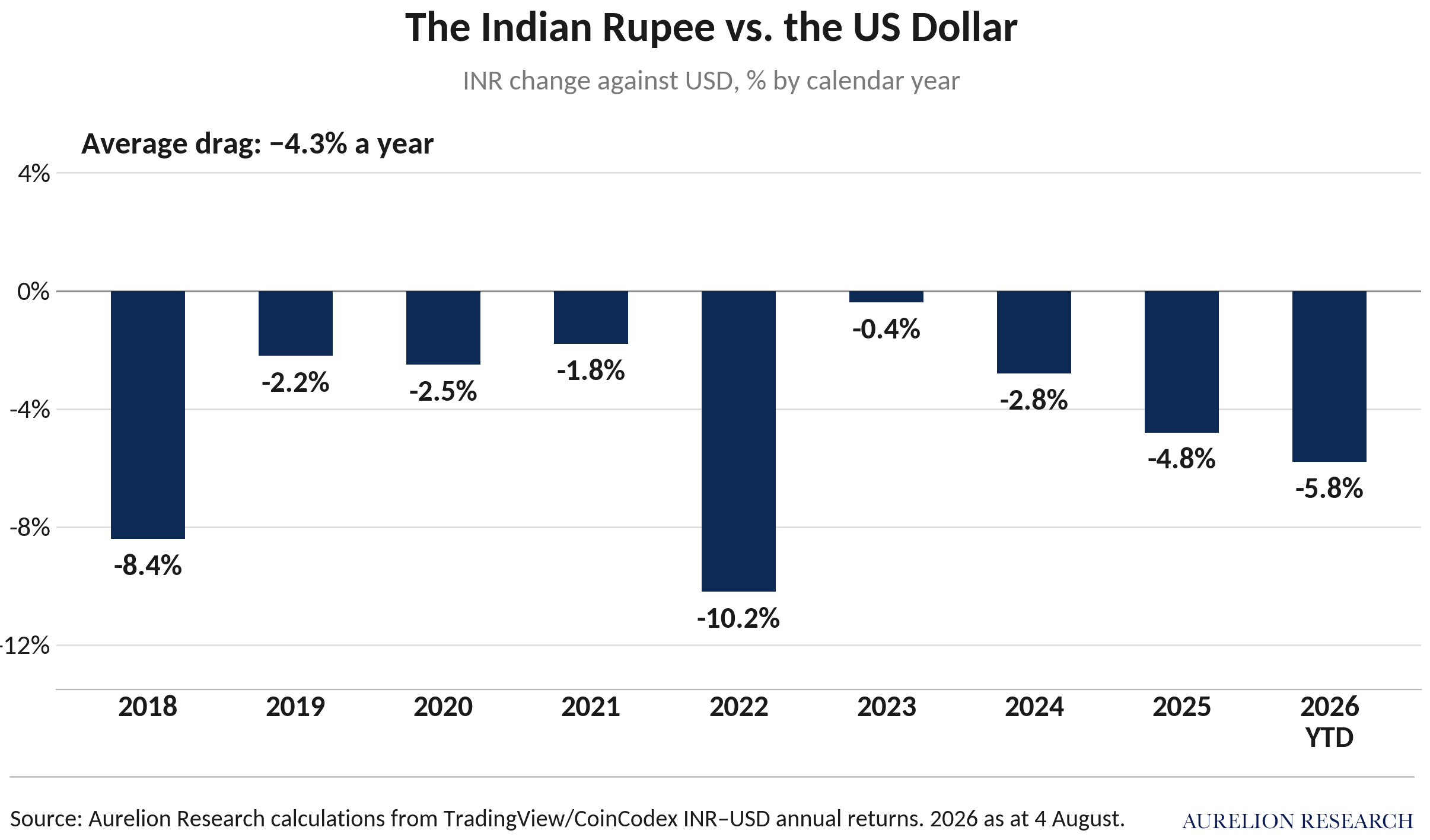
What Happened in 2026?
The rupee started the year at around 90 to the dollar and fell to 97 at its weakest point. It currently sits at 95.2, down 5.7% year to date.
Three things drove the decline:
(1) US tariffs of 50% on Indian goods hurt exports during the first half of the year. (2) Foreign investors pulled a record $29B from Indian equities over six months. (3) And the Hormuz conflict pushed oil prices higher, which is important because India imports roughly 88% of its crude and pays for it in dollars.
The rupee has since recovered from its lows. The RBI has been selling dollars to slow the decline, oil prices have come down from their peak, and a package of reforms has helped stabilize foreign participation in the bond market.
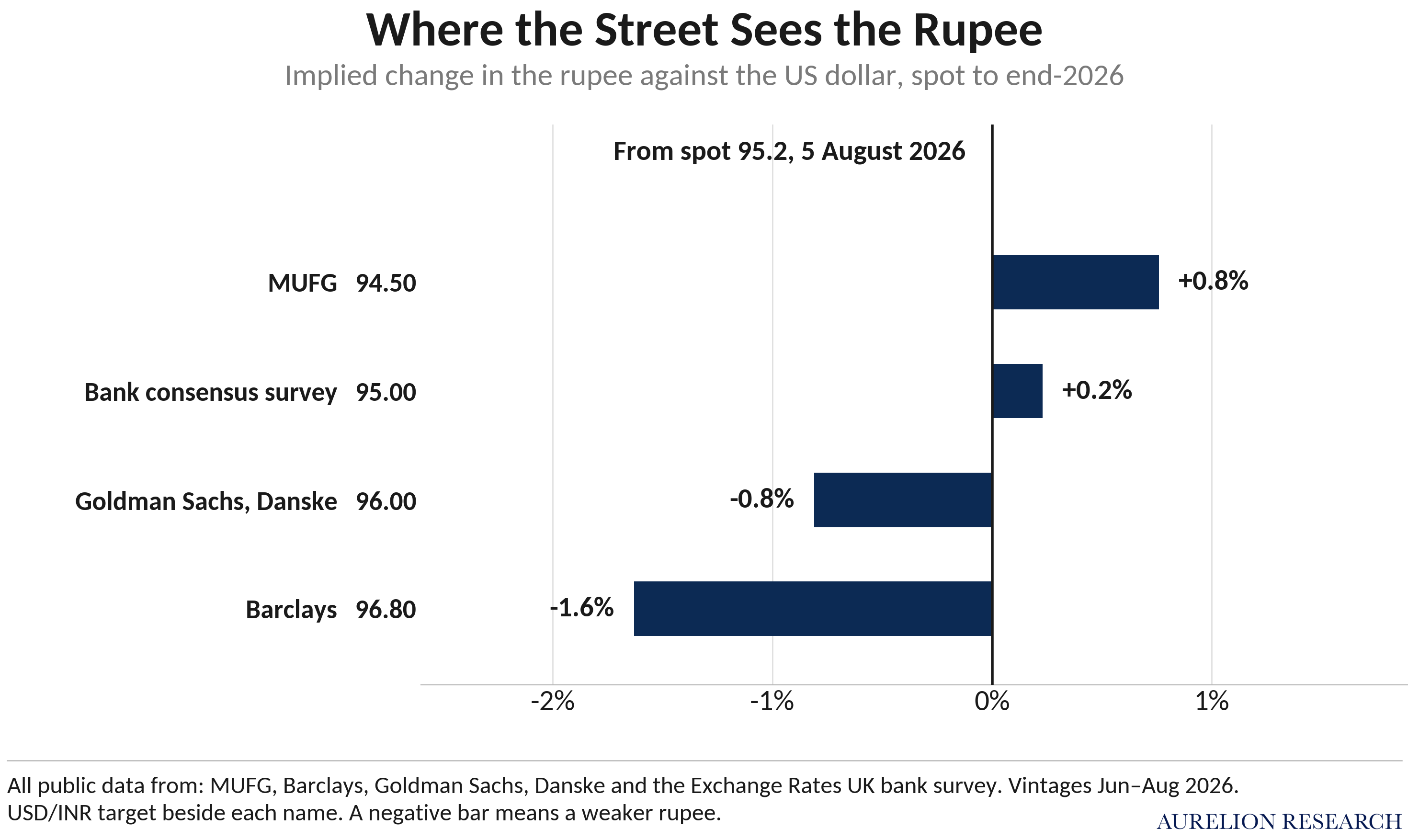
Where the Street Sees It
The banks are unusually aligned.
MUFG recently updated its view and expects the rupee to be slightly stronger by year end. Barclays sits at the bearish end, expecting a 1.6% further decline.
Most credible forecasts are within a three-point range. Breaking below or above these levels would likely require a major catalyst. Another oil shock or a more hawkish Fed could push the rupee past 97, while a trade resolution and stronger foreign inflows would be needed for a move back toward 90.
The Inflation Gap Has Narrowed
Between 2000 and 2025, India averaged 5.9% inflation compared with 2.6% in the US, a gap of about 3.3%. Over the same period, the rupee depreciated by 2.9% per year. The currency tracked the inflation differential closely, which is consistent with purchasing power parity. Applying the same logic today suggests the currency drag should be closer to 1% per year.
The Rupee’s Decline Beyond Inflation
Over the last five years, India averaged 4.9% inflation and the US averaged 4.5%, a gap of only 0.4 percentage points. The rupee still fell roughly 4% per year during that period. This suggests that factors beyond inflation are affecting the currency.
India runs a persistent current account deficit and imports 88% of its crude oil, meaning it relies on foreign capital inflows each year. When foreign investors sell, as they did in the first half of this year, the currency comes under pressure.
Base Case: 3% Per Year
One point of the decline comes from the inflation gap with the US, which is roughly where it is today. The RBI also expects this gap to remain stable as US inflation normalizes. The other two points come from balance of payments pressures, which tend to appear when foreign capital flows slow.
All-in, we expect earnings to grow 17%, with currency impact reducing growth by 3%, resulting in 14% total earnings growth over the next five years.
2.4 Current Market Valuations
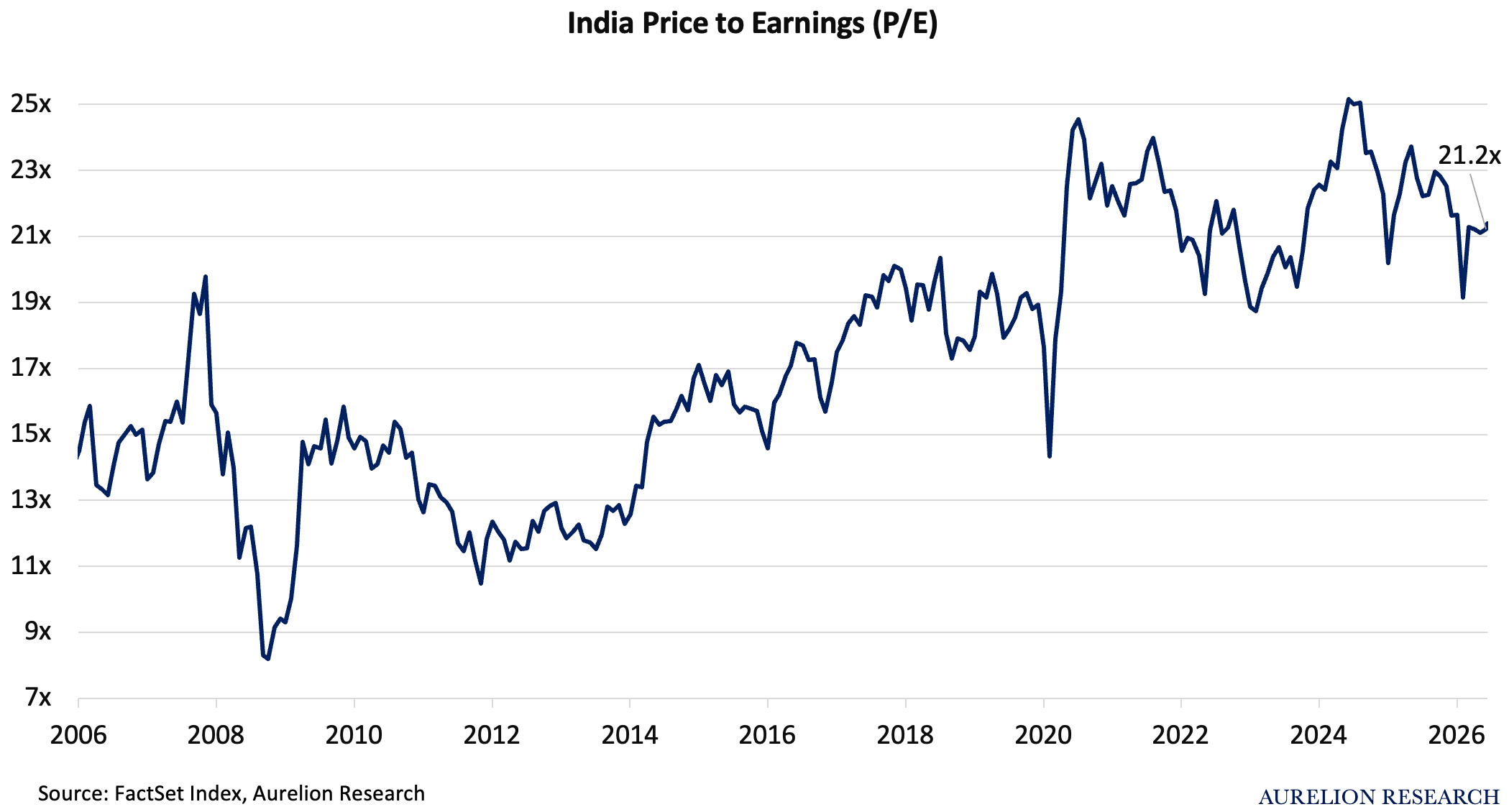
The valuation multiple of Indian equities has historically been correlated with the country’s growth. As India entered a higher growth period, the market multiple re-rated. We expect growth to continue improving, which should support a premium valuation compared with historical averages.
To estimate our expected P/E multiple, we focus mainly on 2021 and thereafter, as this was the period when India started to perform strongly. With the P/E multiple already elevated historically and now similar to the S&P 500, we expect this premium valuation to hold at around 23x P/E over the next five years.
This assumes a valuation similar to where the market traded before IT stocks declined on AI concerns, which have so far been more about sentiment than a real impact on fundamentals. India traded above 23x P/E for most of 2024 and reached 25.2x in July.
One downside we need to keep in mind when looking at valuations is that India currently lacks the type of mega-cap technology companies seen in other markets.
There is no Indian equivalent, at least for now, of companies like NVIDIA, SanDisk, Kioxia, or SK Hynix that are benefiting from the AI, semiconductor, and memory boom cycle while trading at extremely high valuations.
This is not necessarily a negative. In fact, it means the Indian market is less exposed to speculative valuation excesses. However, it also means India does not have a few massive companies trading at very high multiples that can lift the overall market valuation average, as we have seen in the US, Japan, and Taiwan.
As a result, India’s re-rating potential will likely come from broad-based earnings growth, improving profitability, and stronger sector participation rather than from a small number of AI-driven mega-cap companies.
2.5 India Total Return Potential
The multiple is doing very little work in our return assumptions. Nearly 90% of the expected return comes from earnings growth. Over the next five years, we expect the Indian market to deliver a CAGR of around 16%.
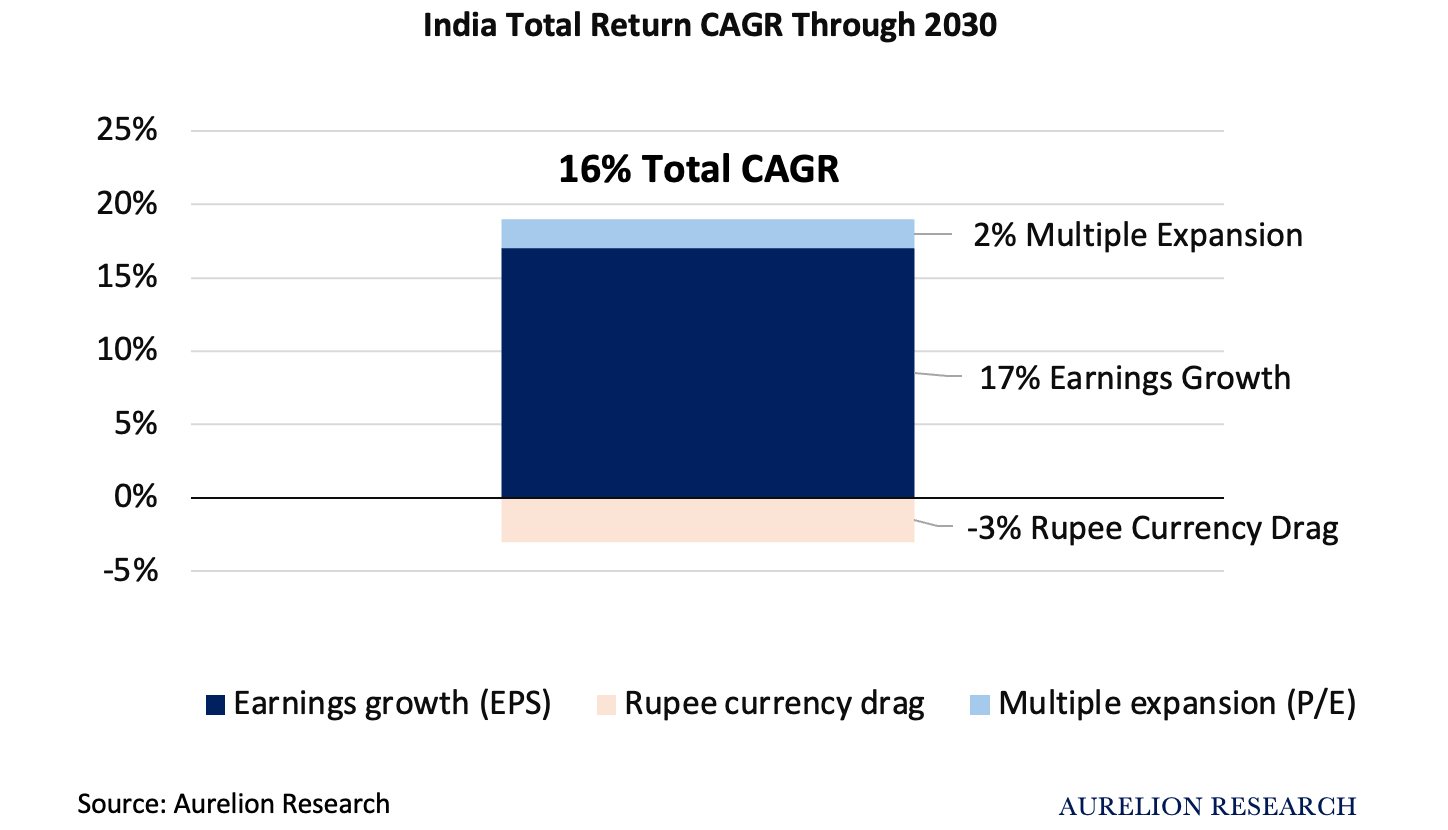
This growth profile is different and more attractive than many other regions, including the US, where EPS growth remains strong but valuations are already at levels where multiple compression could become a headwind over time.
India is in a different position, with growth expected to accelerate while the country’s investability continues to improve.
Importantly, we believe investors can generate returns above the broader market by focusing on the right sectors and companies. This is the approach we explore further in our equity basket.
3. The Long-Term Growth Drivers
3.1 Growth Driver 1: A More Favorable Macro Environment
Two major concerns for India earlier this year were elevated oil prices and tighter domestic financial conditions. Both are now starting to move in a more favorable direction.
1. On oil, we are less concerned given our bearish outlook on crude prices, unless there is a major escalation around Hormuz. A lower oil price environment would be a meaningful positive for India given its dependence on imported crude.
2. On financial conditions, the situation has also started to improve.
In June, the government introduced a package aimed at attracting foreign capital and improving liquidity conditions, including more affordable FX swaps for banks and public sector companies, incentives for overseas Indian deposits, and broader access for foreign investors in Indian bonds.
Some analysts estimate that this package could attract as much as US$65B in foreign inflows, which would provide a significant boost to domestic liquidity. After a period of tighter conditions, this could become an important support for investment, credit growth, and the broader economy.
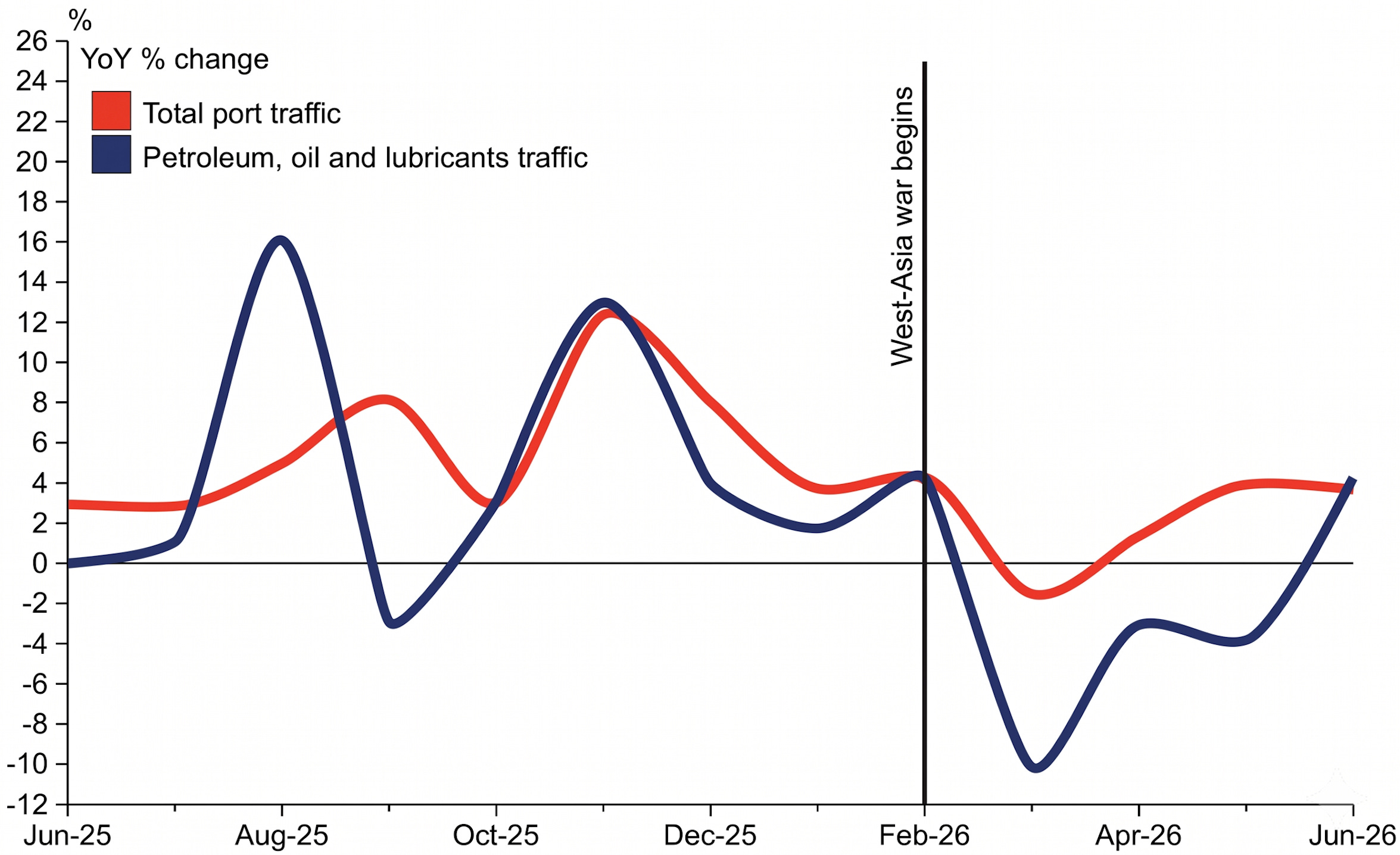
A recovery is now starting to appear in fuel demand and petroleum traffic.
These indicators have improved significantly since the Strait of Hormuz disruption and are now back around, or potentially above, pre-conflict levels. While full July data is not yet available, current trends suggest that physical energy flows have largely normalized.
The Recovery Is Starting to Show Up in Fuel Demand
3.2 Growth Driver 2: Capital Flows Return to India
July was India’s strongest month for foreign investor inflows since February, before the start of the Hormuz crisis.
Foreign Investors Return to Indian Markets
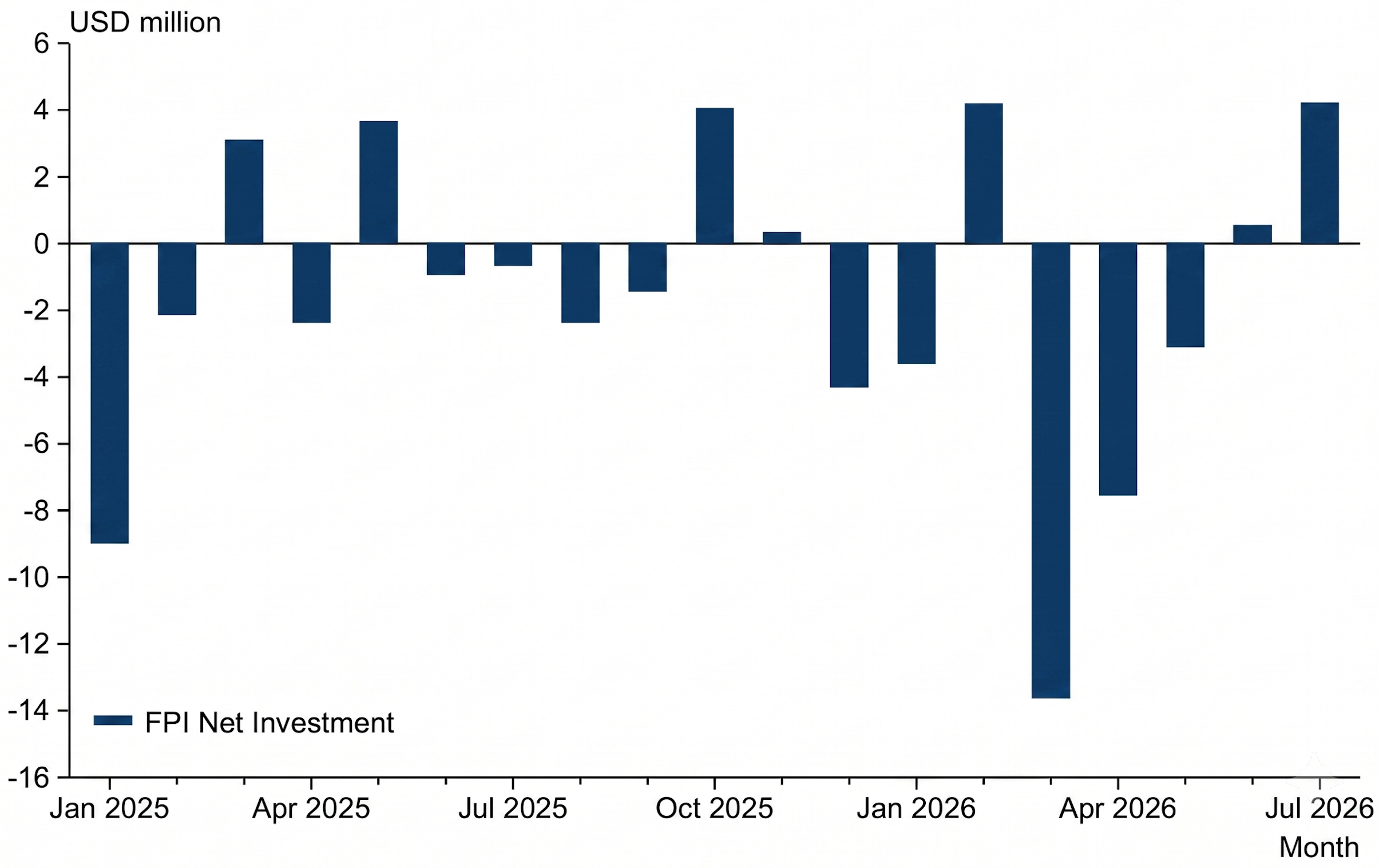
This shows that the environment is starting to change: oil prices have moved lower, financial conditions are improving, and other macro factors are also helping. The risks that weighed on India earlier this year are gradually fading.
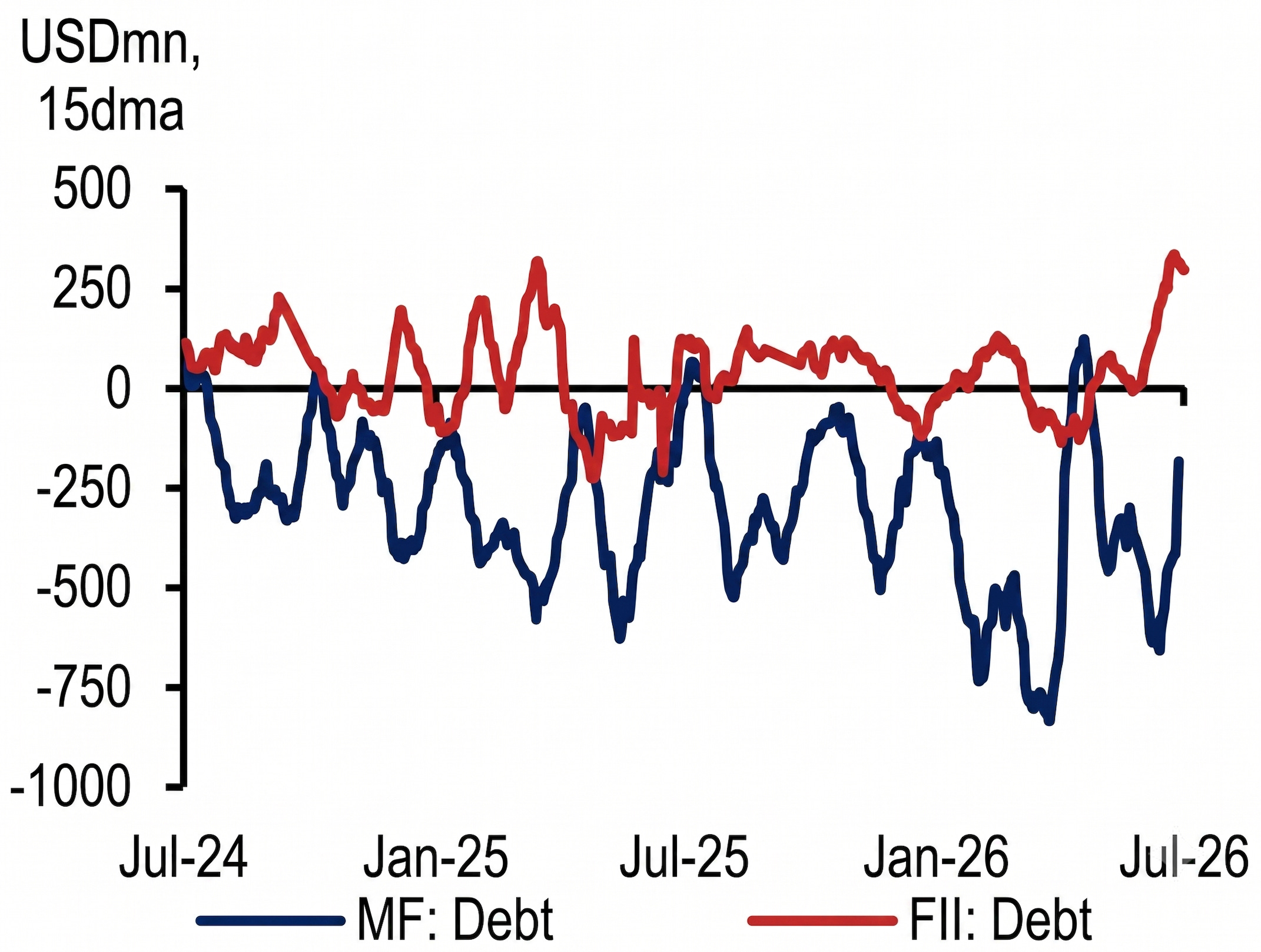
On debt and equity inflows, we can also see a recovery in July, reflecting improving investor confidence and renewed interest in Indian markets.
Debt Inflows from Mutual Funds & Foreign Investors
Equity Inflows from Mutual Funds & Foreign Investors
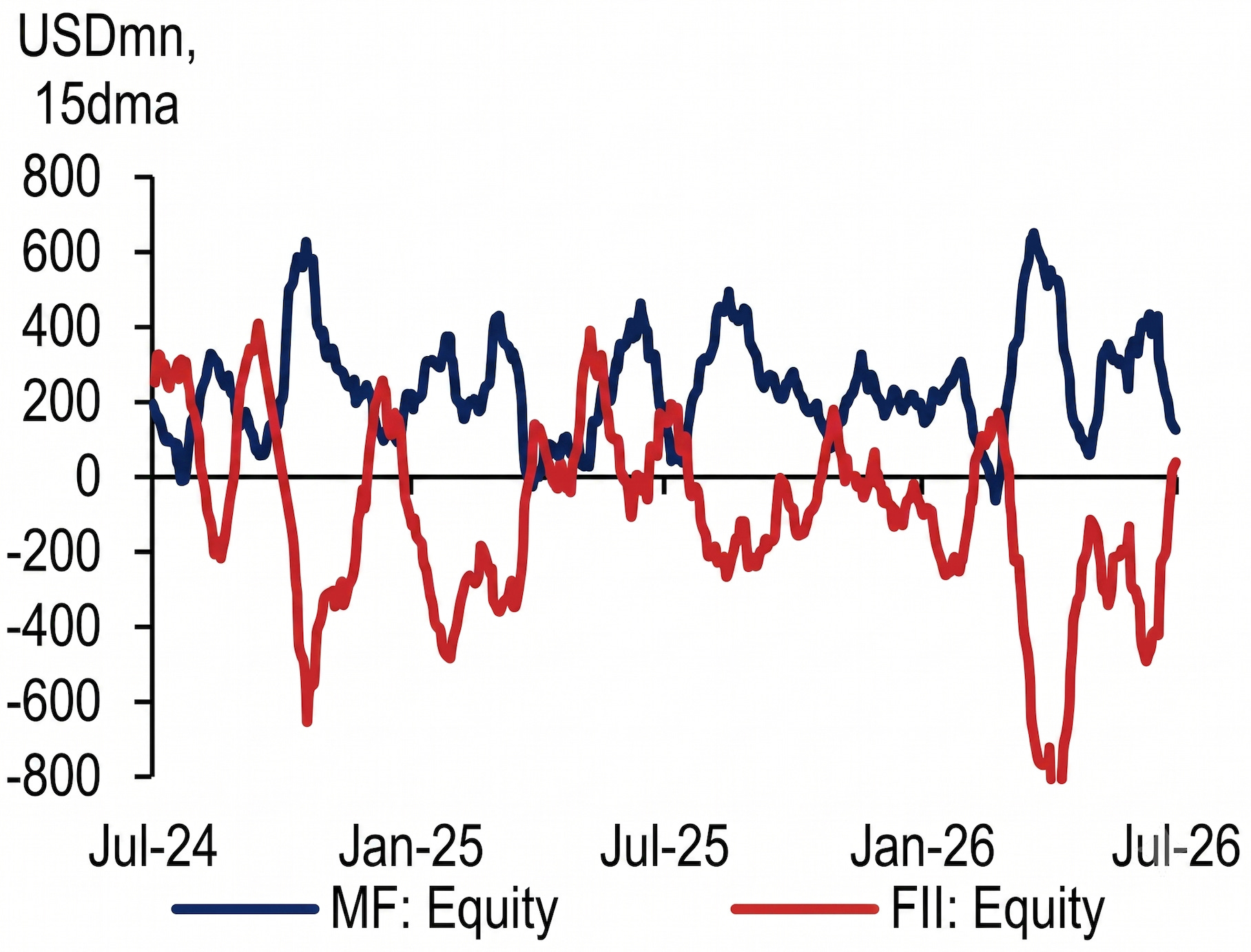
This follows the recent measures introduced by the Indian government to attract more foreign capital and improve domestic liquidity conditions.
3.3 Growth Driver 3: Multiple Sectors Are Booming
The Indian economy is massive, and that is something everyone knows.
With a population that continues to grow, the country benefits from powerful long-term drivers creating opportunities across multiple sectors. Growth has slowed in recent months, but as discussed earlier, we believe the economy is positioned to regain momentum.
India has many sectors entering important development phases, with significant TAM expansion opportunities ahead. We decided to dedicate an entire section to highlight some of the most interesting areas where we see potential.
A) The First One Is the Defence Sector
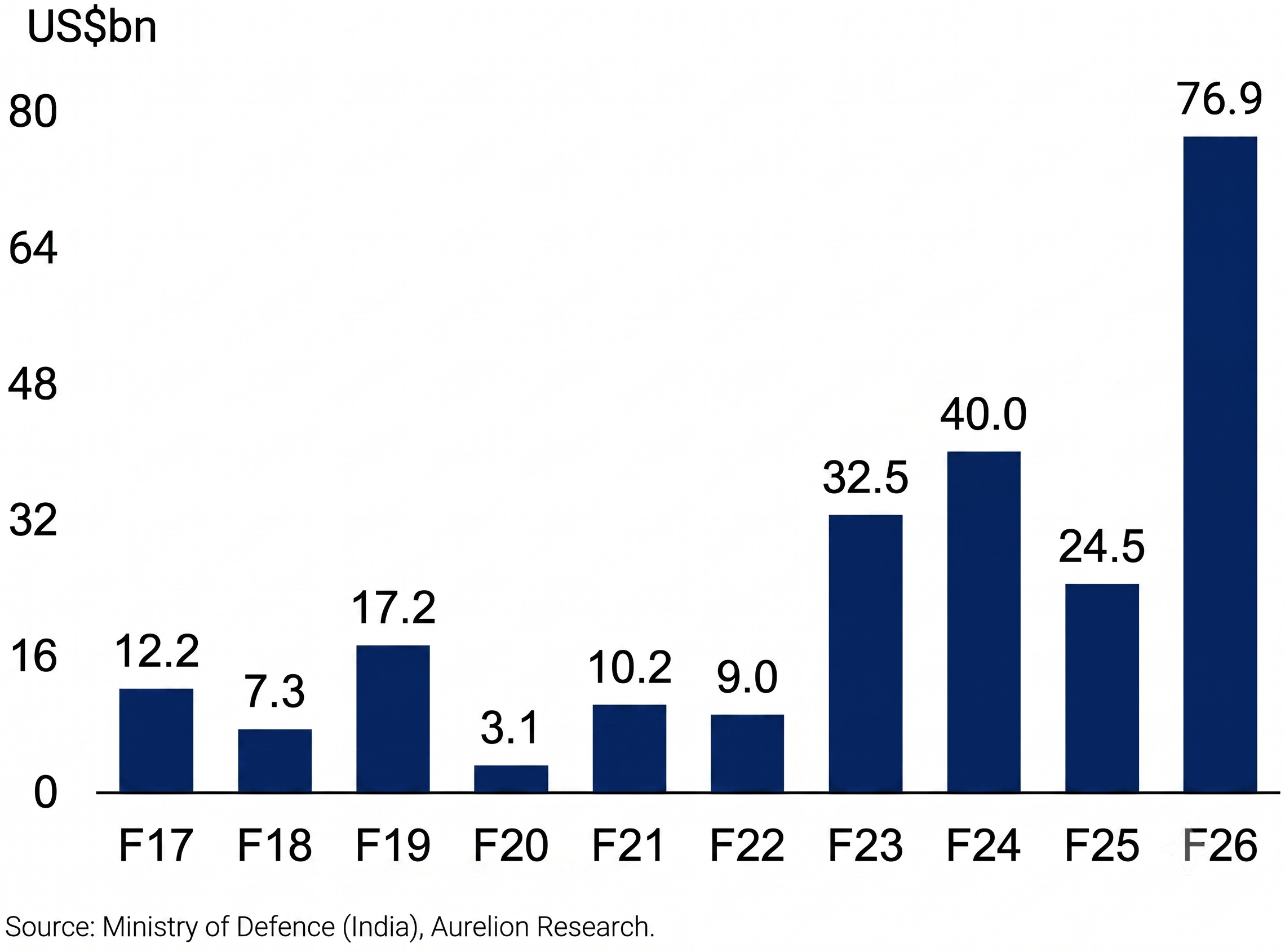
The defence sector in India is entering a major investment cycle.
Government policies are becoming increasingly focused on strengthening the country’s domestic defence capabilities, while rising geopolitical and border tensions are accelerating the need for military modernization. This is creating a major supply opportunity that India will need to address as it looks to expand its defence manufacturing capacity and reduce its dependence on foreign suppliers.
The Ministry of Defence recently received a record allocation, representing the largest share of total Central Government Expenditure at 14.67% and around 2% of India’s GDP. This marks a significant increase in defence spending and sets the foundation for a multi-year investment cycle focused on improving military readiness, upgrading capabilities, and increasing strategic independence.
India’s Defence Capex Cycle Is Taking Off
The next phase of investment will focus on key areas such as aerospace, naval capabilities, next-generation electronic warfare systems, and advanced defence technologies. India is also pushing aggressively to expand local manufacturing and domestic R&D, with the goal of reducing strategic dependence on imports for critical components such as sensors, and also guided systems.
India Defence Exports: Growth Set to Continue Beyond FY26
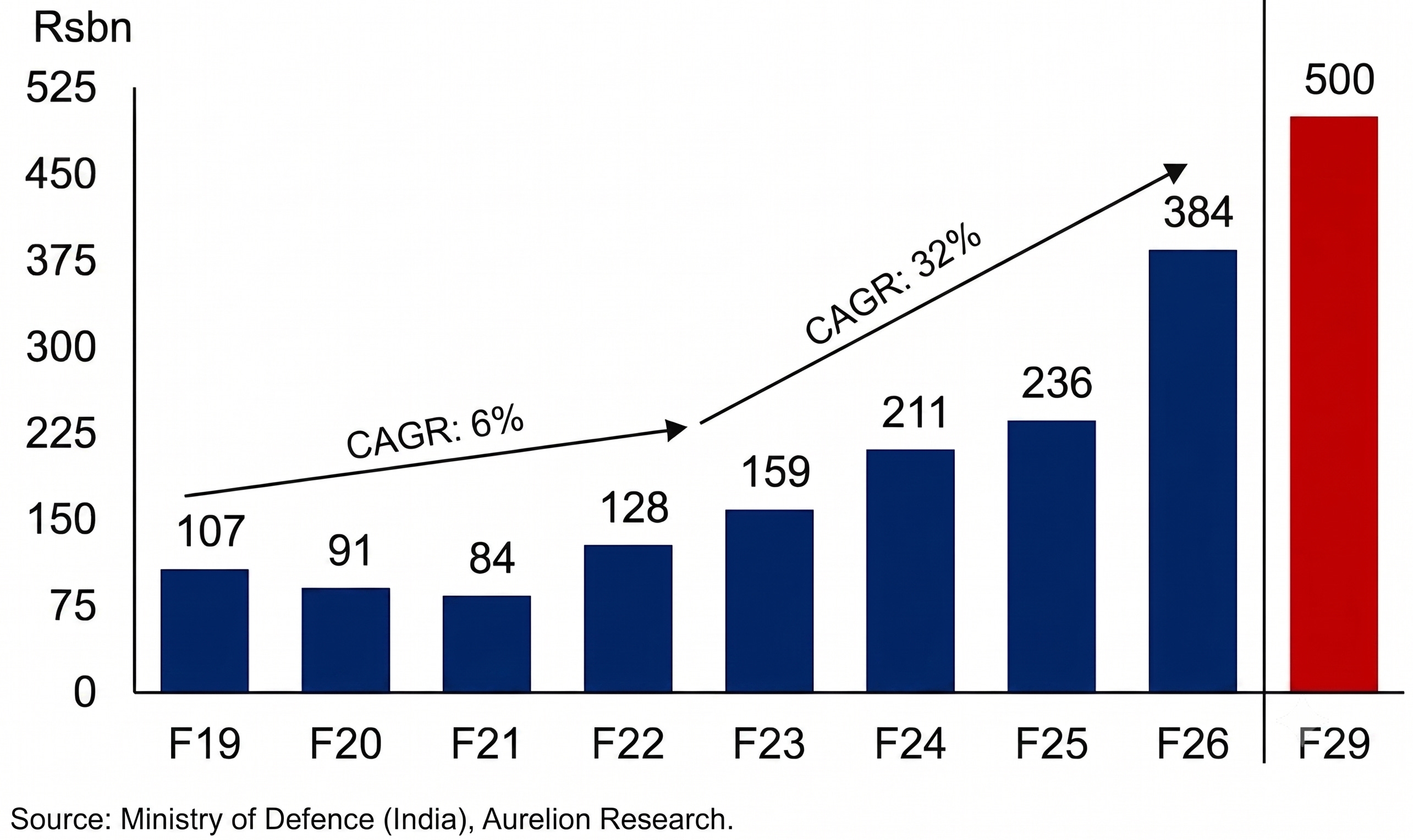
Alongside higher domestic spending, India is also building a stronger export-oriented defence ecosystem. The government’s push to increase local production, support private suppliers, and develop indigenous technologies is creating the foundation for continued growth in defence exports.
This is a trend we have also seen in Canada, where a stronger focus on domestic capabilities became an important growth driver for the sector.
The 2026 defence cycle is being driven by aggressive modernization targets, ongoing border readiness, and the long-term objective of building a stronger domestic defence industry. As capital flows into defence public sector companies, private suppliers, and technology development, opportunities across the entire defence value chain are becoming increasingly attractive.
B) The Second One Is the Power Sector
This is a recurring theme we are seeing worldwide right now with the AI wave, but it is even more significant in a country growing as fast as India.
India’s power sector is entering a multi-year investment cycle, driven by a simple reality: the country needs significantly more electricity.
Demand is rising, and India will need to expand its power generation, transmission, and grid infrastructure to support its next phase of growth.
India’s electricity demand is expected to continue rising steadily, supported by fast urbanization, increasing cooling needs, industrial expansion, infrastructure development, and the growth of data centres.
More Renewables Mean More Grid Investment
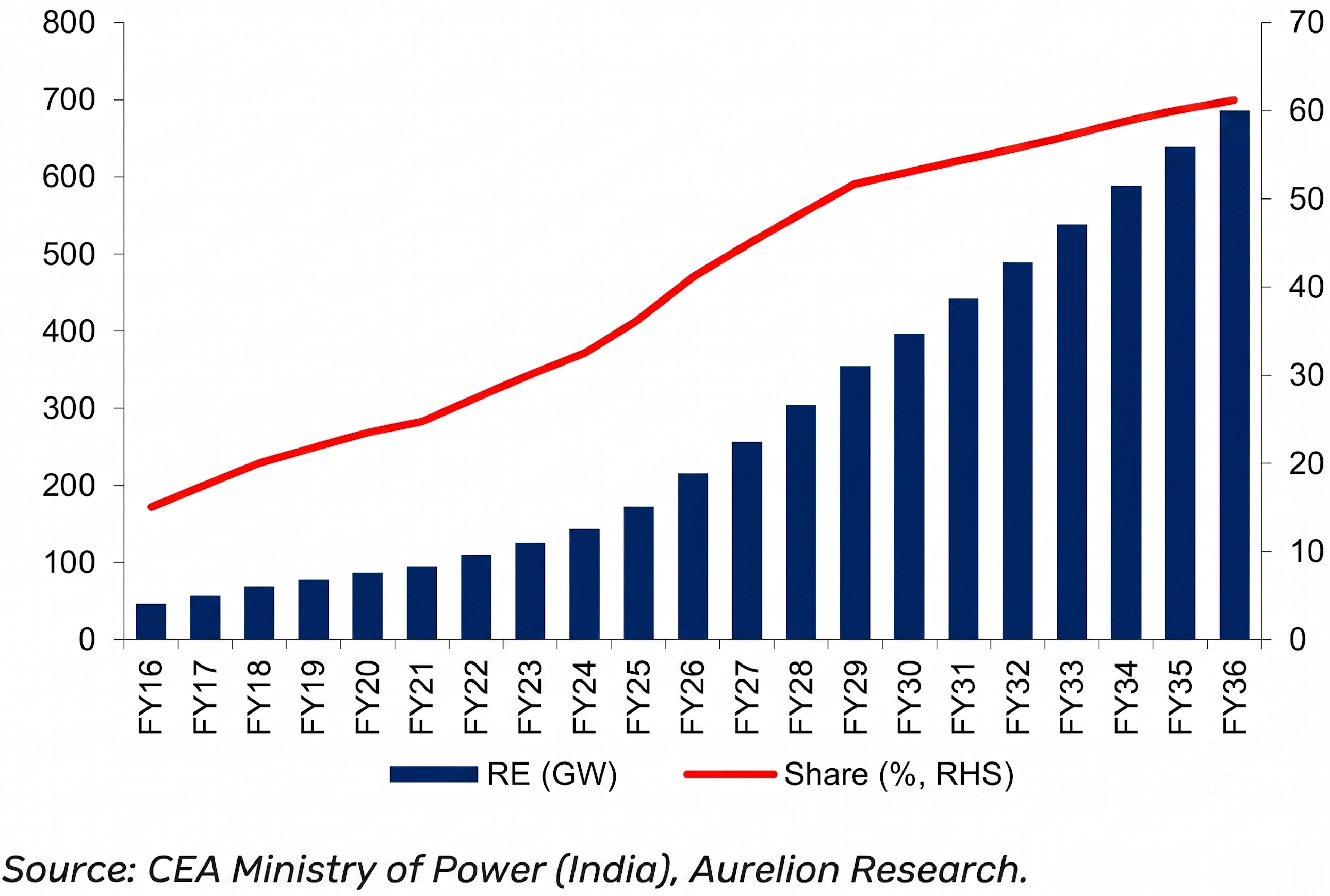
At the same time, India is accelerating renewable energy additions to meet its long-term clean energy targets. This transition will require significant investment across transmission networks, grid modernization, and power equipment.
Some analysts estimate that the grid equipment opportunity could reach as much as US$85B over the 2027-2036 period. This creates a strong long-term runway for companies positioned across India’s power infrastructure buildout.
Domestic demand is already translating into stronger order books for major grid equipment manufacturers, providing better visibility on revenue growth over the next several years. Companies are expanding manufacturing capacity and upgrading capabilities to capture this demand. The race now is about increasing production capacity fast enough to meet the scale of the opportunity.
Beyond India, global demand for high-voltage equipment is also accelerating as countries invest heavily in grid upgrades and energy transition projects. With supply constraints emerging across the global market, Indian manufacturers have an opportunity to capture a larger share of demand through competitive costs, strong engineering capabilities, and expanding production capacity.
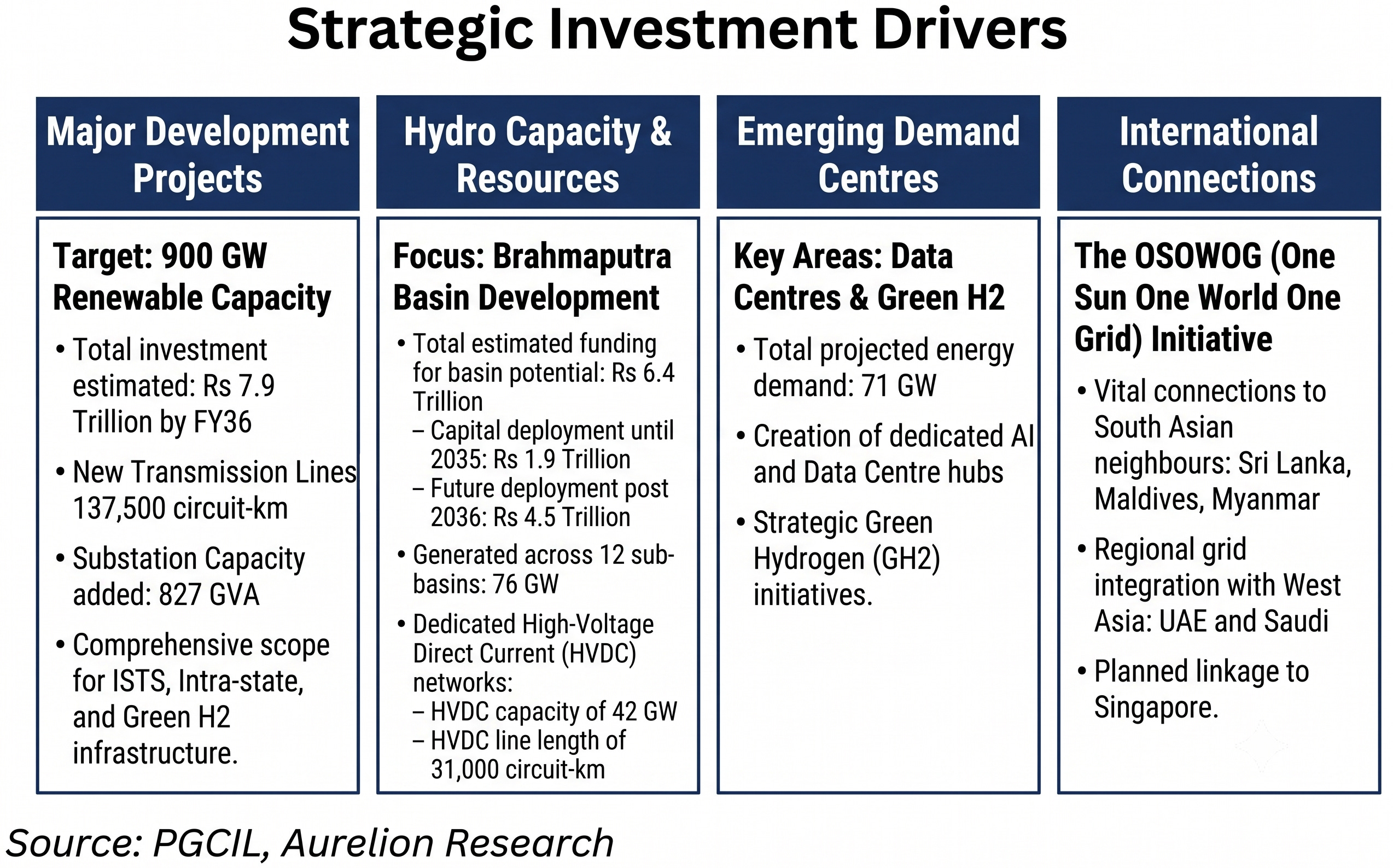
Unlike solar, where India has relied more heavily on imported inputs, the power equipment sector already has a stronger domestic manufacturing base and deeper engineering expertise. The key challenge now is scaling capacity fast enough, while securing critical inputs such as CRGO steel and expanding high-voltage testing infrastructure to compete for a larger share of the global market.
As countries around the world upgrade their power grids, India is well positioned to become an increasingly important supplier of grid equipment, benefiting from both strong domestic demand and a growing global need for reliable power.
C) The Third One Is Energy Security
India is taking steps to reinforce its domestic oil and gas industry and reduce its dependence on foreign energy supplies. Recent reforms, including the Oilfields (Regulation and Development) Amendment Act, 2025 and updated Petroleum & Natural Gas Rules, 2025, aim to make exploration and production more attractive for companies by creating a simpler and more stable regulatory environment.
Boosting Domestic Oil & Gas Production.
The new framework makes approvals easier, provides longer and more flexible petroleum leases, and reduces uncertainty for operators. These changes are expected to encourage more investment in exploration, improve the use of existing resources, and support higher domestic production over time.
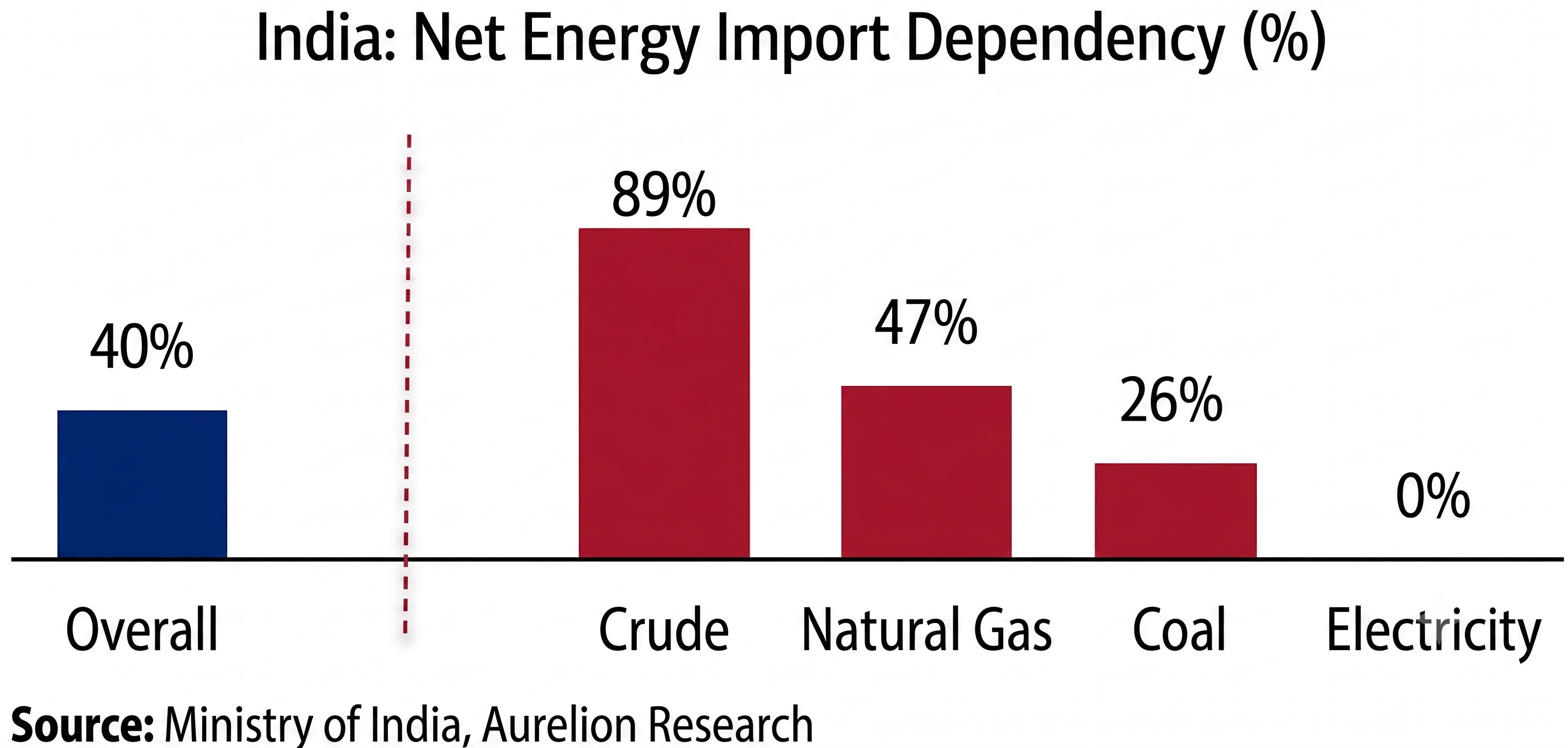
This comes as India remains heavily dependent on energy imports, bringing in around 89% of its crude oil and 47% of its natural gas needs. With domestic production remaining largely unchanged over the past decade, increasing local output has become a key priority for India’s long-term energy security.
If you want to see more of our work on everything related to the oil market:

D) The Last One Is Healthcare
Making Healthcare More Accessible Through Insurance.
India’s healthcare system is becoming easier to access as insurance adoption increases. In 2025, the Insurance Regulatory and Development Authority of India (IRDAI) and the General Insurance Council (GIC) launched a common insurance empanelment initiative to simplify cashless healthcare.
Today, hospitals need separate agreements with each insurance company to provide cashless treatment. This creates additional paperwork and different processes depending on the insurer. The new system aims to create a common network where hospitals approved by one insurer can be accessed by customers from multiple insurance companies. This should make the process faster, reduce administrative work, and improve access to healthcare.
The initiative is still developing, with discussions continuing around pricing and claim processes. Some smaller hospitals have joined, but major private hospital chains have not yet adopted the framework.
Indian healthcare companies are really attractive right now, but if you are looking for something well-run, based in the US, and still overlooked:

4. Retail Investors Keep Faith in India Equities
Domestic investors continue to provide strong support to Indian equities.
After a temporary slowdown in May, equity mutual fund inflows recovered in June, with net inflows increasing 26% month-on-month to US$3.1B. This extended the streak of positive monthly inflows to 64 consecutive months.
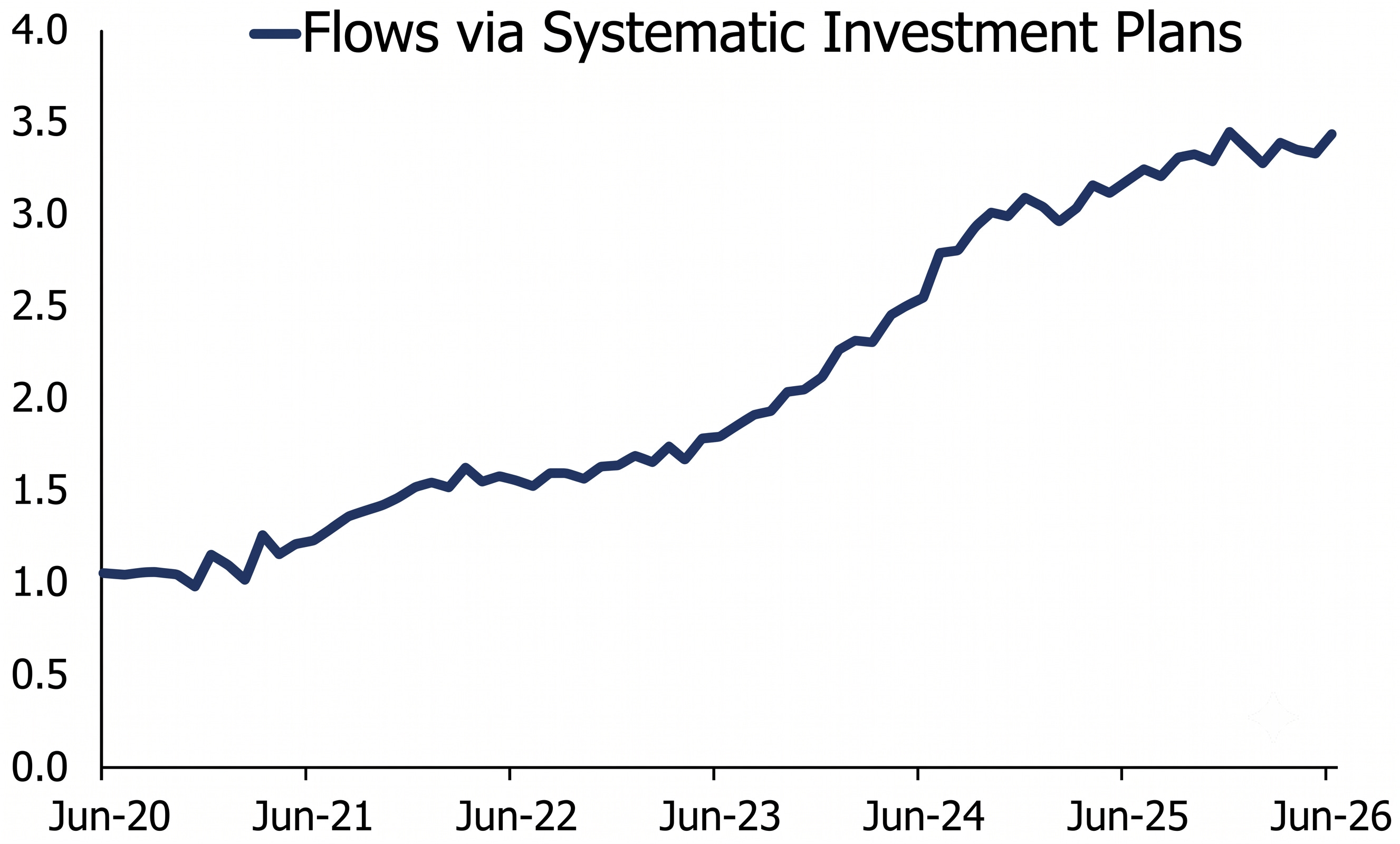
While buying activity increased, some investors also took profits as markets recovered. However, the broader trend remains unchanged, with retail participation in Indian equities continuing to grow.
A major driver behind this has been the rapid adoption of systematic investment plans (SIPs), where investors regularly invest a fixed amount into mutual funds. Monthly SIP contributions continue to reach record levels, growing at more than 30% annually since the pandemic.
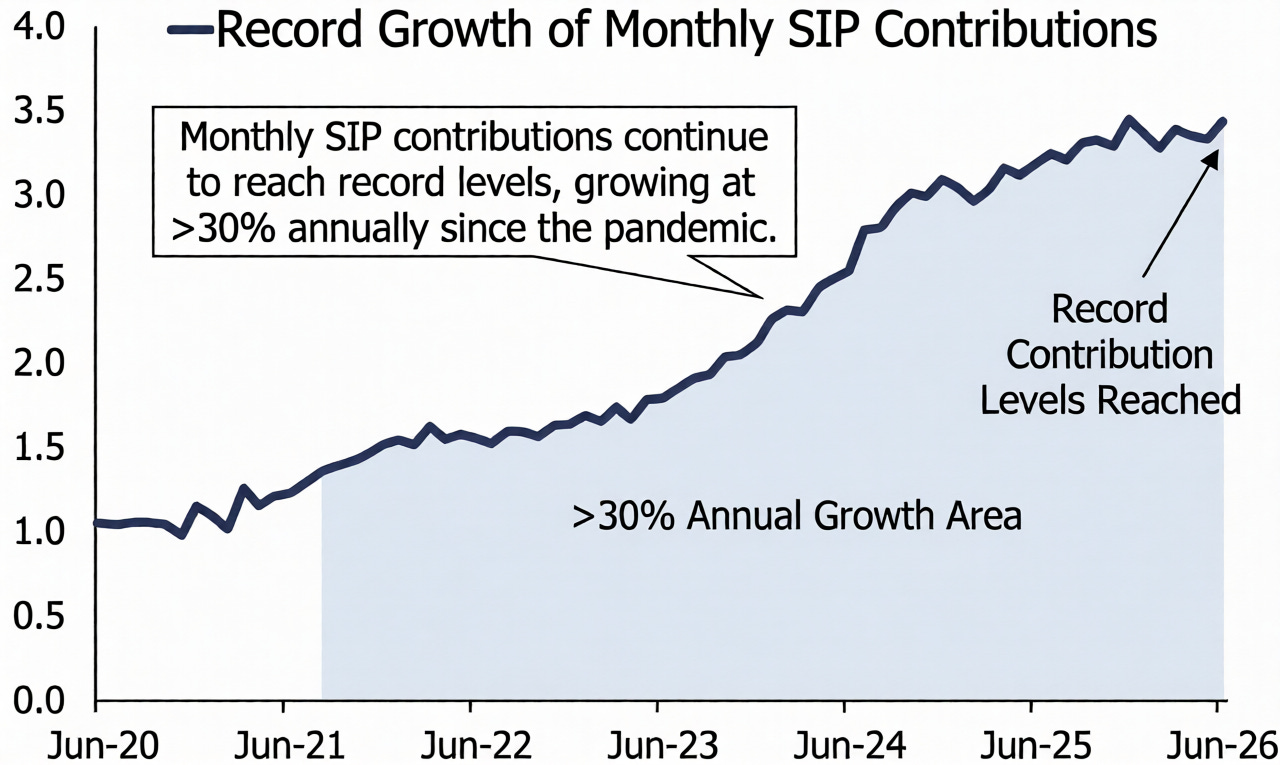
This shows that Indian households are increasingly investing their savings in financial markets, making domestic investors a larger source of support for equities. Earlier this year, foreign investors remained cautious due to weaker market momentum, limited exposure to AI-related themes, and the impact of Hormuz on energy prices and sentiment. However, we think many of these pressures are temporary. Commodity cycles tend to normalize over time, and corporate earnings should recover as economic conditions improve.
India also enters this period of market uncertainty with strong external fundamentals. The country holds around US$697B in foreign exchange reserves, providing a significant buffer against potential external shocks.
5. The Presence of Hedge Funds in India
A thriving equity market is extremely important for a growing economy.
Deep and liquid capital markets attract more investors, improve capital allocation, and create stronger conditions for long-term growth.
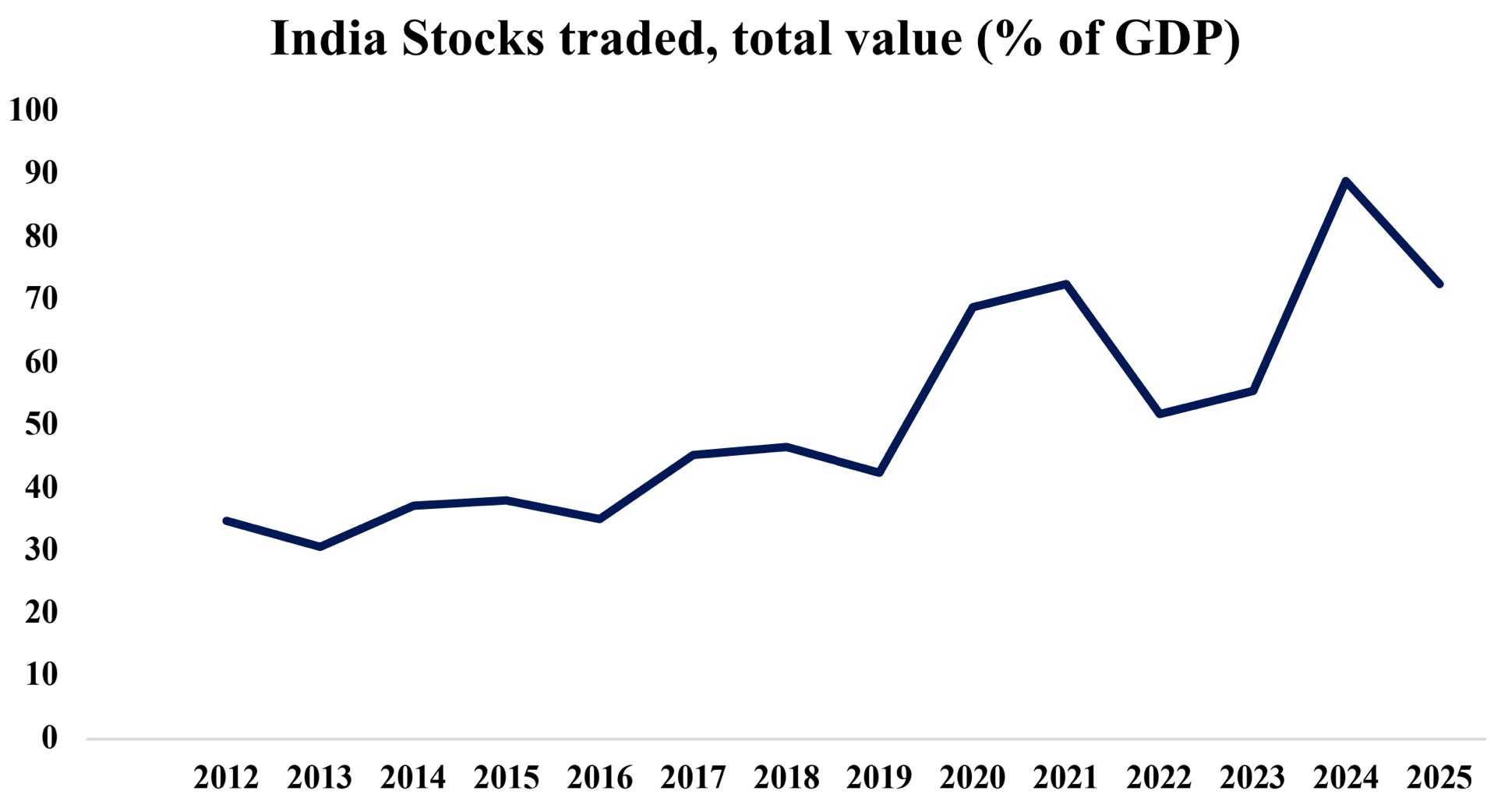
In our research, we came across the 1998 paper by Levine & Zervos, which found that stock market development, including liquidity and integration with global capital markets, is positively linked with future economic growth, productivity improvements, and capital accumulation.
India’s equity market has been rapidly developing, and global financial institutions are taking notice. Recent regulatory reforms, including the SWAGAT-FI framework and amendments introduced in 2021, have simplified the process for foreign investors to access the Indian market. Large institutional investors can now complete registration within 48 hours and renew their paperwork every ten years instead of every few years. Eligible participants include sovereign wealth funds, pension funds, central banks, and other major institutions.

The shift of global financial firms toward India started decades ago. D.E. Shaw was one of the first major firms to establish a presence in the country, opening its Hyderabad office in 1996. The main drivers were India’s strong engineering talent and the cost advantages available at the time. Since then, many have followed.
For years, most of these operations focused on supporting global businesses through technology, quantitative research, operations, risk management, finance, and compliance teams. However, India is increasingly becoming more important for actual investment activity, especially with the rise of quantitative trading.
Today, firms such as WorldQuant, Tower Research, Qube Research, Squarepoint, and AQR have built significant operations in India, attracted by the country’s large pool of engineering and quantitative talent. The combination of a growing equity market, improving market infrastructure, and deep technical talent is making India an increasingly important hub for global hedge funds.
AQR Office in Bangalore, India

This growth has also attracted more regulatory attention.
The case involving Jane Street highlighted some of the challenges that come with a rapidly expanding market ecosystem. Indian regulators alleged that the firm’s trading activity around Bank Nifty derivatives gave it an unfair advantage, leading to regulatory action and the seizure of around US$570M in assets.
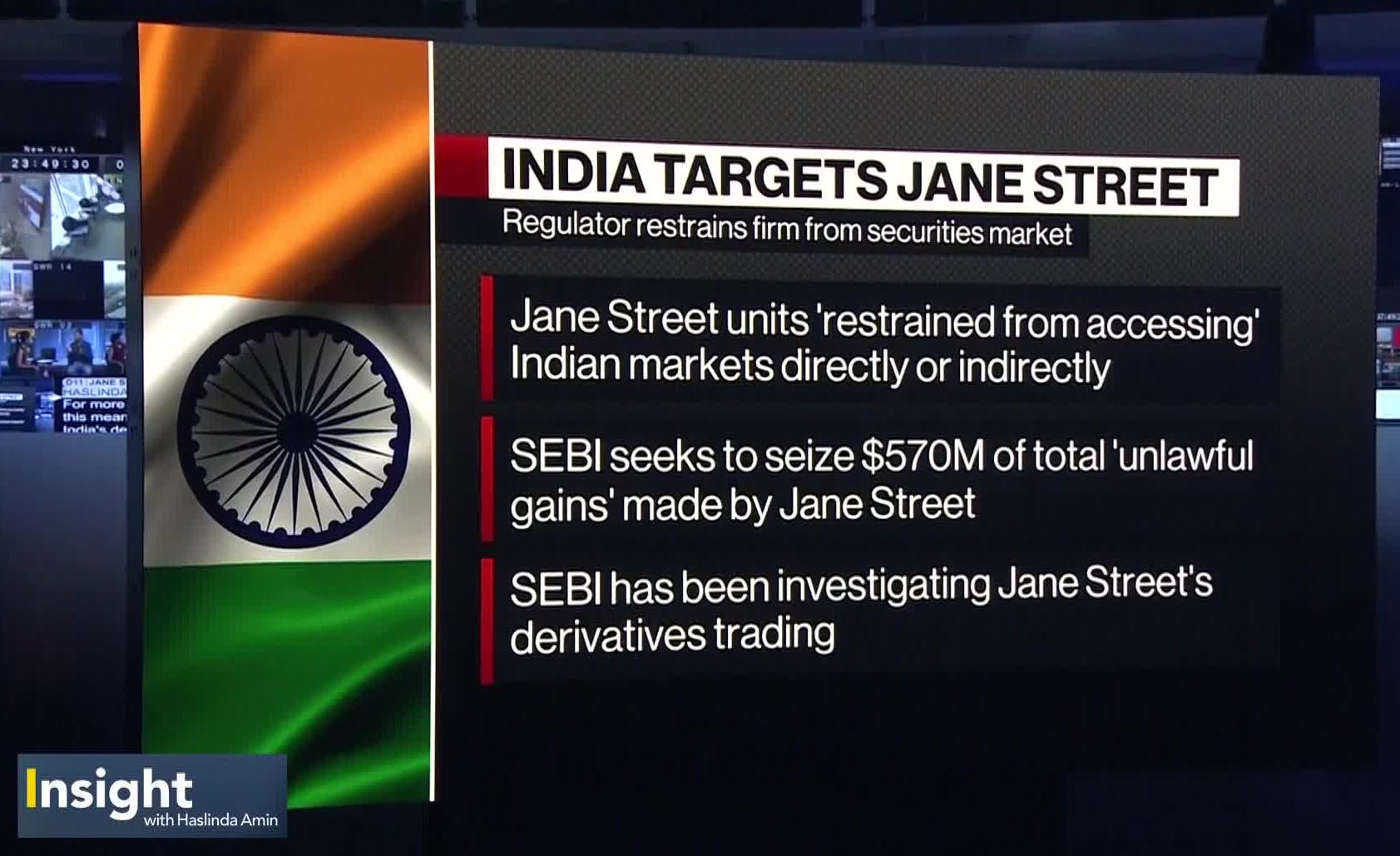
Despite these challenges, the broader trend is clear: global financial firms are building a larger presence in India as the country’s equity markets deepen, regulations improve, and investment opportunities continue to expand.
6. The Rise of Remote Talent in the AI Era
India’s biggest advantage has always been its large talent base, similar to China, and the AI wave is only expanding this opportunity.
For decades, global companies have relied on India for software development, engineering, and back-office operations due to its deep pool of technical talent and competitive costs. AI is now creating new demand across areas such as AI engineering, data infrastructure, cybersecurity, and enterprise automation.

The difference today is that companies can access this talent remotely without needing to build large physical operations. Digital collaboration tools allow global firms to work directly with Indian engineers and technology professionals, expanding the opportunity beyond traditional outsourcing models.
We spoke with a software engineer who studied in the US but returned to India to apply his skills in Mumbai at a major software company:
“India has changed a lot. In the past, many engineers felt they had to move abroad to work on global technology projects. Today, you can be based in India and still work on the same high-value projects with international teams. The talent is here, and the ability to collaborate globally has improved significantly.”
With one of the world’s largest pools of developers and technical workers, India is well positioned to benefit as companies continue investing in AI adoption. Global technology firms, startups, and enterprises are already expanding their presence in the country to build AI capabilities, and this should accelerate going forward.
Over time, India has the potential to evolve from a global outsourcing hub into a major center for AI development, implementation, and innovation.
7. The AI Debate in India
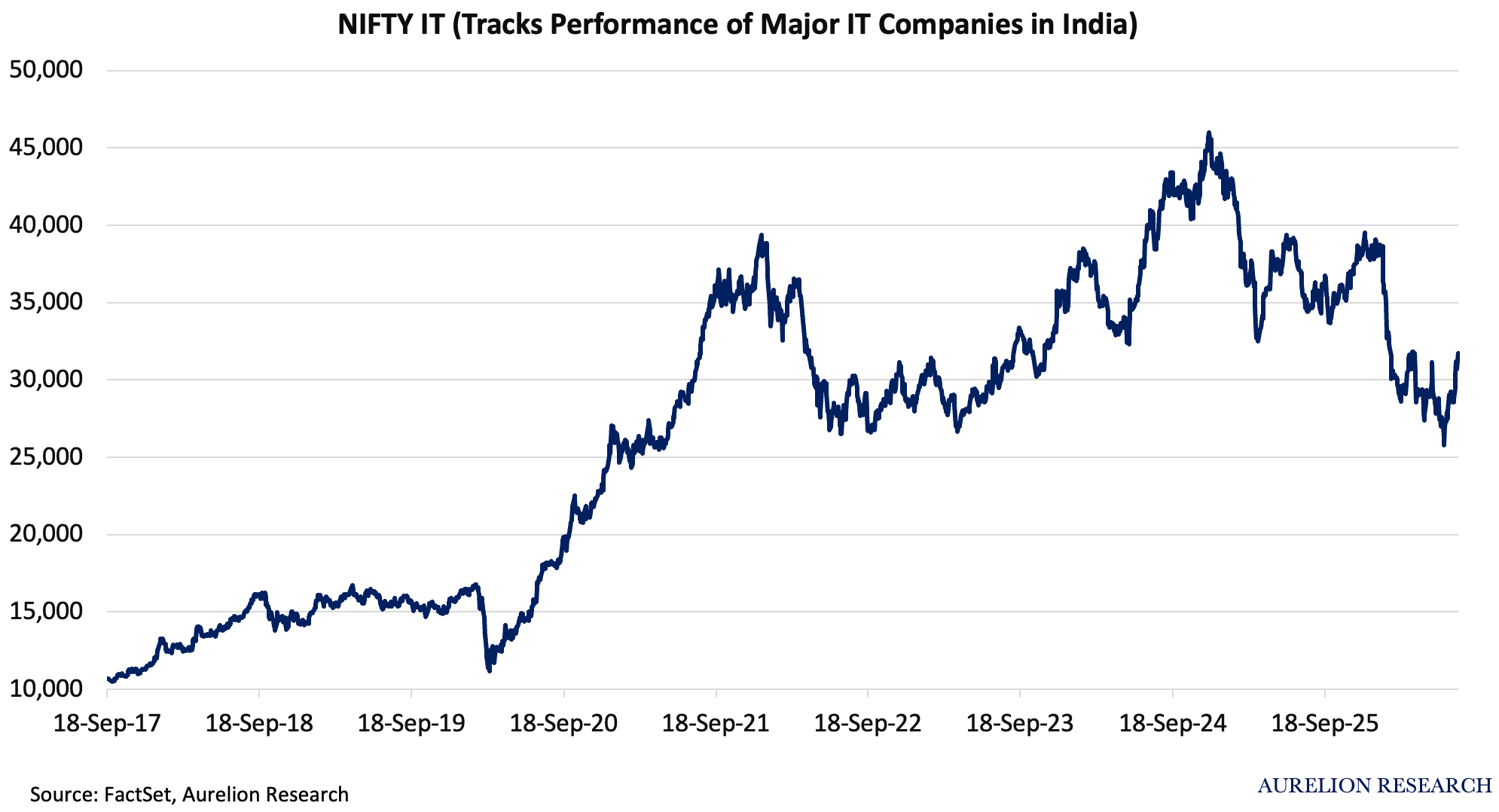
The bear case is simple. AI can automate parts of coding, reducing the value of outsourced developers. Indian IT stocks have declined over the past twelve months on this concern, while foreign investors shifted capital from India toward Korean and Taiwanese semiconductor and memory companies.
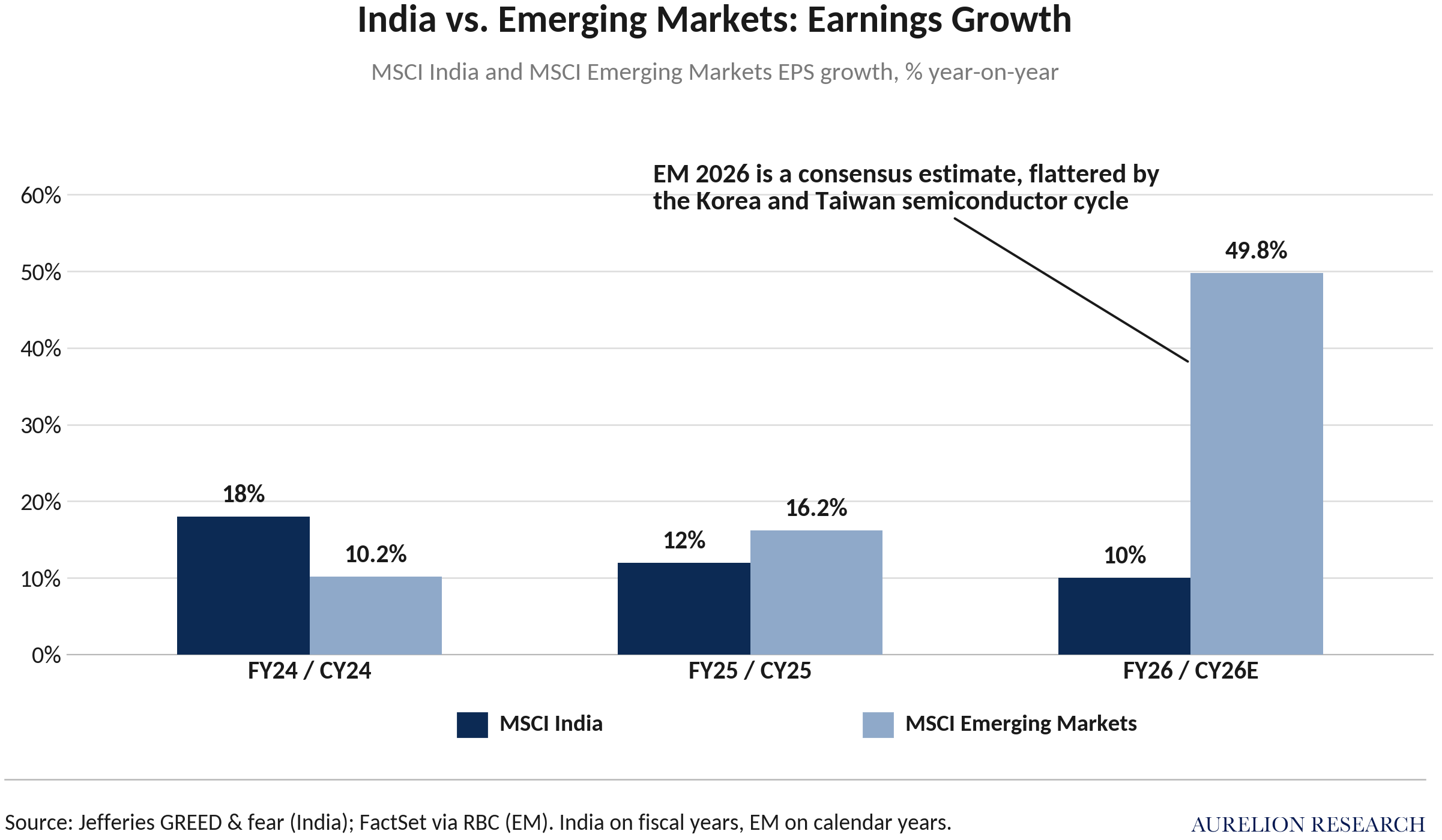
The bull case rests on a different point. India’s constraint has never been the number of workers; it has been output per worker. Closing that gap traditionally required roads, ports, and power infrastructure, which can take decades. AI can improve white-collar productivity without requiring the same physical buildout.
The early data supports this view. Anthropic’s Economic Index found Indian users completing an estimated 3.8 hours of work within 15-minute AI sessions, above global averages. At scale, AI could allow Indian engineers to deliver closer to the output of higher-cost markets while maintaining India’s cost advantage.
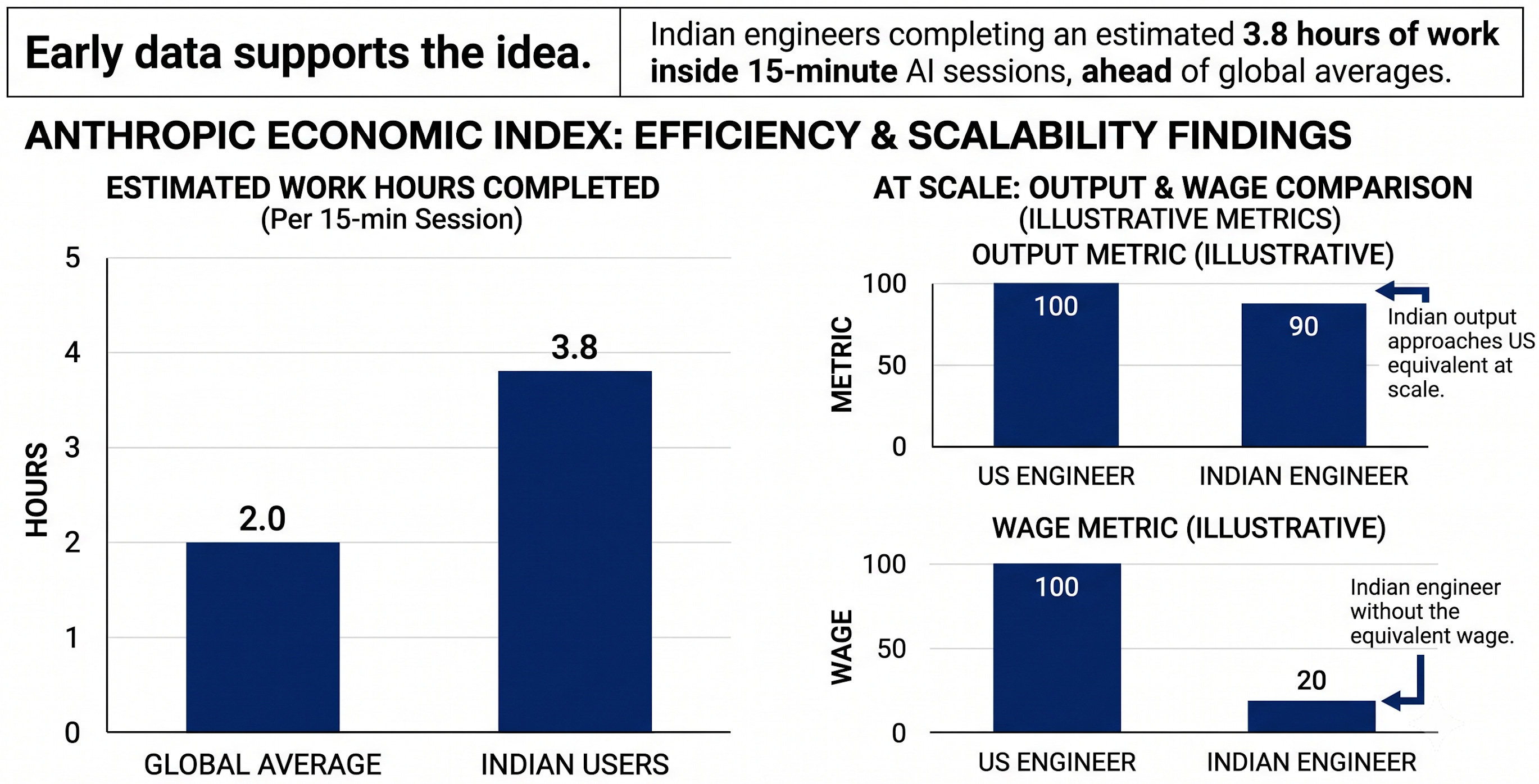
AI is a swing factor in both directions.
We believe it will ultimately be a productivity driver over the next decade rather than compressing the low billable-hour model that built the IT sector.
Importantly, we see this as a longer-term outcome. Our FY27 and FY28 forecasts do not depend on knowing exactly how this plays out.
8. The Growing Influence of Indian CEOs
India has produced a growing number of technology leaders who are now running some of the world’s most important companies. While we could have easily named at least 20 more, these five examples highlight the increasing influence of Indian executives across global technology.
1. Satya Nadella (Microsoft CEO)
Born in Hyderabad, India, Nadella studied at the Manipal Institute of Technology, the University of Wisconsin–Milwaukee, and the University of Chicago Booth School of Business. He joined Microsoft in 1992 and played a key role in the company’s transition toward cloud computing and Azure.
Since becoming CEO in 2014, Nadella has overseen one of Microsoft’s most successful periods, including its cloud expansion and disciplined AI investment strategy. Under his leadership, Microsoft’s stock has increased 10x, representing 20% annualized growth.
2. Sundar Pichai (Google CEO)
Born in Madurai, India, Pichai studied at IIT Kharagpur before earning an MS from Stanford and an MBA from Wharton. He joined Google in 2004 and rose through the product organization, leading key products including Chrome, ChromeOS, and Android. Since becoming CEO in 2019, Pichai has overseen Google Cloud expansion and major AI infrastructure investments. Alphabet’s stock has increased 450%, representing 21% annualized growth.
3. Arvind Krishna (IBM CEO)
Born in Andhra Pradesh, India, Krishna studied at IIT Kanpur before earning a PhD in electrical engineering from the University of Illinois.
He joined IBM in 1990 and became the driving force behind IBM’s $34B acquisition of Red Hat. Since becoming CEO in 2020, Krishna has repositioned IBM around hybrid cloud and AI infrastructure. IBM’s stock has increased roughly 113% under his leadership.
4. Sanjay Mehrotra (Micron CEO)
Born in Kanpur, India, Mehrotra studied at BITS Pilani before earning engineering degrees from UC Berkeley. He co-founded SanDisk in 1988 and led the company until its acquisition by Western Digital for $19B.
He became CEO of Micron in 2017 and has positioned it as a key beneficiary of the AI-driven memory cycle. Under his leadership, Micron’s stock has increased 27x, which is 43% annualized growth.
5. Nikesh Arora (Palo Alto Networks CEO)
Born in Ghaziabad, India, Arora studied electrical engineering at IIT (BHU) Varanasi before earning an MBA and MS in finance in the US.
After senior roles at Google and SoftBank, Arora became CEO of Palo Alto Networks in 2018. His focus on platformization and cybersecurity consolidation has transformed the company’s strategy. Under his leadership, Palo Alto Networks’ stock has increased 370%, representing 21% annualized growth.
9. In Conversation: Key Insights
First, we spoke with an investment research analyst currently working in India, who previously studied finance at Princeton University in the United States.
A Massive Consumer Market That Is Becoming More Digital
“They scale very easily over there. There’s 1.2 billion people, so any good idea that’s affordable scales quickly.”
India’s population creates a unique environment for businesses that can deliver affordable products and services at scale.
“The digital population is growing more prominent, so people in their teenage years into their 30s are ordering out a lot at little to no more cost than cooking at home.”
The younger Indian consumer is increasingly prioritizing convenience. Food delivery has become a fundamental trend as digital adoption rises and delivery networks benefit from India’s population density.
“Living in India for a summer, that’s what I did. Unless I went home to my grandparents’ place, the average person could just order out and it comes out to the equivalent of $10–15 per day to eat well. What we’d consider a nice restaurant that would run you $50–100 in the US, you could get for like $20 over there.”
Affordable services are a key driver of adoption in India. The combination of low costs and improving digital infrastructure is allowing new consumer habits to develop quickly.
Consumer Behaviour: Price Over Time
“The average Indian consumer is willing to wait 30 extra minutes for an Uber rather than pay an extra $2 for one right now.”
India remains an extremely value-conscious market. Consumers are often willing to sacrifice convenience to get a better price, creating a strong advantage for companies that can operate efficiently and maintain low costs.
2. We also spoke with an investment analyst from WestBridge Capital, a major global investment firm managing over $7B and focused on private and public markets in India.
Healthcare: A Market Entering Modernization
“Big shift in health insurance, but as more Western medications and remedies are being taken up in the market, people realize it’s not inexpensive, so health insurance policies are definitely starting to increase. The insurance base is kicking up.”
Healthcare adoption is accelerating as incomes rise and consumers become more exposed to modern treatments. However, the market still has significant room for improvement.
“People are highly trusting of what a doctor tells them to do. Almost 10 out of 10 times a person will just do what the doctor tells them.”
Healthcare remains highly relationship-driven, with many consumers relying on local doctors and pharmacists for medical decisions. This creates opportunities for companies improving healthcare access, diagnostics, and treatment quality.
South vs North India: Different Economic Profiles
India’s development is not uniform across the country.
“South India is more developed, North India is more emerging.”
Southern cities such as Bengaluru have become major technology hubs, attracting global companies and highly skilled workers. Many Indians returning from overseas choose southern cities because of their stronger technology ecosystem and more developed infrastructure.
AI: Huge Opportunity, Difficult Execution
India offers significant AI opportunities due to the inefficiencies that remain across many industries. However, adoption will require careful execution. With such a large technology workforce, companies must balance automation opportunities with workforce considerations and reputation risks.
India’s Pharmaceutical Opportunity
India has become a global pharmaceutical leader, with companies such as Sun Pharma, Dr. Reddy’s Laboratories, Divi’s Labs, Biocon, and the Serum Institute of India playing major roles across generics, APIs, biosimilars, and vaccines.
The sector faces export-related risks, including potential tariff pressure, but domestic healthcare demand is becoming an increasingly important growth driver as insurance penetration rises and healthcare consumption expands.
3. We also spoke with an investment banking analyst currently working in India, who previously studied at an Ivy League university in the United States.
Policy Remains a Key Investment Factor
He pointed out a major difference between India and the US:
“The government’s influence on Indian financial markets is much larger compared to the US. If you want to have high confidence investing in India, you need to understand policy. Government decisions, regulations, and priorities can have a much bigger impact on specific sectors and companies, so understanding where policy is heading is extremely important.”
10. Indian Equity Basket
We built a diversified equity basket focused on companies that we believe offer the best combination of quality, upside potential, attractive timing, and exposure to India’s long-term growth story.
Investors can implement it on Plutus here.
The basket, including positions and weights, is available to Aurelion Research’s paid subscribers. Names are traded on liquid, well-known global exchanges (U.S., London, etc.) to provide access for global investors. The basket can be viewed or downloaded directly from this report after upgrading.
11. What Could Go Wrong?
The biggest risks to India remain external shocks and execution risks.
Geopolitical tensions are still a key risk, particularly if they lead to a renewed spike in energy prices. Given India’s dependence on imported crude, a sustained increase in oil prices could put pressure back on inflation, the current account deficit, and corporate costs. However, this is not something we expect to happen.
The second risk is policy execution. India has announced ambitious reforms and investment plans, but the ability to successfully implement them will be critical in determining how much economic growth can accelerate.
India’s young population is still a major long-term advantage, but creating enough quality employment opportunities will be increasingly important. A more protectionist global environment could make this more challenging.
Finally, the impact of the recent FX package will depend on the scale and durability of foreign inflows. While it can improve liquidity conditions in the short term, the longer-term impact will depend on whether these inflows translate into sustained investment and broader economic activity.
12. Final Thoughts on India
We believe India has many of the key ingredients needed to continue its development path as an emerging economy. A young population, rising domestic consumption, infrastructure investment, manufacturing growth, and ongoing reforms provide strong foundations for long-term growth.
Short-term challenges have created volatility, but they do not change the broader story. As energy pressures ease, financial conditions improve, and investor confidence returns, India is well positioned to recover, regain its previous momentum, and continue its long-term growth trajectory.
View how the portfolio is positioned here: Aurelion Index link.
The Aurelion Team
Questions? Reach us directly on Substack or at contact@aurelionresearch.com.
Superb quality.. Great article
Great write up!