

Last week, the latest round of 13F filings came out.
We now know what some of the biggest and most well-known hedge funds bought and sold last quarter. We went through a large number of 13F filings, looking beyond the headlines to build a broader picture of how institutional money is positioned: what funds own, which themes they are betting on, and where capital is flowing.
We present the most relevant ones below, but first, we take a look at where the AI trade stands today.
The most obvious theme of the filings was AI. A large number of funds have significant exposure to AI-related companies, many of which are trading at very high valuations and carry equally high expectations. That part did not surprise us.
What did surprise us was how little exposure many of these funds have to commodities. Maybe a copper miner just isn’t as sexy as SpaceX or Micron, but seeing so few meaningful commodity positions across these portfolios was still surprising. And that may be where things get interesting.
Let’s start by looking at where hedge funds are putting their money across sectors.
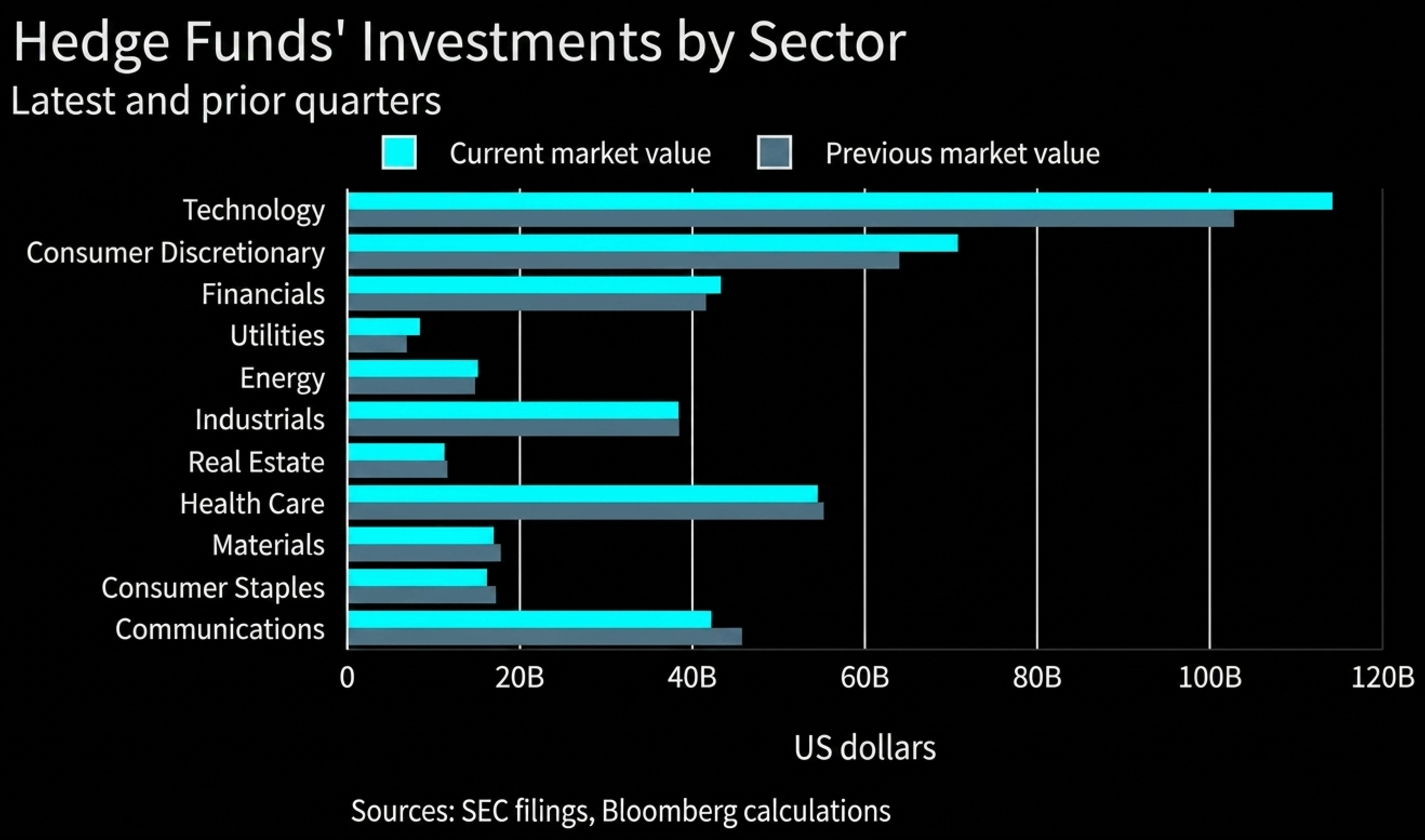
As expected, technology remains the most heavily invested sector. Consumer discretionary is also gaining traction, a sector we’ve been invested in since the start of the year.
We view this 13F exercise as a great way to gauge investor sentiment across large-cap stocks, which has a ripple effect across the entire stock market.
Table of Contents
Hyperscalers & Semis: The AI Trade
1.1 Inside the KOSPI’s Volatility
1.2 The Case for Further Upside
1.3 The Other Side of the AI Trade
What Hedge Funds Are Selling
What Hedge Funds Are Buying
Our Final Thoughts
1. Hyperscalers & Semis: The AI Trade
The AI trade is the hottest trade in the stock market right now.
But the more interesting question is how far it can actually go.
There are two sides to this trade. On one side, you have the companies spending hundreds of billions of dollars building data centers and buying the chips needed to run them. On the other, you have the companies supplying the hardware, memory, networking equipment, and everything else required to make it happen.
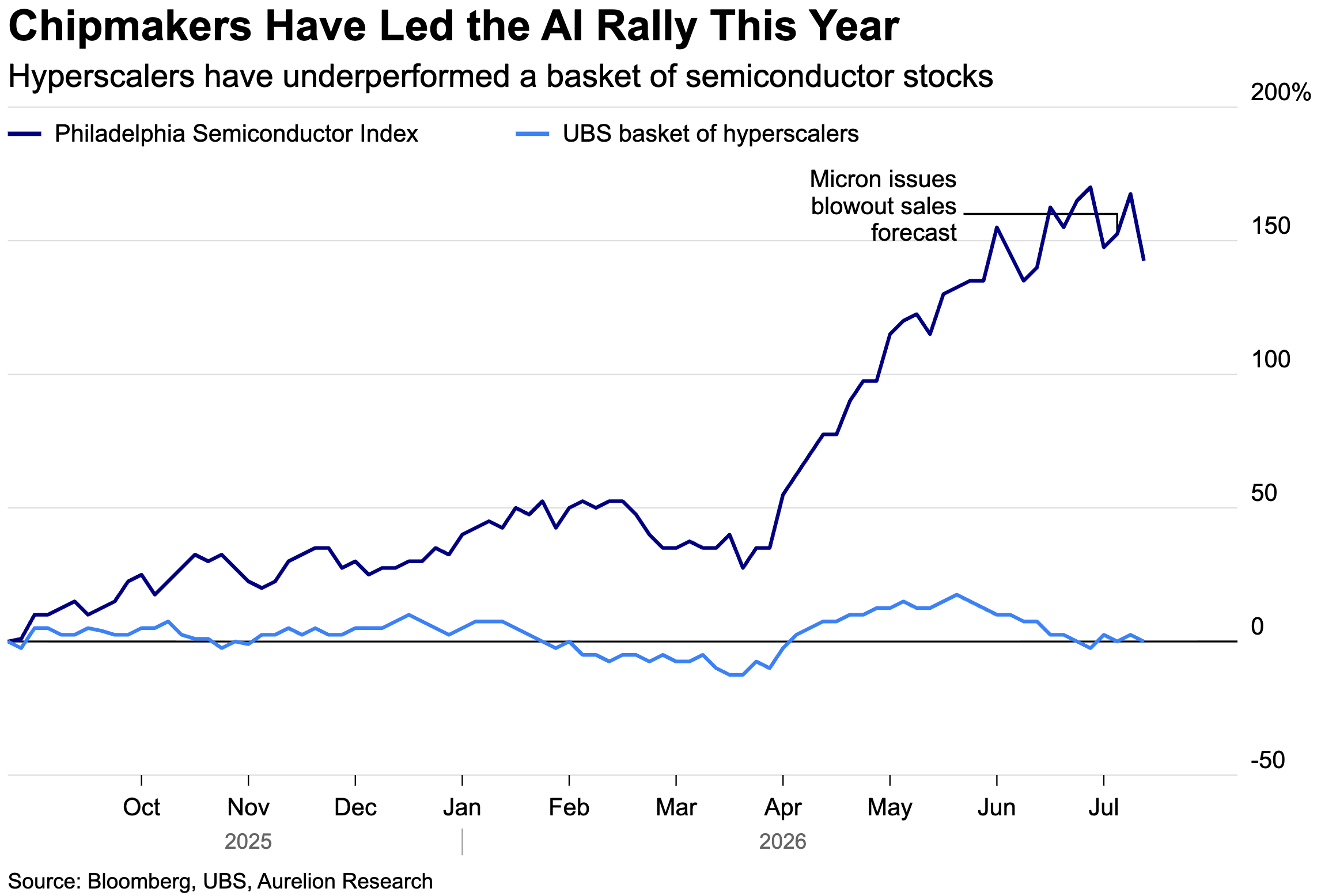
At some point, valuations have to come back down to reality. Unless earnings growth is strong enough to justify them, the numbers simply stop making sense.
How much can the companies building this infrastructure realistically spend? How much can the suppliers earn? And, more importantly, what valuations can investors justify if expectations keep getting higher? If we eventually find that there is a ceiling to how much money can be poured into this buildout, the unwind could get ugly. We are already getting a taste of what that looks like.
1.1 Inside the KOSPI’s Volatility
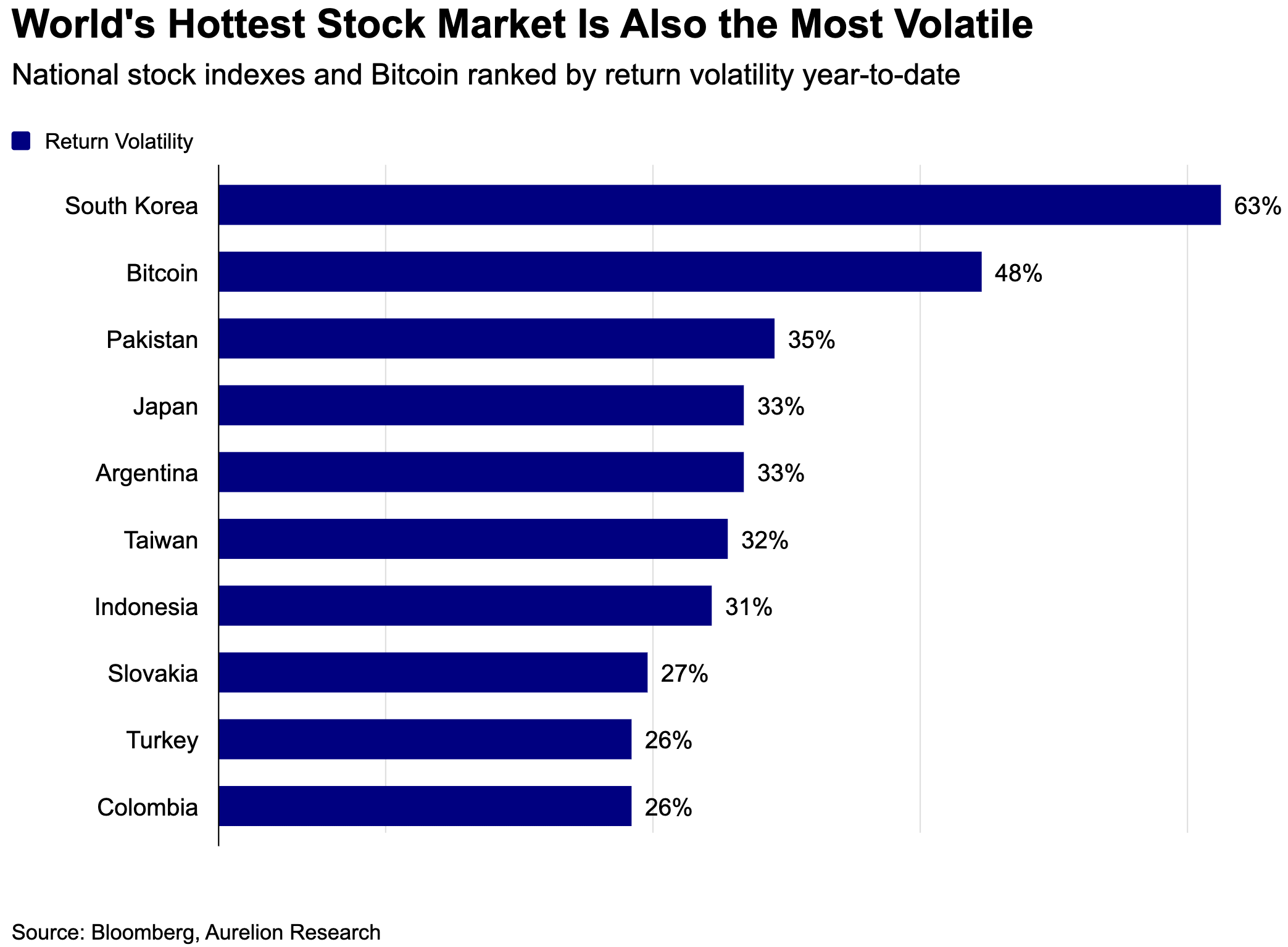
South Korea, home to some of the world’s biggest memory companies, has become one of the clearest examples. Samsung and SK Hynix have been at the center of the AI boom, but the broader KOSPI stock market has been moving like a casino lately: 7% moves up, 7% moves down, huge selloffs, massive rebounds, and even circuit breakers. At this point, we simply stopped trying to count them.
Need proof the KOSPI is volatile? It’s now more volatile than Bitcoin.
Korea’s Retail Trading Phenomenon
South Koreans have always been active in the stock market, but the AI boom has taken that interest to another level, especially around Samsung and SK Hynix.
This year, local investors have put more than 110 trillion won ($77B) into KOSPI stocks, helping companies raise money and fund their expansion. The downside is that this heavy retail buying has also made the market more volatile.
Foreign investors have largely been on the other side of the trade. Many global funds have had to reduce their positions in Samsung and SK Hynix because the two stocks had become too large a part of their portfolios. Foreign investors have sold $115B of KOSPI stocks this year, including more than $40B of SK Hynix.
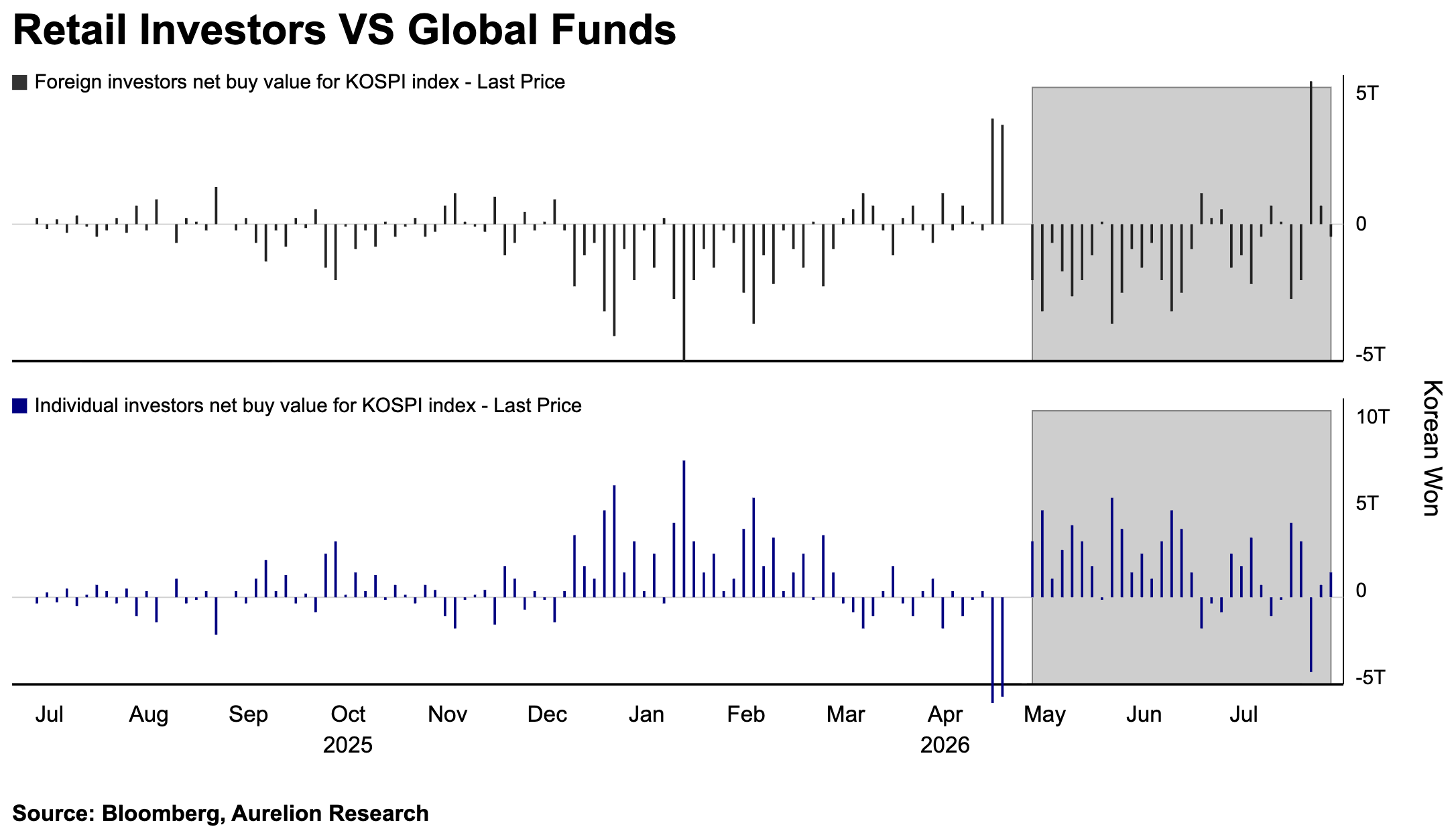
South Korean retail investors are known for chasing returns and moving with the crowd. Rising prices can attract even more buyers who fear missing out, while sharp declines can trigger a rush for the exits. Institutional investors tend to be more patient, paying more attention to a company’s underlying value.
Leverage Adds Fuel to the Fire
Leveraged ETFs can magnify both gains and losses, and their popularity has exploded. Goldman Sachs estimated that assets in Korean leveraged ETFs rose from around $5B at the start of the year to more than $40B by late June.
That surge eventually began to unwind. As stocks fell, some investors were forced to sell, putting further pressure on prices and reducing ETF exposure. By July 29, JPM estimated that hedge funds had completed 90% of their deleveraging, suggesting that much of the forced selling was already behind the market.
Lastly, the KOSPI is unusually concentrated.
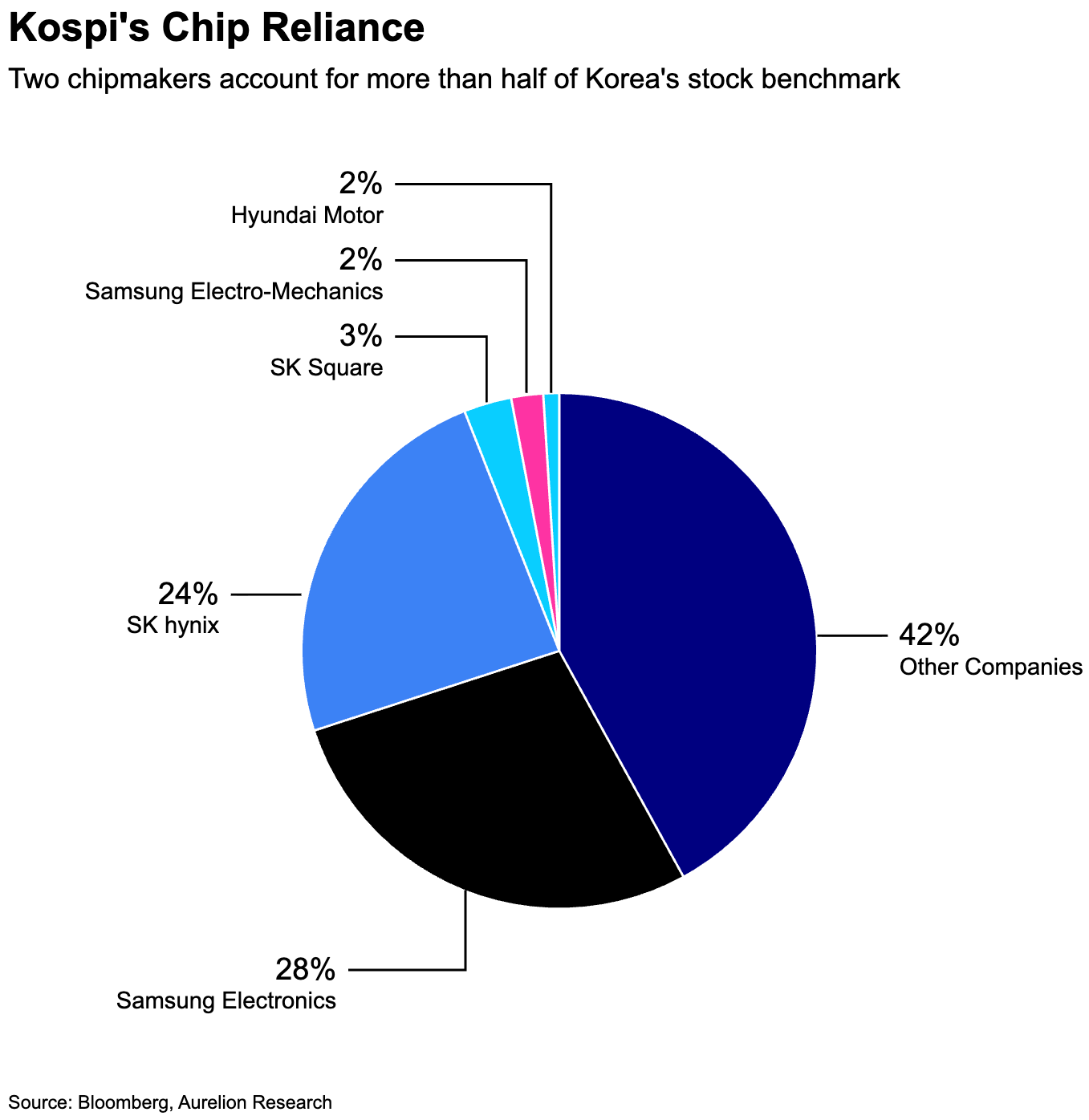
Samsung Electronics and SK Hynix, the country’s two major memory chipmakers, account for more than half of the KOSPI. That leaves the index heavily exposed to the semiconductor cycle. When memory demand is strong, the KOSPI can benefit significantly. When the cycle turns, the impact works both ways.
That doesn’t mean the AI trade is over. Far from it. But can spending, earnings, and eventually cash flows grow fast enough to justify the expectations already priced into these companies? That is the question we will answer next.
We recently added a high-quality, undervalued company to the Aurelion Index that we believe could benefit significantly from all this volatility.

1.2 The Case for Further Upside
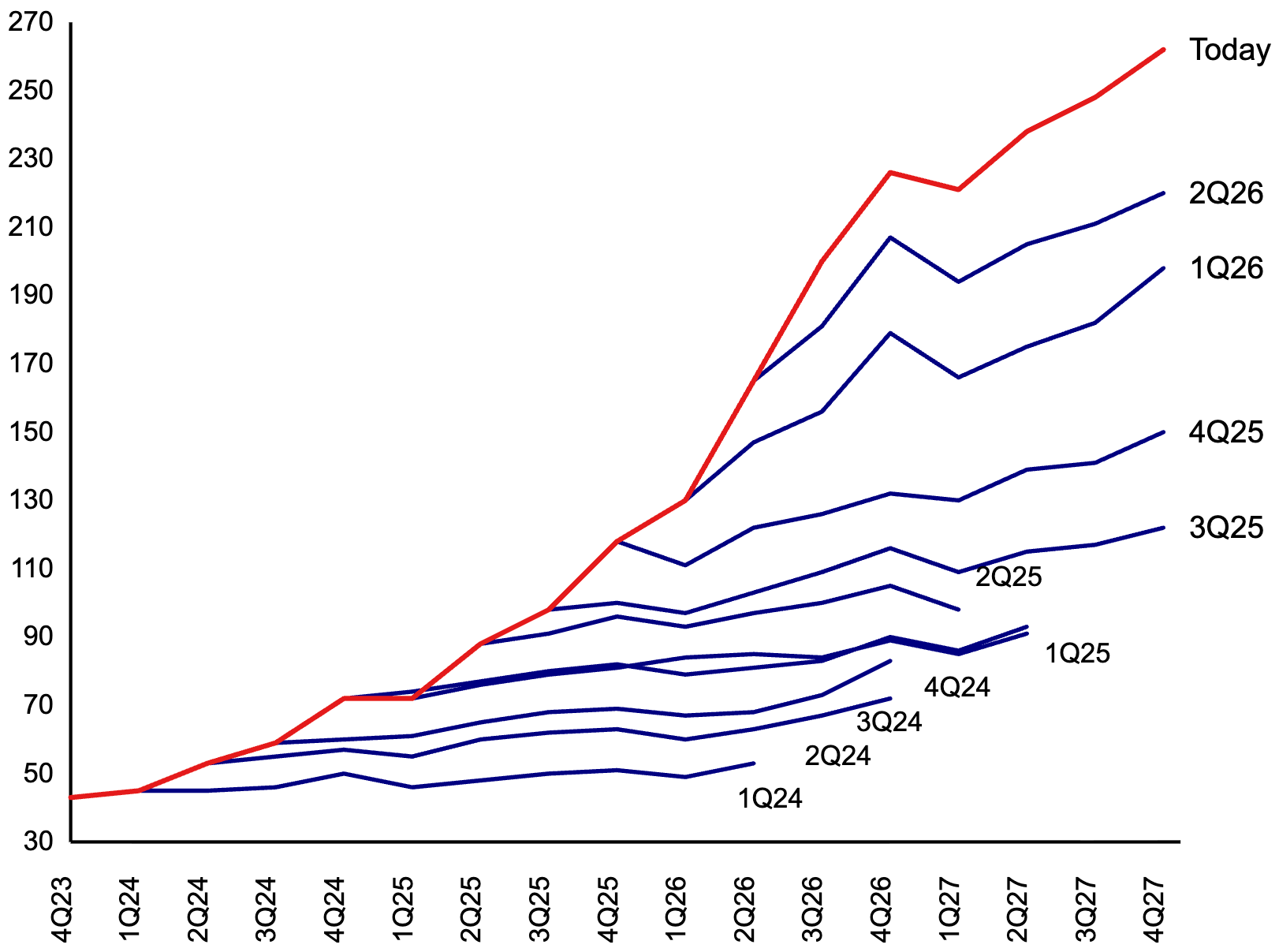
The main question on everyone’s mind is whether hyperscalers and other AI-related companies can continue expanding, scaling, and growing their businesses at the pace the market currently expects. So far, spending has consistently moved in one direction. Capex estimates have been raised every quarter since Q4 2023, reflecting just how quickly expectations around AI infrastructure have grown.
Hyperscaler Capex Estimates Were Raised Every Quarter
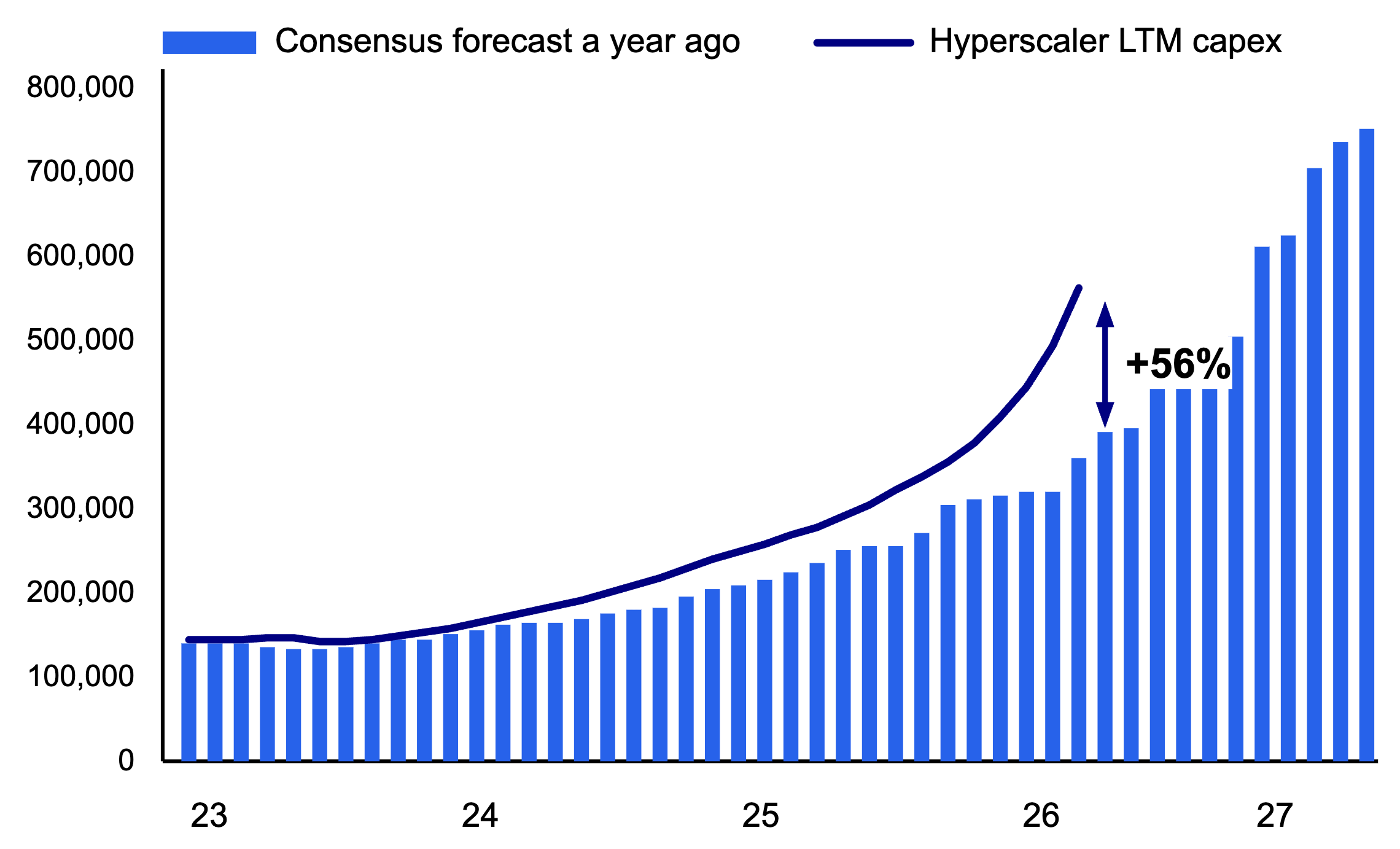
And even when we look at consensus estimates, they have consistently fallen short. Hyperscaler capex has come in more than 56% above what the market was forecasting a year ago, showing just how quickly expectations have been moving higher. More importantly, this trend does not appear to be slowing, with spending estimates continuing to be revised upward.
Hyperscaler Capex Has Come in 56% Above Consensus
We recently added a high-conviction copper company to the Aurelion Index that we believe will be one of the biggest beneficiaries of the surge in AI infrastructure spending.

1.3 The Other Side of the AI Trade
There are always two sides to the story. And yes, we see a real risk that hyperscalers and semiconductor companies could eventually struggle to keep up with the market’s expectations. That does not mean growth is coming to an end.
We believe one of the bigger issues is that EPS growth could slow while expectations continue to rise. When the bar keeps moving higher, companies can deliver great results and still disappoint investors simply because they were not “good enough” relative to what was already priced in.
This is where we think volatility could really pick up over the next few quarters.
Take Micron (MU) as an example.
In a more normal market, missing consensus might have meant a 5–10% decline. Today, with expectations and positioning so high, the same miss could easily result in a 15–20% drop. The fundamentals may not have changed dramatically, but the market’s reaction can be very different when the bar is this high.
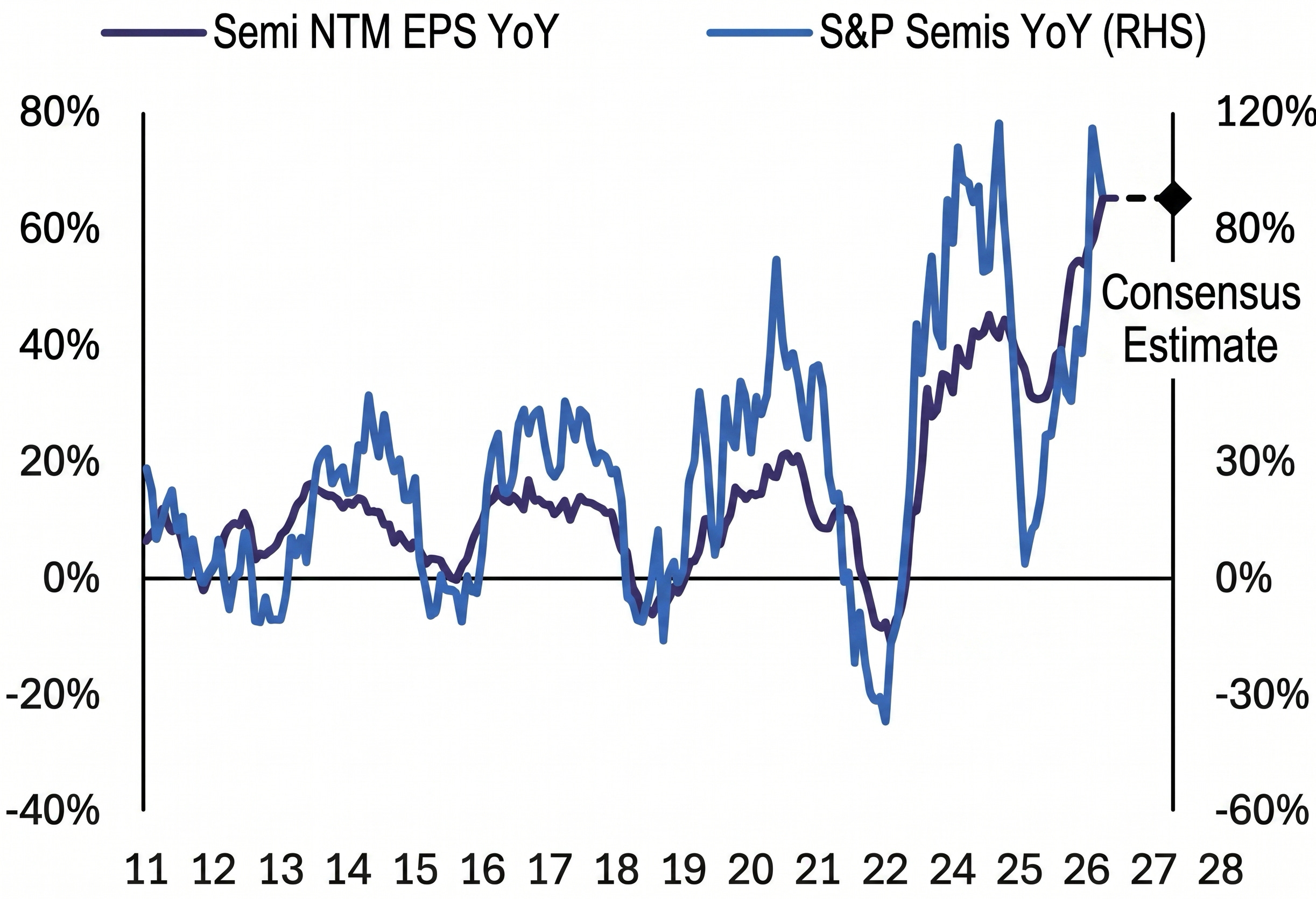
Semiconductor EPS growth is expected to peak at around 51% in Q2 2027. That is still a long way out, especially in a market where things can change very quickly, so we would not put too much weight on a forecast that far ahead.
Semis’ Contribution to S&P EPS Growth to Peak at 51% in 2Q27
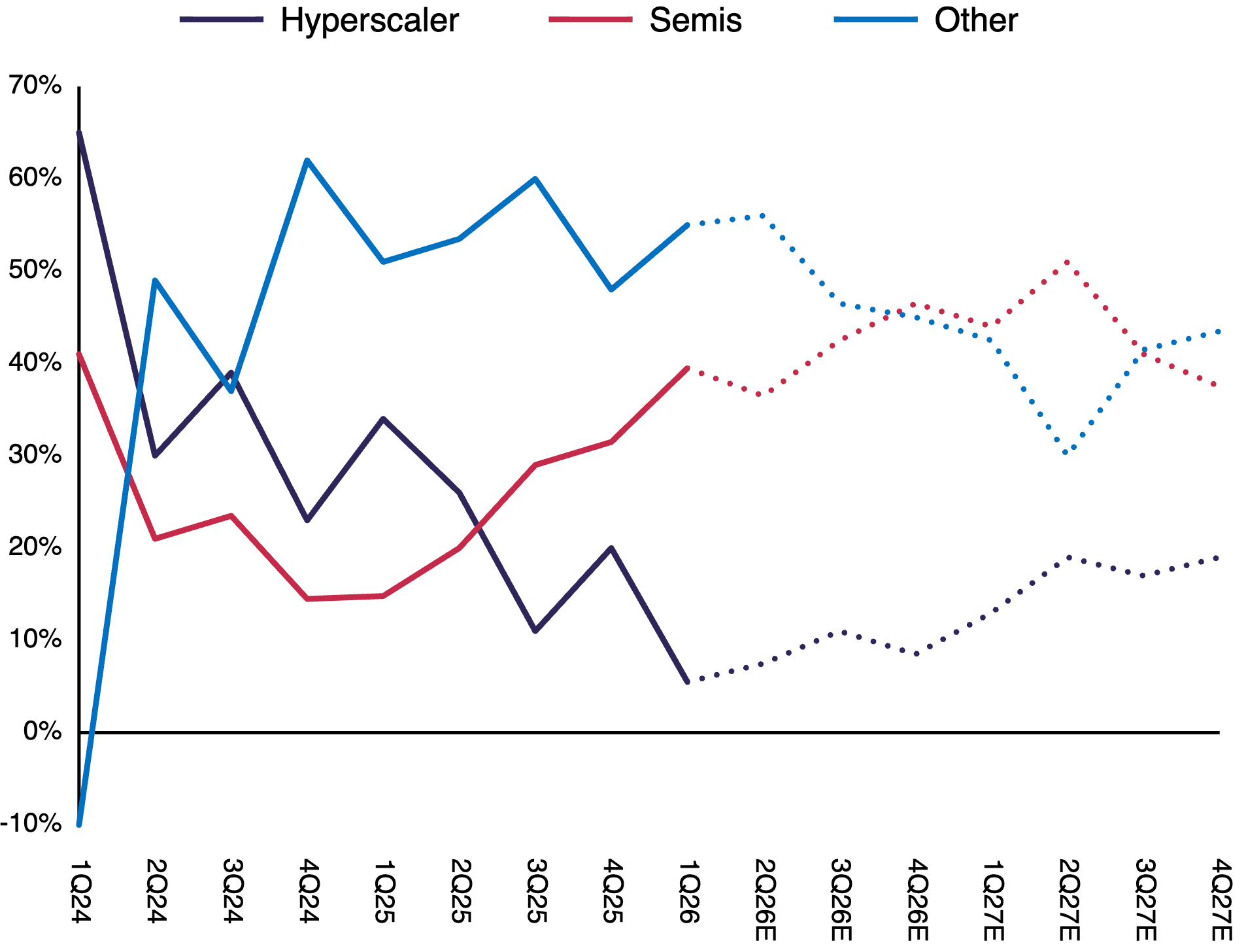
Still, it is worth keeping in mind because the market is already pricing in very strong earnings growth. If that growth starts to slow, even while earnings continue to rise, the reaction could be very different, and things could get ugly.
We think this is one reason hyperscalers could eventually start to moderate their spending plans, especially after the recent underperformance across the sector.
If the market suddenly starts questioning (if it is not already) whether all this additional capex can generate enough incremental earnings and cash flow, companies may become more cautious about the pace of future spending.
Semis Returns Are Already Pricing in Slower EPS Growth
At the same time, Return on Incremental Invested Capital (ROIIC) has fallen back to its 10-year average of around 21–22%.
Hyperscaler ROIIC: Back to the 10-Year Average
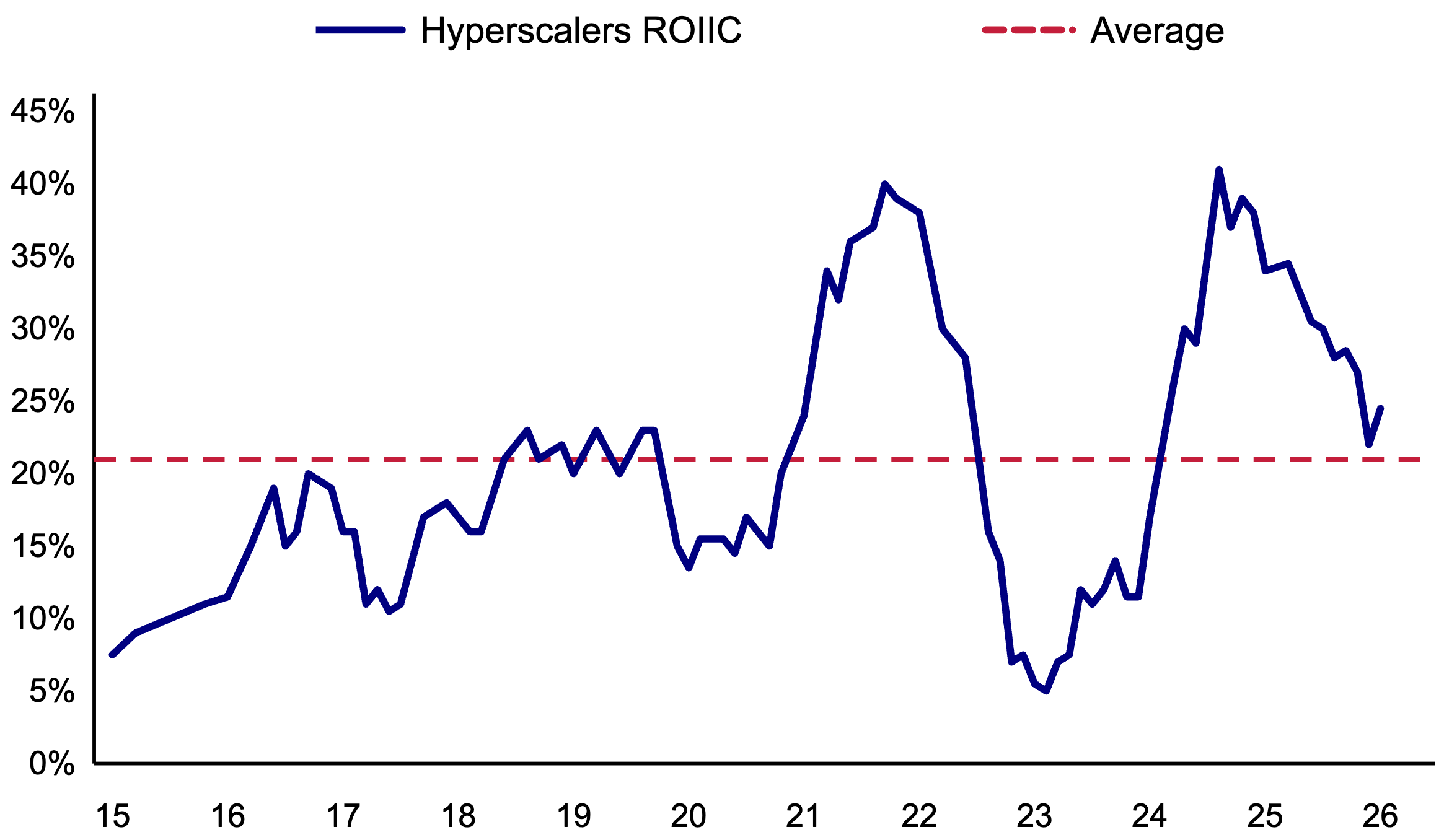
That is important because it suggests the return on each additional dollar invested is no longer improving. If that continues, it becomes harder to justify increasing capex at the same pace. They can keep spending more, but at some point, the returns need to make sense. The only question is when.
Earlier in May, we wrote a special article on SpaceX and the other big upcoming IPOs.

2. What Hedge Funds Are Selling
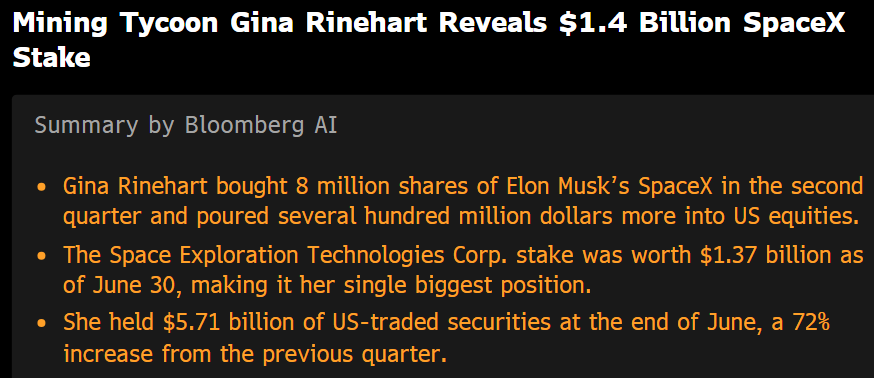
The first interesting finding was Gina Rinehart’s massive bet on SpaceX. Australia’s richest person invested around $1.4B in the company, making it far too significant to ignore. She does not run a hedge fund, so it technically falls outside our 13F analysis, but a bet of that size from one of Australia’s most prominent people was worth mentioning.
Oracle (ORCL)
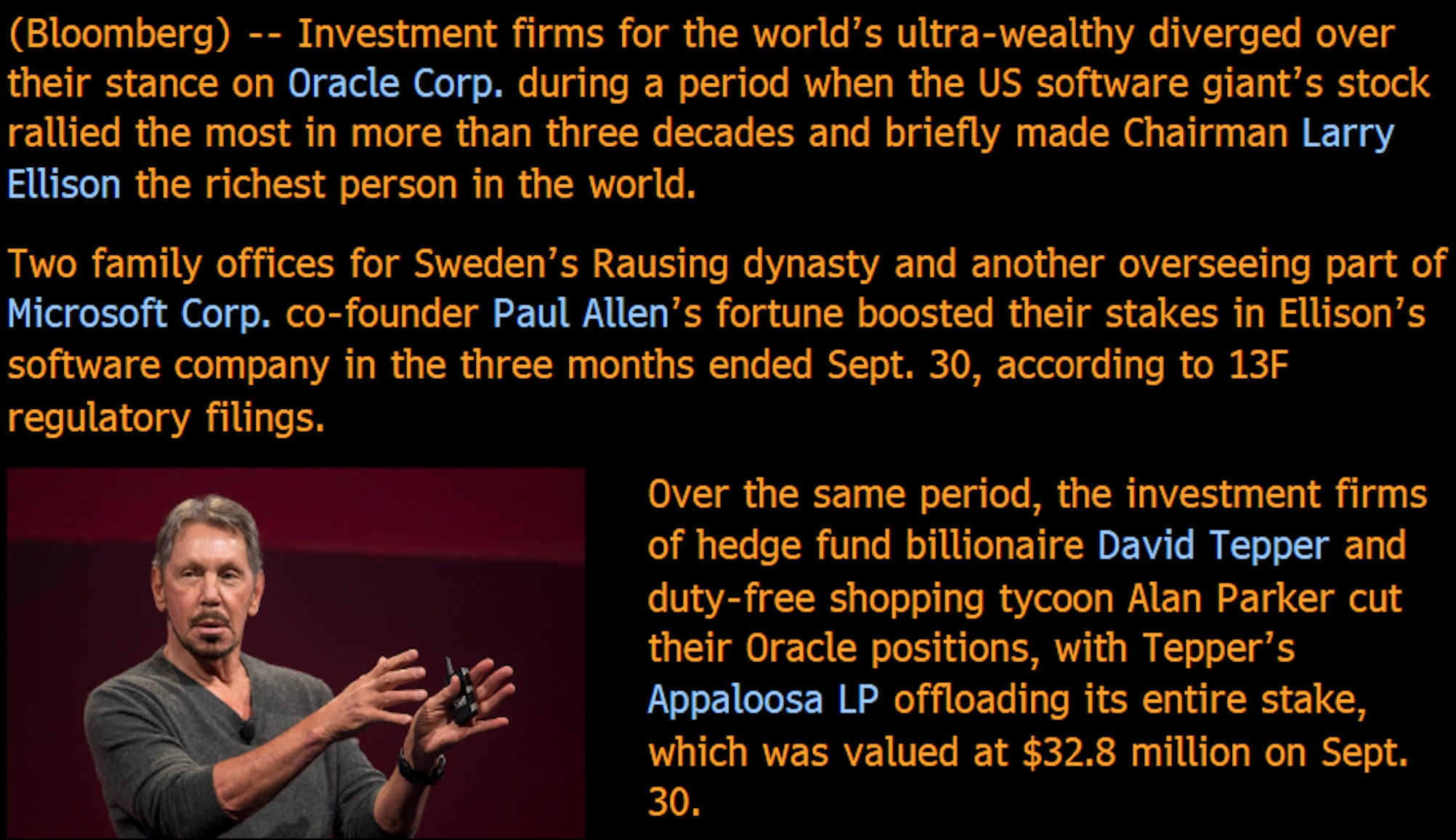
Interestingly, while most investors have been getting out of Oracle, the Swedish Rausing family, which manages its wealth through an investment fund, has been adding massively to the position. That said, David Tepper exited it entirely.
Google, Amazon, and Nvidia
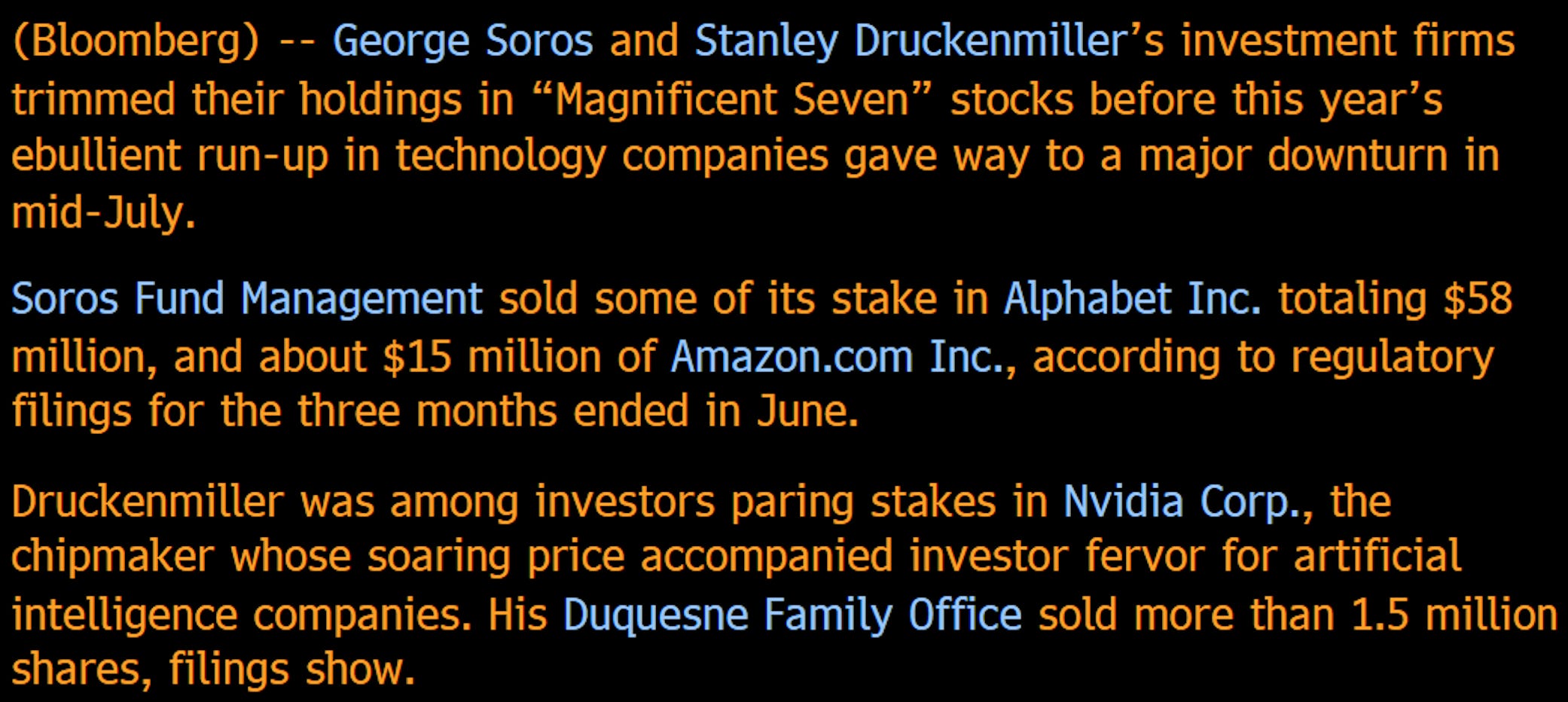
We saw the famous investors Soros and Druckenmiller trimming some of the Magnificent Seven names, including Google, Amazon, and Nvidia.
For those looking for a way to benefit from rising memory prices and the broader semiconductor buildout without taking on the same risks as the companies actually making the chips, this is our favorite way to play the trend.

3. What Hedge Funds Are Buying
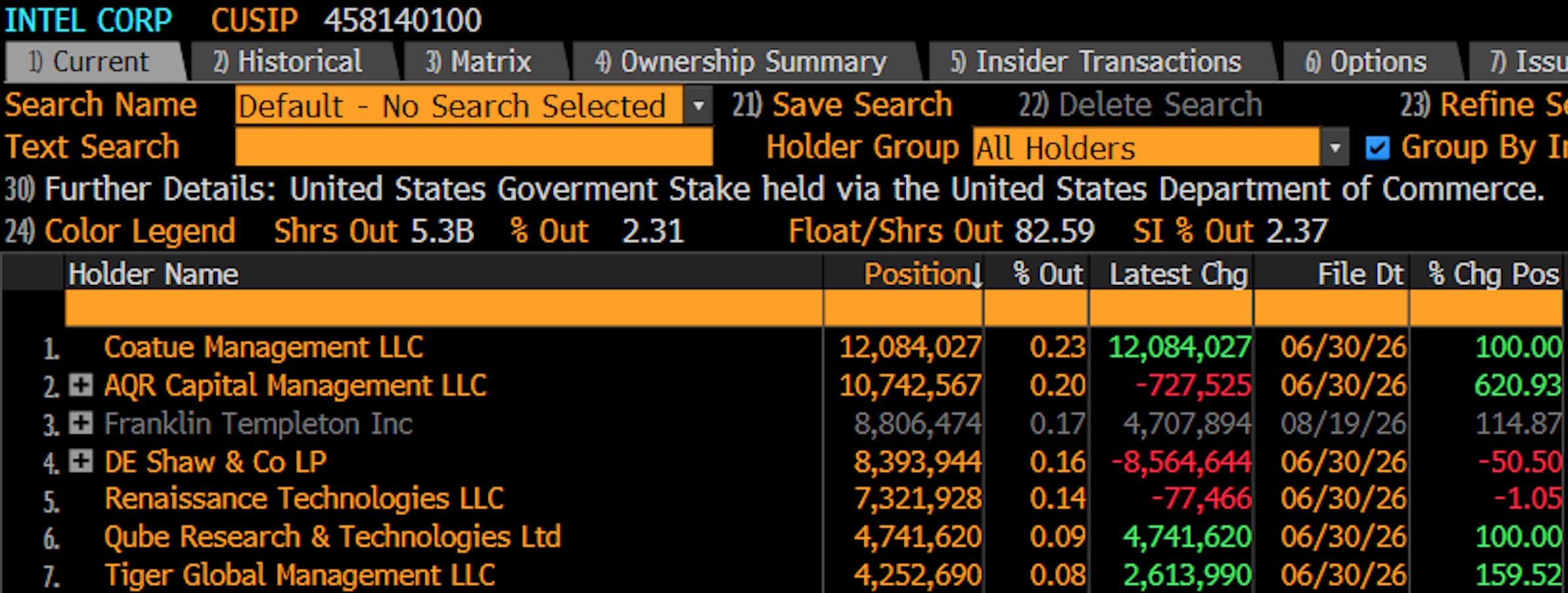
Intel (INTC)
Intel is particularly being bought by some of the “big guys”, including Coatue, AQR, and Tiger Global. That is interesting to us, especially since the shares are now trading near their lowest levels in recent months.
Nebius (NBIS)
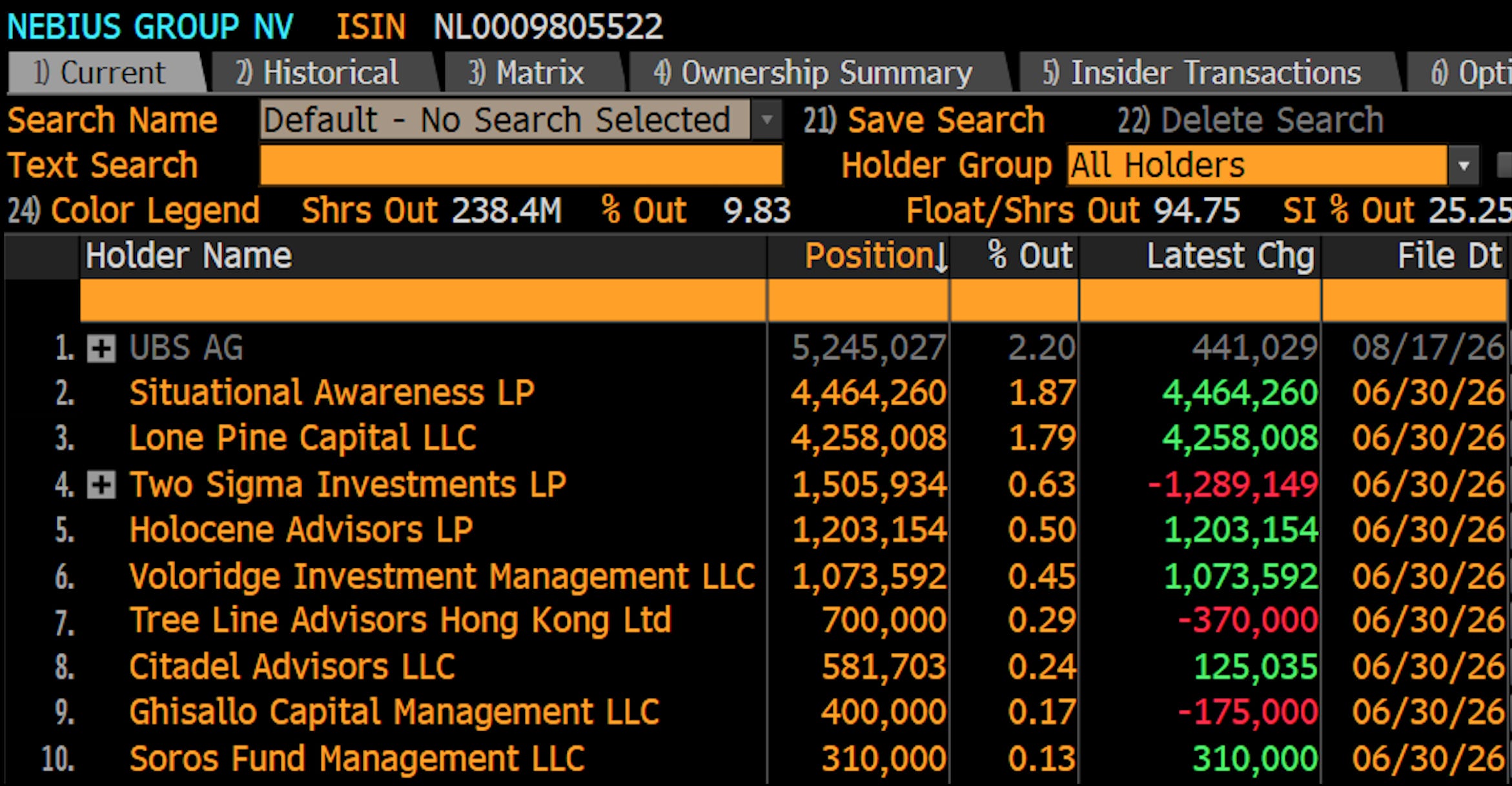
Nebius is no surprise here. Almost everyone seems to be buying it as the stock has quickly become one of the hottest momentum names in the market.
Nvidia (NVDA)
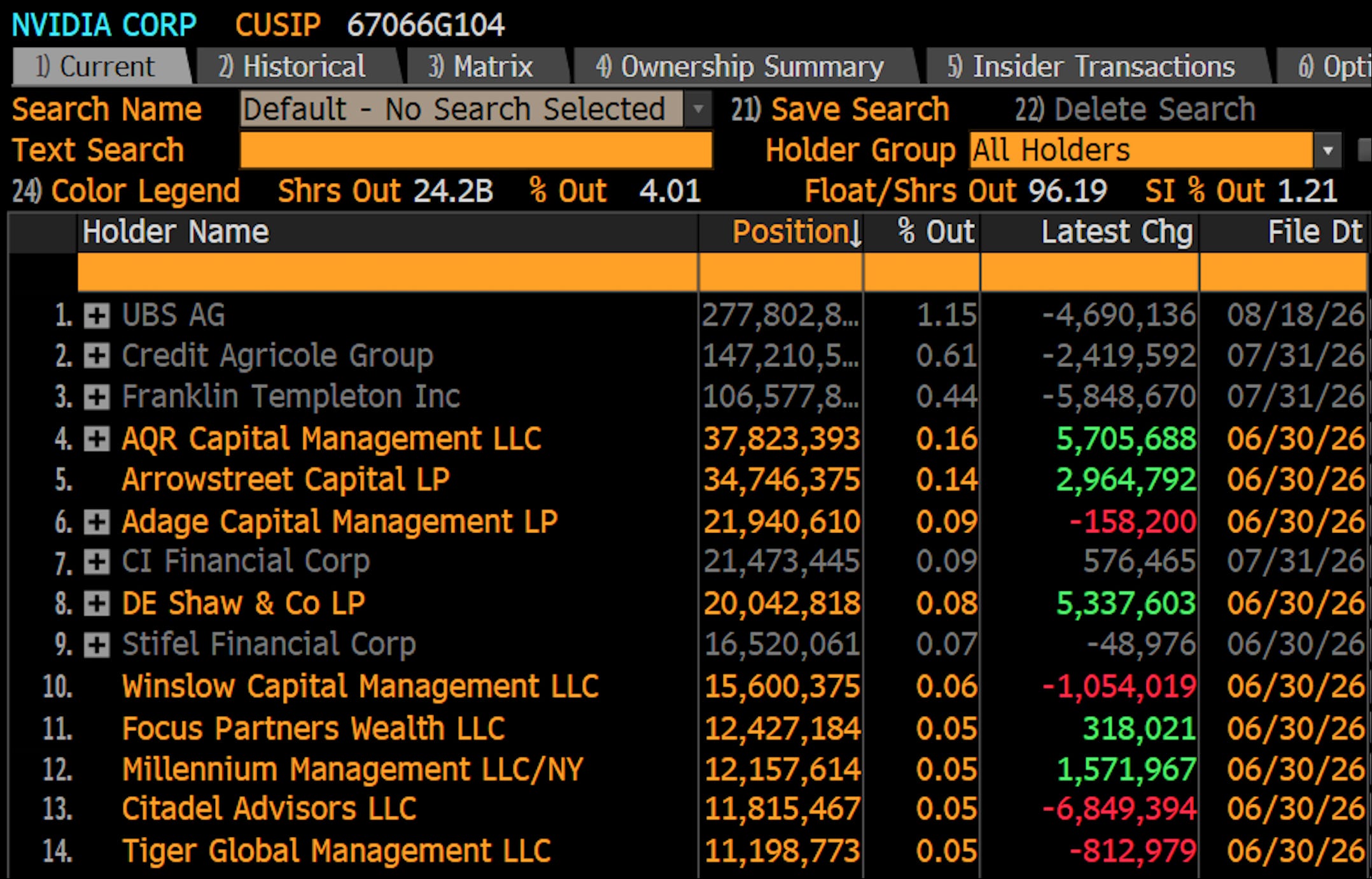
Is interesting as well. Sentiment seems pretty divided, with some big funds making significant buys while others are taking large positions off the table.
SanDisk (SNDK)
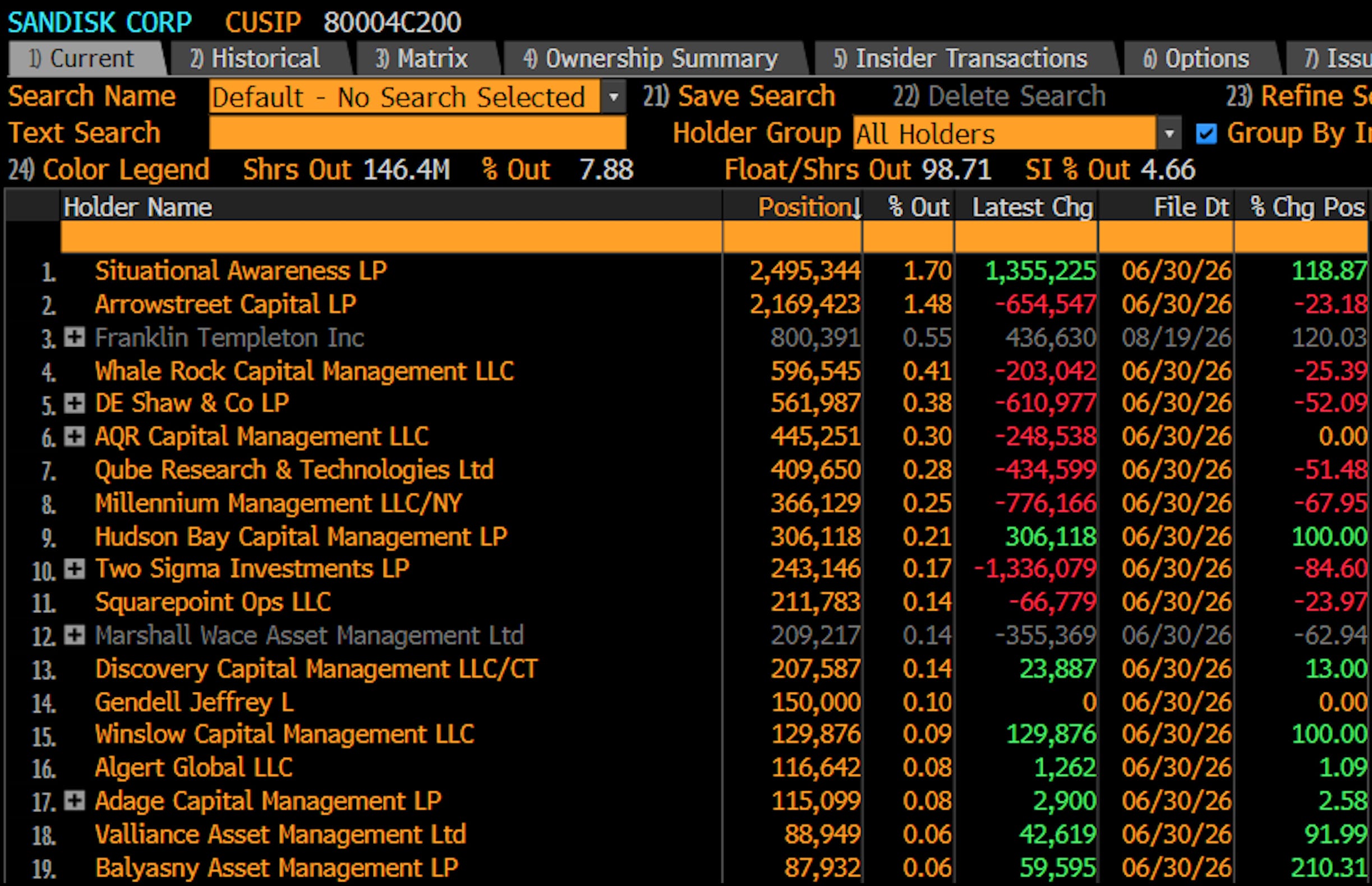
Is seeing a major selloff, which isn’t too surprising given everything that happened with Situational Awareness and its massive position in the stock.
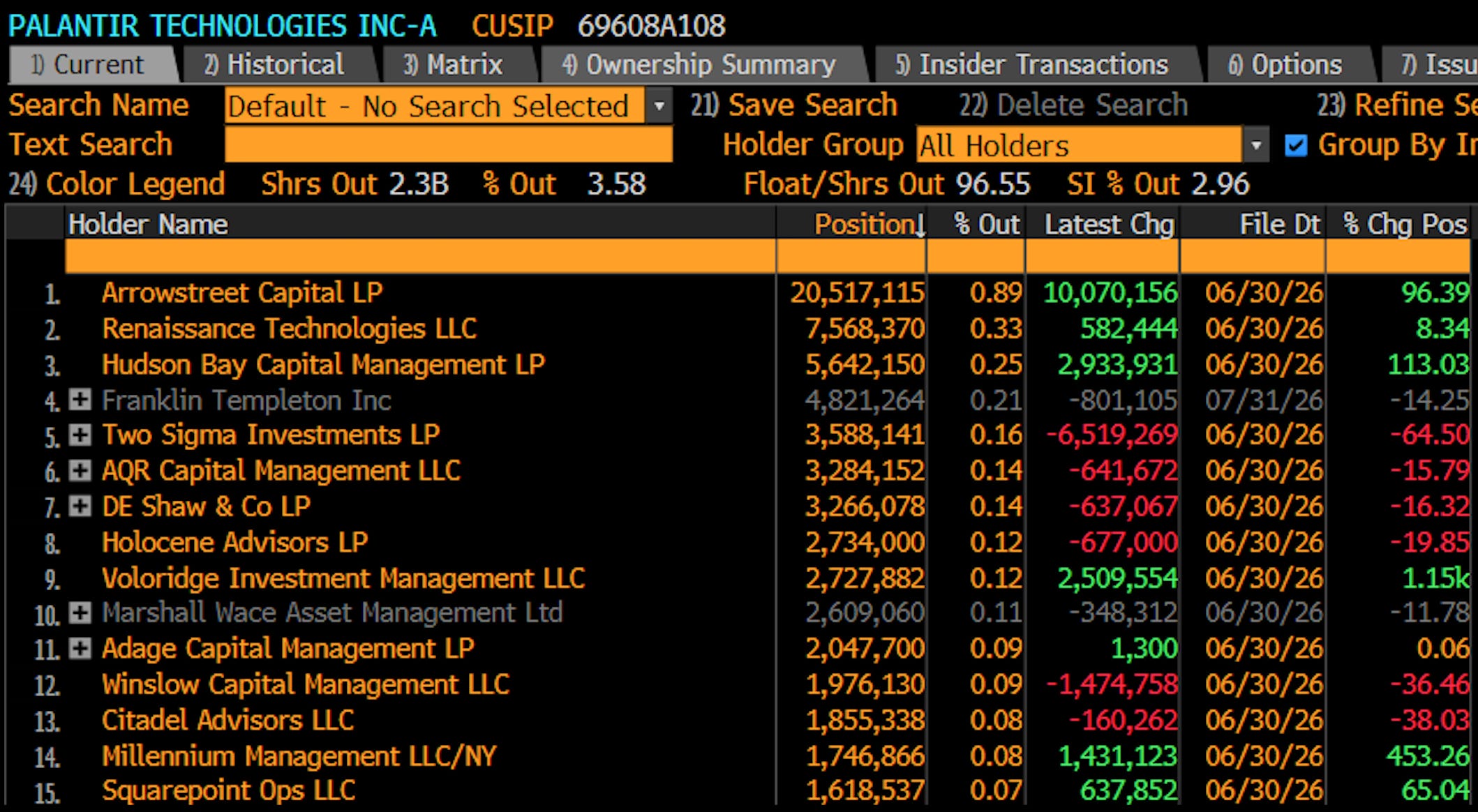
Palantir (PLTR)
Almost a 50/50 split between buys and sells for PLTR, with some big funds getting in while others are trimming. It just shows how divided sentiment is around the stock right now.
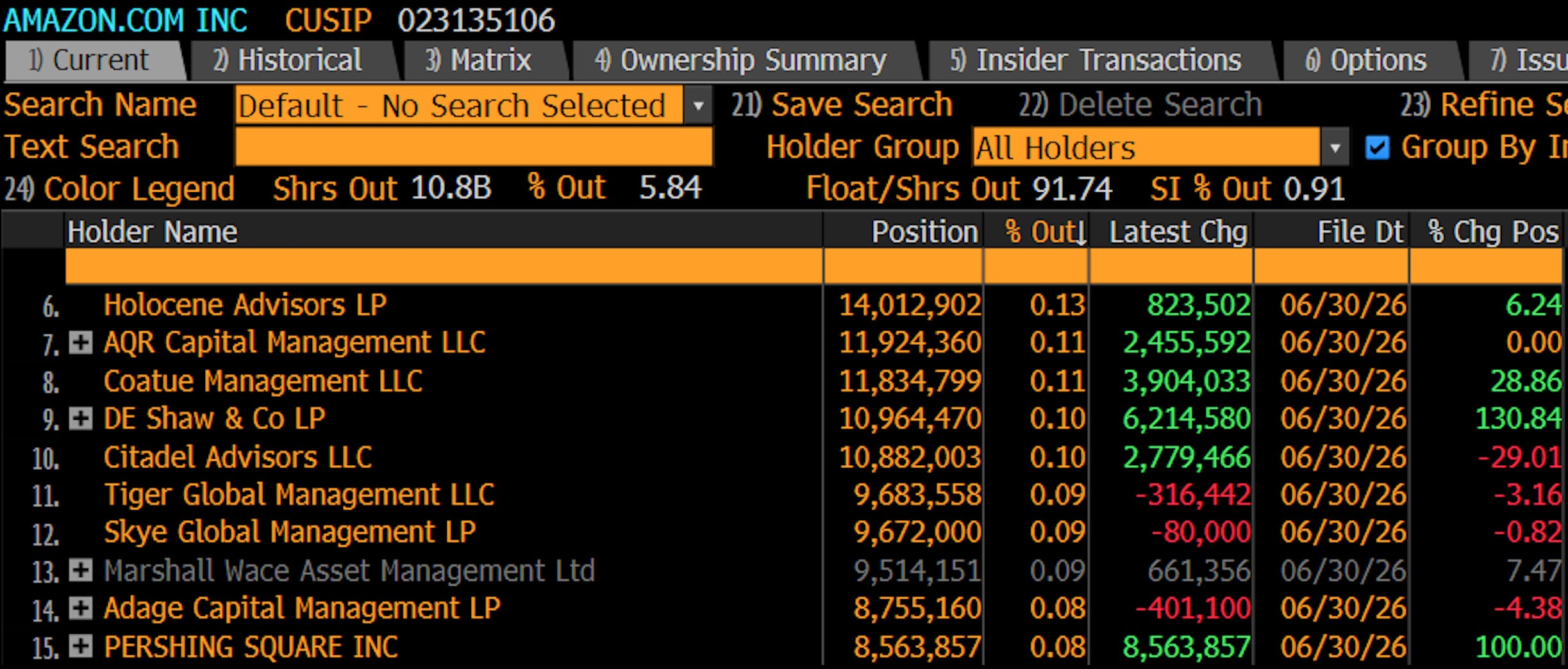
Amazon (AMZN)
Way more buys than sells, which lines up with the bullish comments we’ve been hearing about the stock and the view that it looks undervalued at current levels.
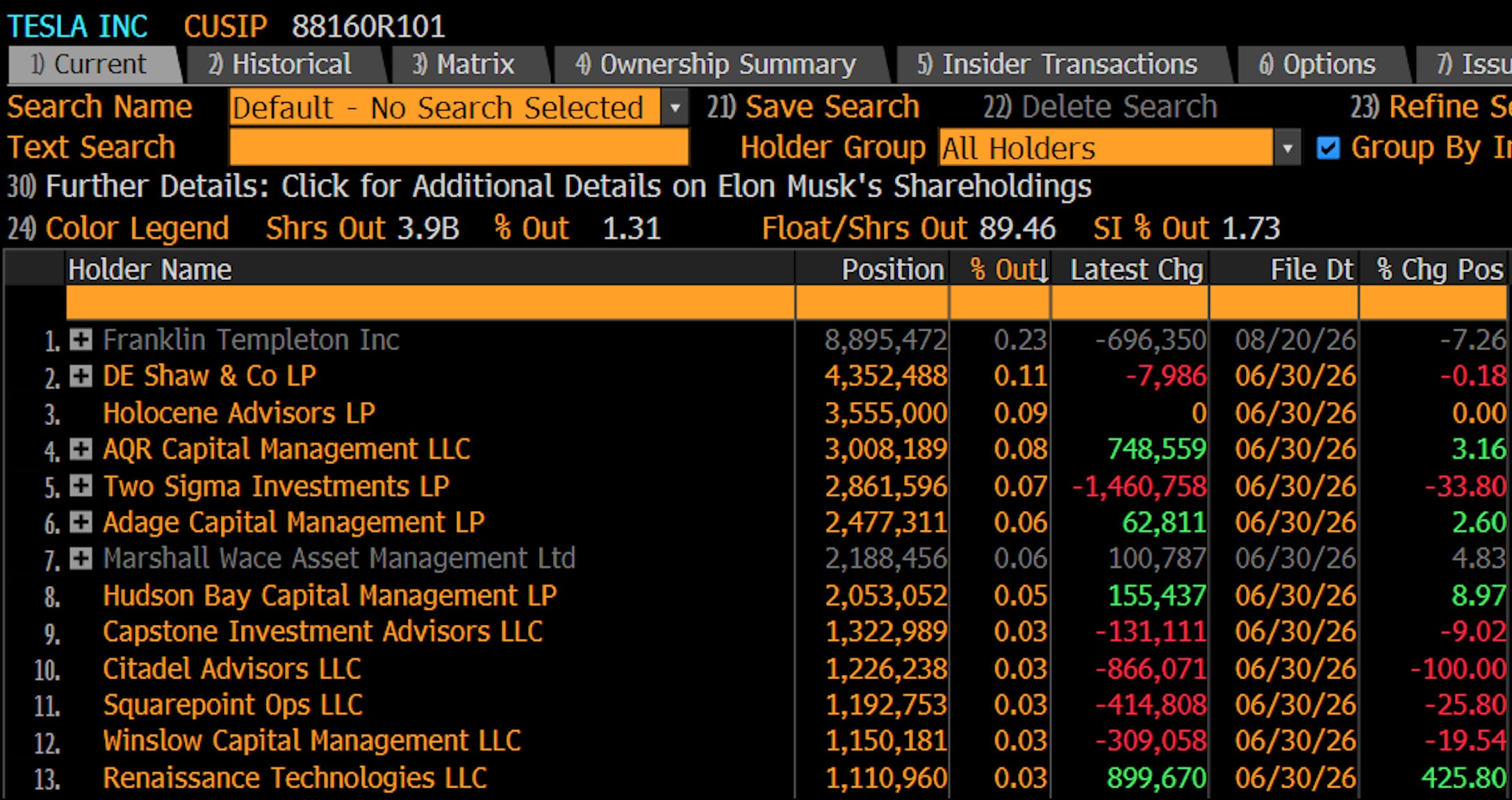
Tesla (TSLA)
Tesla is a company that is hard to figure out right now. It almost has a cult-like following among many investors, but institutions seem to be taking a more cautious approach for now, with several big funds trimming their positions.
Microsoft (MSFT)
Many funds are getting in, similar to Amazon. The stock is being bought because it looks relatively cheap compared with the memory momentum names, especially when you look at the earnings and cash flow these companies could generate.
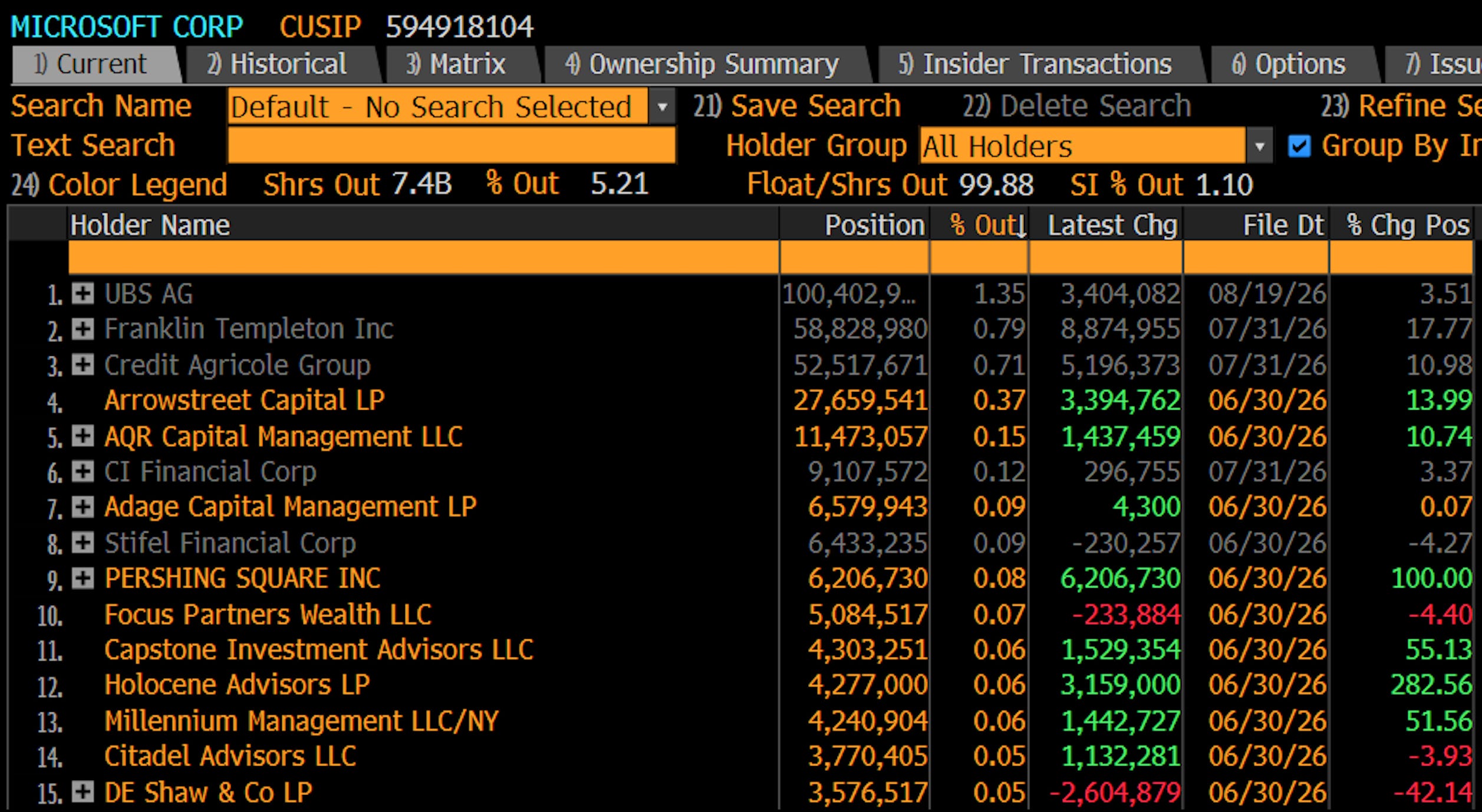
Alphabet (GOOGL)
Not much to say about Google. It’s a great company, but there isn’t much action around it right now, with most of the attention focused on Microsoft and Amazon.
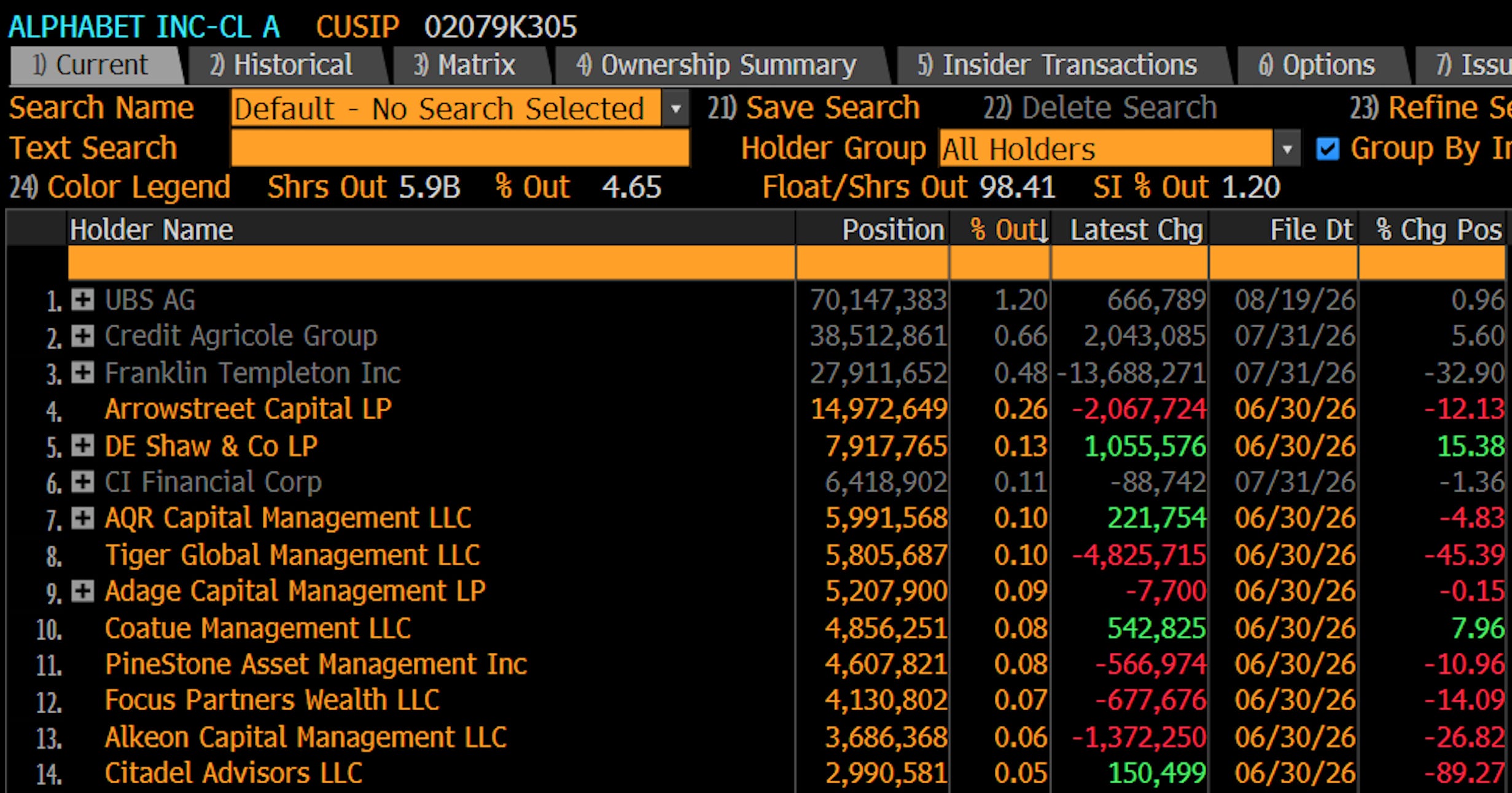
Meta (META)
Interesting to see Bill Ackman getting into this one.
He doesn’t make many new bets, so it could be an interesting one to watch.
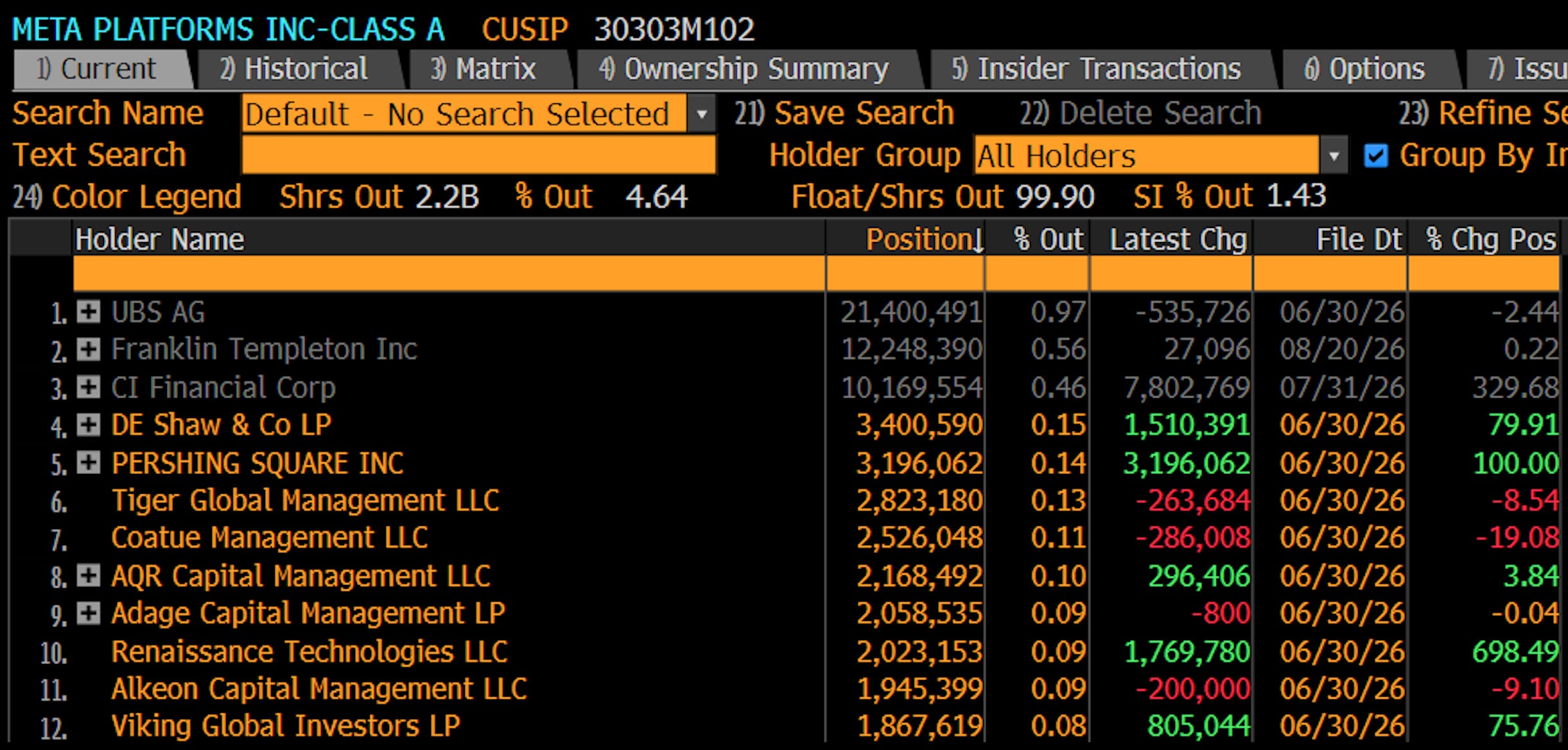
Arista (ANET)
Arista is a Silicon Valley company we have yet to meet with management, but it’s definitely one we want to take a closer look at. It’s a high quality business.
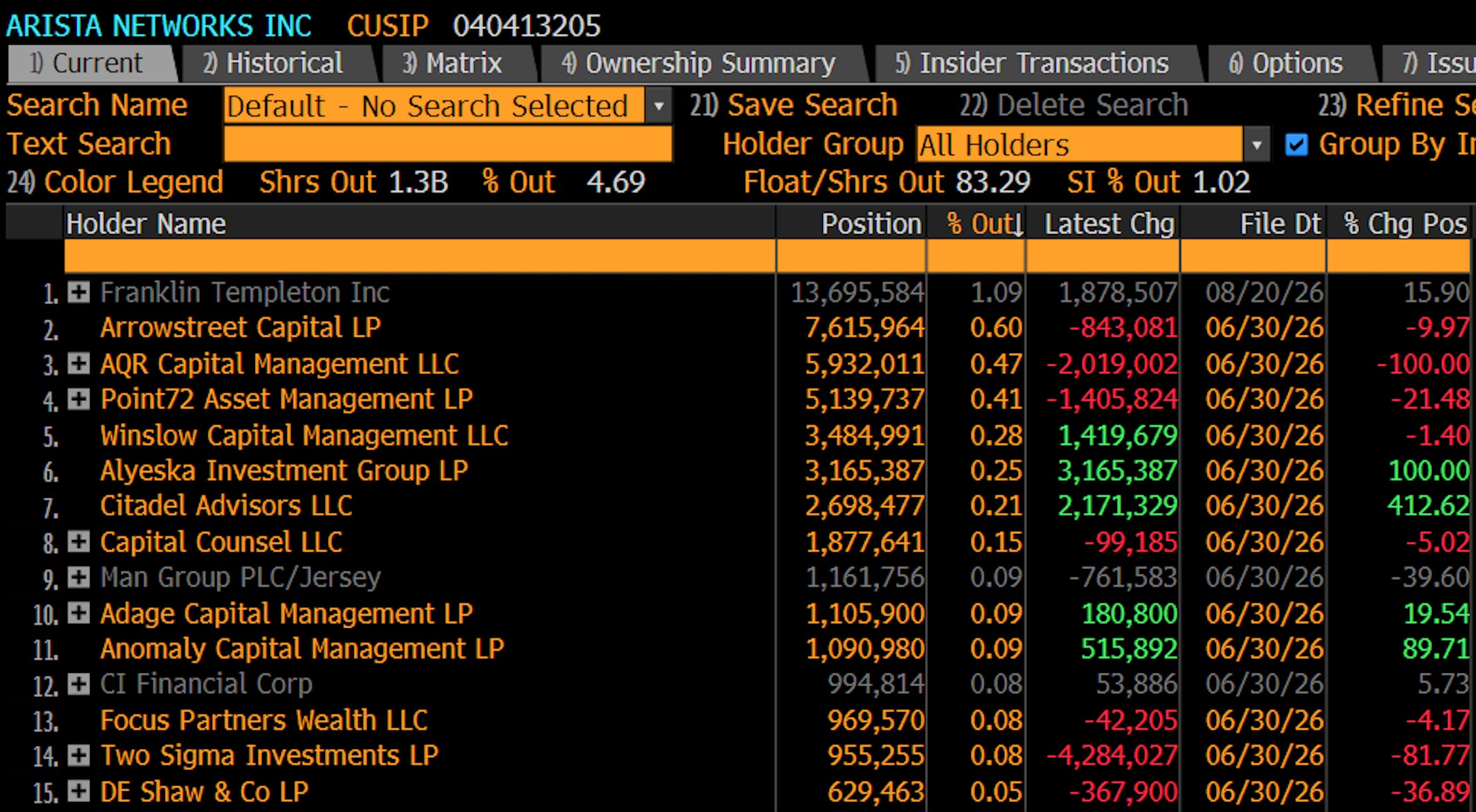
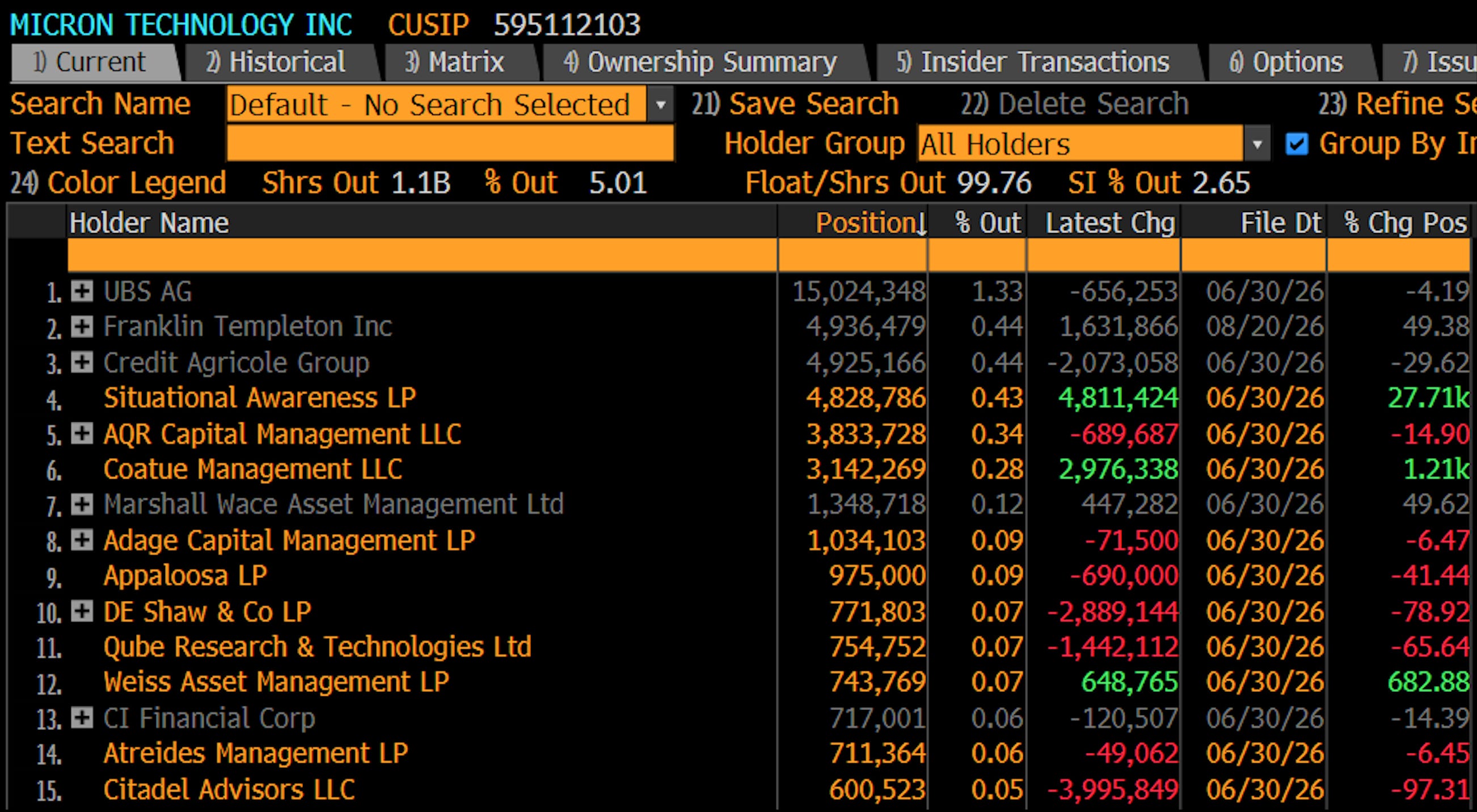
Micron (MU)
This one is getting punished by funds that may think it ran too far, too fast. On our end, we think it’s a business with plenty of potential over the long term.
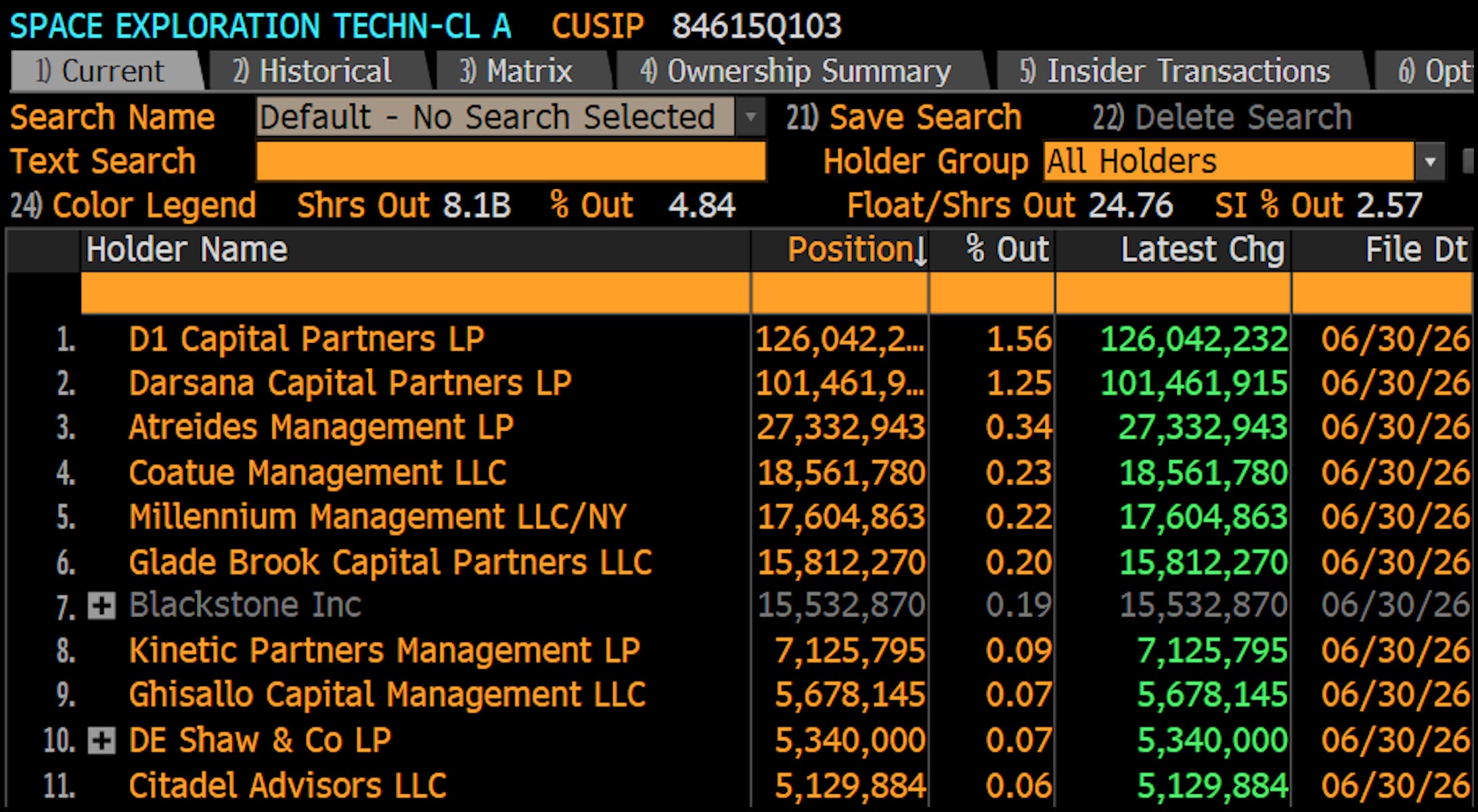
SpaceX (SPCX)
We kept SpaceX for last because it is seeing some of the biggest inflows right now, with several major investors building massive positions over the past quarter.
Per Hedge Fund
Here, we show what almost all of the major hedge funds bought this quarter.
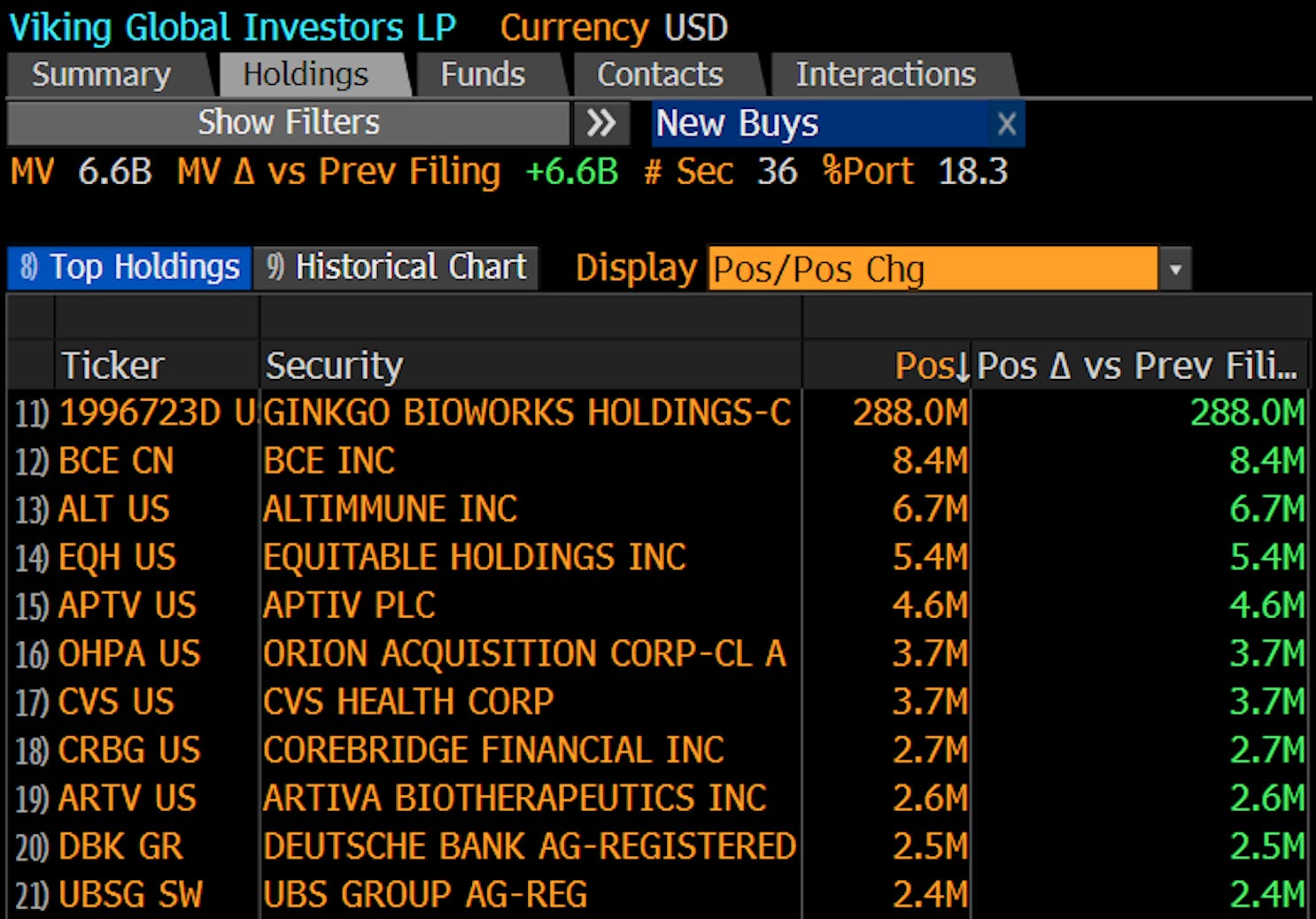
Viking Global bought BCE, a Canadian telecom company we know very well that has been pretty much left for dead. BCE has been under pressure for a while, so seeing Viking step in is an interesting bet on a potential turnaround.
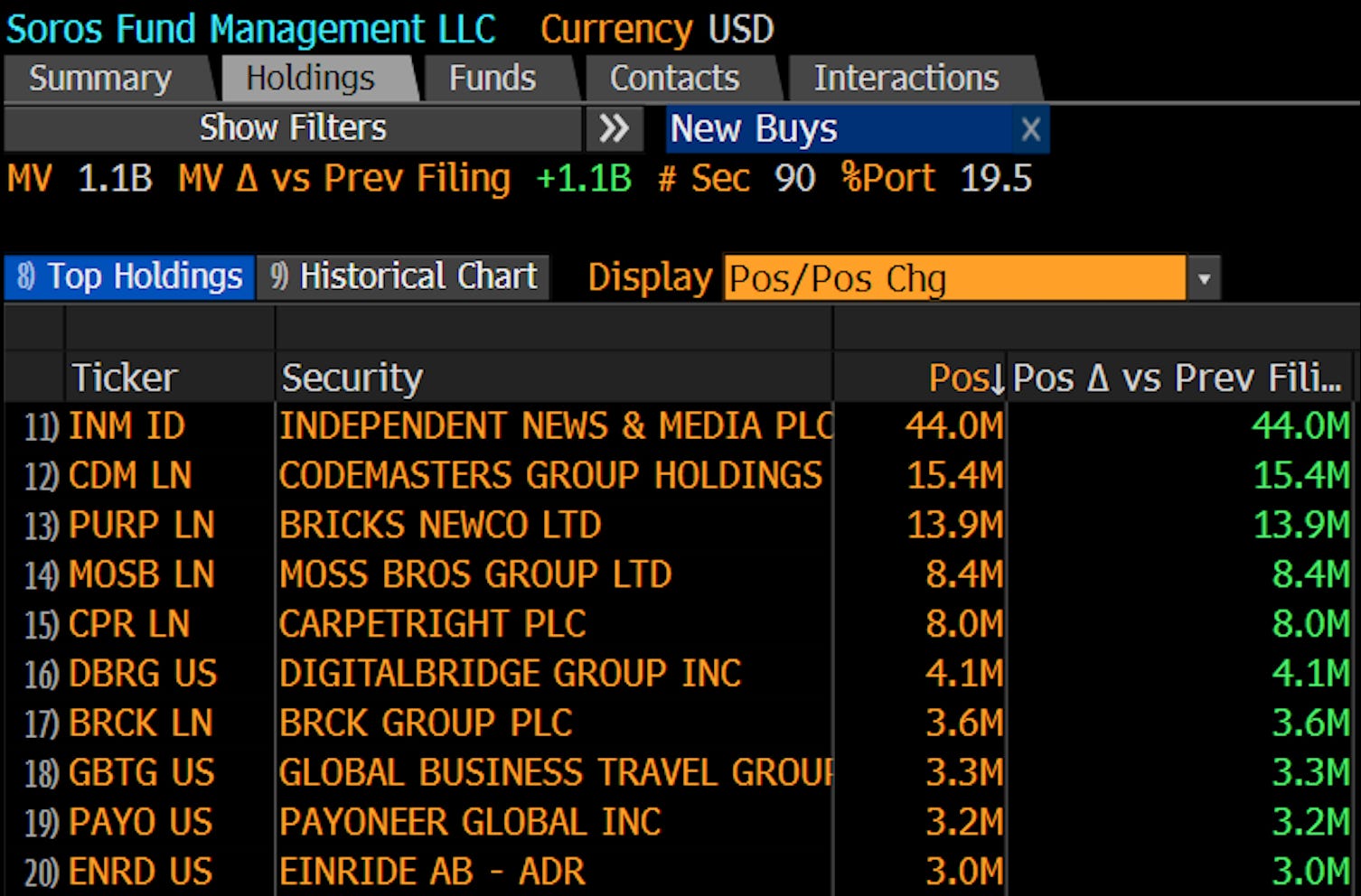
Soros Fund has some interesting names, to say the least. The portfolio is filled with lesser-known companies rather than the usual mega-cap names, which makes it look like they are searching for more alpha and less crowded ideas.
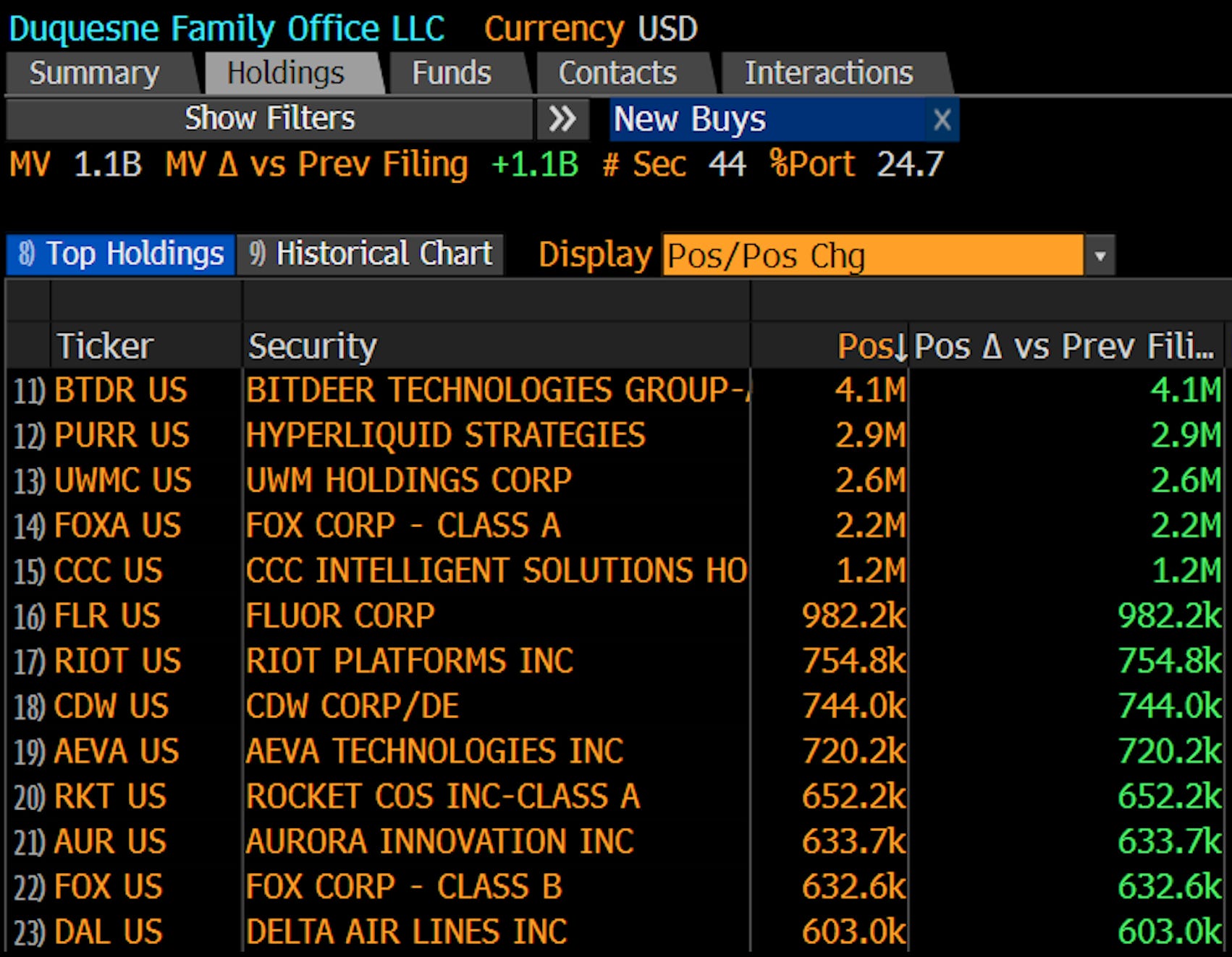
Druckenmiller’s fund (Duquesne) has some interesting names. PURR stands out given how volatile and momentum-driven the stock is, while RKT and RIOT also fit that higher-risk profile. On the other hand, DAL and FOX were more surprising to us and are names we think could be worth looking at more closely.
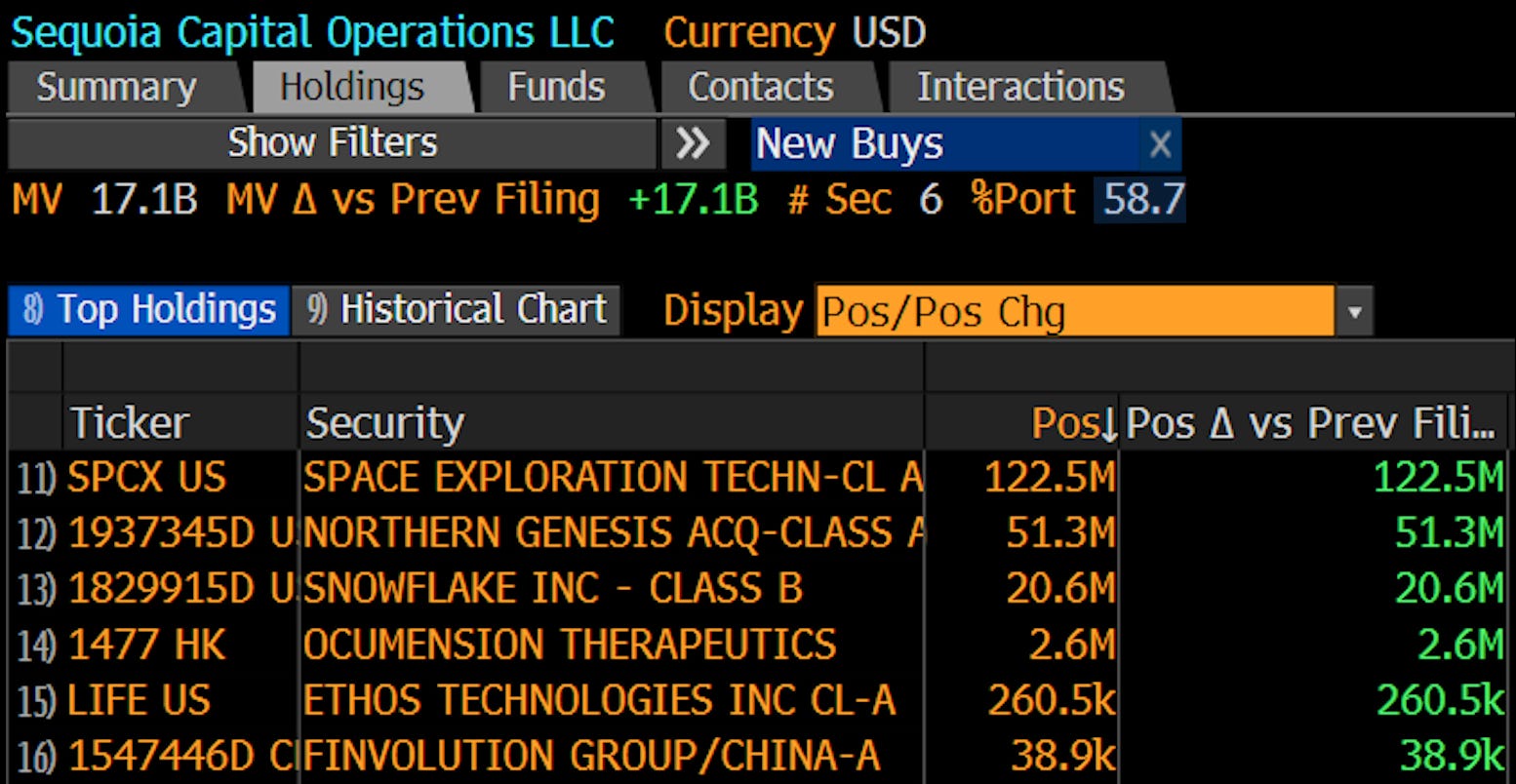
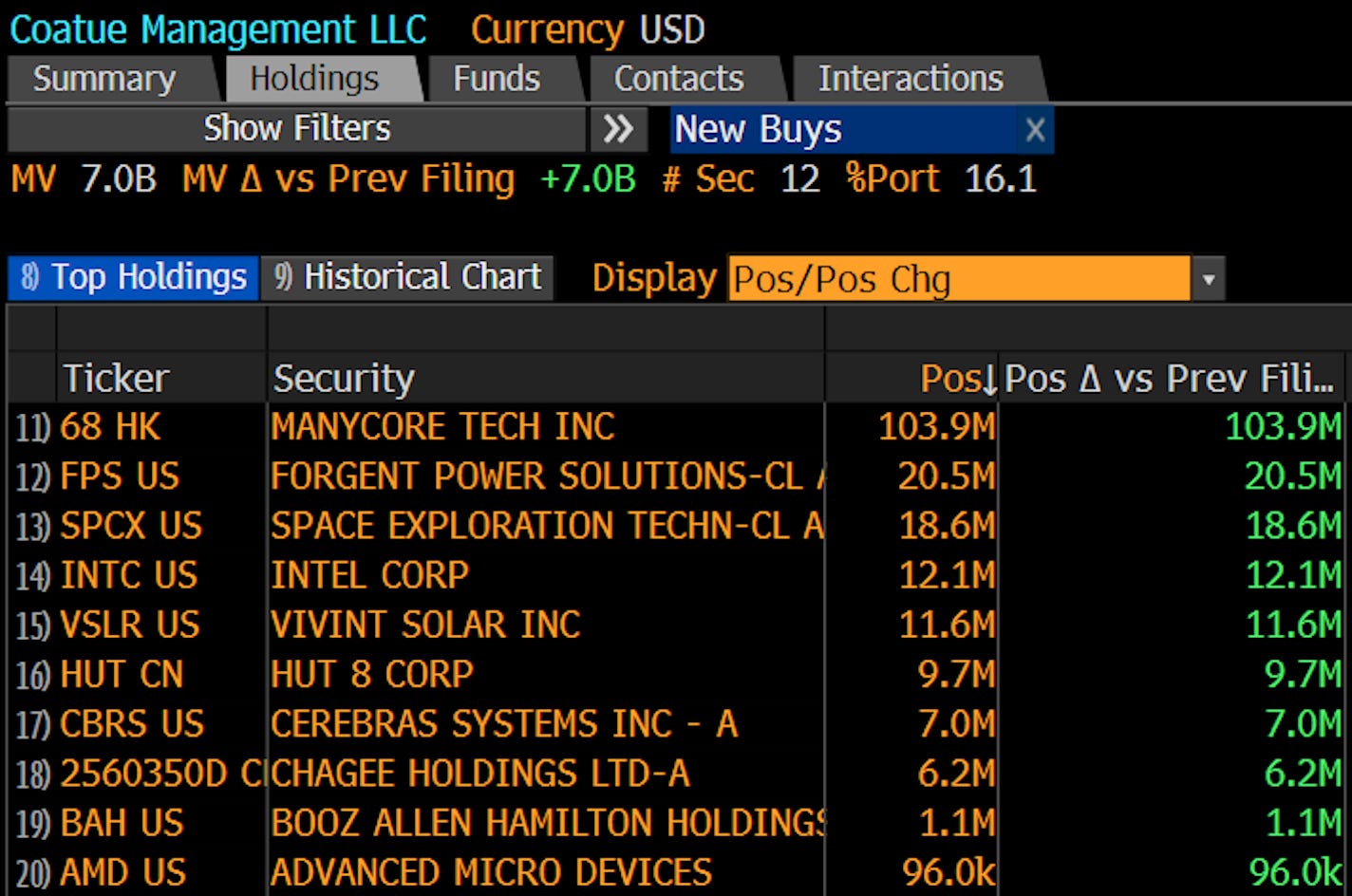
For Sequoia and Coatue, two of the biggest names in tech investing, it’s interesting to see that both are betting on SpaceX. Sequoia, however, seems to be going after a less obvious group of names compared with Coatue. Snowflake is one we’re less convinced by and looks close to a dead company in our view, while CBRS is a name we find much more interesting.
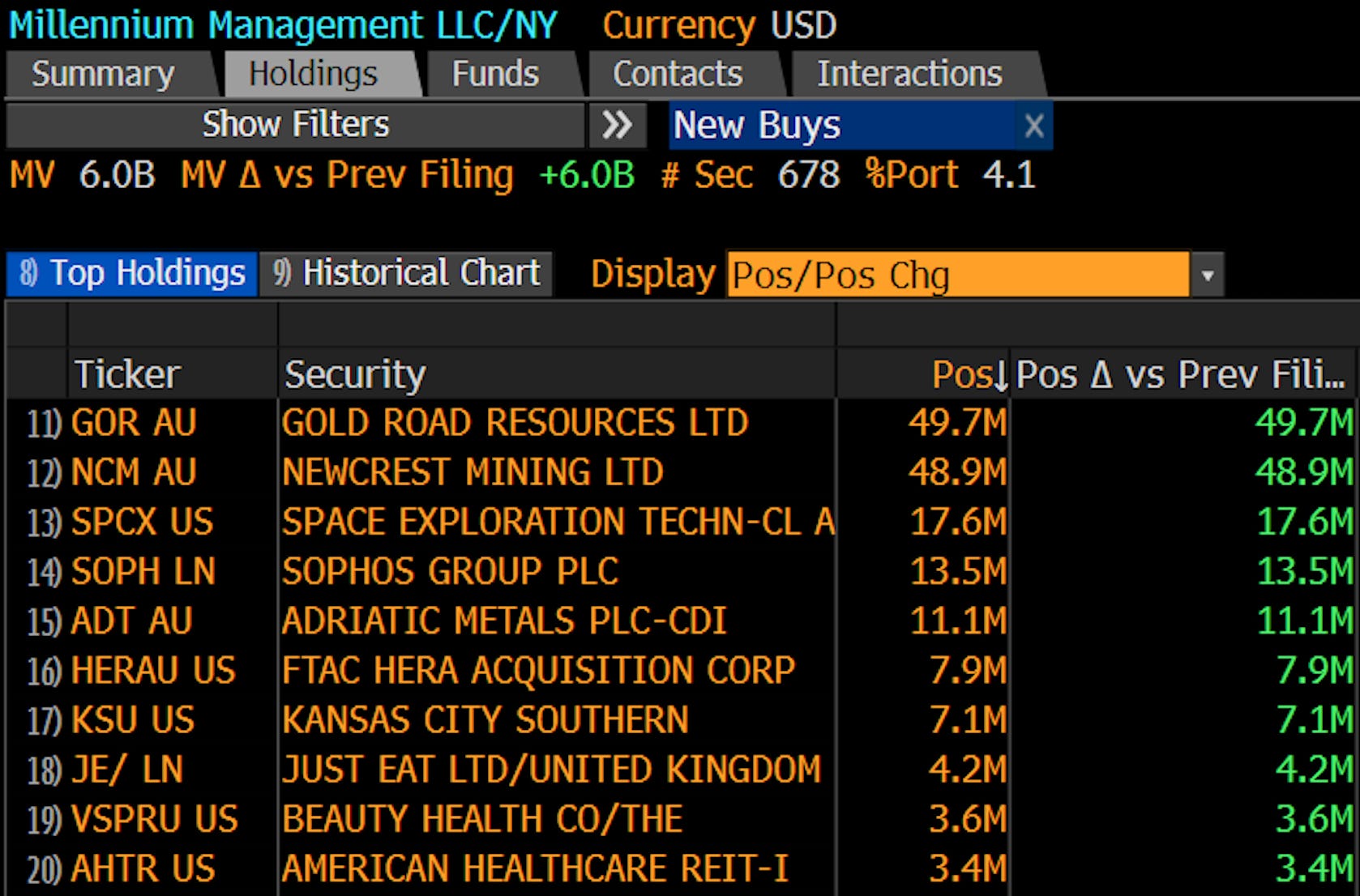
Millennium has SpaceX as well, making it one of the most recurring new buys we’ve seen across the filings. More importantly, we are finally seeing some money move into commodities, with positions in GOR, NCM, and ADT.
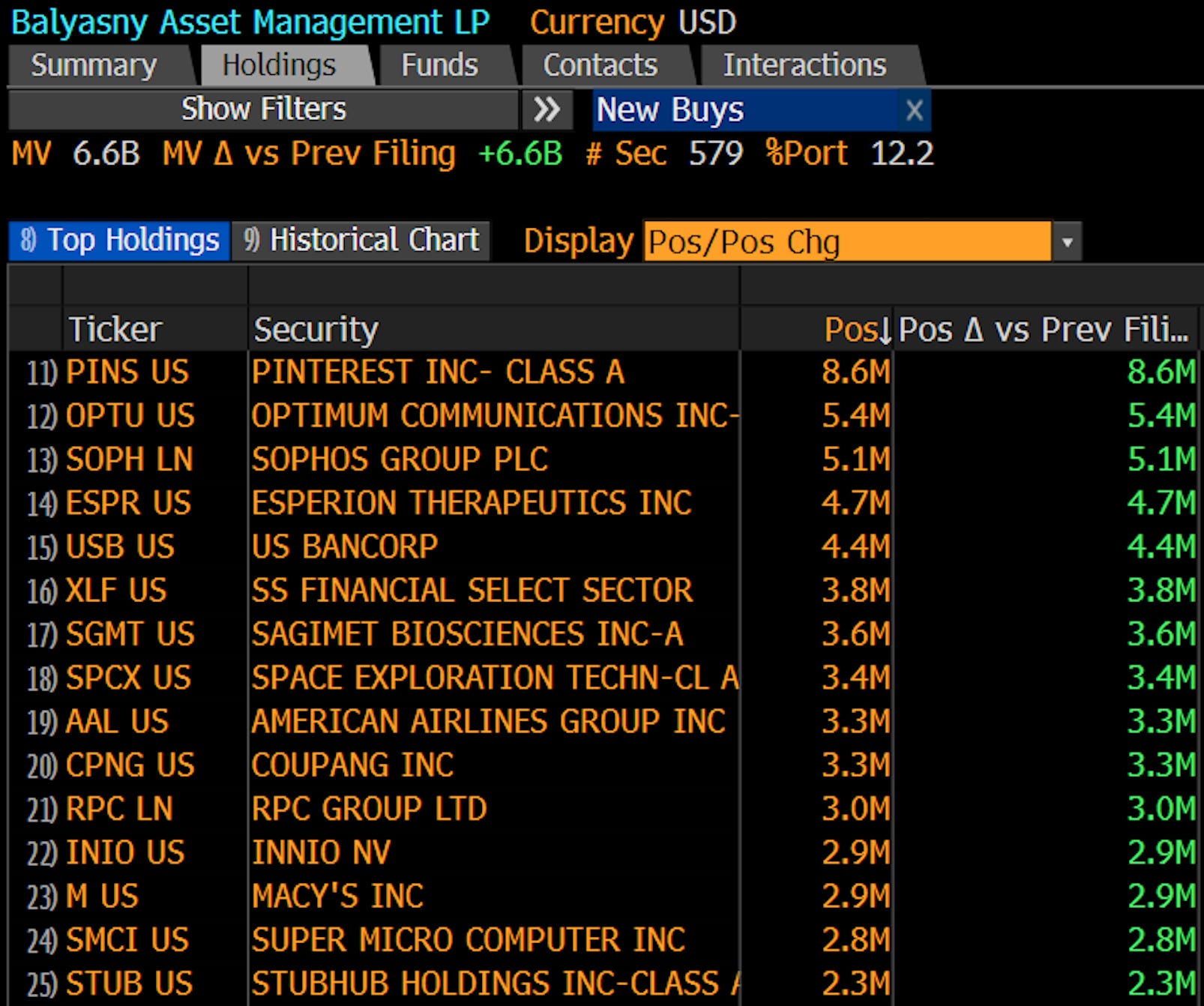
Balyasny has a bit of everything, as usual. We’re not sure there is that much alpha in the portfolio, but PINS could be an interesting one. STUB is worth watching, especially if the IPO story starts to come back.
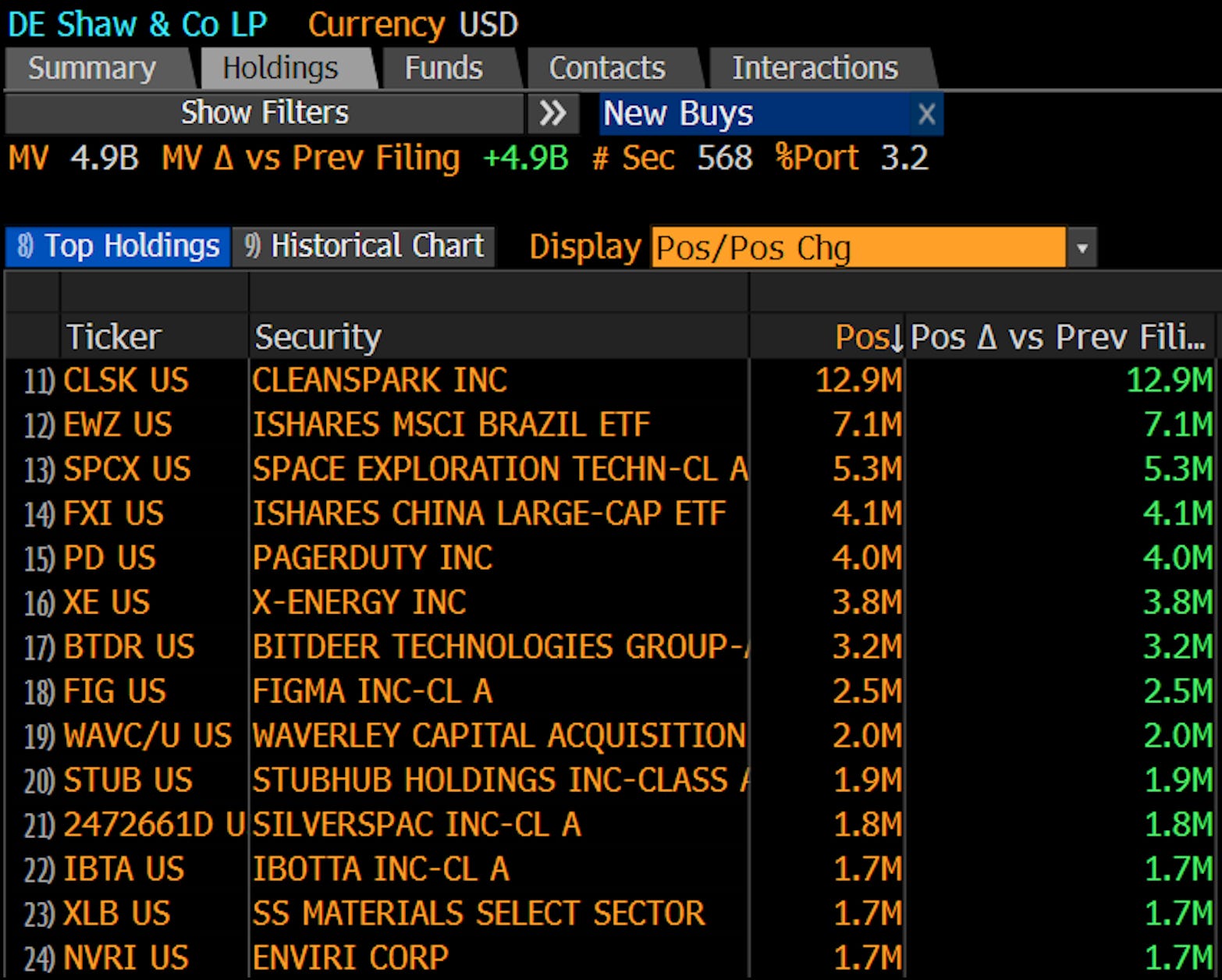
D.E. Shaw also has STUB, along with some interesting bets on China and Brazil. BTDR is another notable position, which Druckenmiller Fund also bought.
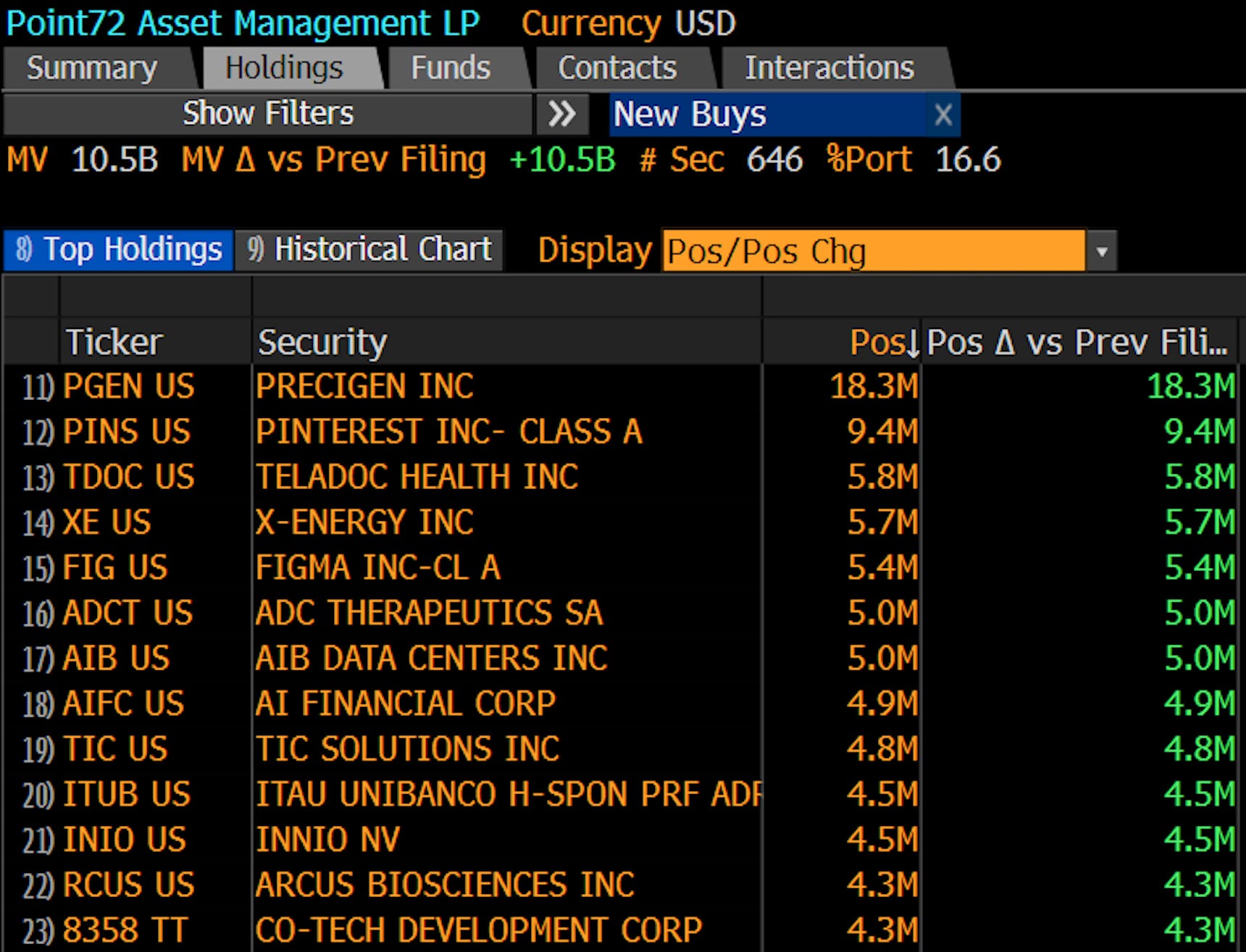
Point72 (Steve Cohen) has a more low profile mix of ideas, but there are still some interesting names in there. ITUB is the one that caught our attention the most, especially given our view that the Peruvian economy still has plenty of room to run and that the new president could be positive for growth.
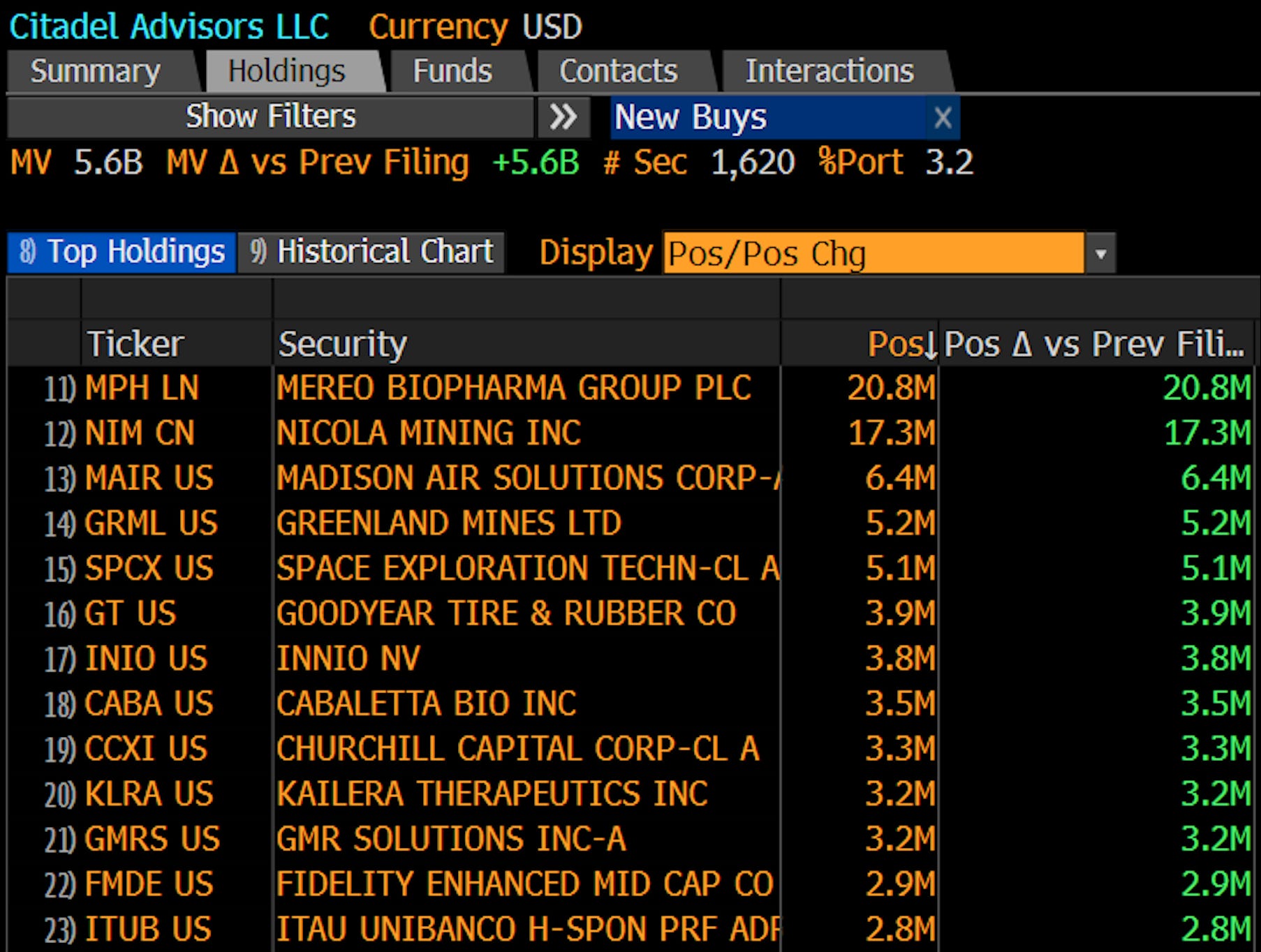
Citadel (Ken Griffin), probably the most famous hedge fund out there, also has some interesting names. ITUB shows up here again, while MAIR is one we are currently looking at and think could be quite promising.
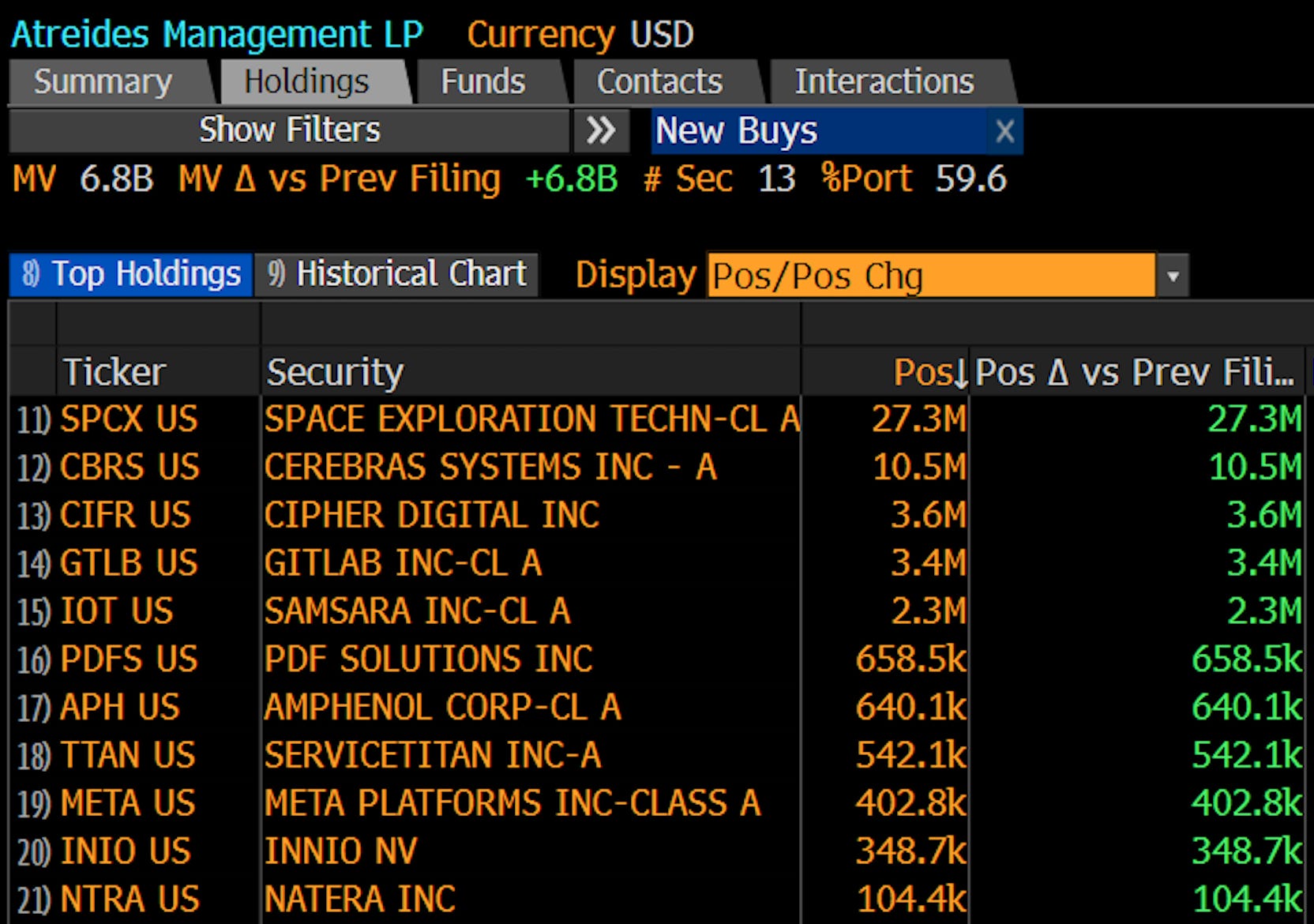
Finally, Atreides, Gavin Baker’s hedge fund, is once again heavily focused on AI, with the portfolio almost entirely tilted toward tech. No surprise there, given Baker’s track record in the space. They are also adding heavily to SpaceX and CBRS, two of the biggest recurring AI-related names we’ve seen across these 13Fs.
A month ago, we had a really interesting conversation with Cerebras’ Head of Investor Relations, where we learned more than we usually do from these calls. Given how many hedge funds added CBRS in their latest 13Fs, we think it’s definitely worth a read.

4. Our Final Thoughts
Overall, we feel like the stock market is giving us more hints about what could come next. The latest 13Fs do not show that interest in memory, semiconductors, or SpaceX is fading. If anything, capital is still flowing heavily into these areas, although the positioning is becoming more divided across certain names.
At the same time, some companies are starting to look more interesting from a valuation perspective. When we compare where they trade today with the earnings and free cash flow they could generate over the next few years, the numbers are starting to make more sense. That makes the current positioning even more interesting, and we think the rest of the quarter could be quite telling.
Overall, we maintain our view that the short term is extremely unpredictable for the AI trade. Therefore, we adopt a diversified positioning across sectors, with investment theses specific to each company. Our AI plays account for about 10% of the portfolio.
View how the portfolio is positioned here: Aurelion Index link.
Below is our most recent report on a stock we just added.

The Aurelion Team
Questions? Reach us directly on Substack or at contact@aurelionresearch.com.
The real AI supercycle is happening in energy infrastructure, and most investors are looking in the wrong direction.
Very good work here