

Boston Scientific has been known as a high-quality healthcare company that consistently surpasses investor expectations.
However, with a chart like this, we decided to speak with the Investor Relations team at BSX. We like the entry point at these levels despite the special situation.
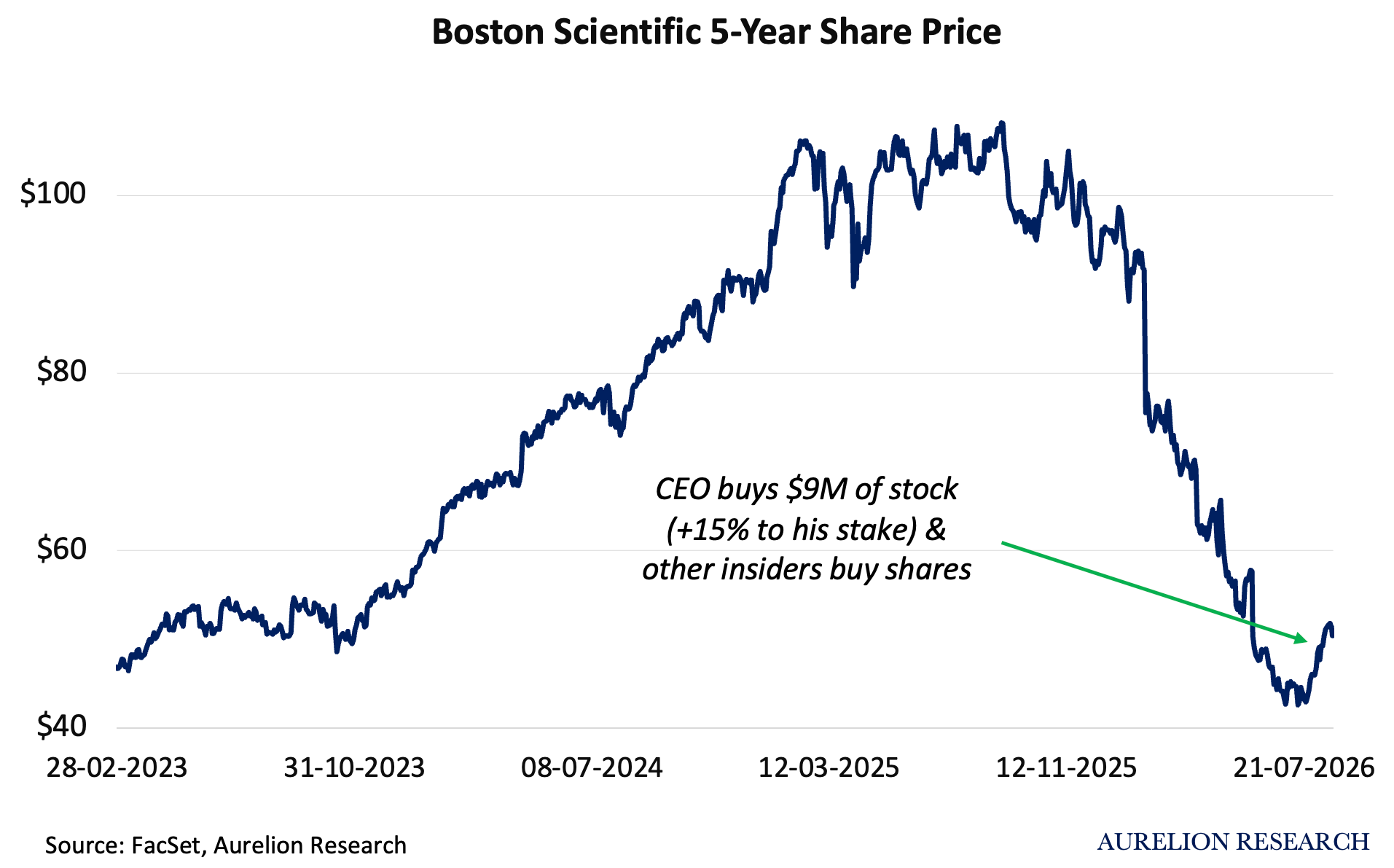
You’ll also see that this type of position is very similar to our prior ones in the healthcare field, like Medpace (MEDP), Stevanato (STVN), and Bruker (BRKR). Simply put, buying “high-quality” healthcare companies that are facing short-term issues can provide a very attractive risk/reward investment.
We are adding Boston Scientific (NYSE: BSX) to our portfolio, the “Aurelion Index”.
The story in short:
Boston Scientific was a Wall Street darling, with industry-leading growth and a track record of successfully developing new healthcare solutions. Since 2021, the company had been growing even faster, at around 15% organically, driven by its 2 new growth engines (Farapulse and Watchman).
However, in early 2026, both of those growth drivers started performing poorly. Farapulse is facing increased competition while Watchman has recently seen weaker demand from doctors.
With those 2 growth engines losing momentum, BSX is growing more slowly this year. Both products also had some of the highest margins in the business. Investors are clearly uncertain about the path forward and have sold the stock significantly.
3 things stand out from our call with investor relations:
1) After listening to the drivers behind their 2027 guidance, we believe it assumes close to a worst-case scenario, with plenty of potential positives that could lead to an upside surprise. New products in the pipeline are exciting and the rest of the business is generally on track.
2) BSX is making significant share buybacks, the first time since 2020.
3) Restructuring is recurring, rather than something being done simply to cut costs because they lack confidence in the two underperforming segments.
Methodology: Aurelion does not receive compensation from companies covered. We believe all information discussed is public, and answers from management are summarized and interpreted by us. They do not reflect the speakers’ exact words.
Table of Contents
Why Now?
Company Overview
Industry Landscape
In Conversation with Boston Scientific
Financials
Valuation
Risks
Conclusion
1. Why Now?
1) Recent Insider Buying
The CEO, Michael Mahoney, bought $9M worth of shares on August 5th, 2026. This was his largest direct purchase in several years and increased his total ownership position by 15%.
Two other directors bought shares as well at the start of August.
For a healthcare company developing products that often require extensive trials and testing, this insider buying is a very positive sign for investors looking at the story. Management knows much more than the street.
2) Large Buybacks
The company made its first meaningful buyback since the pandemic, with $2B worth of shares, backing up its argument that the share price is undervalued.
3) Special situation with two product ranges that have significantly lowered the valuation.
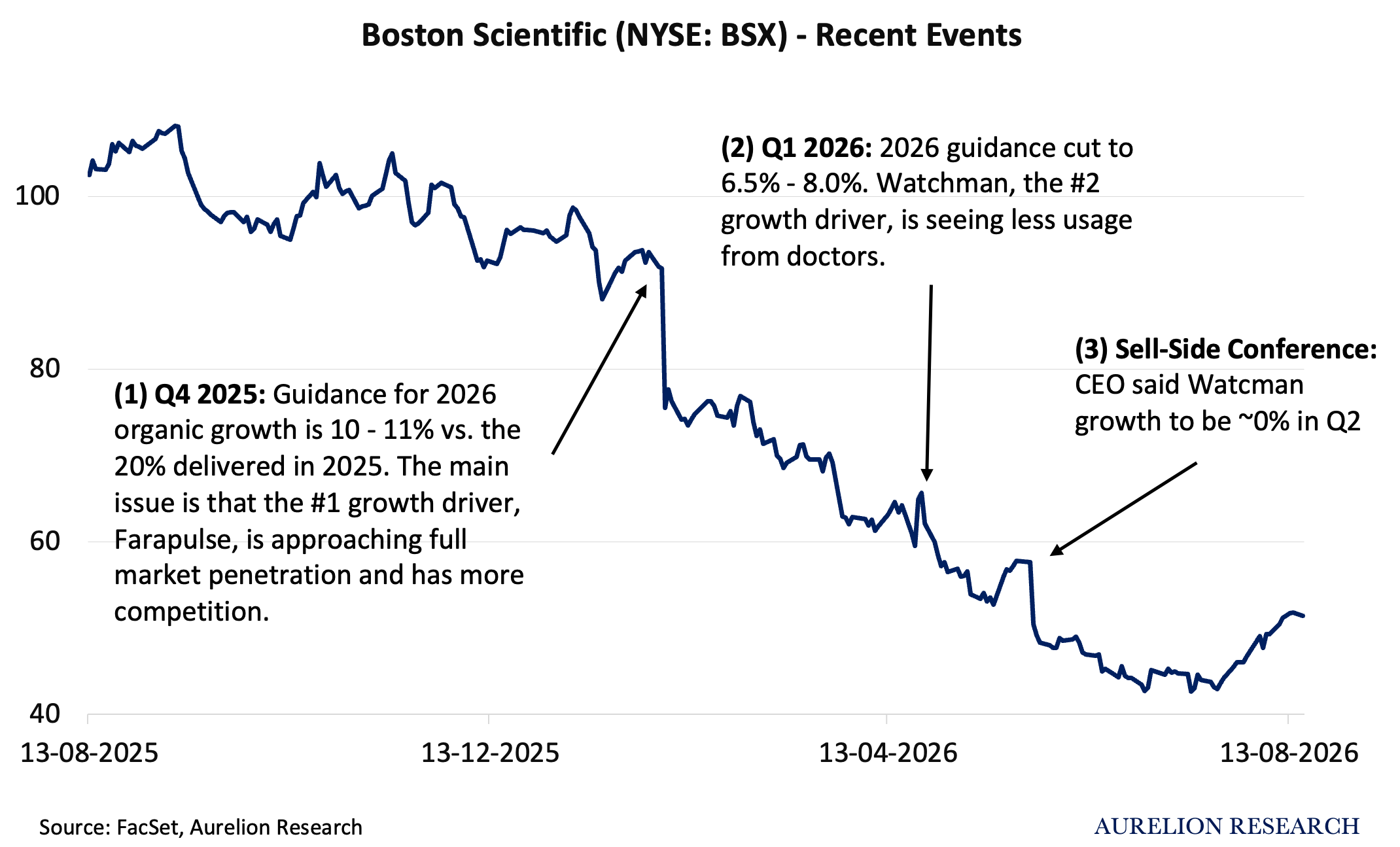
There were three main events that caused the major slips. They are presented below in the price chart:
Farapulse treats irregular heartbeats.
A doctor threads a thin tube up to the heart and uses electricity to destroy the small area of tissue causing the problem. It is safer and about three times faster than the older method, which used heat to burn the tissue.
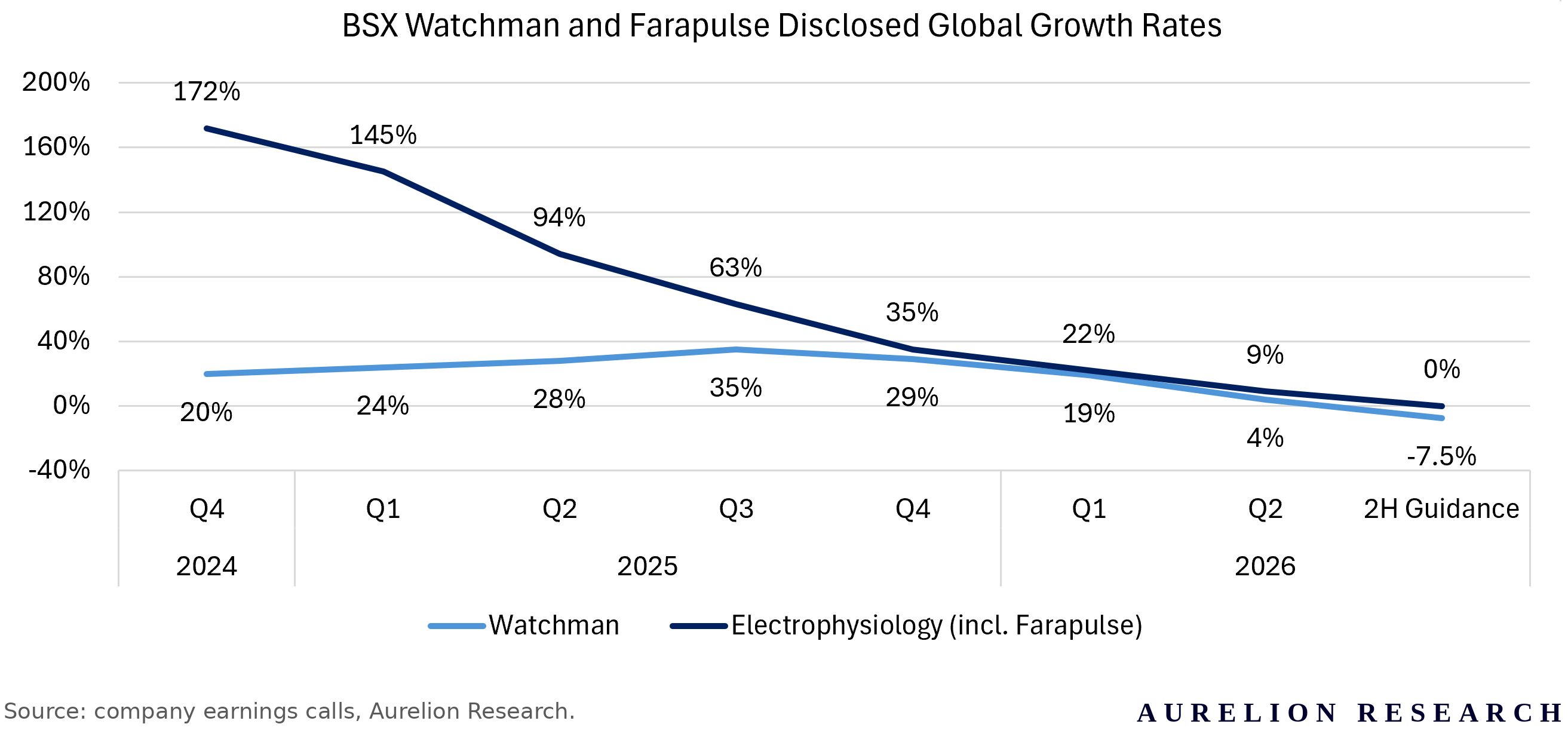
It went from nothing to roughly 80% of US procedures in just two years, meaning most of the market it was converting is now converted. Abbott, J&J, and Medtronic have also launched competing products. US growth has fallen to ~3% as BSX loses share. Management assumes sales stay flat through 2027 and gives no credit for winning share back before its next product generation launches.
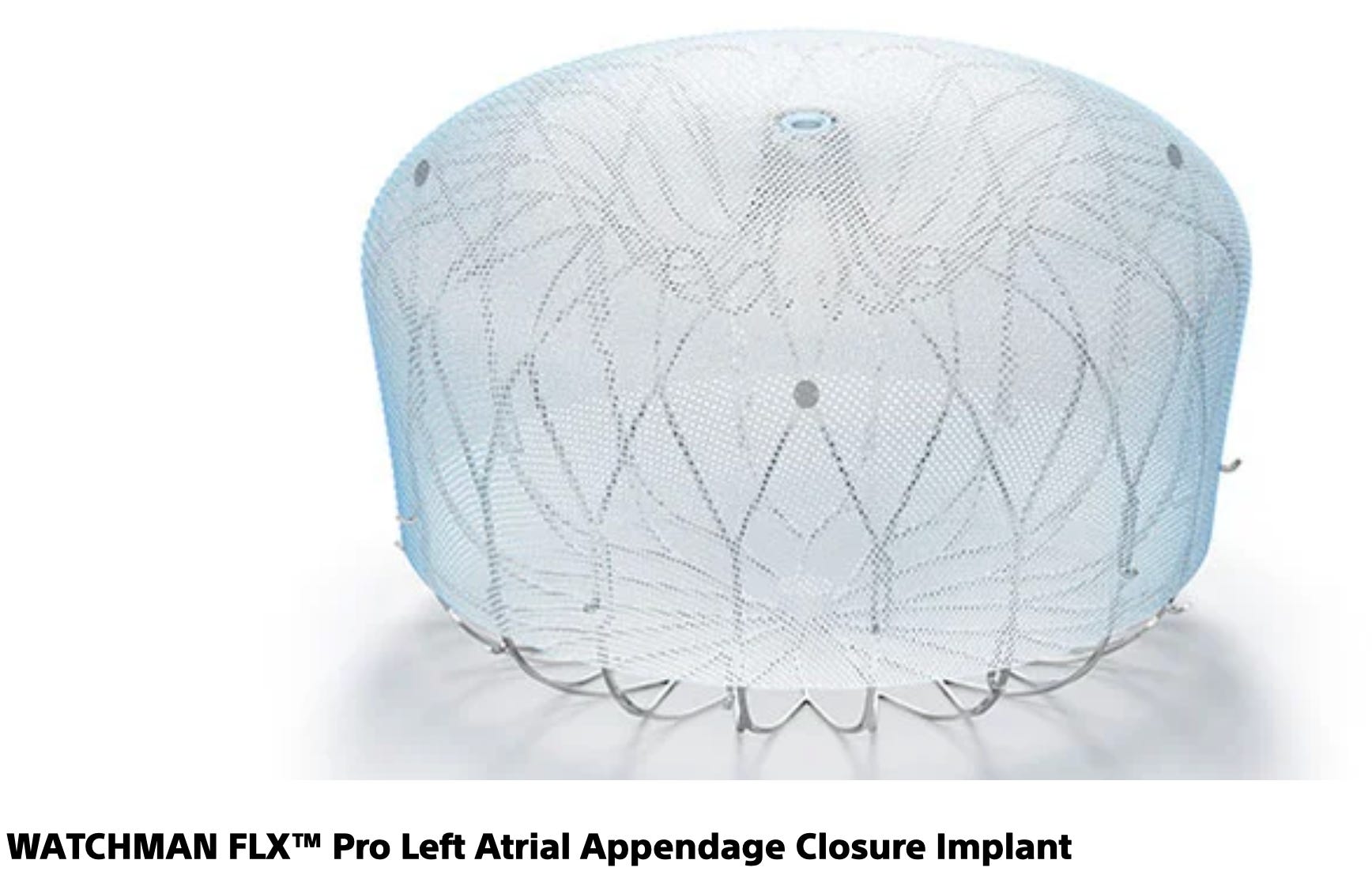
Watchman helps prevent strokes. It is a small plug, about the size of a quarter, placed inside the heart to seal off the pocket where most dangerous blood clots form. It allows patients to stop taking blood thinners for life.
A wave of clinical studies came out in the last 9 months, some supportive and others less supportive. According to management and expert calls we have read, doctors responded by putting the decision off rather than working through the data because there was a lot and it was confusing.
Nothing changed about the device or the patients who need it. Management says physicians simply have not had time to absorb the data, assumes no improvement in 2027, and expects a new competitor to enter.
While we acknowledge the stock deserves a lower valuation given the lower growth coming from those two product ranges, which represent 25% of revenue, we think the stock has been unjustifiably punished. What we like is that there are several ways for investor sentiment to turn.
Launches in 2027–2028: There are several new products coming onboard with billion-dollar market opportunities. These could fill the shoes of the two problem children.
Farapulse: farawave ultra launches around mid-2027, with new heart imaging and faraflex coming in 2028. These could help growth recover in 2H27 and return to market growth in 2028.
Watchman: Management is not counting on a recovery, but is increasing doctor education and direct-to-patient marketing. A possible label expansion and Medicare decision in 2028 could open a market where 30–40% of eligible patients are untreated.
We present a framework below of management’s expectations for Farapulse and Watchman as well as our own estimates. The key takeaway is that the impact is mostly that the company has lost these growth drivers quicker than expected, not that overall company growth is expected to turn negative.
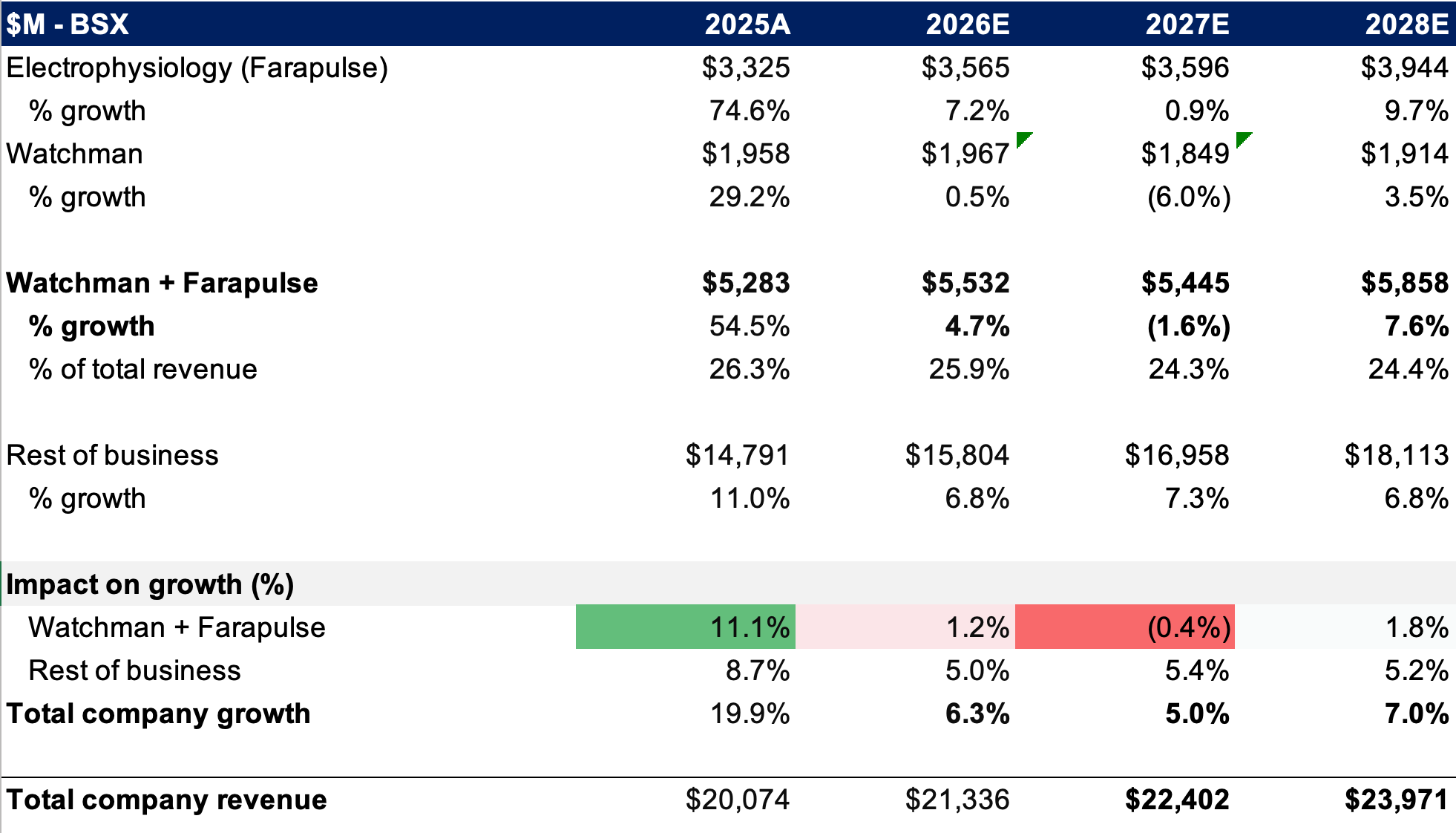
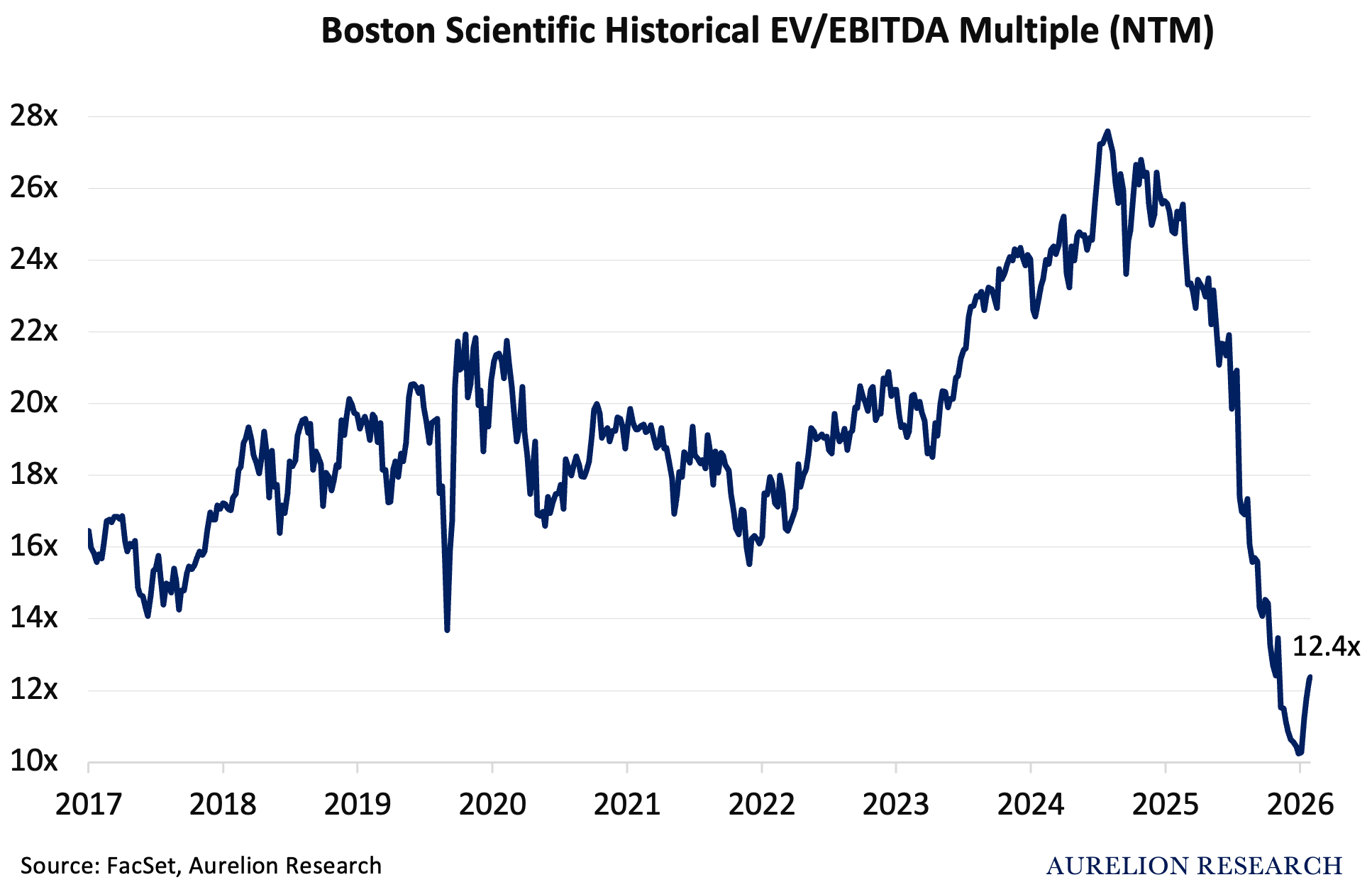
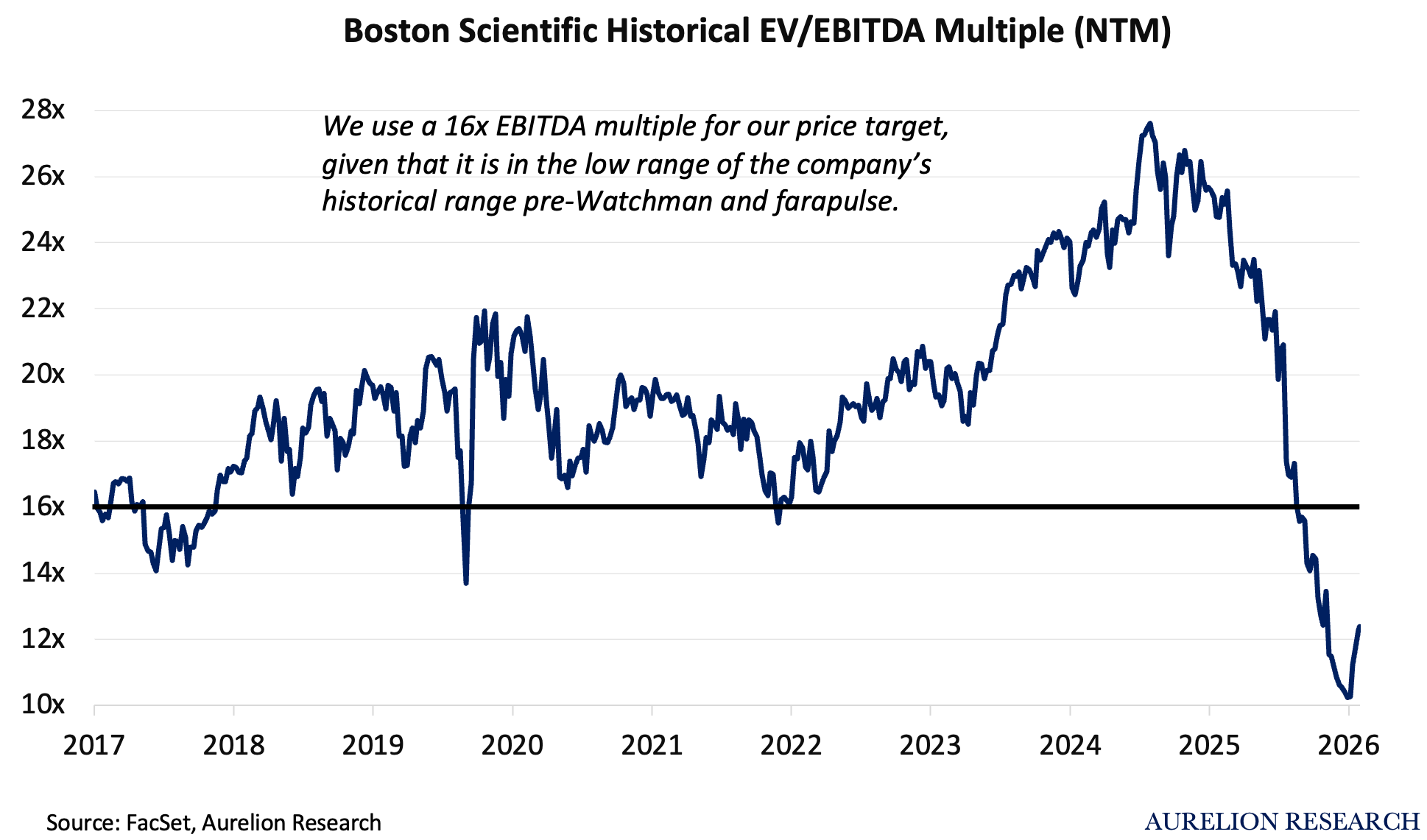
Finally, we think that at 12x earnings versus its average of 20x earnings, we are paying very little for a high-quality business. Revenue generally grows 7–8% in the long term, plus acquisitions that they have proven to be successful with. There is also a margin expansion story, giving investors a great company to own even without those two performing well.
2. Company Overview
Boston Scientific at a Glance
Boston Scientific is a global medtech company that specializes in medical devices. It makes products that help doctors diagnose and treat serious health conditions, mainly in areas like heart disease, cancer, digestive, neurological, and urological care. BSX has a large and diverse product portfolio, which gives it exposure to several areas of healthcare.
Business Overview
Boston Scientific has two main businesses: Cardiovascular and MedSurg.
The company focuses on growing its existing businesses while also moving into new areas with growth potential. A big part of that comes from developing new products and gaining market share in procedures where demand is growing.
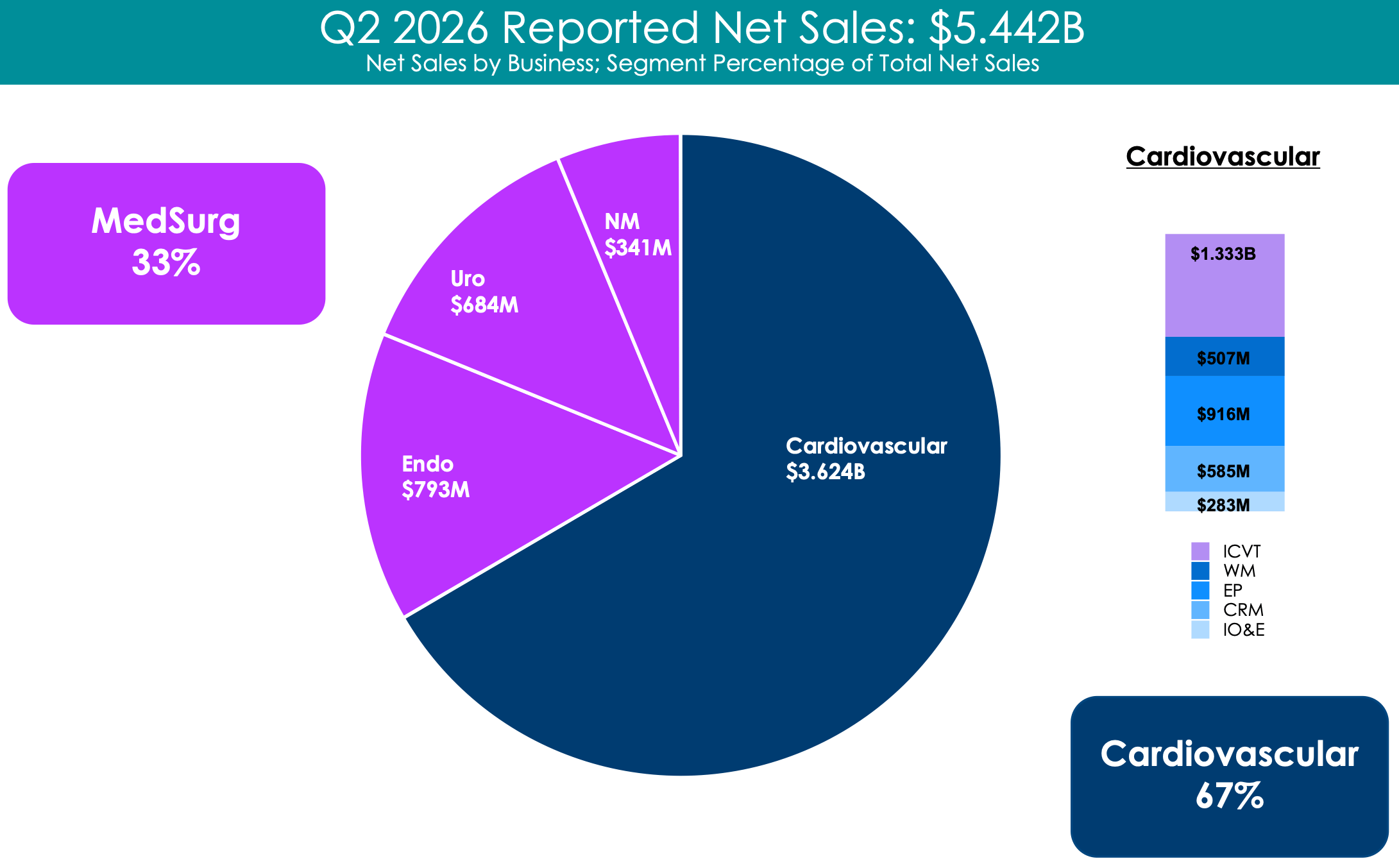
1. Cardiovascular Segment (67%)
The Cardiovascular segment is the larger and more diverse part of Boston Scientific’s business. It covers coronary and peripheral artery disease, blood clot removal, heart rhythm management, and electrophysiology.
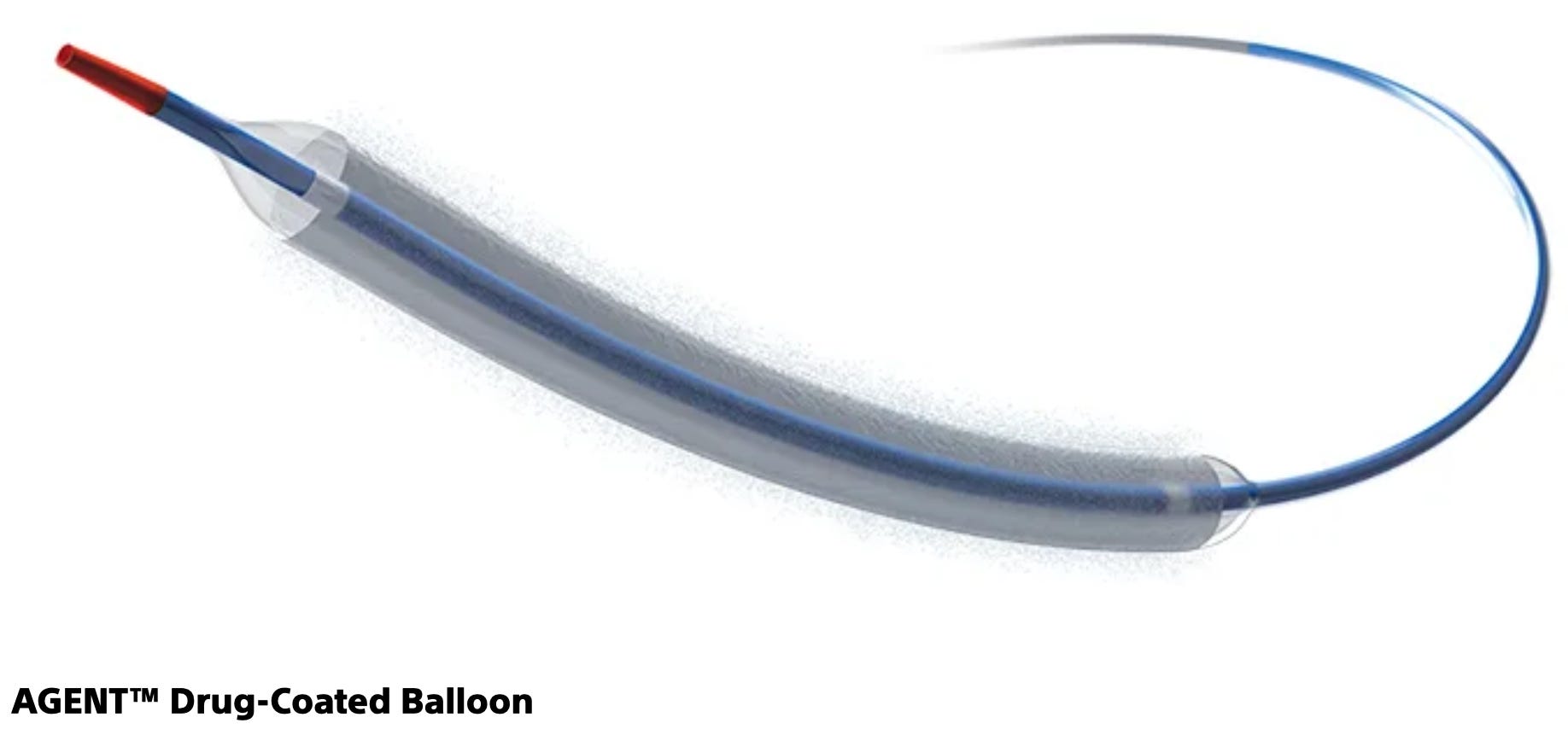
One product is the AGENT, a drug-coated balloon used to treat patients whose arteries become blocked again after receiving a stent. Instead of putting in another stent, AGENT delivers the drug directly to the affected area without leaving any additional metal behind. It has been available globally since 2014 and is now the first and only coronary drug-coated balloon approved in the U.S.
BSX has products across the entire procedure, from imaging and vessel preparation to stents, thrombectomy, and other treatments.
It also has WATCHMAN, which is used to reduce stroke risk in certain patients with atrial fibrillation. BSX also has a growing presence in electrophysiology, where it has an interesting opportunity with its “FARAPULSE” platform.
FARAPULSE is one product we find particularly interesting. It’s Boston Scientific’s pulsed field ablation (PFA) system used to treat atrial fibrillation.
PFA is becoming a bigger part of AF treatment, with clinical data showing FARAPULSE can be as effective as traditional treatments while offering shorter procedure times.
As Boston Scientific’s Chief Medical Officer, Brad Sutton, put it: “We haven’t seen esophageal injury or pulmonary vein stenosis in nearly 40,000 cases.”
What also makes FARAPULSE interesting is that it covers several parts of the procedure, including access, mapping, and the actual ablation, which is the process of treating the heart tissue causing the irregular heartbeat. This gives BSX more exposure and more opportunities to sell its products.
A Look at FARAPULSE Products
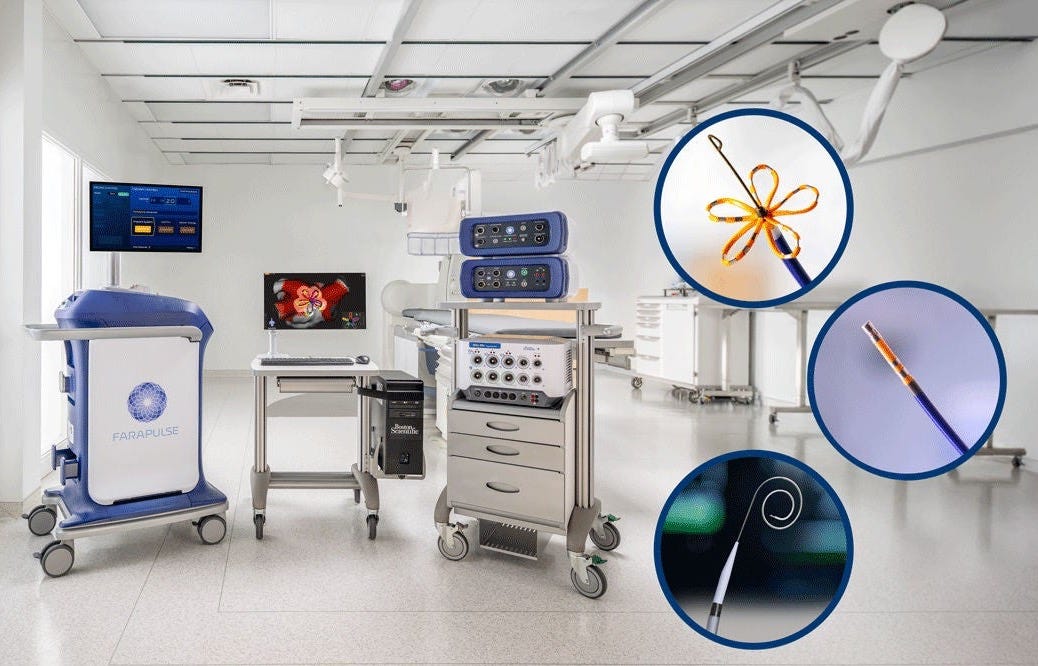
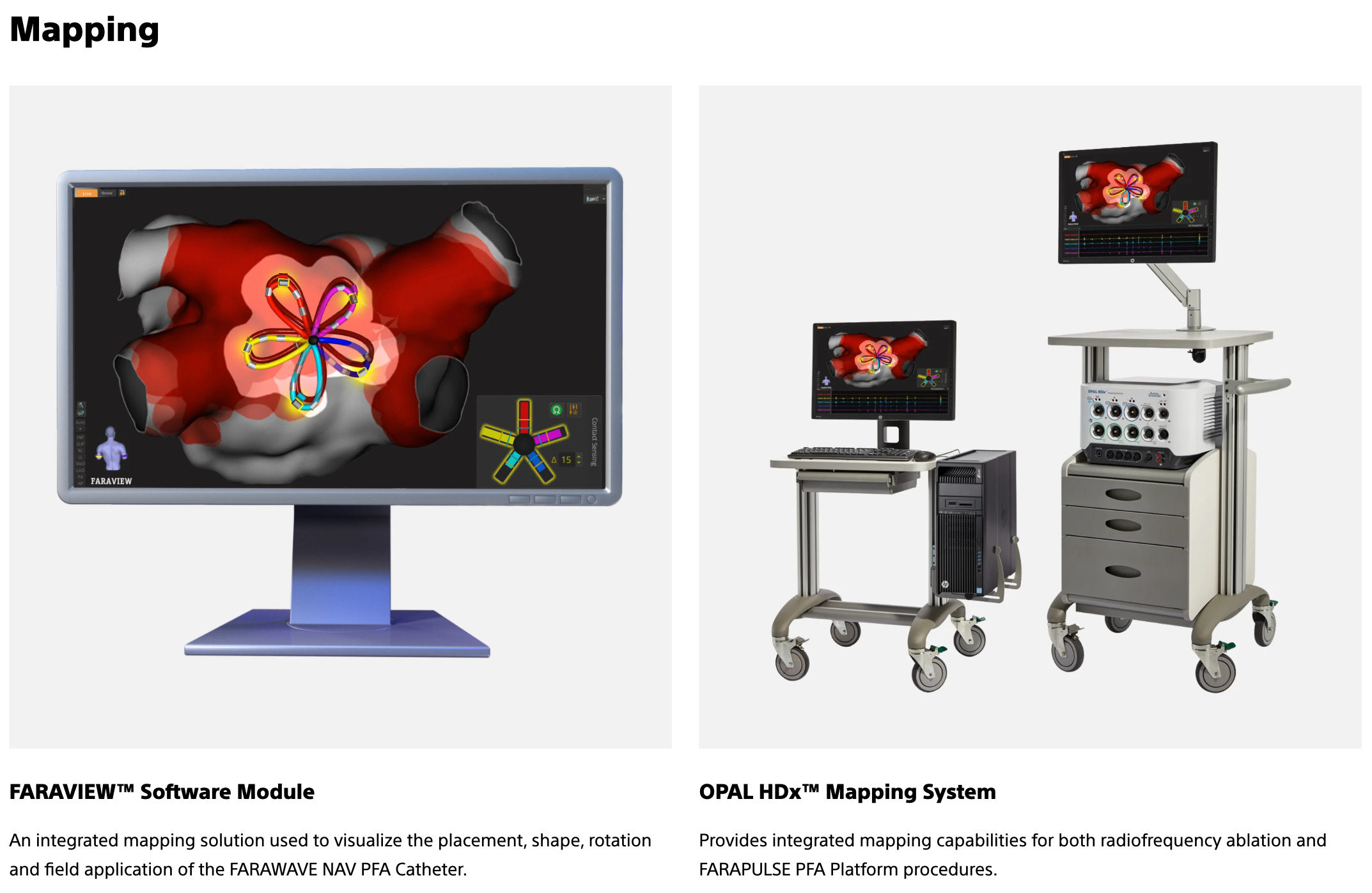
As PFA continues to gain adoption, we think FARAPULSE will become an important part of Boston Scientific’s growth, especially as the company continues to expand its presence in the broader electrophysiology market.
2. MedSurg Segment (33%)
The MedSurg segment is mainly focused on Endoscopy, with products used to diagnose and treat gastrointestinal and pancreatic conditions.
The portfolio includes clips used to stop bleeding, stents used to open blocked areas, single-use scopes, and tools used in procedures such as ERCP. Boston Scientific also sells products for endoscopic surgery and weight loss, including the OverStitch suturing system and Orbera intragastric balloon.
One product we find interesting is OverStitch NXT, an endoscopic suturing system used to close tissue during certain procedures. It works with many commonly used gastroscopes, so hospitals may not need to buy new equipment to use it. It also gives doctors more control during the procedure and makes it easier to reach areas that can be difficult to access with standard scopes.
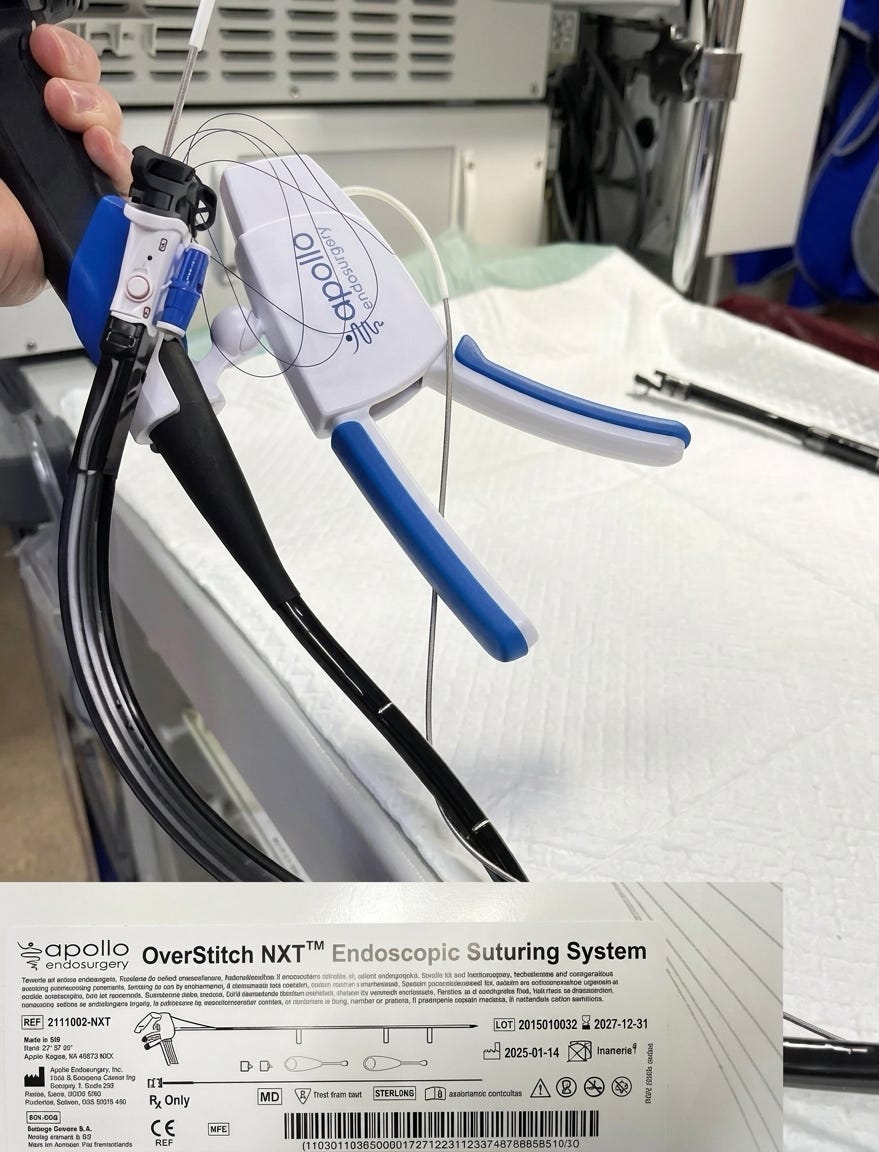
Overall, we see the MedSurg segment as another source of growth for Boston Scientific outside of cardiovascular, with a broad range of products used across different types of procedures.
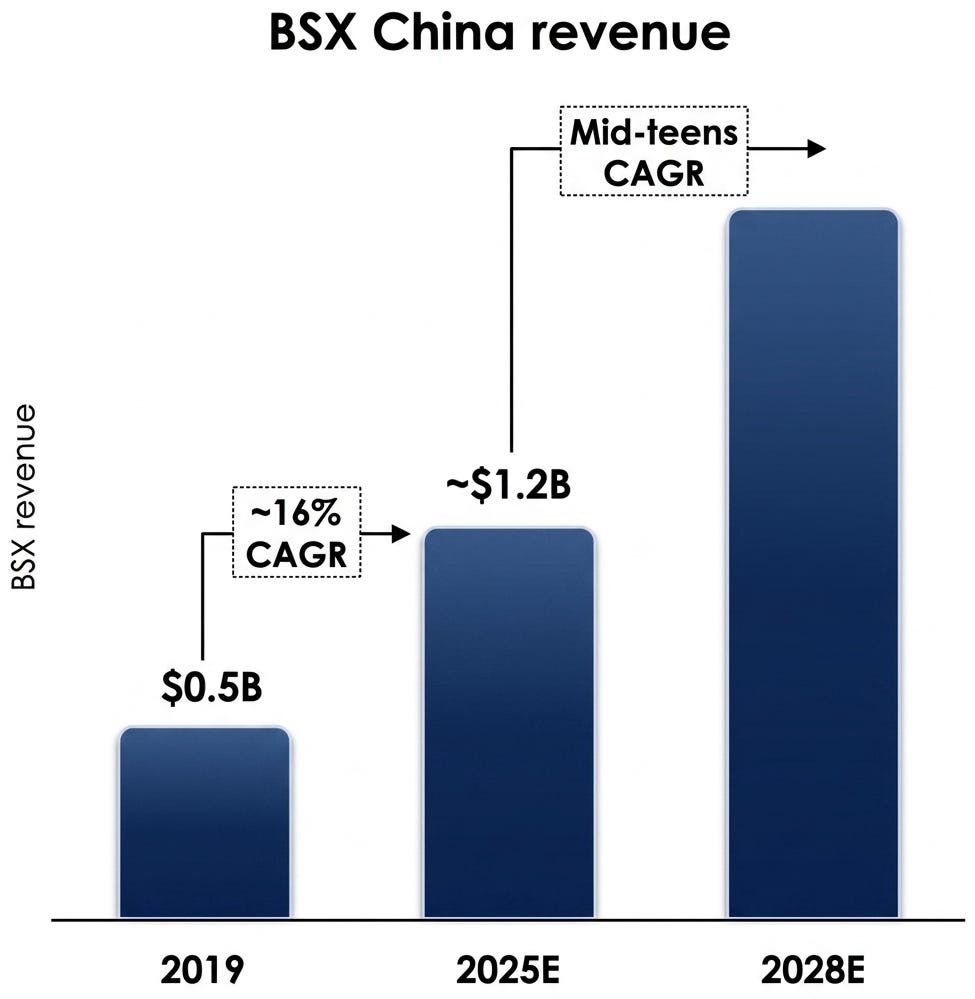
China is a genuine growth market, with revenue above $1B and APAC growing 12% in Q1 2026. The main offset is VBP, which has cut device prices 50–93% and impacted parts of Vascular Therapies and Urology. Management is leaning into VBP by investing in local innovators and expanding its Chinese commercial team while competitors pull back.
3. Industry Landscape
Key named competitors:
Abbott Laboratories, Edwards Lifesciences, Medtronic plc, Stryker Corp.
Within offerings like endoscopy and urology (together 28% of 2025 sales) under the MedSurg segment, BSX is a dominant global player with stable and compounding revenues. In the Cardiovascular segment, BSX leads the market in LAAO with Watchman (though competitors are looking to enter) and they are #2 share in pulsed field ablation with Farapulse. Both of these markets (LAAO and pulsed field ablation) are becoming increasingly competitive, but BSX remains relevant or market-leading.
Outside of BSX’s dominant products where they are incumbents today, there are opportunities to expand the company’s product lineup, though not without competitive pressure.
One example: in intravascular lithotripsy (IVL), BSX launched SEISMIQ for peripheral use in January 2026 and is testing/awaiting approval for coronary use.
The key competitor in this space is Shockwave Medical (acquired by JNJ in June 2024). Shockwave’s C2 product entered the U.S. market in 2021 and has since become the 800 pound gorilla in the space, with over 600 peer reviewed publications covering 25,000+ patients. As a new entrant, that efficacy will be difficult to replace.
BSX’s offering in the space is slated to use laser and optical fibers instead of spark-gap electrodes to generate acoustic pressure waves which early data suggests produces a more uniform energy profile. In addition to Shockwave under JNJ, Abbott and Phillips Healthcare are seeking to enter the IVL market as well, with each player moving toward regulatory verification.
In coronary IVL specifically (related directly to or around the heart itself), BSX can take advantage of their broader coronary ecosystem in imaging, stents, and drug-coated balloons.
BSX essentially already offers steps 1, 3, and 4 of this procedure, whereas their coronary IVL offering would address step 2 in the chain and create a more unified ecosystem of products. Coronary IVL specifically has a $1Bn estimated TAM which would move the needle for BSX’s sales if they can penetrate the market.
There are many other segments and markets that can be entered organically or through investment and M&A. BSX has historically been an acquirer of companies with strong and complementary assets.
Examples include their Penumbra acquisition in January 2026 for $14.5B, granting assets in neurovascular and mechanical thrombectomy.
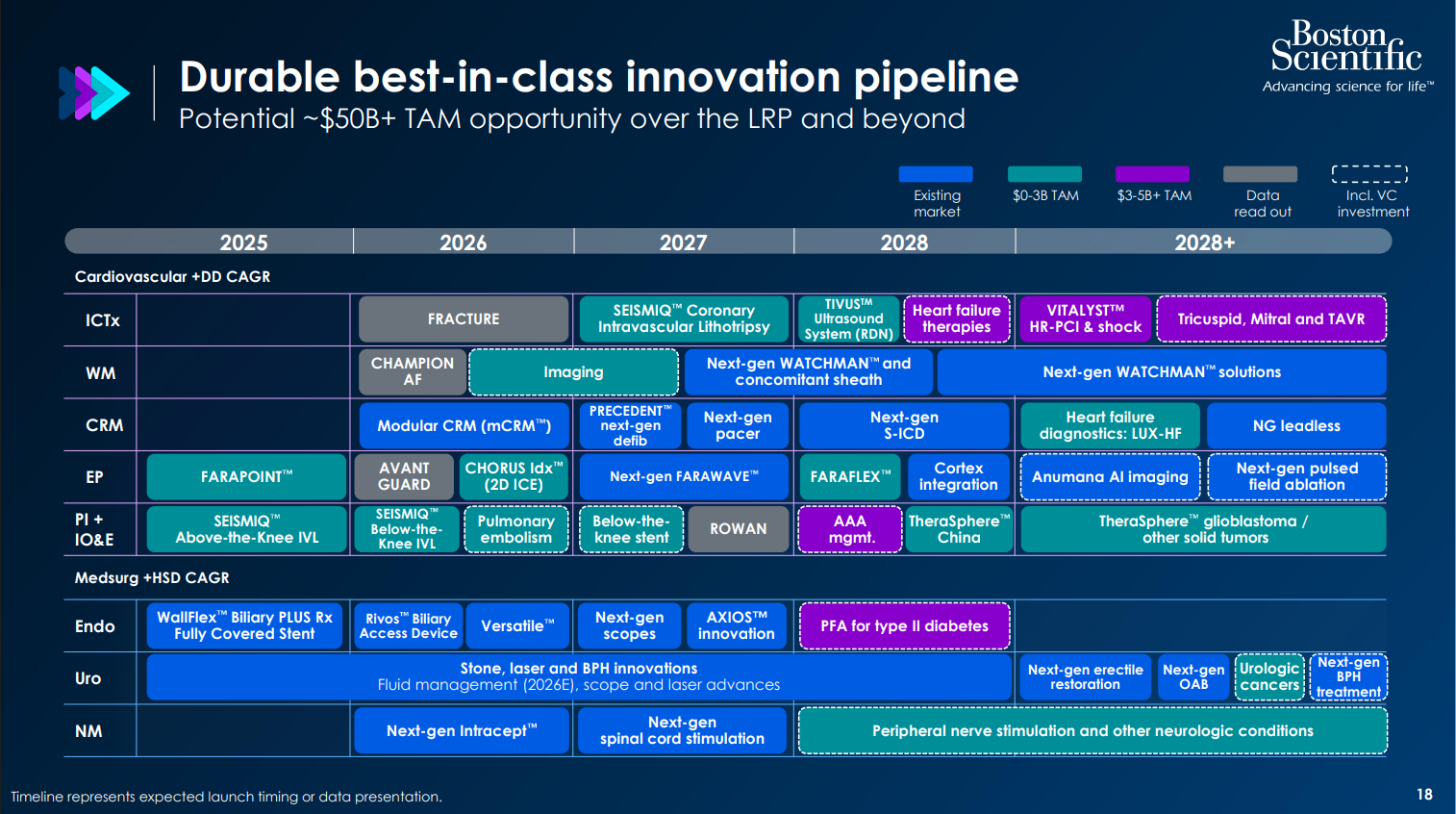
An interesting aspect of BSX’s capital allocation is their venture-capital playbook.
The Farapulse product that drove such strong growth in 2024 and 2025, BSX first invested in 2014, and in 2021 exercised an option to acquire the remaining stake in the company, bringing it fully in-house.
The acquisition-in-pieces structure allowed BSX to pay roughly $575M for 100% control over time for this asset that has now come to drive strong growth. BSX has run this playbook in other areas, with the initial VC investment approach to reduce risk, and a full acquisition once the application is proven.
Penetration vs Market Share
In medtech, penetration matters more than market share for determining growth. For example, Farapulse has reached ~80–85% of US procedures in two years, so Farapulse’s category-driven growth is largely over and further growth must come from taking share. LAAO is the opposite. BSX has >90% of the implanted device market, but penetration is still only in the mid-teens among ~5M eligible patients. The main issue is getting more patients referred.
Reimbursement is important too, since the procedure only grows when both doctors and hospitals have a good reason to do it.
To summarize, the industry is highly competitive but favors large, established players like BSX. The key is to look at each product category separately, as growth rates, market shares and competitors vary significantly. For BSX, management targets 7–8% long-term organic growth across its diversified portfolio.
4. In Conversation with Boston Scientific
We spoke with Boston Scientific’s Investor Relations team mid-August 2026. Below is our summary of what we took away in our interpretation.
1) The 2027 framework assumes a largely unchanged environment.
In the last call, management gave a framework (not “guidance”) of 2 - 4% organic growth for 2027, with formal guidance coming on the Q4 call in February.
The build behind it is simple: the other 75% of the business grows around 6%, the Watchman market declines mid-to-high single digits, and global EP sales are flat.
That’s it. There is no assumption that the medical education effort works, no assumption that referral patterns normalize, and no assumption that urology recovers from 1%.
We came away thinking the number is closer to a floor than a midpoint. It looks like they have more visibility into the problem. And it is reassuring with BSX’s history of surpassing expectations (they’ve cut guidance only 2x in 15 years).
2) The rest of the business grows at 6-7%
75% of the business has been growing at 6-7% for a number of quarters.
What we found more interesting is that the 6% of last quarter carries the urology segment growing at 1% and CRM at negative growth. There are measures in place to fix them. If either works, growth will be higher.
3) Urology looks fixable, although it has taken longer than expected.
The 2024 Axonics acquisition brought a “sacral neuromodulation” business that requires lots of human capital. Leadership and team turnover after the acquisition took reps out of the field. That hurt the selling effort and the patient funnel.
Refilling the funnel has taken longer than expected. Management expects growth to come back to the market growth rate which is 6 - 7% . This is definitely one of the most fixable of the 3 problems.
4) Watchman’s problem appears to be communication.
Nothing has changed in how the device is made or used, and it has been on the market for over a decade. What changed is that a large amount of clinical data came out at once, with some of it favorable and some less so.
According to management, physicians haven’t had time to fully absorb what it means in practice. For a busy doctor, the easiest decision is simply not to pursue it.
5) Spending on Watchman has not been cut.
The two largest cost lines are the sales force and direct-to-patient marketing and neither is being cut. Management was explicit that it does not want a short-term decision today to damage long-term growth.
We read continued investment into a shrinking franchise a proof of conviction.
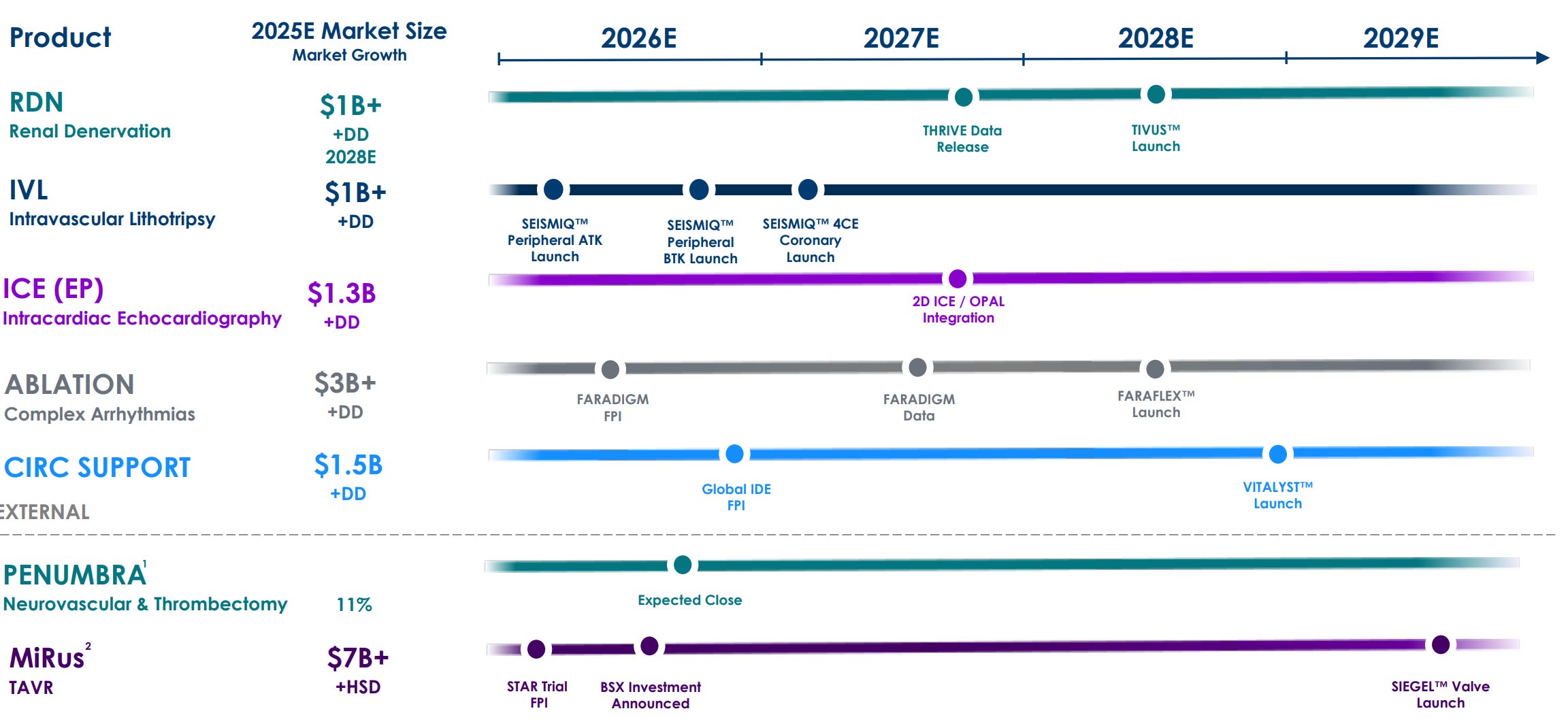
6) The new products could increase growth in 2027 and 2028.
Management discloses the new products coming out in its investor relations deck. While we did not get more information, it’s safe to say these could be potential drivers. We look forward to commentary in upcoming earnings calls.
7) The restructuring is a scheduled program.
Boston Scientific runs one roughly every three years: 2019, 2023, and now. We see most of the benefit to land in 2028. The savings come from manufacturing efficiencies, supply chain optimization, and organizational structure. This would have happened regardless of how Watchman and EP performed.
8) Free cash flow guidance impacted by Watchman & Farapulse
The 2026 figure is now closer to $3.8B versus roughly $4B coming into the year, with the shortfall attributable to lower cash coming from Farapulse and Watchman. BSX targets 70–80% conversion from EBITDA. This appears to be a high target compared to historicals for us.
9) The broader demand environment is stable.
Management sees healthy procedure volumes and no evidence supporting the softer readings some analysts have published. The recurring variable is reimbursement, which splits into a physician fee and a facility fee. This year, the physician fee was relatively stable while the hospital fee was cut somewhat.
5. Financials
Because BSX makes meaningful acquisitions, we remove the acquired growth to look at the underlying business. The historical performance is consistent with management’s 7–8% CAGR target, with periods of higher growth when new solutions are coming out and lower growth when there are issues.
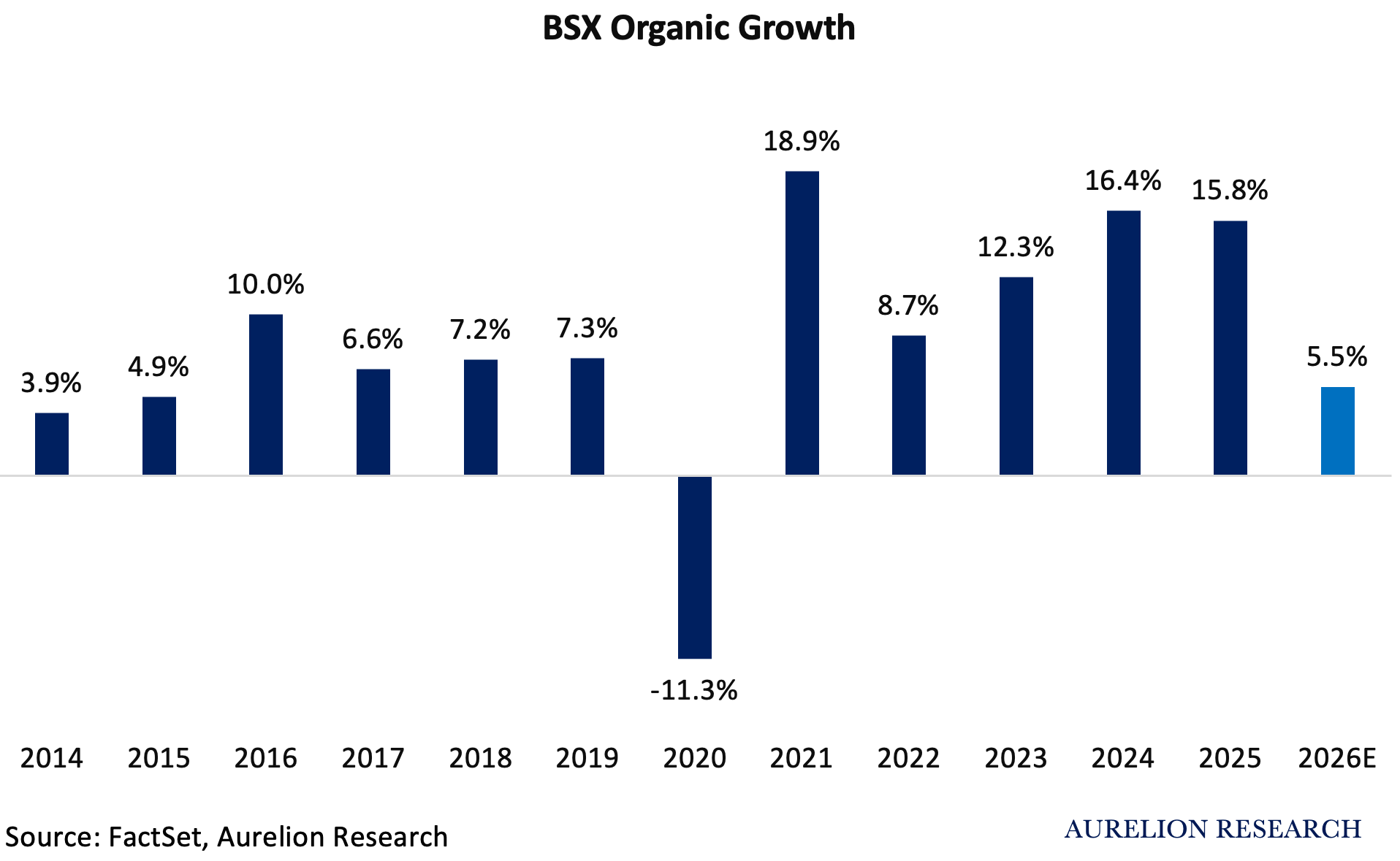
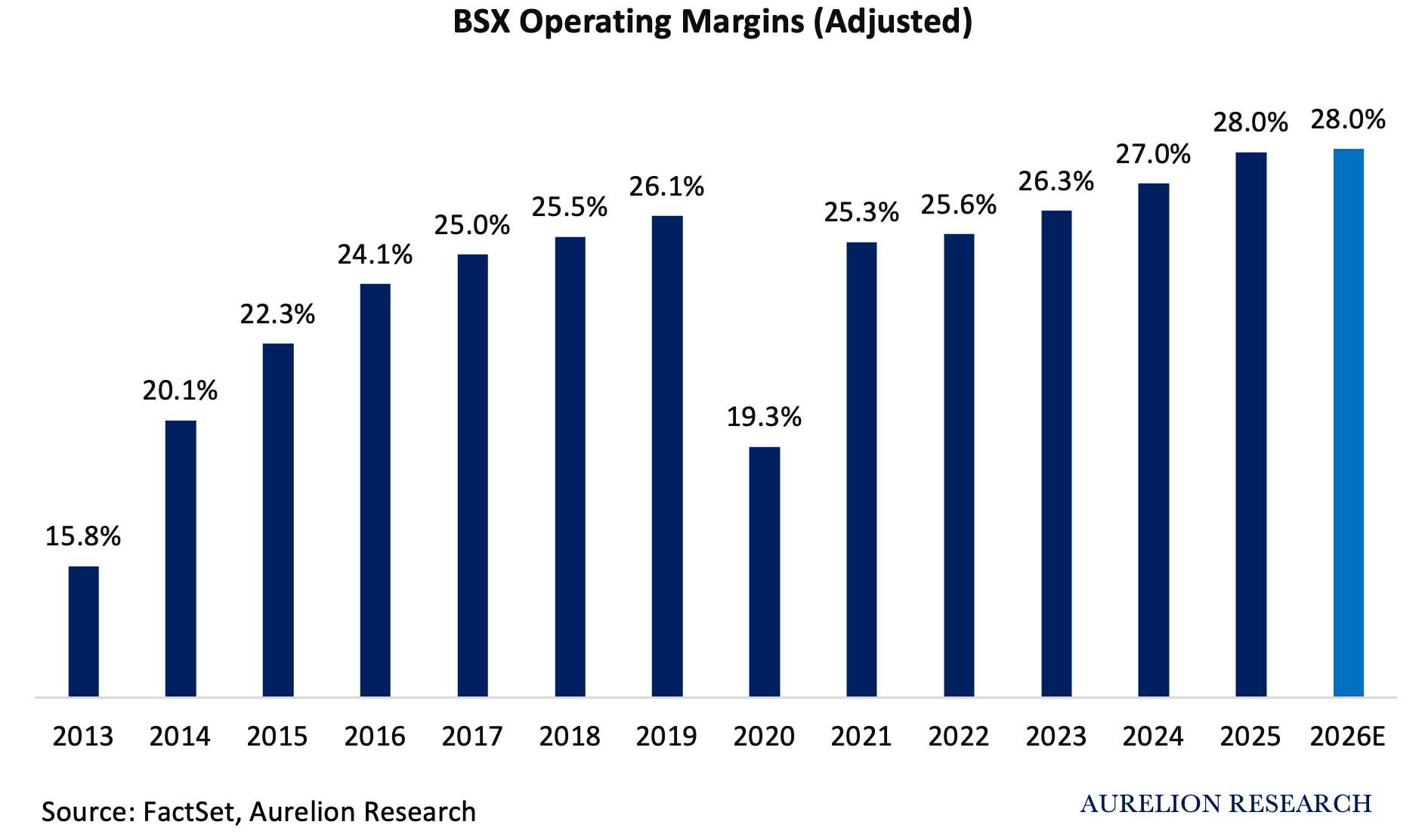
On the company’s margins, the trend has been clearly positive, driven by a mix of cost cuts and a better business mix.
2013–2016: BSX came out of the financial crisis with a bloated structure, a declining defibrillator business, and heavy litigation. Restructuring helped close plants, consolidate manufacturing, and reduce headcount, taking margins from 15.8% to 24.1%.
2016–2019: Management shifted toward higher-growth categories like endoscopy, urology, and interventional cardiology while moving away from slower-growth businesses. Margins reached 26.1% by 2019.
2020: COVID. Elective procedures stopped and margins fell. They recovered within two years.
2021–2025: mix and operating leverage. High-growth markets increased from 25% to 55% of revenue, while low-growth exposure declined from 30% to 20%. Farapulse and Watchman, both above corporate margin businesses, also grew rapidly.
The result is 1,220bps of margin expansion in twelve years, with roughly 80bps of annual expansion in 2023–25. For balance, 2026 is guided flat at 28.0%, as the mix tailwind that drove much of the recent expansion reversed.
BSX has made numerous acquisitions in the past, most of which have been financed with cash and debt. The company has been very successful at making these acquisitions. Share issuance has been low, which is something we like to see.
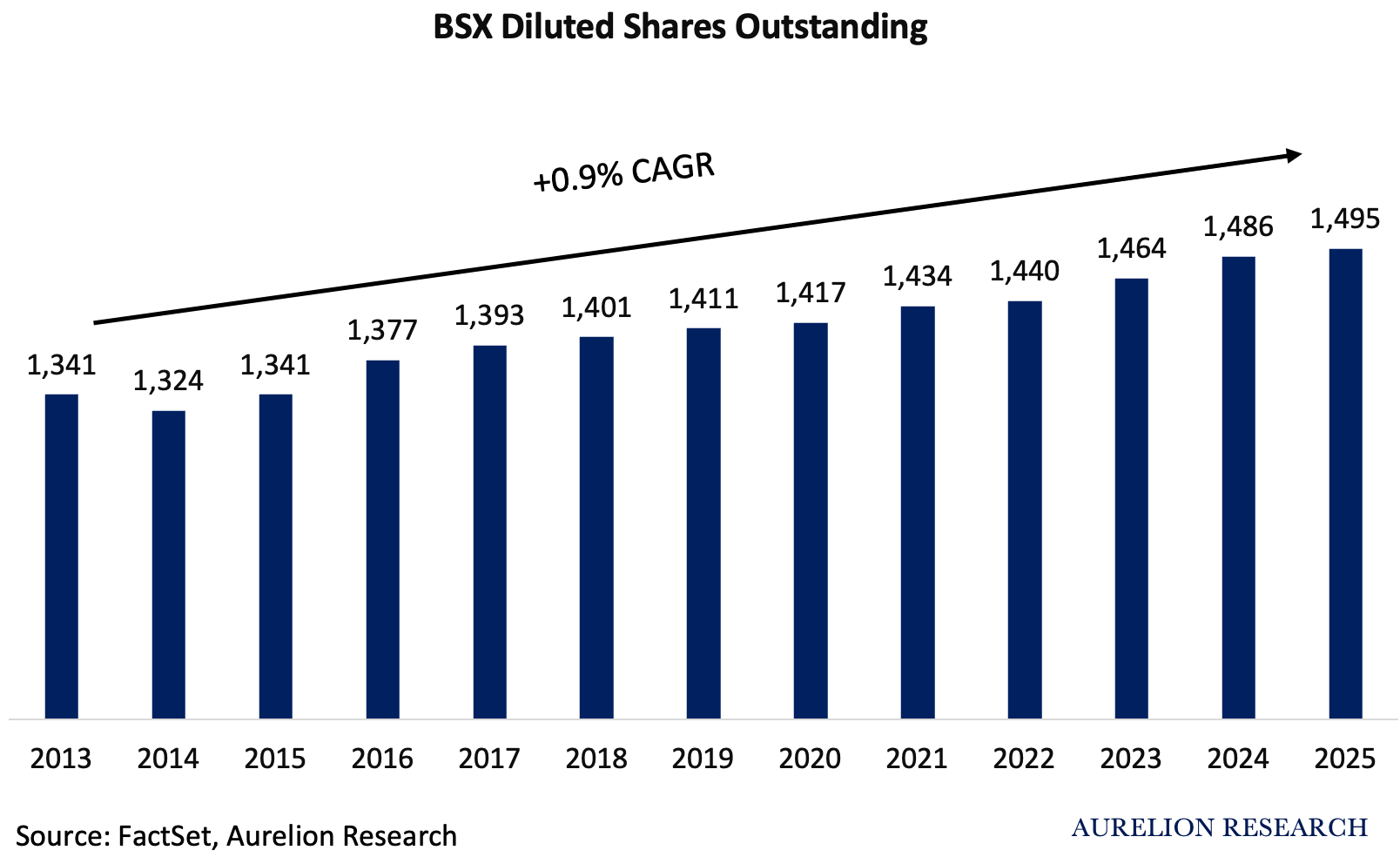
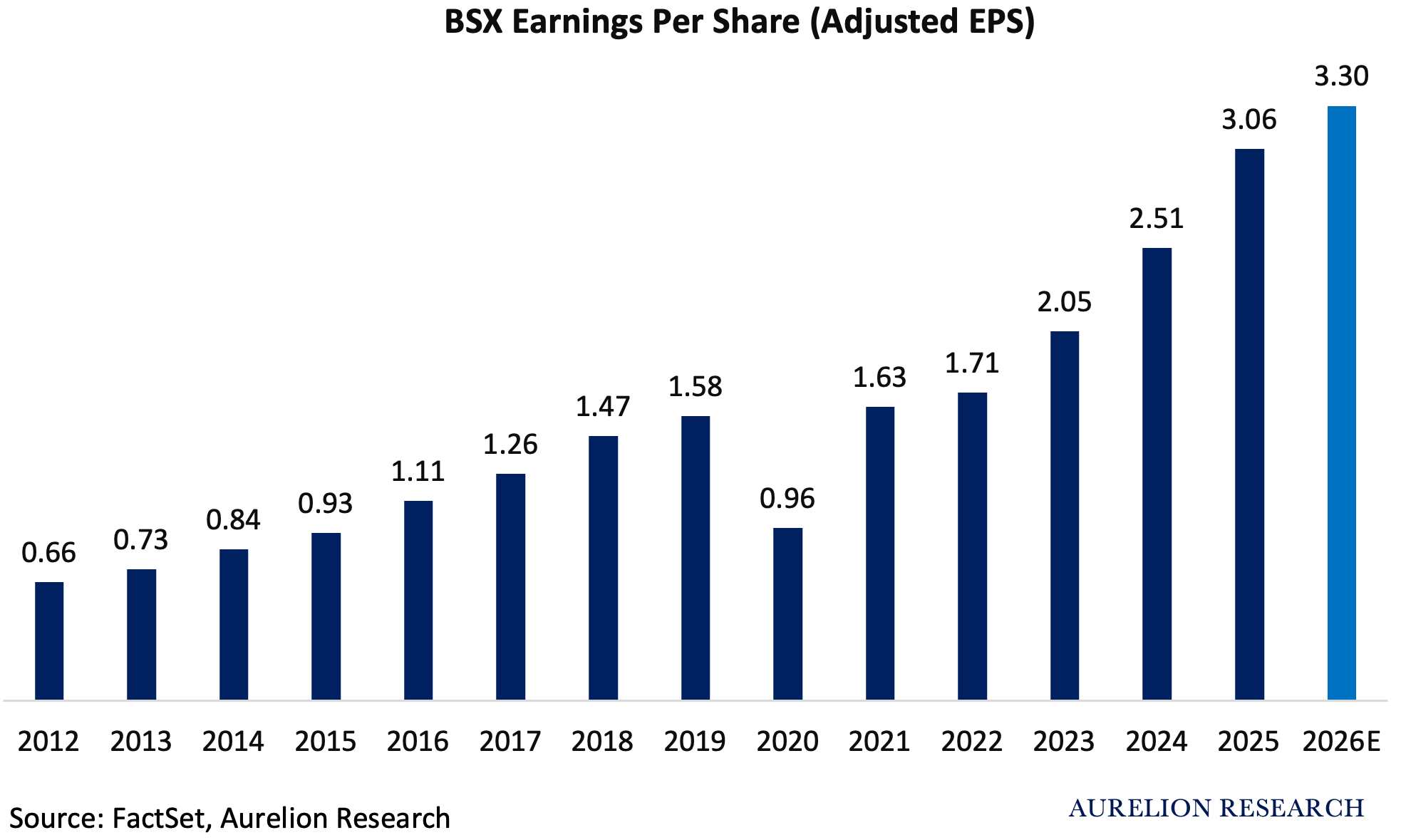
In total, combining organic growth, margin expansion, and a virtually flat share count, BSX has been able to grow at a CAGR of 12.2% over the last 14 years.
6. Valuation
Revenue Growth
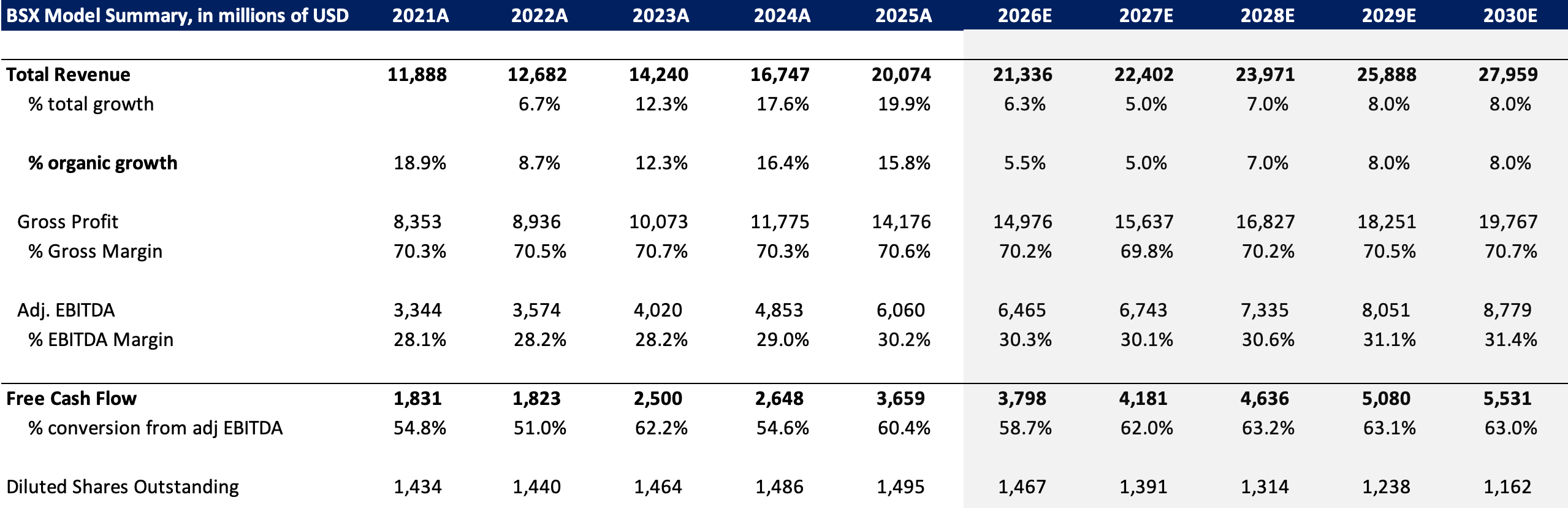
We assume growth to be all organic but include announced acquisitions in our revenue numbers. We are slightly over the Street in the 2027 period because we think it will be easy to beat the 2 - 4% discussed by management. For the following periods, we assume the long-term range for BSX’s growth (7 - 8%).
Margins
Because new products coming in the 2027–2028 period should boast higher margins than the rest of the business, we give a bit of margin expansion to BSX.
Moreover, the restructuring they are doing should help lower costs for the 2027–2028 period, though we expect margins to be slightly impacted in 2027 with Farapulse and Watchman.
Because BSX has proven over time to be able to grow their margins in the last decade, we think this is the base case. Our EBITDA margin increases from 30.2% to 31.5% in 5 years.
Cash Flow Generation
Management told us 70 - 80% conversion from EBITDA as a target, though we view this as high compared to what they have historically done. Our model therefore implies more in the 62% conversion range.
Capital Allocation
We assume a +0.7% growth in diluted shares outstanding coming from normal stock compensation and the rest of cash to go towards buybacks.
Because BSX is now buying back a significant amount of shares and has proven that their acquisitions enhance the value of their share price over time, we think putting all the cash to work in buybacks is a fair projection for our long-term price targets.
Technical note: A few sell-side analysts double-count amortization in their adj. EBITDA calculation because amortization is already excluded from adj. operating income, so the result overstates true EBITDA.
We use adjusted operating income + depreciation only.
We do not argue for a comeback to the all-time high multiple, nor the average, but rather to the bottom of its historical average. 10 - 12x EBITDA is a multiple for a scenario where Farapulse and Watchman become significant detractors to growth, which has not been proven yet.
Our valuation is as follows, driven by an 8% earnings CAGR, meaningful buybacks, and a slightly higher multiple than the current one.
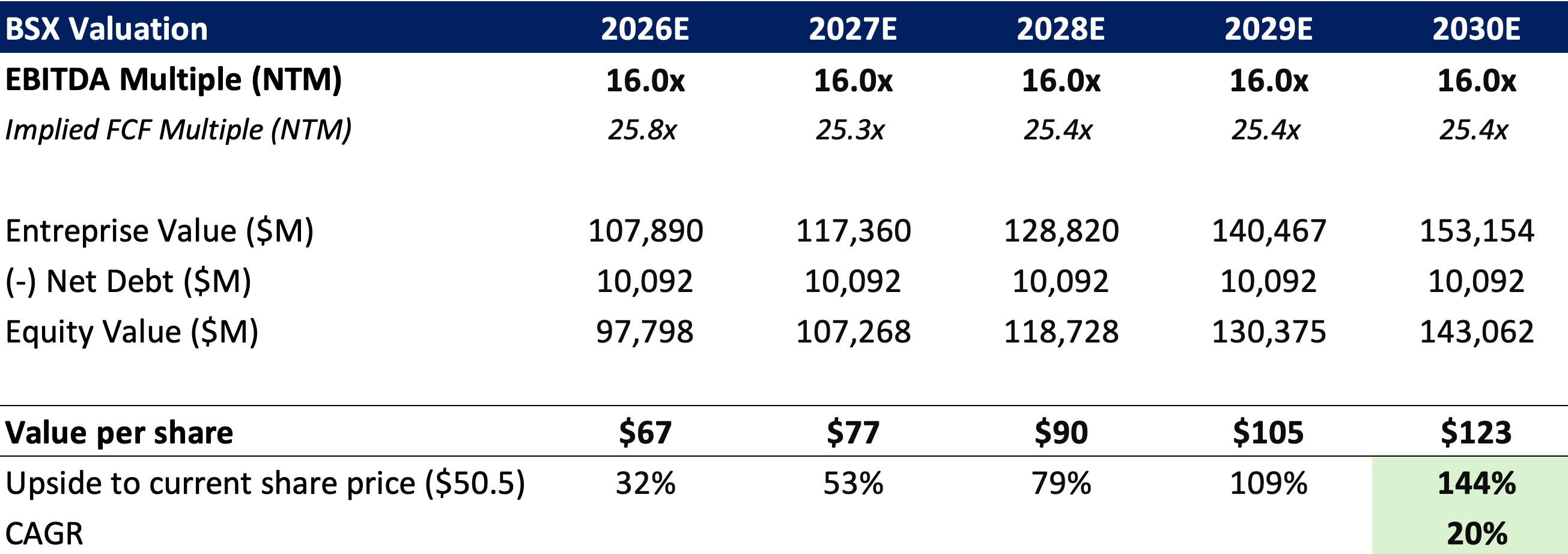
Our price target for year-end 2026 is $67.
We do not think BSX is worth its previous $100 PT or that it will get there quickly, given the uncertainty and slower growth around Farapulse & Watchman.
However, even under what we consider a base case, where both Farapulse & Watchman perform poorly, our valuation still points to compelling upside.
7. Risks
1) Farapulse could lose more share than we expect. Management assumes global EP sales stay flat through 2027, which we view as conservative. However, one Abbott territory manager expects Farapulse’s US share to fall from ~70% today to 35–40% by 2027 as Affera and Volt gain traction. We would not take that estimate at face value, but if share loss is even directionally close, EP revenue could decline rather than stay flat. The main issue is that BSX’s mapping remains weaker until its new imaging product launches in 2027.
2) Watchman’s issue may be more than communication. Management believes doctors need more time to digest the recent clinical data. There may also be an economic issue, as hospitals and doctors can have different incentives around the procedure. With a new competitor coming in 2027 and no major label or coverage change expected until 2028, Watchman could remain a headwind for longer than expected.
3) Penumbra could weigh on the numbers. The $14.5B acquisition closes in 2H26 and is excluded from current guidance. Penumbra has lower margins than BSX, while integration costs and amortization will also create pressure. It also reduces the balance sheet flexibility that has supported BSX’s M&A strategy.
Overall, we think the risks are real, but importantly, we do not need Farapulse or Watchman to fully recover for the investment to work.
That is what makes the current valuation interesting to us.
8. Conclusion
Boston Scientific is going through a temporary slowdown.
Farapulse and Watchman have clearly become headwinds, and we do not expect either business to quickly return to its previous growth rate. But the rest of the company continues to grow, new products are coming, margins have a long track record of expansion, and management is still allocating capital aggressively through buybacks and M&A.
At 12x earnings versus a historical average of ~20x, we believe the market is pricing in a much worse outcome than our base case. Even assuming Farapulse and Watchman remain significant headwinds, we see attractive upside from the underlying business, new product launches, margin expansion, and buybacks.
The key for us is that we do not need everything to go right. We are buying a high-quality compounder while two of its growth engines are temporarily struggling. If either one stabilizes faster than expected, or the new product pipeline delivers, the upside could be meaningful. We believe this creates an attractive risk/reward and are adding Boston Scientific to the portfolio.
View how the portfolio is positioned here: Aurelion Index link.
Below is our most recent report covering our previous stock addition.

The Aurelion Team
Questions? Reach us directly on Substack or at contact@aurelionresearch.com.
Great research, thanks! how are you sizing this in the index?
I understand the thesis where valuation likely decreased more than it should for a business which remains quite recurring. The question which is not answered here is why now ? What is the catalyst to enter now rather than 2 months ago or in 6 months ?