

Forecasting commodities is challenging, but correctly assessing the market can lead to significant returns.
In this piece, we walk through the commodities that we are currently most bullish and bearish on and explain the reasoning behind each forecast. We focus on where we see the biggest disconnect between what the market expects and what we think will actually happen, putting numbers behind our views.
Simply put, our current stance:
Gold: Bullish
Copper: Bullish
Uranium: Bullish
Crude Oil: Bearish
Fertilizers: Bearish
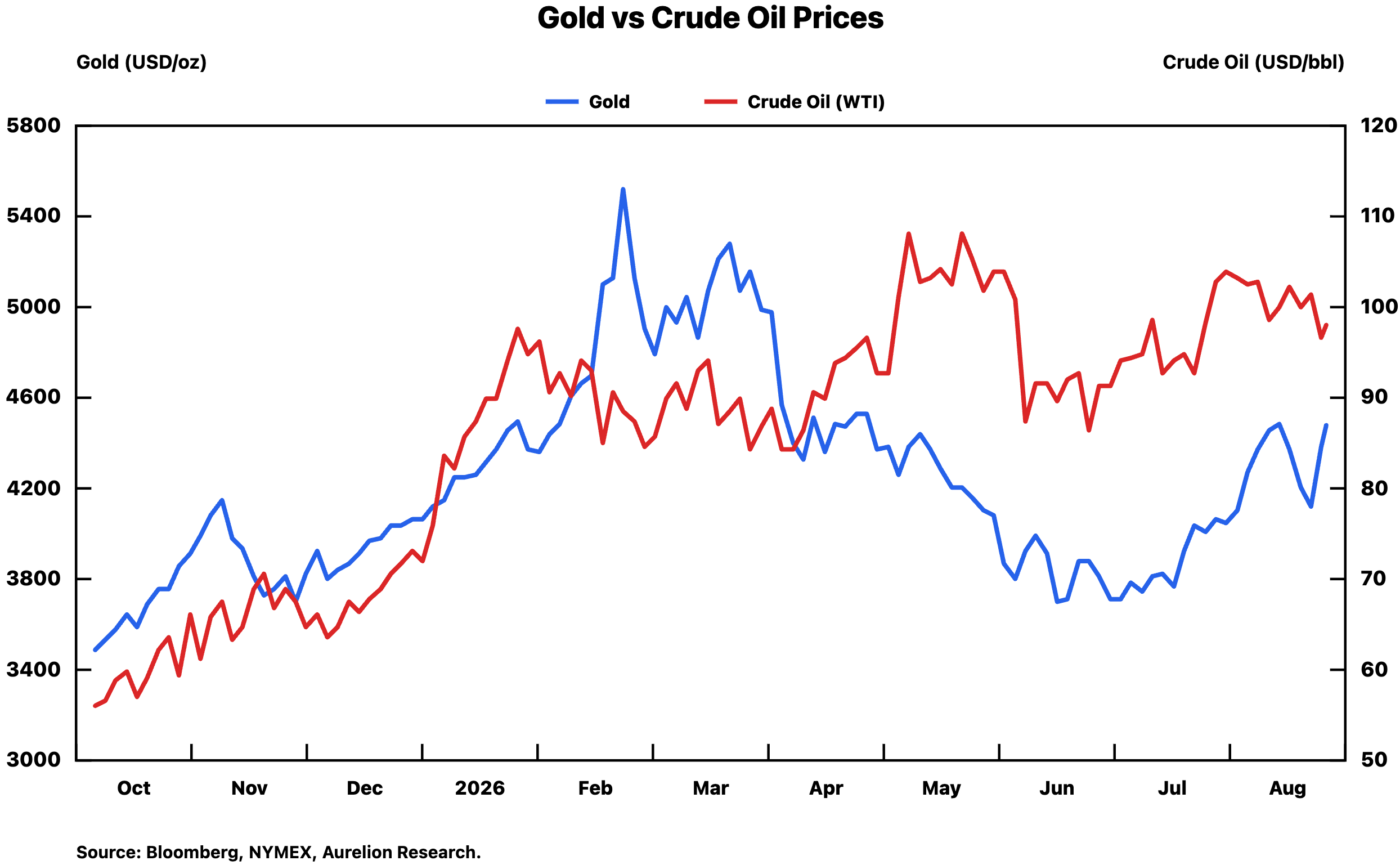
Gold started to decouple from oil prices, and that is exactly what we had been waiting to see before becoming bullish on gold again.
We also provide ways to express these views through well-positioned companies with strong fundamentals and attractive growth prospects, giving investors a way to benefit from the themes we believe are likely to play out.
Table of Contents
Bullish Commodities
1.1 The Case for Higher Gold Prices
1.2 A Growing Copper Supply Deficit
1.3 The Uranium Spot Price Rally
Bearish Commodities
2.1 Fertilizer Prices Won’t Rally
2.2 Don’t Fall for the Oil Bulls
Final Thoughts
1. Bullish Commodities
In the following section, we go through the three commodities we are most bullish on: gold, copper, and uranium.
We could have covered other commodities, such as steel, aluminium, and silver, but we chose to focus on the ones we consider most relevant and have the highest conviction in. For each commodity, we outline our thesis and price target.
1.1 The Case for Higher Gold Prices
In times of uncertainty, gold has historically been one of the most effective hedges against geopolitical and financial risks. That remains true today. When gold pulled back from its highs a few months ago, mainly due to changes in the economic outlook, interest rates, and the US dollar, we never turned bearish on the metal. We simply saw it as an opportunity to wait for a better entry point.
We think that opportunity has arrived.
Gold is now positioned to make new all-time highs, with central bank buying remaining strong, interest rate expectations becoming more supportive, and plenty of room for private investor demand to grow.
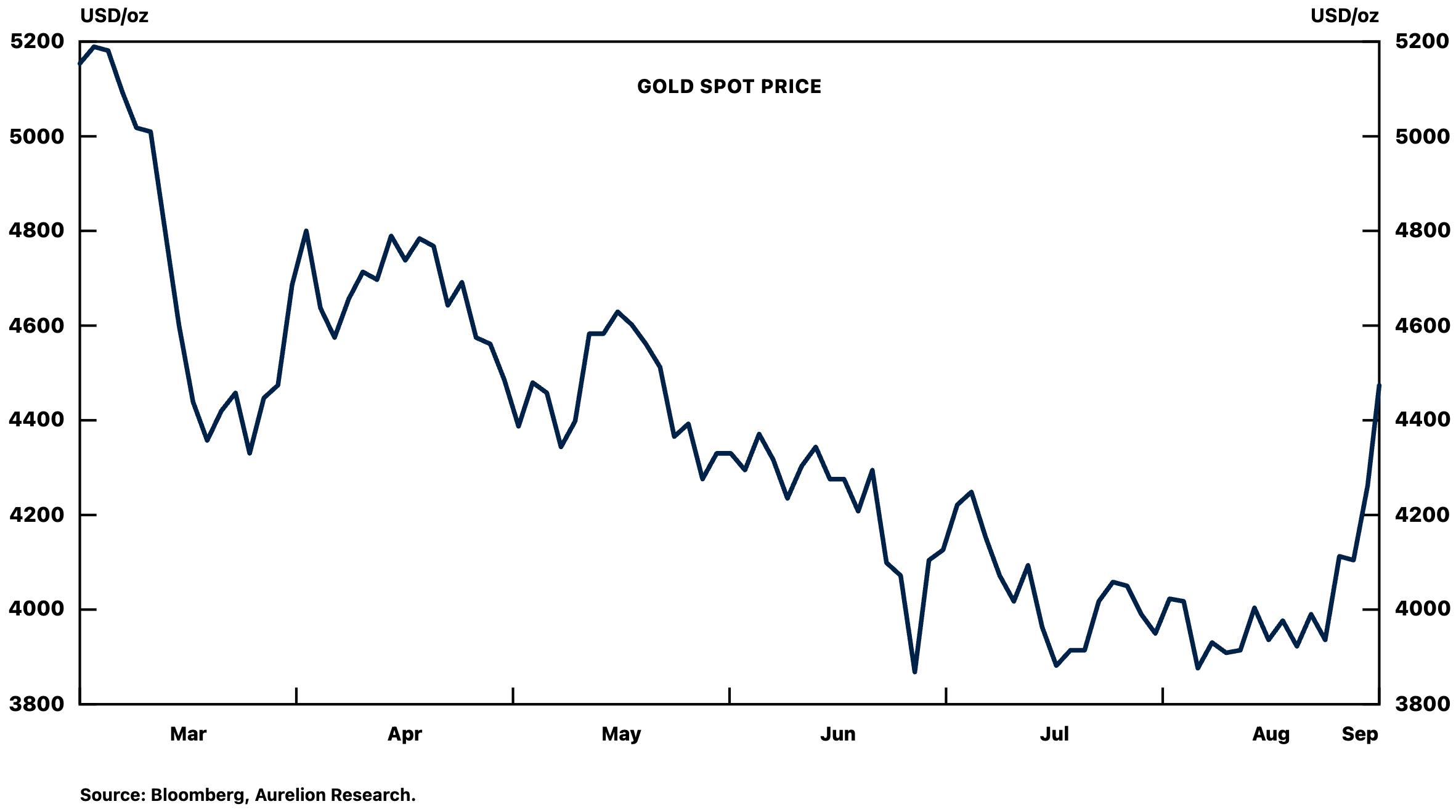
Gold also is still one of the simplest ways to diversify away from the US dollar, which is rarely a bad idea. More importantly, we think the worst of the recent correction is behind us. Real rates and the dollar remain important for gold, but we expect both to become more favorable for the metal going forward.
So, what is keeping the rally going?
We think central bank demand is one of the biggest reasons.
Central Banks Are Still Buying
They have been accumulating gold at a high rate, and we think this is more than a short-term trend. Governments are increasingly using gold to diversify their reserves and hedge against geopolitical and financial risks. Unlike foreign currency reserves, gold is much harder for another country to freeze or restrict.
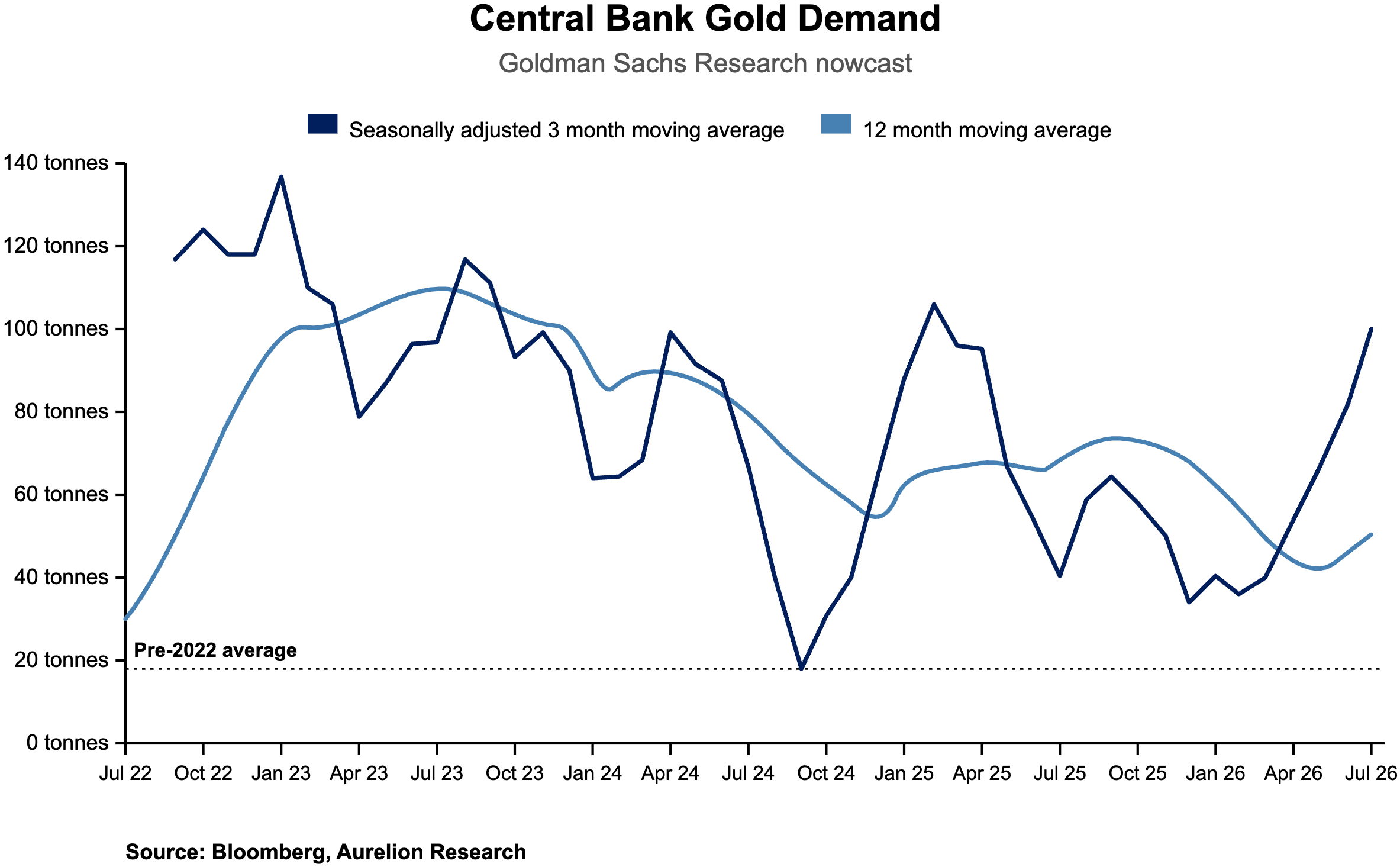
This shift accelerated after 2022, when G7 countries froze Russian central bank assets following the invasion of Ukraine. Since then, central banks have continued to increase their gold purchases, turning what was once a smaller part of the market into an increasingly important source of demand.
China is an important part of this story. Central bank purchases accelerated to around 100 tonnes per month in June 2026 on a three-month seasonally adjusted basis, up from roughly 66 tonnes the previous month. China’s central bank was also the largest identifiable buyer in the market that month.
We think this creates an important floor for gold prices. Investment flows can change quickly, but central bank buying has become a much more consistent source of demand than in previous gold cycles.
Investors Are Coming Back
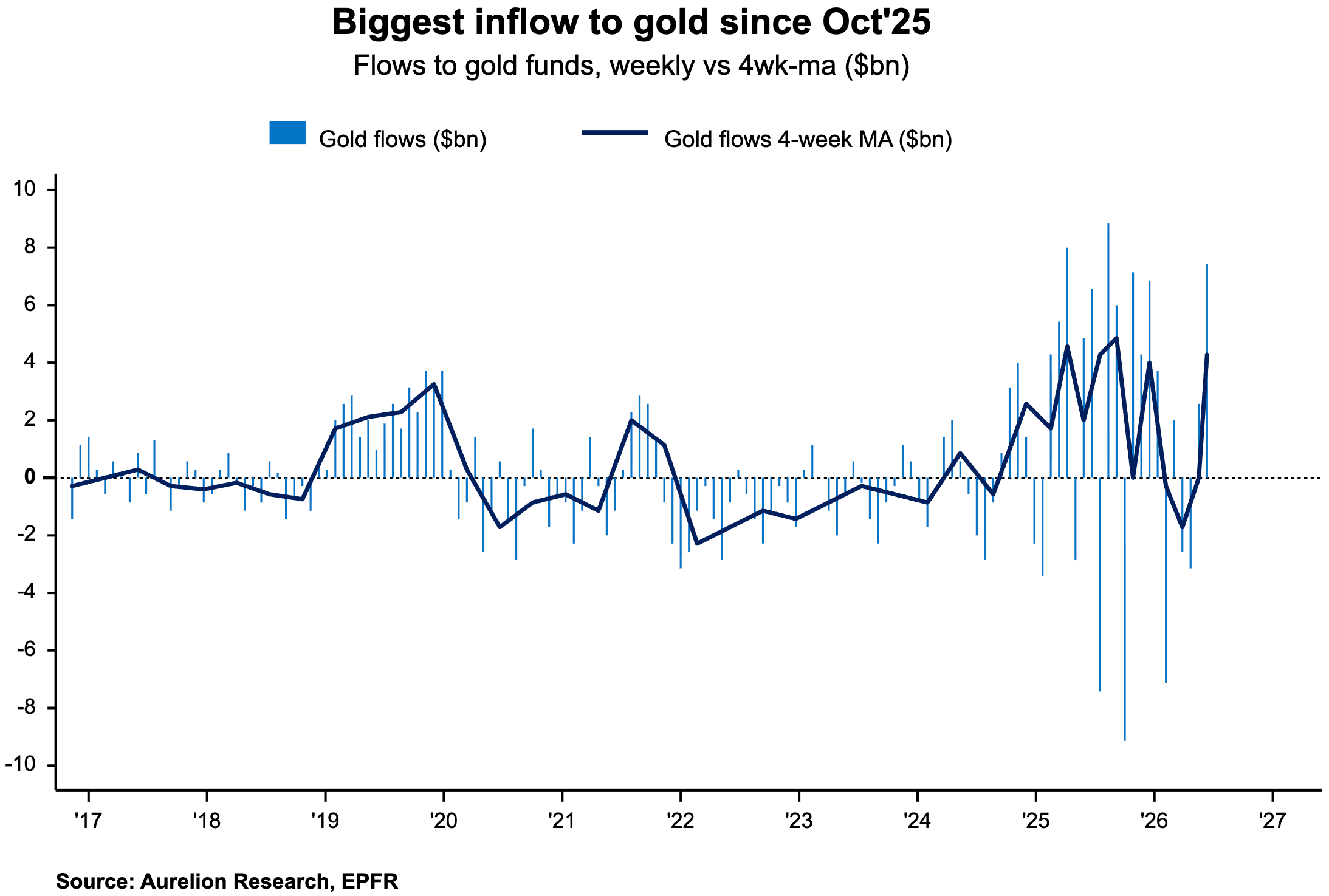
Central bank demand is only part of the story. Investment flows are starting to show that private investors are also becoming more interested in gold.
The latest data showed the largest inflow into gold funds since October 2025. Gold is getting hot again, and investors do not want to be the ones watching from the sidelines while everyone else gets in. Gold ownership remains relatively small in most portfolios. If even a modest amount of capital is reallocated toward the metal, the impact on prices can be significant given the size of the market.
Gold Could Become More Volatile
The increase in investor interest is also showing up in the options market.
Demand for gold call options has been rising as investors look for protection against large changes in government policy and geopolitical risks. This can increase volatility in both directions, but we think the current setup creates more potential for upside acceleration than a sustained reversal.
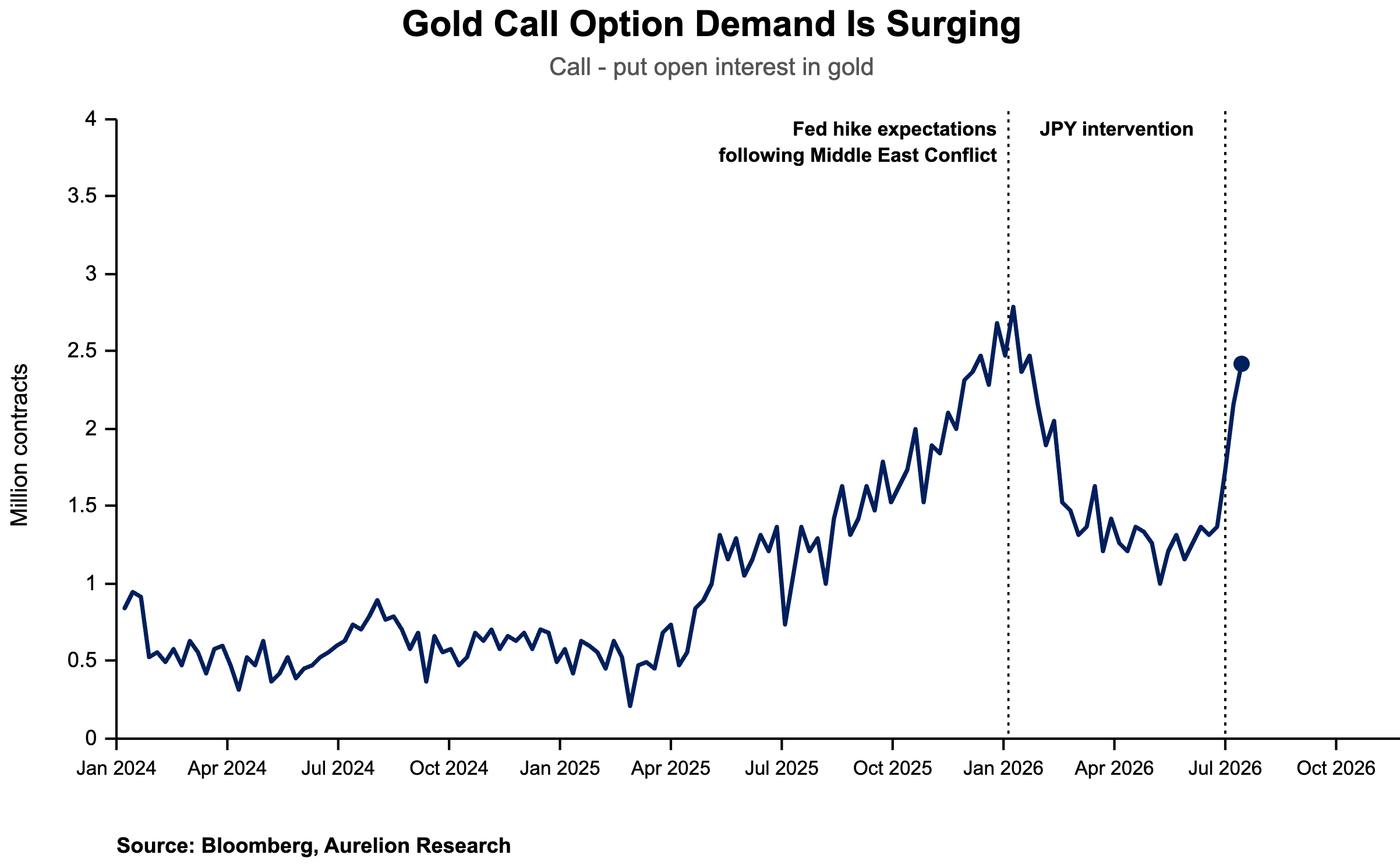
The reason is simple. As gold approaches important strike prices, dealers who have sold call options may need to buy more gold to hedge their exposure.
This can create additional demand and reinforce the rally. Of course, the same mechanism can work in reverse if gold falls sharply, which can amplify downside moves. But when investor positioning, demand, and the underlying fundamentals are all pointing higher, the options market can add fuel to the rally.
Rates Are Turning More Supportive
Interest rate expectations are another reason we think gold can move higher. After a slower first half of the year, demand is starting to pick up as markets see less risk of the Fed keeping rates high through 2026. Gold tends to struggle when yields rise because higher-yielding assets become more attractive. With markets now expecting rates to move lower, that headwind is starting to fade.
At the same time, geopolitical tensions and growing concerns around Western debt and fiscal spending could push more private capital toward gold. Gold still represents a relatively small allocation in most portfolios, leaving significant room for ownership to increase. If investors begin to follow central banks and increase their exposure, it could create another meaningful source of demand.
Positioning Still Has Room to Move
One of the more interesting things to watch is the difference between realized flows and conditional expected flows in one-month gold projections.
The data shows that positioning can shift quickly in either direction. Investors can add significant net length when they become more bullish, but that positioning can also unwind just as quickly when sentiment turns.
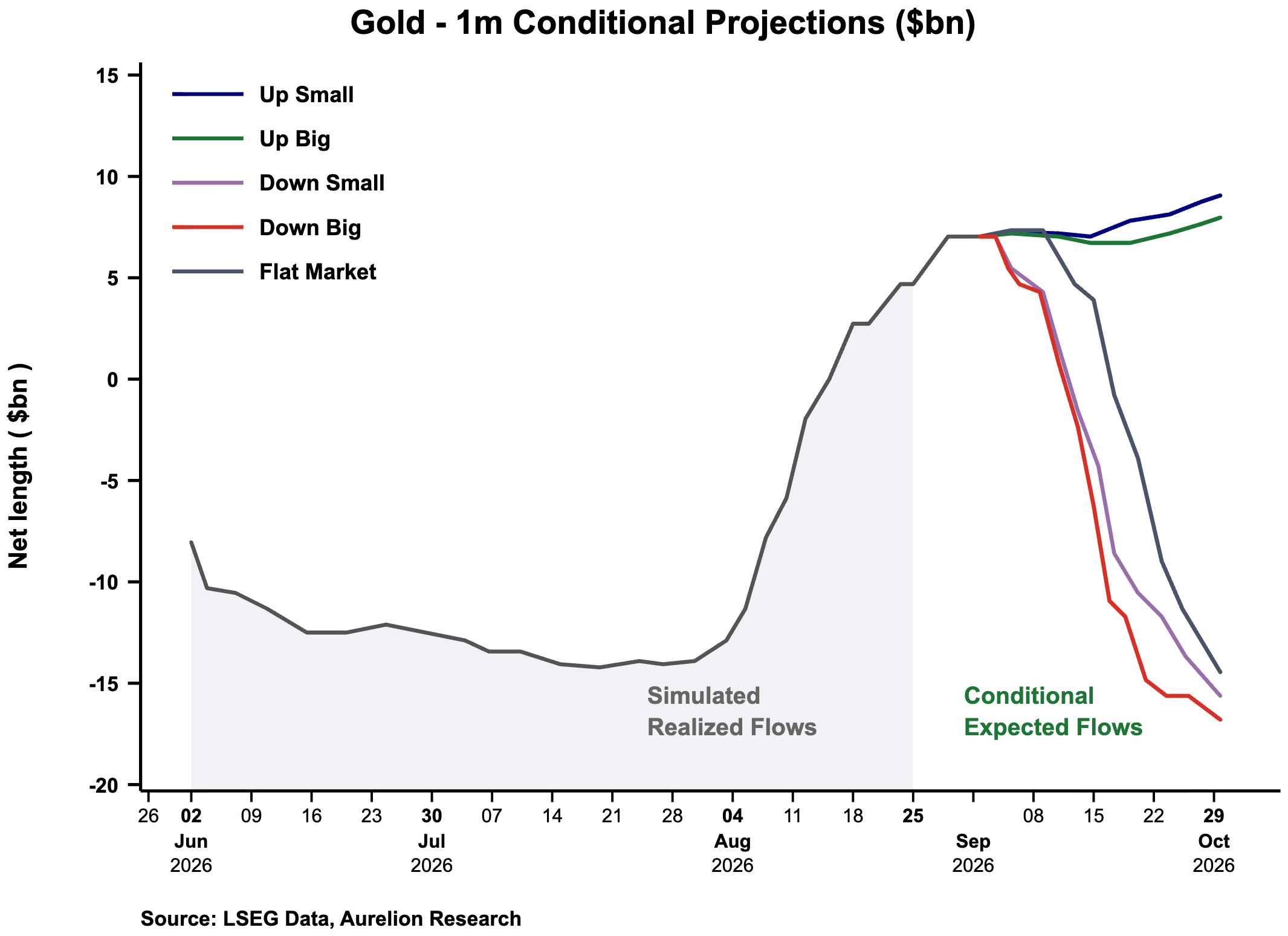
We do not view this as a reason to become bearish. Instead, it highlights an important characteristic of the current market: gold has become a crowded trade at times, but positioning can still change dramatically as expectations evolve.
Our Gold Price Forecast
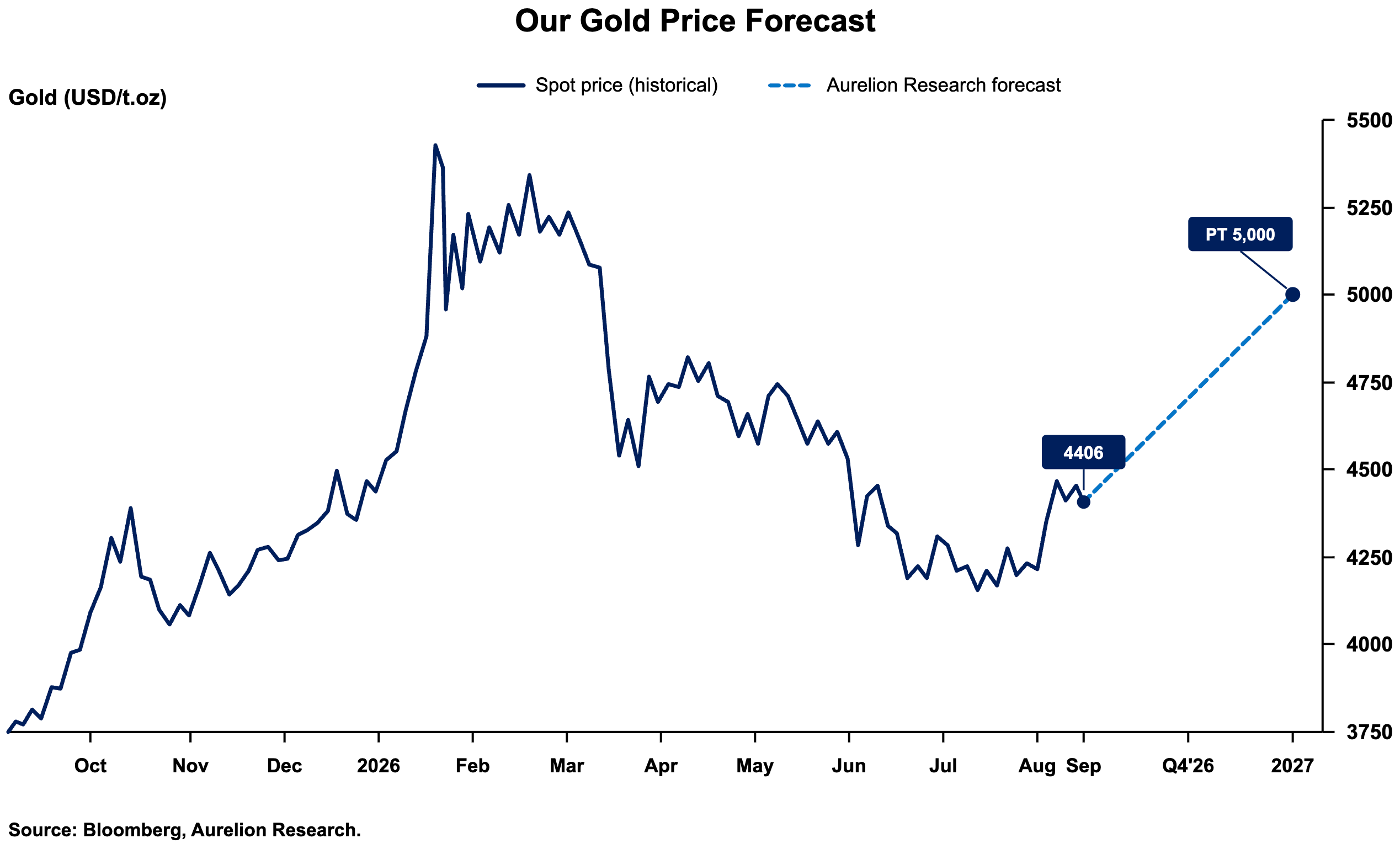
With central banks still buying, investment flows picking up, and rates becoming more favorable, we think the setup for gold remains strong. Private investors are also still underexposed to the metal, leaving plenty of room for more demand. Gold is already moving higher, but we think the rally is still in its early stages.
We expect gold to reach $5,000/oz before the end of 2026.
1.2 A Growing Copper Supply Deficit
The copper bull case is pretty simple. Demand continues to grow, while supply is struggling to keep up, which ultimately leads to a deficit. And when a commodity is in a deficit, prices tend to rise. That is exactly what we are seeing with copper.
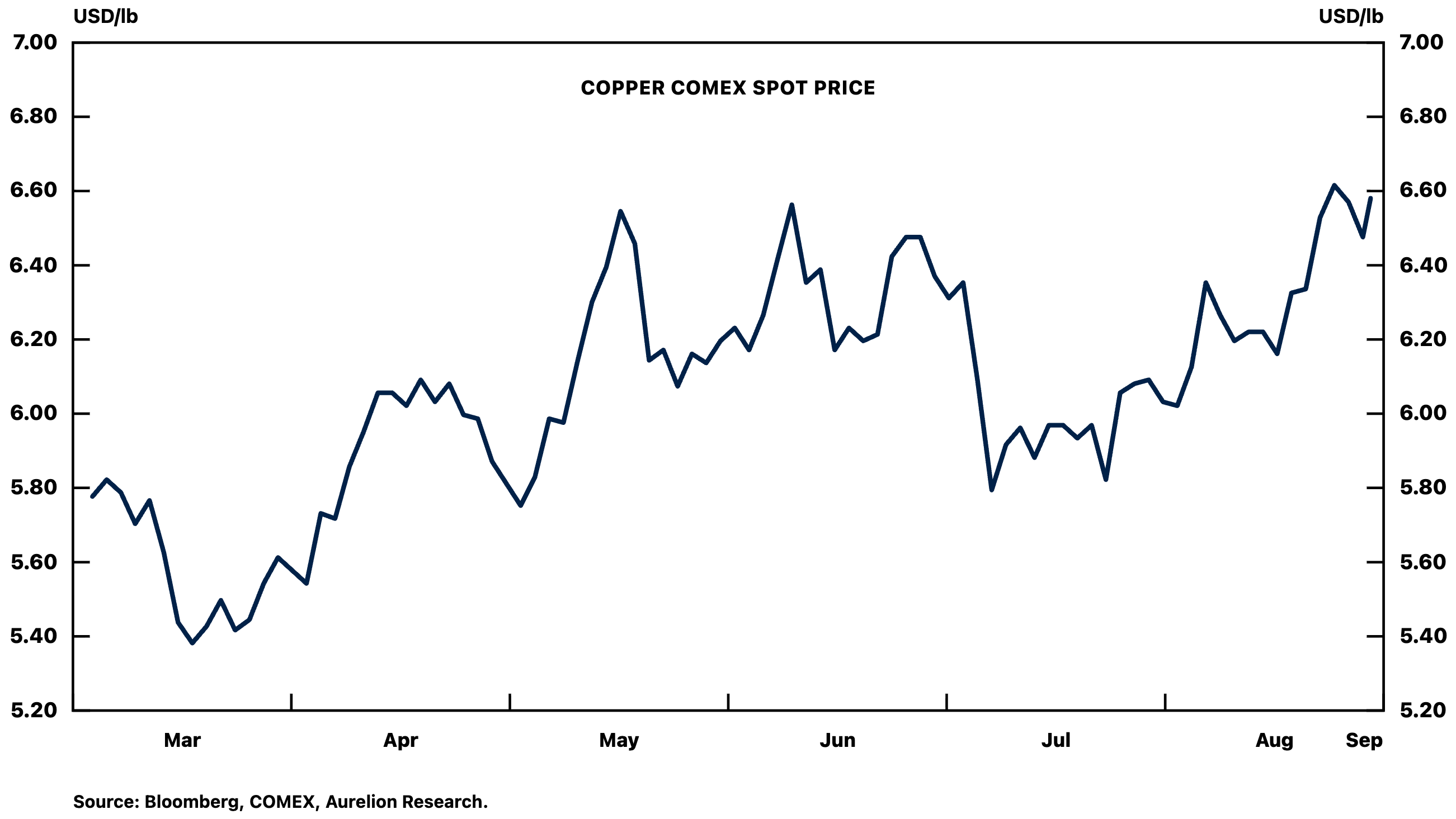
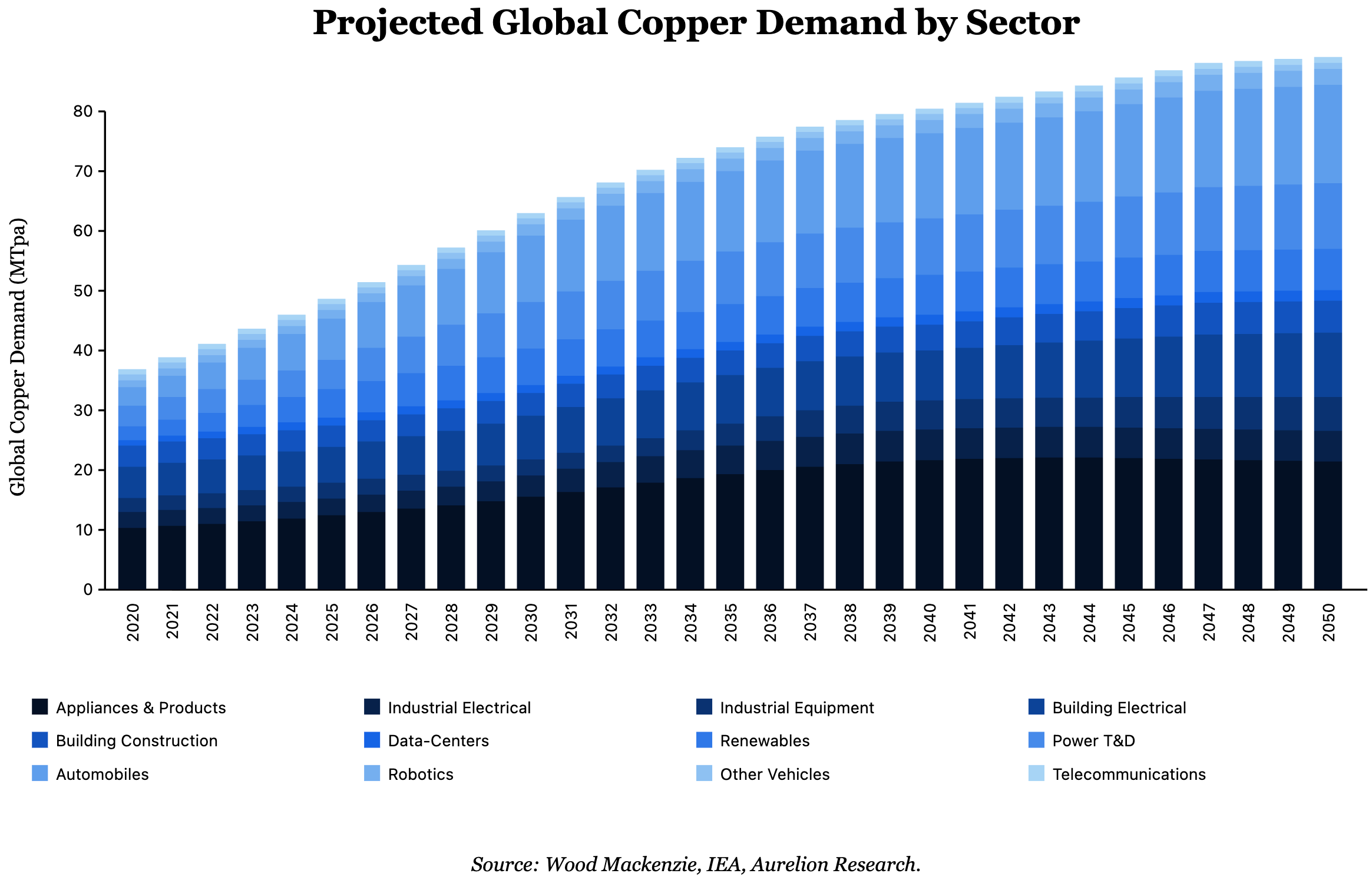
As data centers, power grids, and energy infrastructure expand, copper demand continues to rise. Electrification is adding another major source of demand, while the rapid buildout of AI infrastructure is putting even more pressure on the metal.
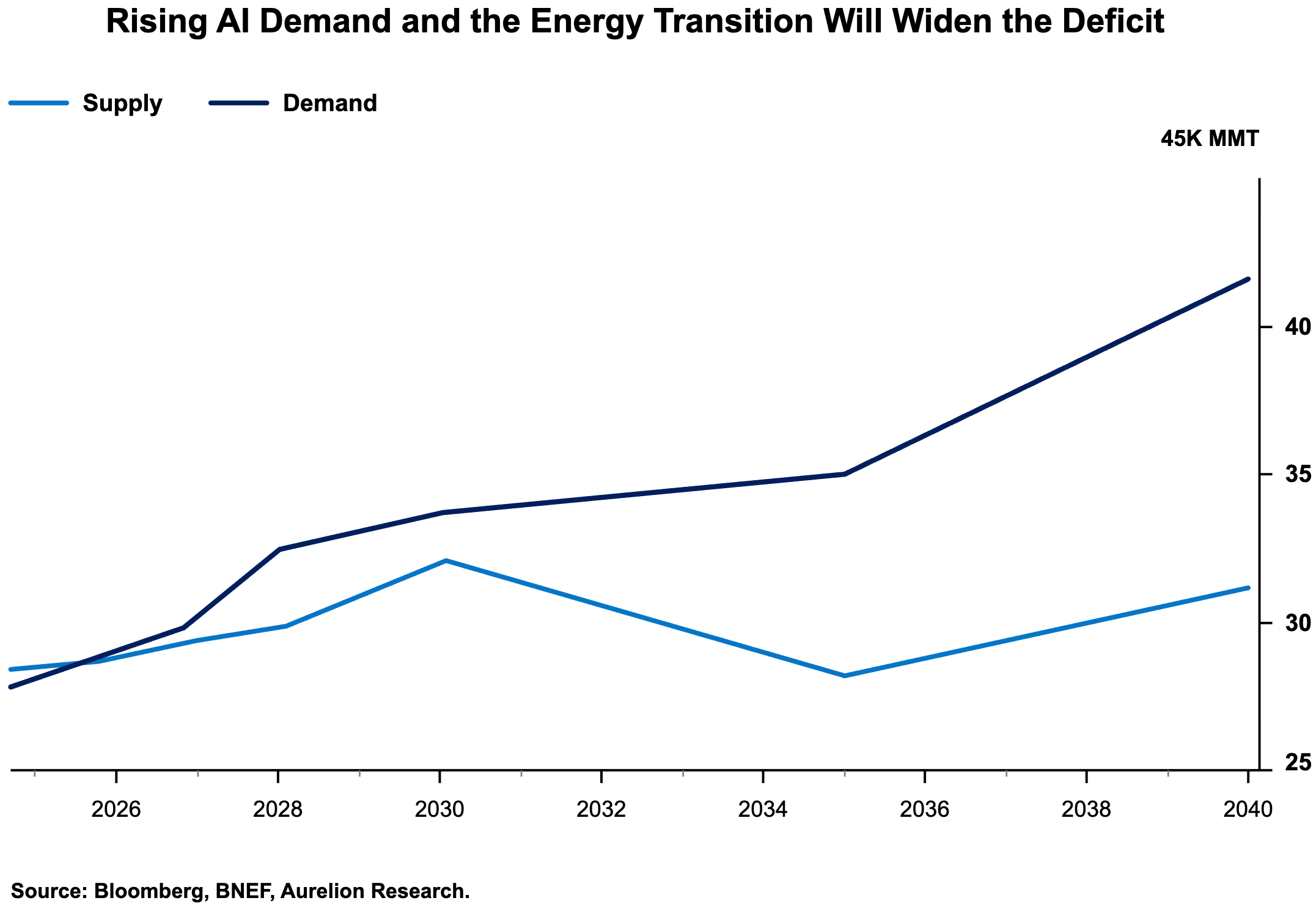
The problem is that copper supply cannot respond nearly as quickly. New mines can take more than a decade to develop, ore grades are declining across many existing operations, and major discoveries are becoming increasingly difficult to find. Even higher copper prices cannot bring new supply online overnight.
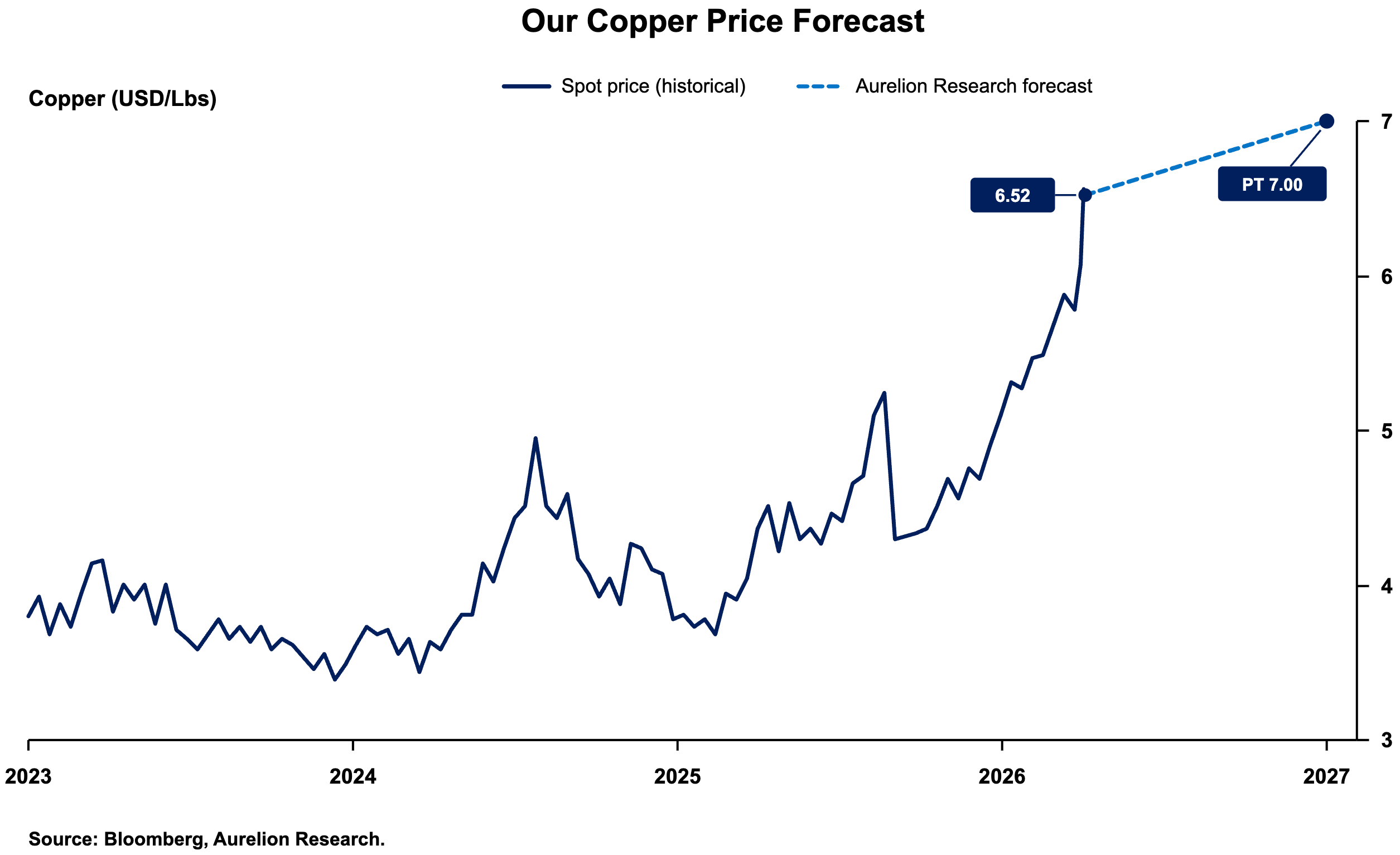
Our Copper Price Forecast
We think significant investment will be needed to close the copper supply gap, but new production takes years to come online. This should keep the market tight and support higher copper prices over the long term.
Given these factors, we have set a copper price target of $7.00/lb for 2027.
We see this company as one of the most attractive ways to gain exposure to the long-term growth in copper demand, as the market moves toward a tighter supply environment.

1.3 The Uranium Spot Price Rally
Uranium spot prices have been rallying recently, and we think the main driver is a combination of timing, market sentiment, and a growing realization that the uranium market could be heading toward a shortage. More and more people are starting to reach the same conclusion we have had for some time: there simply will not be enough uranium supply to meet future demand.
But why won’t supply be able to keep up?
The answer starts with electricity. Global power demand is rising rapidly, while nuclear is becoming increasingly important as countries look for reliable, low-carbon energy. AI is adding another layer to this trend, with data centers requiring enormous amounts of power and running around the clock.
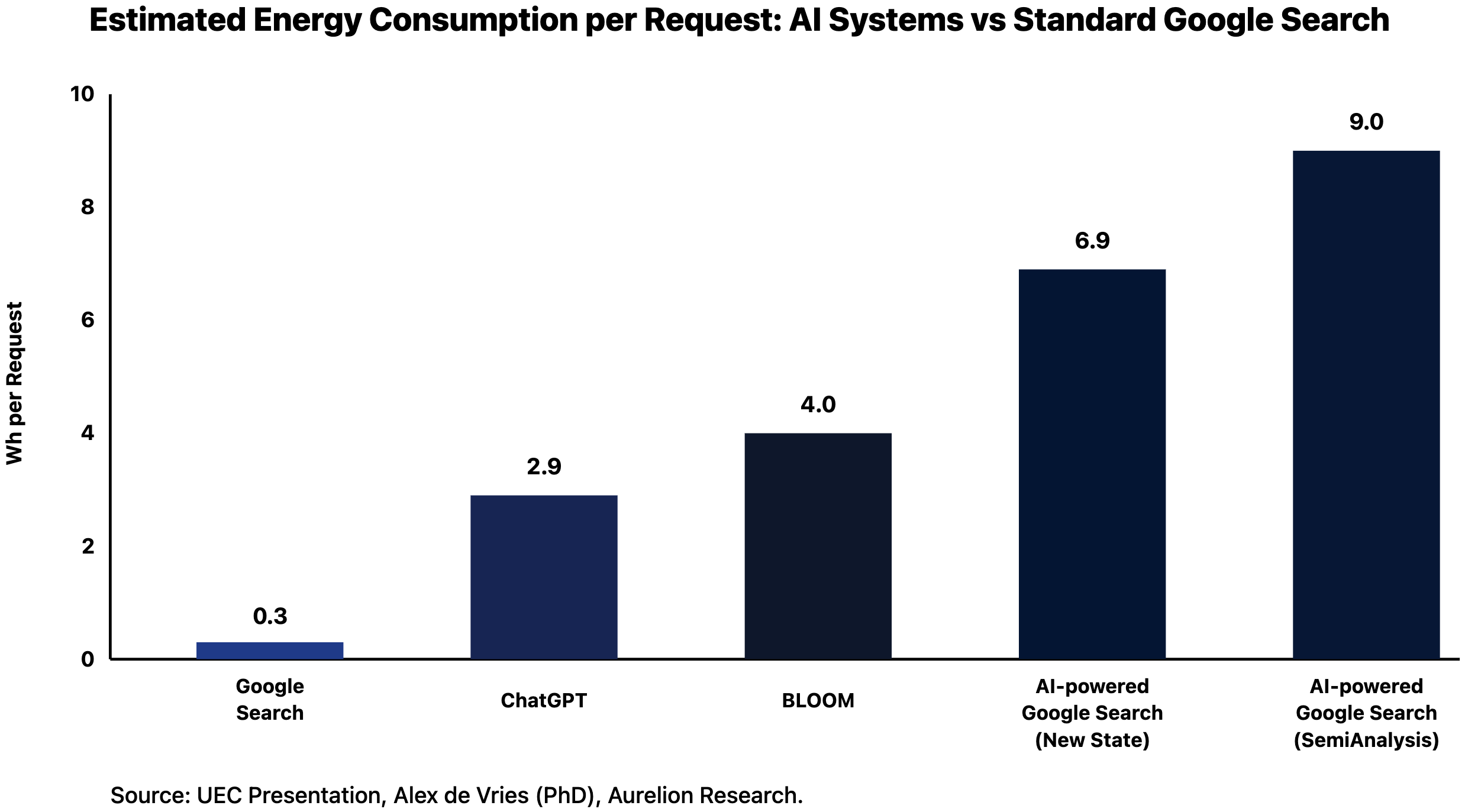
Data center power consumption alone is expected to rise 165% by 2030.
Nuclear is one of the few low-carbon sources that can provide reliable power around the clock. This is creating more demand for uranium, but supply takes much longer to increase. New mines can take years to develop, making it difficult for supply to keep up. Even if hyperscalers slow their spending, we still expect uranium demand to exceed supply in the coming years.
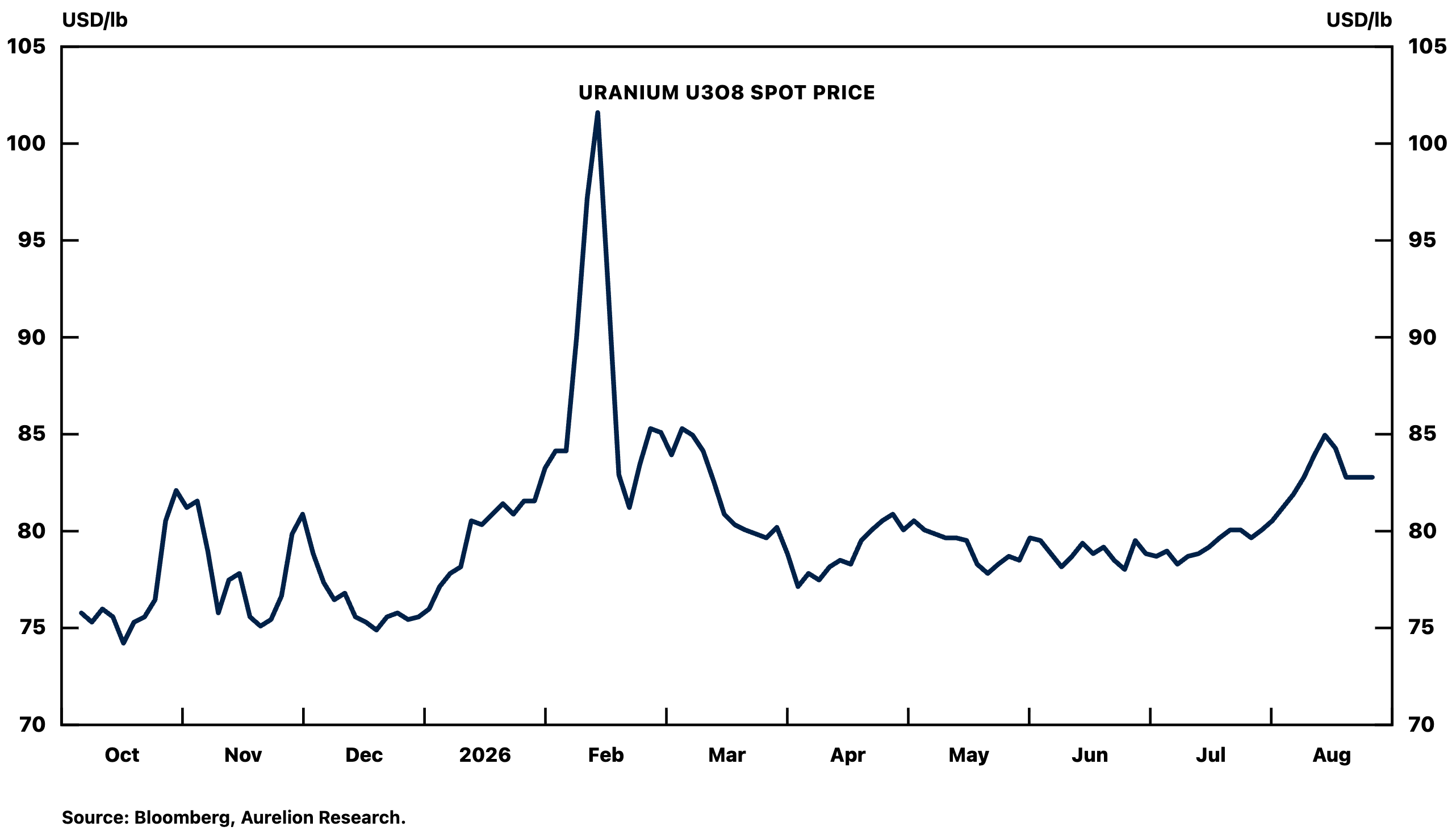
The issue is simple: we do not yet have enough energy capacity, especially clean and reliable power, to support what is coming. Uranium production also cannot ramp up quickly, so even relatively small increases in consumption can have a meaningful impact on prices.
Even if hyperscalers eventually scale back their spending plans, we still expect nuclear demand to outpace available uranium supply over the coming years.
The AI boom is only one part of the story, and the broader push for reliable, low-carbon power is unlikely to disappear. With new mines taking years to develop, we think the market remains set up for higher uranium prices.
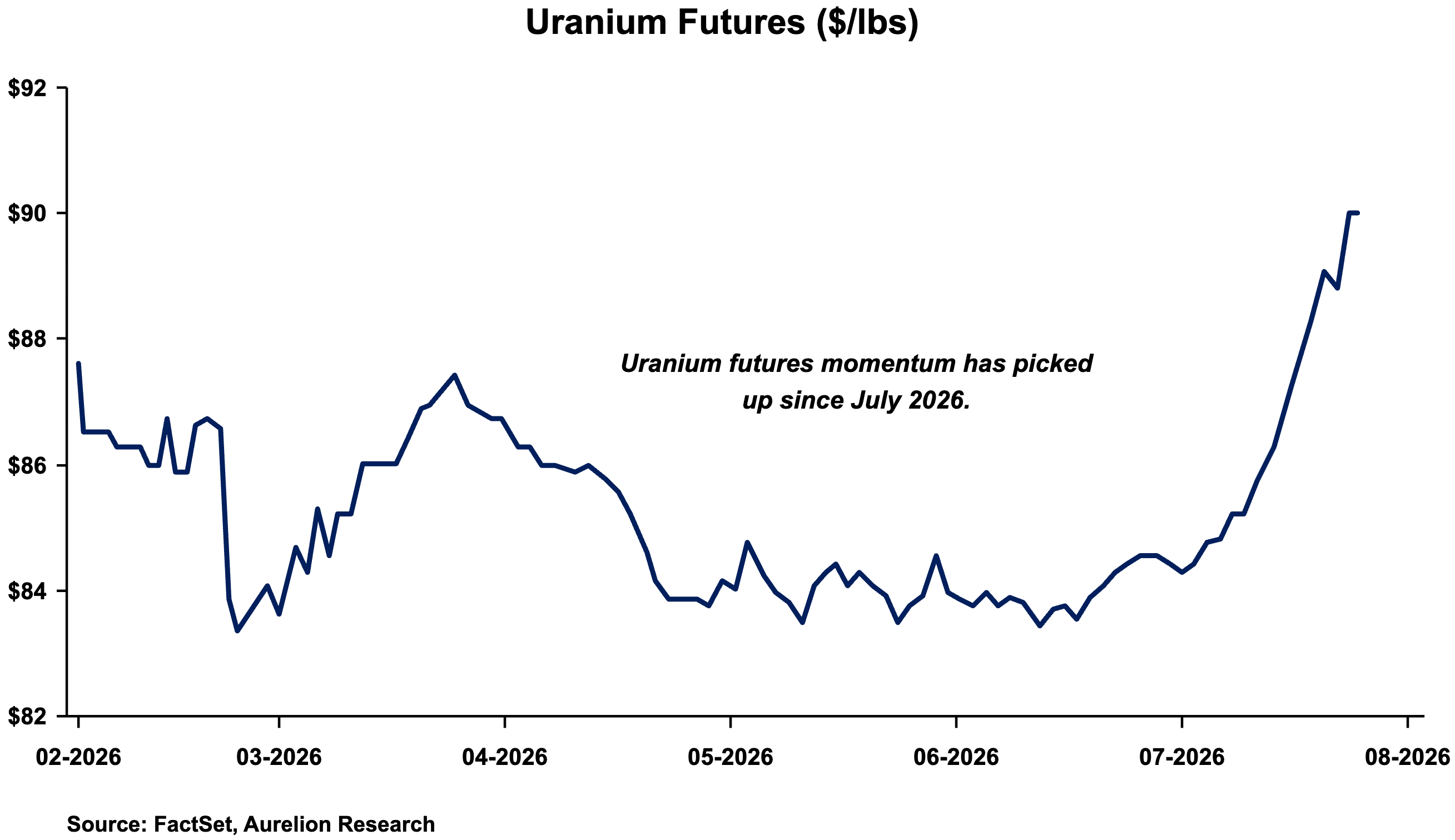
Our Uranium Price Forecast
The key question now is how high uranium prices can go from here.
We believe uranium prices can reach $100/lb in 2026.
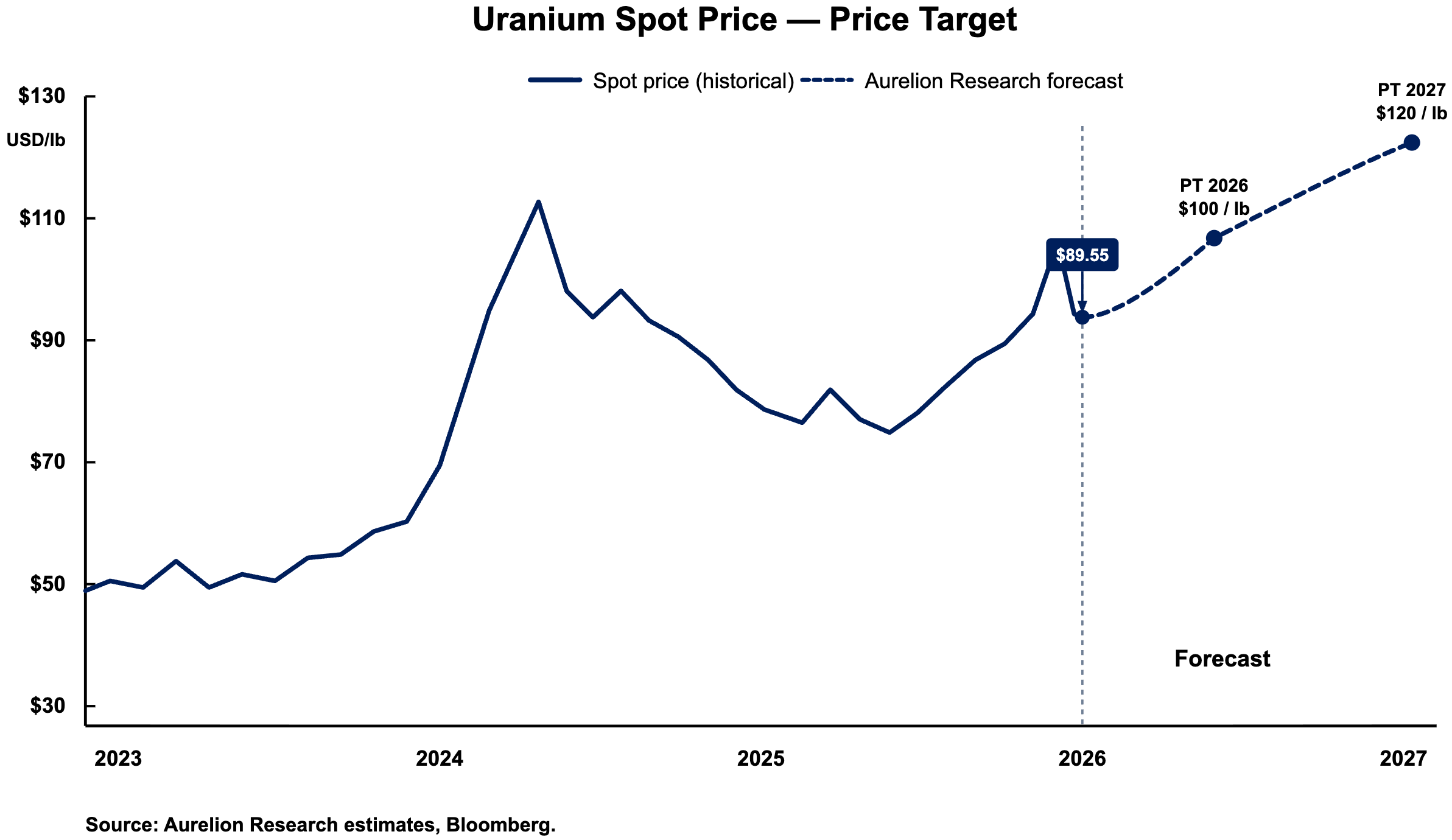
The longer-term picture is even more compelling. Analysts expect the uranium market to face a growing supply gap over the next two decades, meaning prices will likely need to move higher to incentivize the new production required to keep up with demand. This is also why we have a $120/lb price target for 2027.
This is one of our highest-conviction nuclear holdings, and we think the company is well positioned to benefit from the next phase of growth in uranium demand.

2. Bearish Commodities
In the following section, we go through the two commodities we are most bearish on: fertilizers and crude oil.
We could have covered other commodities, such as coal, lithium, and natural gas, but we chose to focus on the ones we consider most relevant and have the highest conviction in. For each commodity, we outline our thesis and price target.
2.1 Fertilizer Prices Won’t Rally
What is happening in fertilizer markets is interesting, but we do not think it means fertilizer prices are about to rally, at least not in the short term. Agricultural commodities are clearly facing higher supply risks following the closure of the Strait of Hormuz, but so far, these risks have not meaningfully reached Western markets. In our view, there is no reason to panic yet.
There is certainly plenty of uncertainty.
The timing of the Strait of Hormuz reopening remains unclear, while concerns around a strong El Niño are adding to fears of an agricultural supply shock. El Niño is a climate pattern that disrupts normal weather conditions, potentially causing drought in some regions and excessive rainfall in others. While a strong event could hurt crop production, we think it is still too early to assume it will have a meaningful effect on global agricultural markets.
China is also helping ease some of the pressure. The recent reopening of its urea export channel has brought additional supply back into the international market and removed part of the risk premium that had built up around the Hormuz situation. This is one of the reasons urea prices have fallen sharply recently.
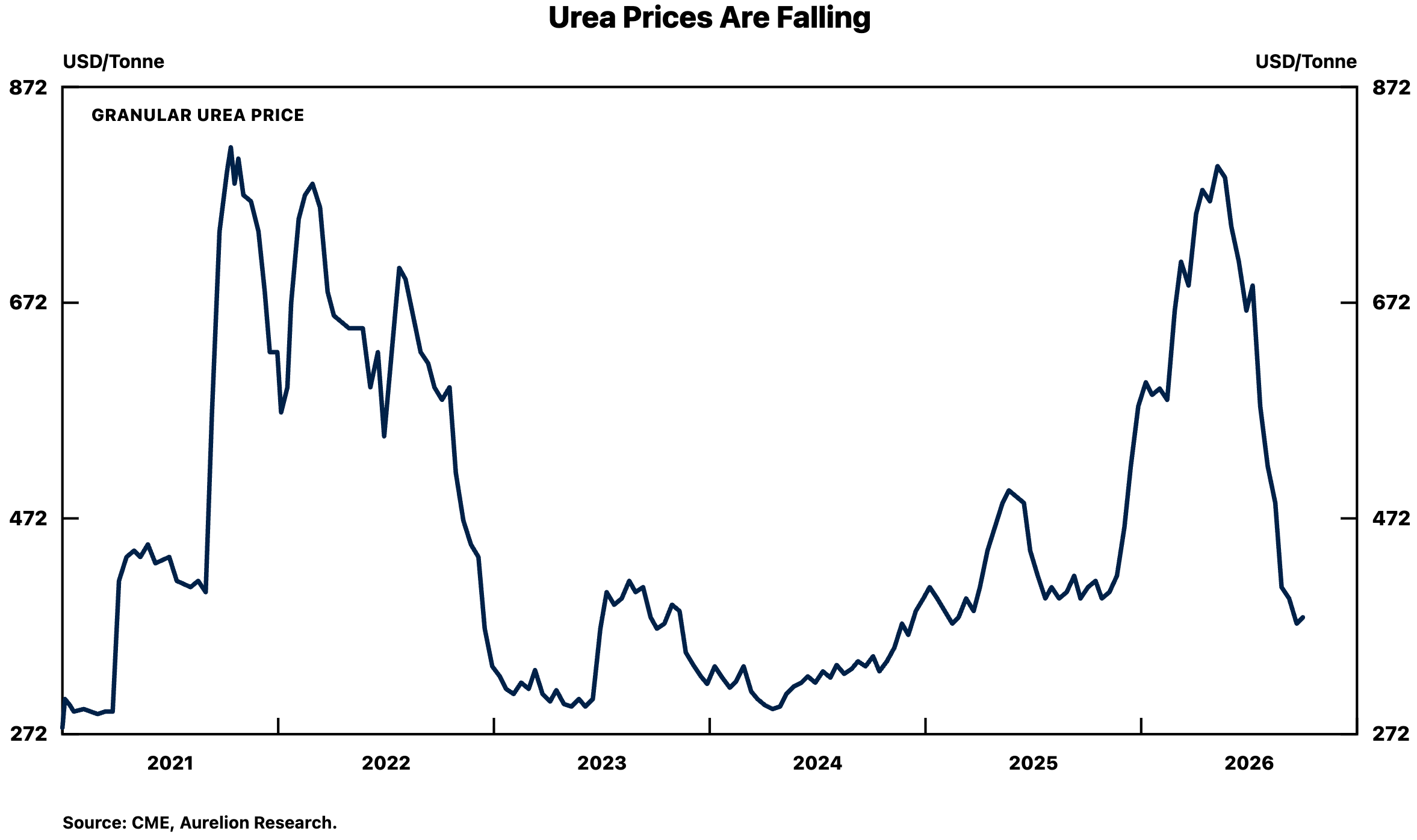
The impact is already visible in fertilizer affordability. After rising earlier in the year, fertilizer costs for farmers have started to ease, reducing some of the pressure on agricultural producers. Finally, inventories provide an important cushion. Several years of strong harvests have helped rebuild global grain inventories and improved crop balances. This gives the market more room to absorb potential disruptions without immediately creating a shortage.
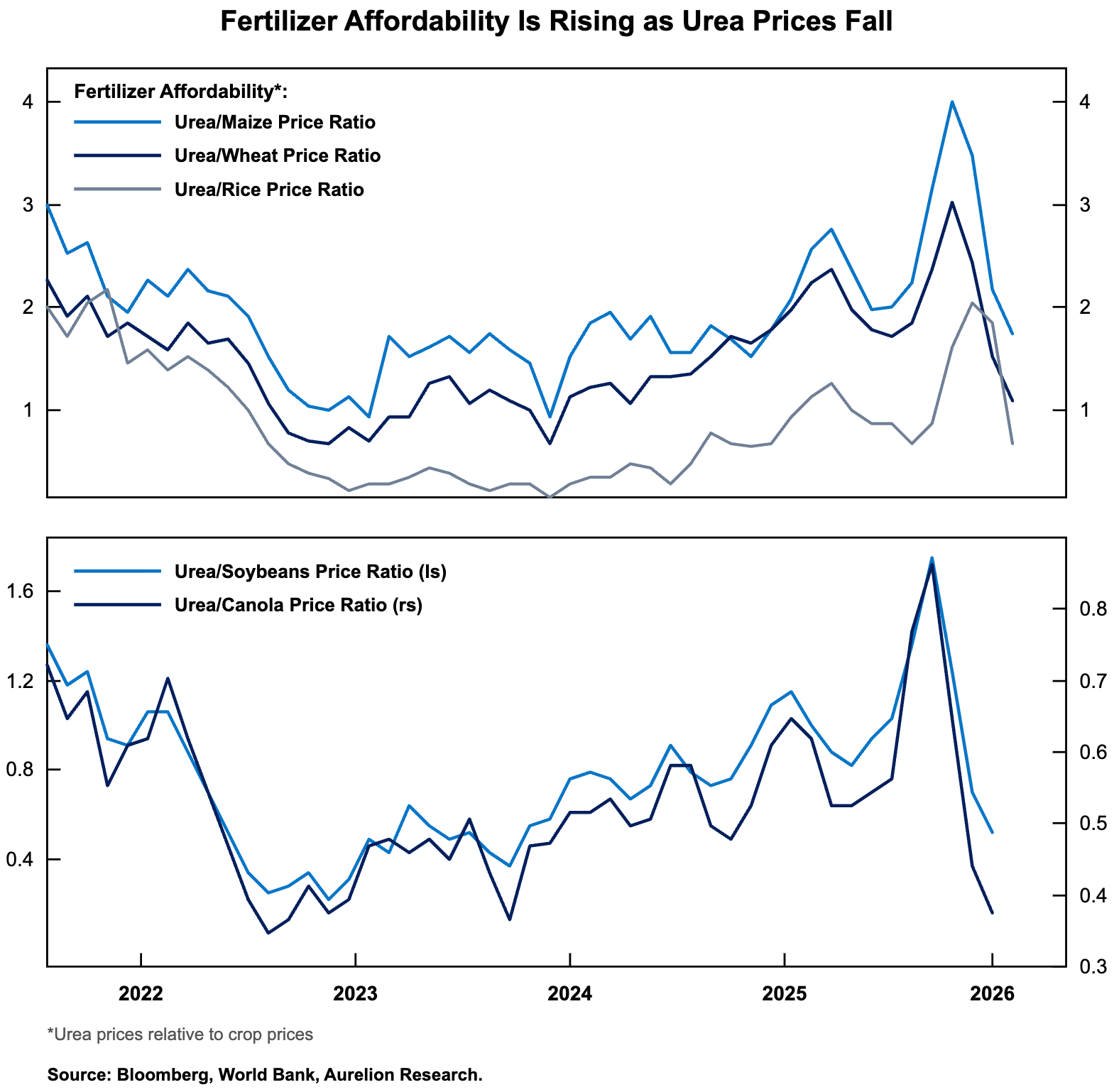
For now, we think the market has more than enough inventory to absorb the risks being discussed. Until that changes, we see limited upside for fertilizer prices in the short term, which is why we remain bearish on the commodity.
2.2 Don’t Fall for the Oil Bulls
The Strait of Hormuz is one, if not the most, important transit route in the world. It moves a huge amount of our daily goods, with crude oil being the most important one. When WTI prices went above $110 a couple of months ago, we were very vocal about the fact that we expected oil prices to go much lower and that the rally was exaggerated and overdone. Why? Because of China.
It seems like most investors forget about China, just like they did a couple of months ago, and that is why they were wrong on oil prices while we were right. With Hormuz, China’s vulnerability in the petrochemical value chain has now been exposed to those who were not paying attention.
We expect the Chinese government to be more careful about this going forward. They will likely secure more coal-to-olefins capacity, which should further reduce their reliance on crude oil and put pressure on oil prices over the long term.
There are many reasons why oil prices eventually faded. China was the one most investors did not see coming. We did, and we were vocal about it, saying that higher oil prices would eventually lead to demand destruction. We received a lot of hate for that view, but well, sometimes being right can make people jealous.
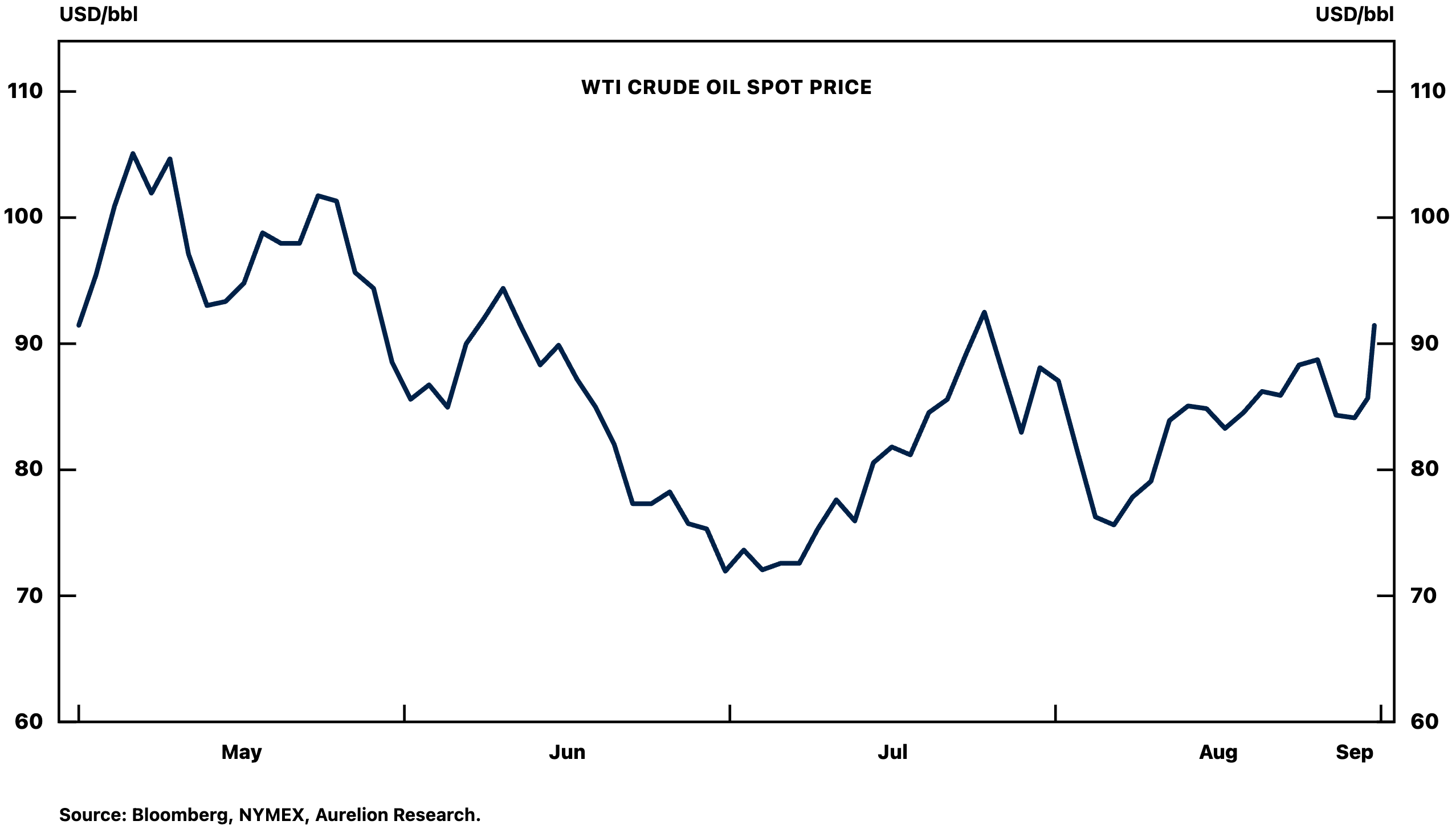
Trump and the US SPR release also played a role, although we think their impact was smaller than China. More importantly, it is about staying objective and following the data. Oil prices can change quickly, so we think it is better to stay flexible and adjust when the facts change.
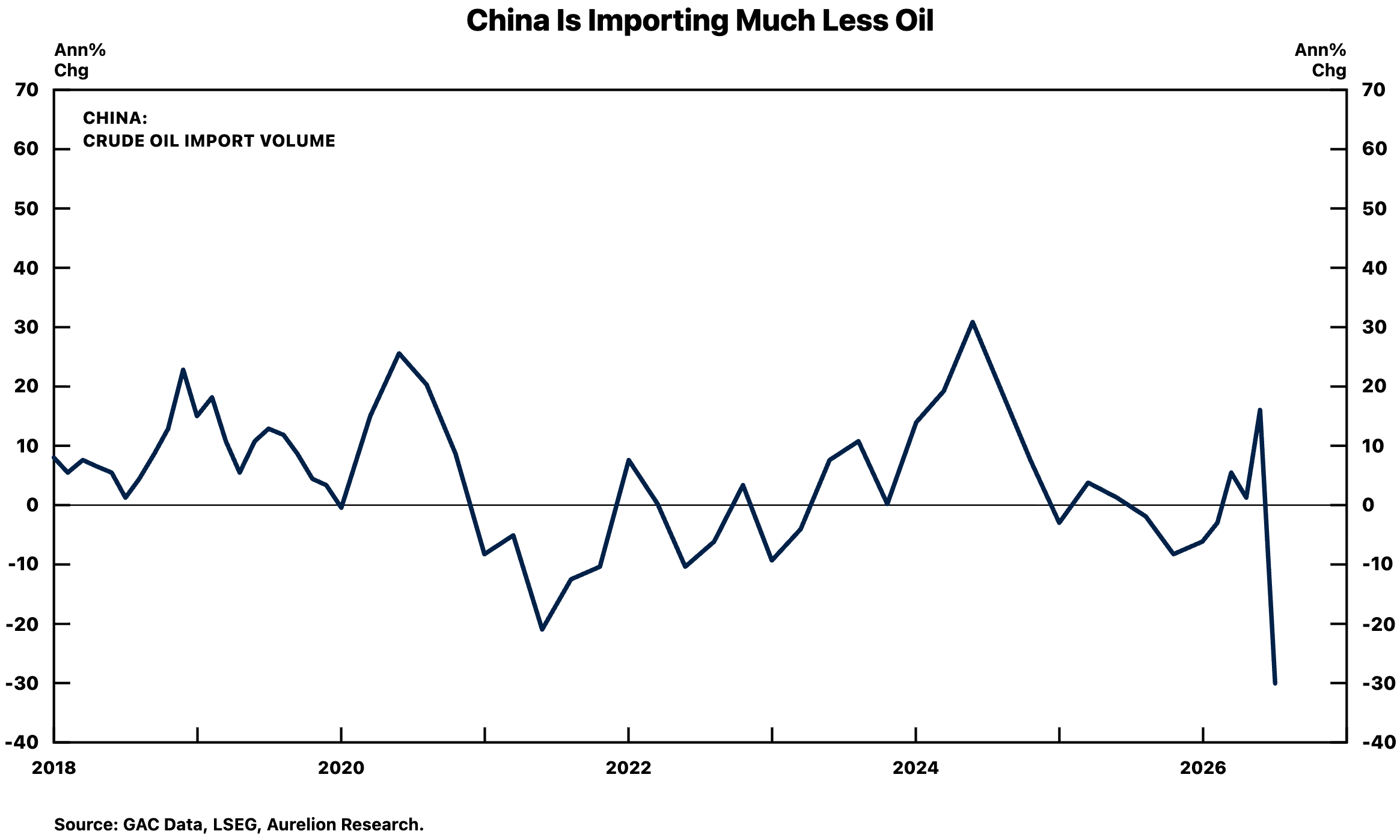
China is importing much less oil than it has in the past, and unlike some other market participants, we do not expect this to change anytime soon.
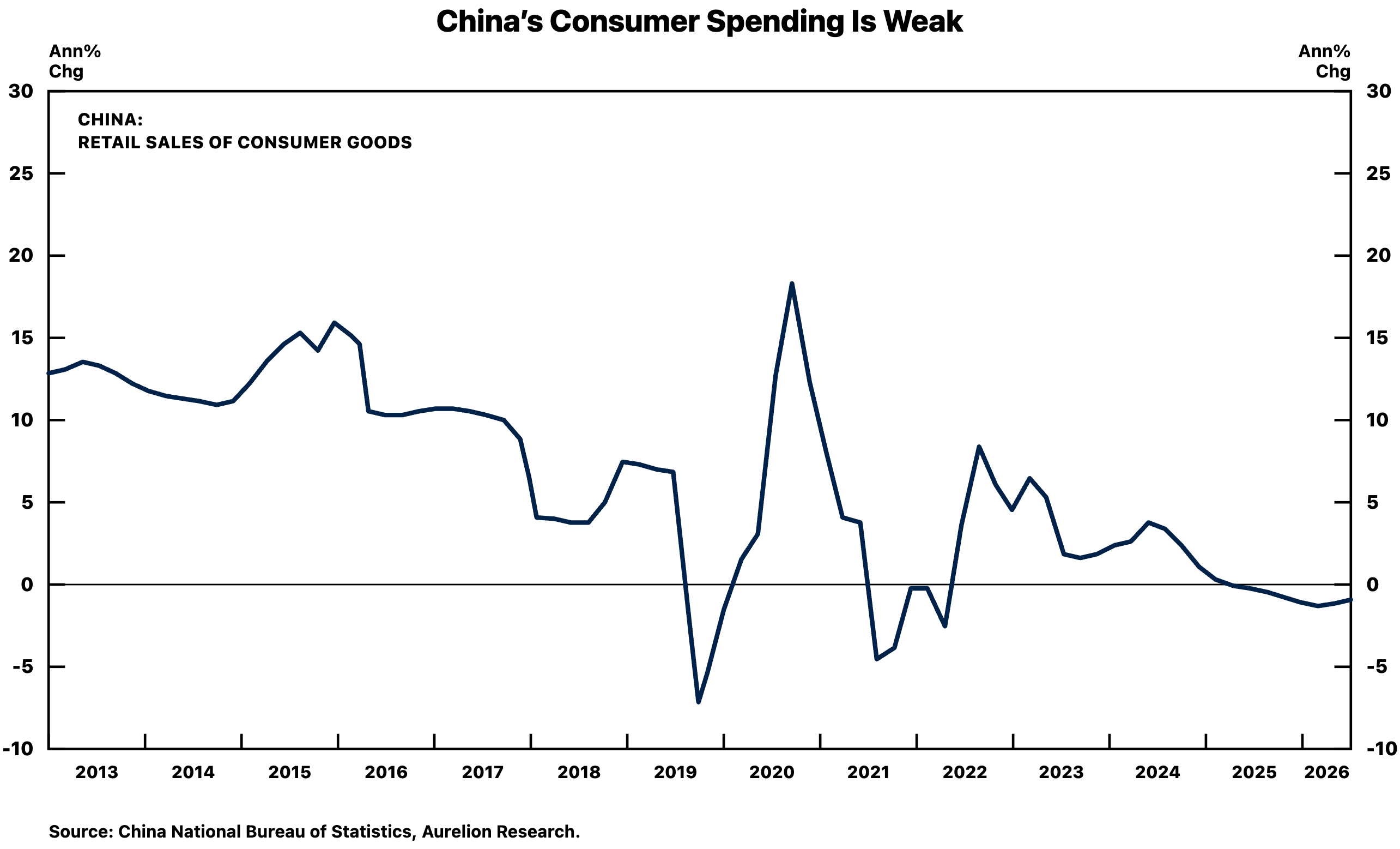
One reason is that China is relying more on coal, but it is also because its consumer remains weak and the economy is not particularly strong. China has also been using its strategic oil reserves, further reducing its need for imports.
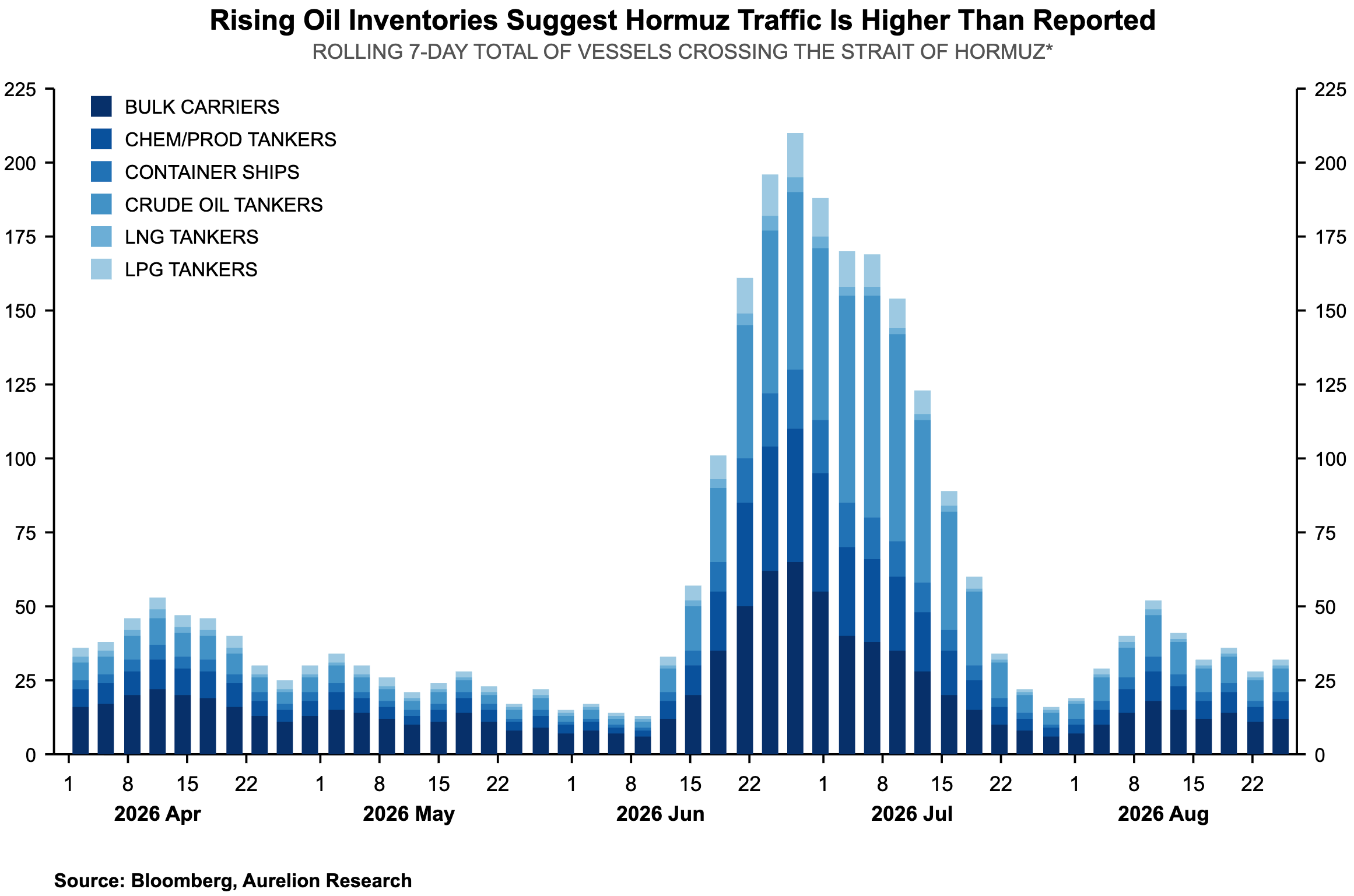
Now, we think Iran is probably approaching peak leverage over the Strait of Hormuz. More oil appears to be getting through than the headline data suggests, which is something most investors are forgetting.
This is very important for oil prices because there is ALWAYS more oil and more tankers moving than what you can see on your screen. Physical oil flows are difficult to track in real time, especially when vessels change routes, delay reporting, or operate outside the most visible shipping data.
Another piece of evidence that Hormuz traffic is simply higher than reported, and we do not see how any oil bull can argue with that fact. Rising oil inventories tell us that there is actually more oil and more ships moving than the data shows.
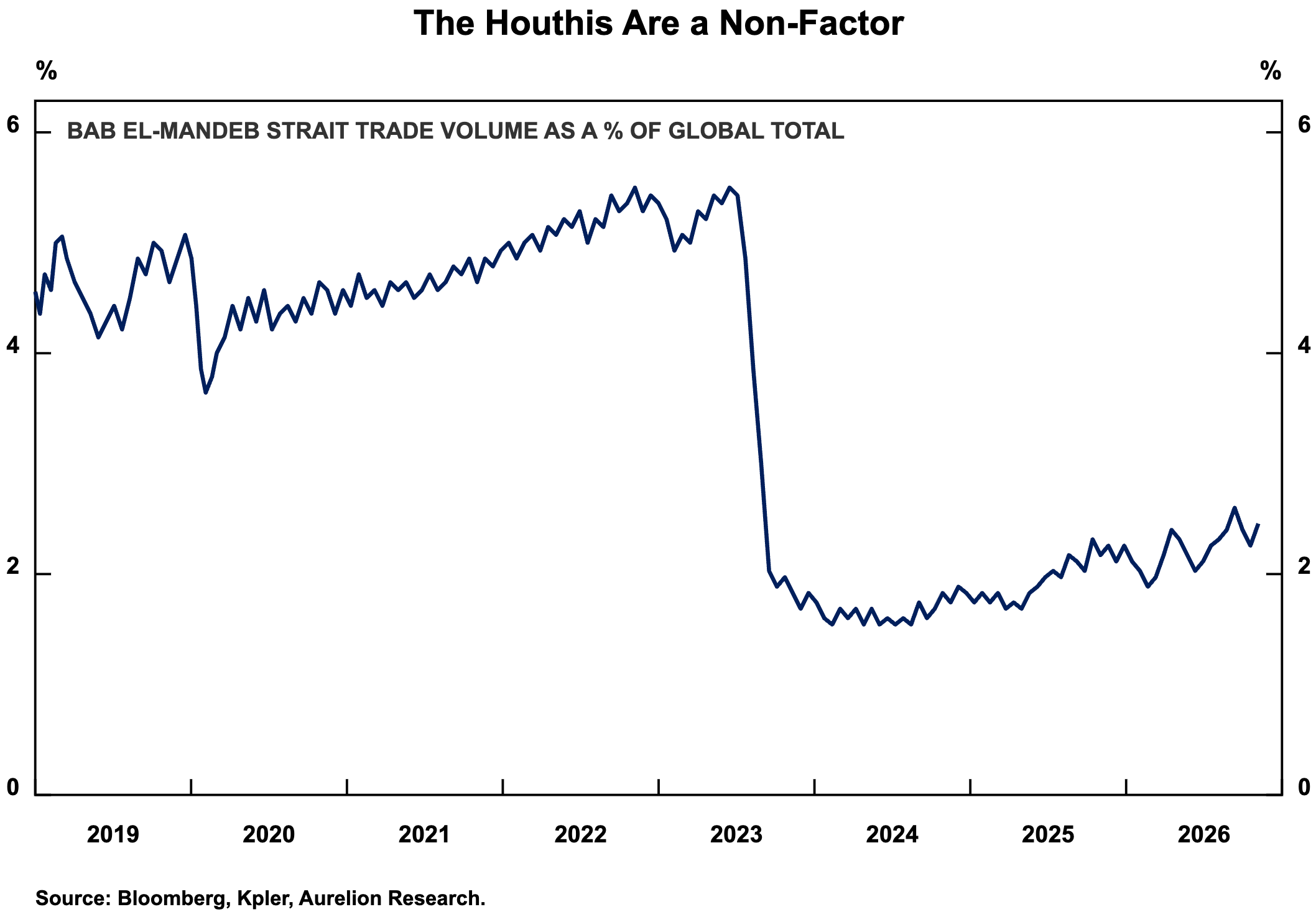
For those saying, “Okay, but the Houthis can still disrupt trade through the Strait even if there is a deal between the US and Iran.” Really? Let’s be real.
The Houthis are simply a non-factor. They always have been. Sure, they can play a role in higher insurance rates for ships, but that is pretty much it. They account for just over 2% of total global trade volume through the Bab el-Mandeb Strait.
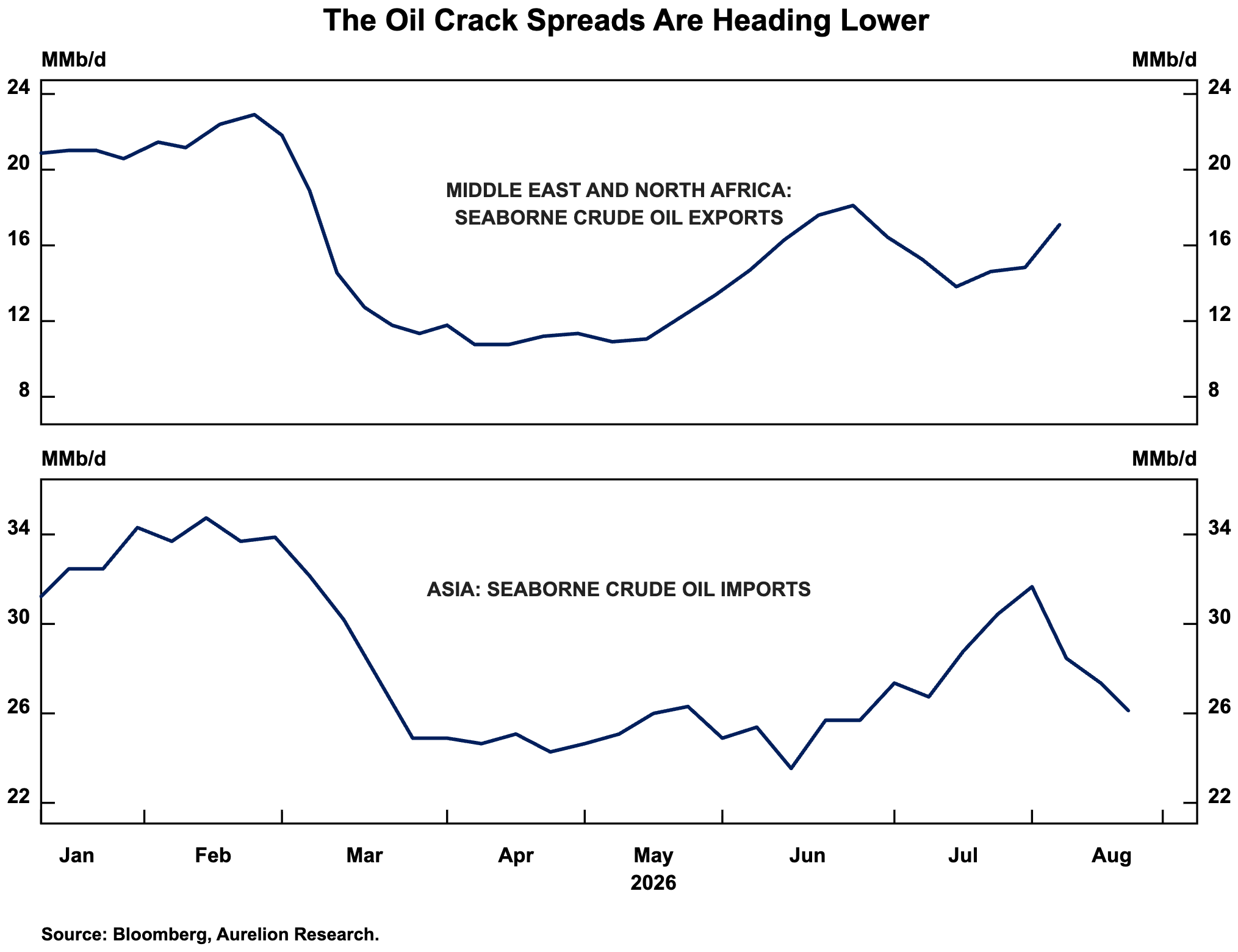
Finally, we think oil crack spreads are set to move lower. Asian crude imports are falling, while Middle East and North Africa crude exports are moving higher again. More crude reaching Asia, combined with weaker demand, should put further pressure on refining margins and eventually oil prices.
Before looking at our oil price forecast, the main risk we see is a much longer closure of the Strait of Hormuz. We are not expecting China to suddenly start importing much more oil again, so the biggest risk to our bearish view would be a prolonged disruption that pushes US SPR inventories into dangerous territory, which is obviously not something anyone wants.
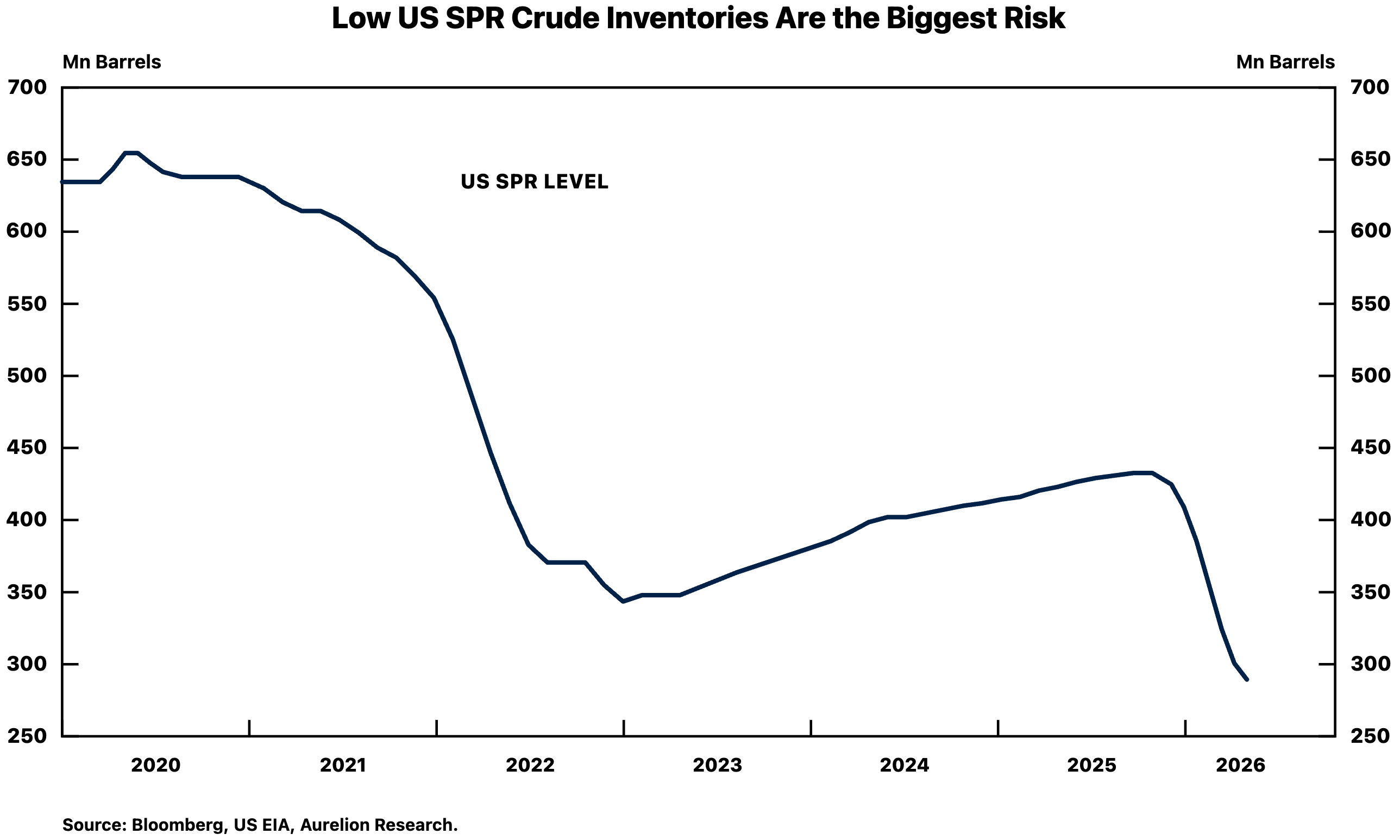
That said, we think this risk is becoming less likely as more oil gets through the Strait of Hormuz and inventories start to rebuild. If this continues, we think the risk premium in oil prices should gradually fade. We therefore remain bearish on oil and think the market is underestimating how quickly supply can recover once more barrels start moving.
Our WTI Price Forecast
Based on all the reasons outlined above, we expect oil prices to move back lower, with WTI reaching around $80 before the end of 2026.
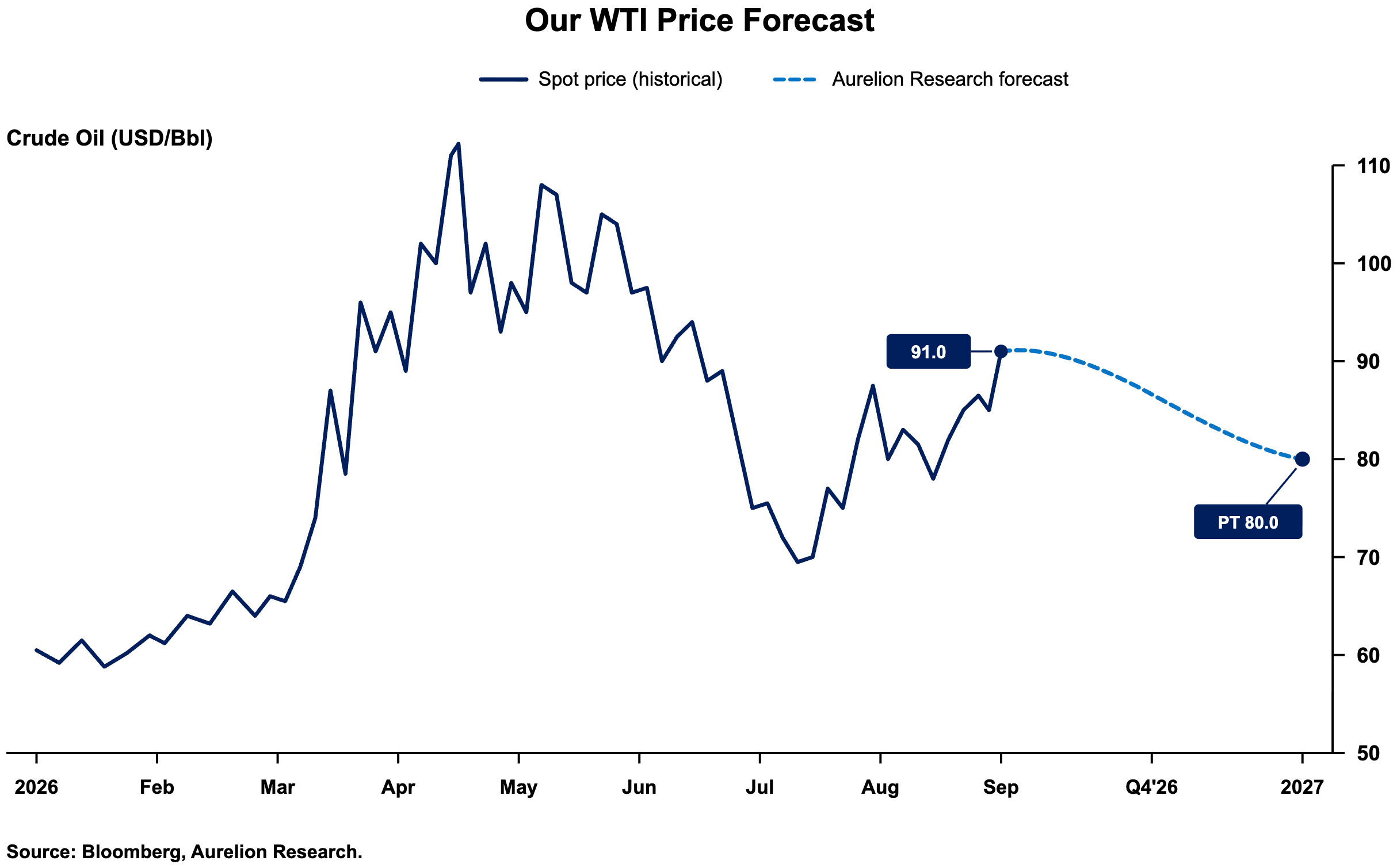
As the Strait of Hormuz reopens and the crude oil disruption becomes less severe than many expect, we think the risk premium will gradually fade. Countries and companies are already adapting, and we expect this to become increasingly visible in the months ahead.
3. Final Thoughts
Commodities are always difficult to forecast, but that is exactly what makes them interesting. We have put numbers behind our views and laid out the reasons why we are bullish on gold, copper, and uranium, while taking the other side on fertilizer and oil. We will see how these calls play out.
We think there is still plenty of upside in some commodities, while others are being priced far too optimistically. But one thing is clear: many commodities are still misunderstood, while others are simply getting too much attention for the wrong reasons. We aim to take advantage of those mispricings.
As analysts, our job is to cut through the noise, identify the inflection points that can actually change the outlook, and decide where we think the market is right or wrong. That is exactly what we did in this piece.
View how the portfolio is positioned here: Aurelion Index Link.
Below is our latest thematic research piece on the UK.

The Aurelion Team
Questions? Reach us directly on Substack or at contact@aurelionresearch.com.
I think you may be off on oil. The July spike in transports was not even close to pre war levels. The graph should start with pre war levels. China has its own SPR of 1.4B vs 400m barrels. In total, the drop in gulf oil production is reaching SPR limits. The longer oil prices stay higher Iran will stall and keep the strait closed. The longer it is closed, the better hand Iran has to play. Also once Horus is open, it will take years to replenish the 2.4B barrels in the worlds SPR’s and that will be consistent buying which will keep oil elevated.
Bullish on uranium and especially copper here. Great post, my friends!!