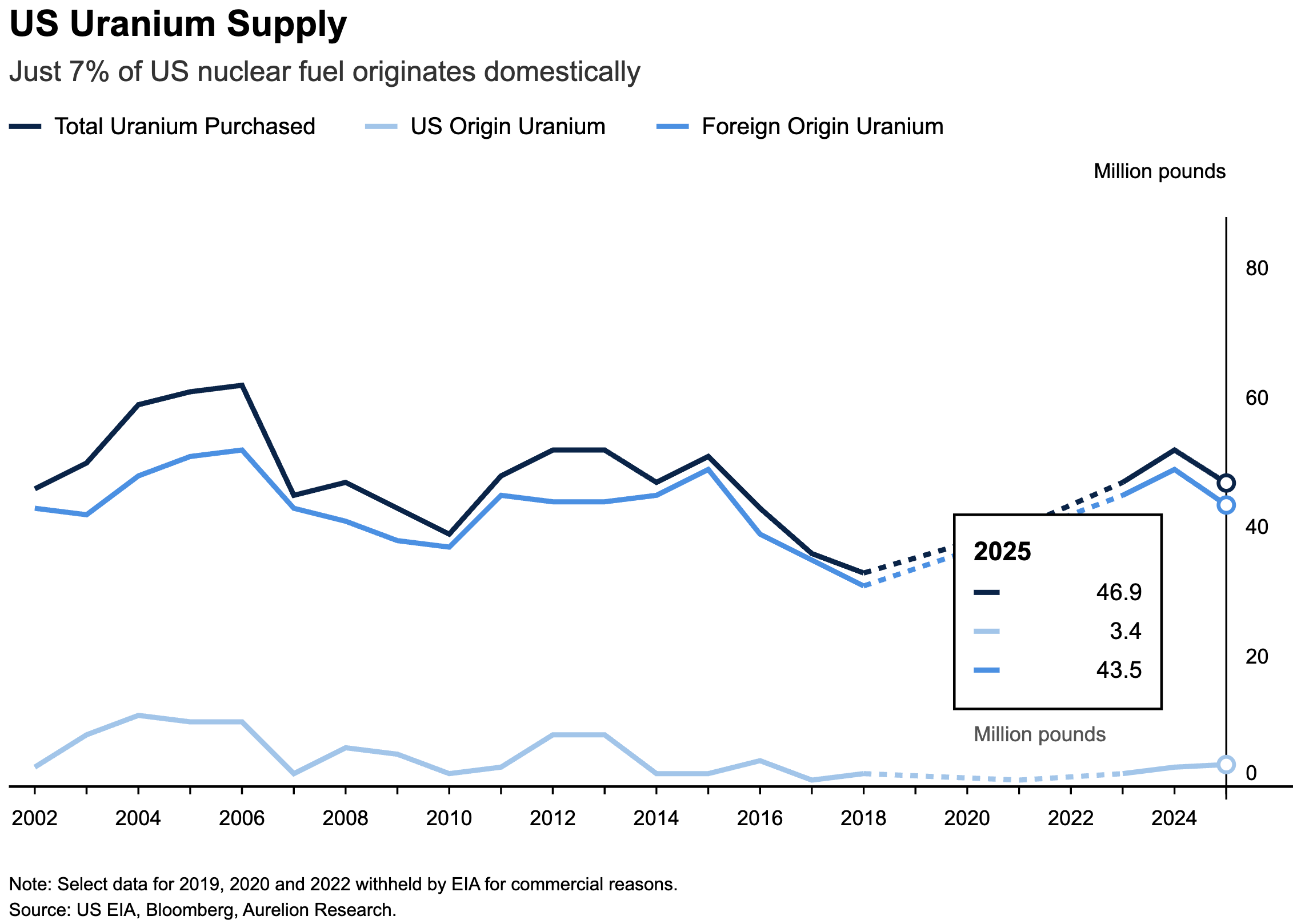
We are adding a second holding to our portfolio that is a direct beneficiary of growing nuclear demand and higher uranium prices.
We view this pair of equities as a compelling combination of exposure to prices and production of uranium. The producer is one of the few that is cash flow positive, with high visibility into long-term demand given its signed contracts.
Hyperscalers are rushing to get access to nuclear, signing large contracts in recent years. The large voices in the AI industry have been calling this out for some time now, for example Jensen Huang (NVIDIA’s CEO), who said that nuclear, such as small reactors, will be the solution to the “bottleneck”.
As we mentioned ourselves in our Uranium Primer:
“The issue is simple: we don’t yet have the capacity to produce enough energy, especially clean energy, to support what’s coming.” A lot of the supply is fixed, meaning incremental demand drives the price of uranium.
We think even if hyperscalers cut their spending forecasts, nuclear demand should still be larger than supply over the next years, directly benefiting uranium equities.
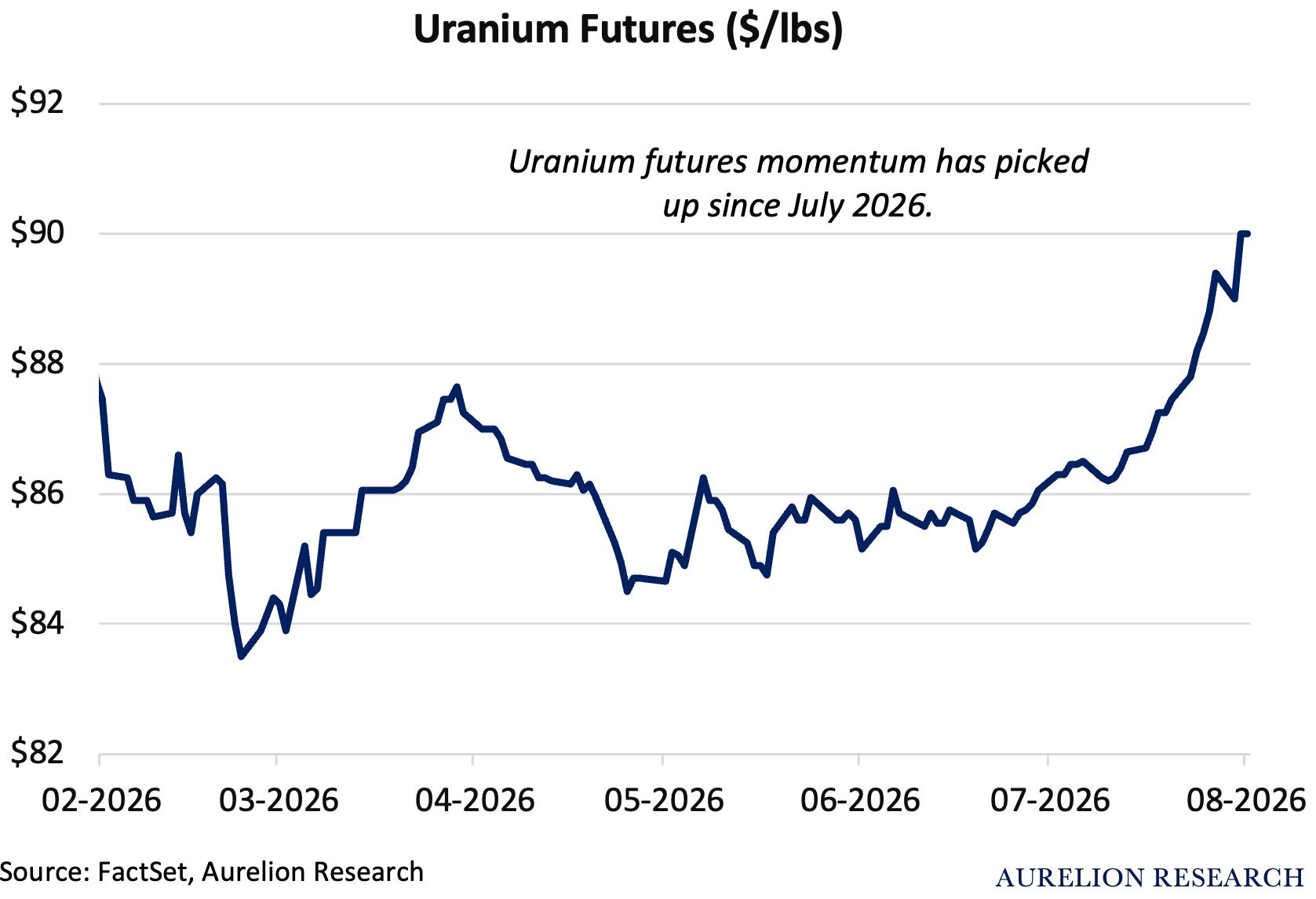
We’ve gone in depth on the uranium market in our previous Primer.
Here, we explain why we are getting another, and differentiated exposure.
Table of Contents
The Uranium Bull Case
1.1 The Main Driver of Uranium Demand: AI
1.2 Supply Can’t Keep Up With Demand
Our Highest-Conviction Uranium Stock
An In-Depth Look at the Business
3.1 Overview of Business Segments
3.2 Strategic Investments & Partnerships
Investment Thesis & Valuation
Our Uranium Price Forecast
What Could Go Wrong
Our Final Thoughts
1. The Uranium Bull Case
1.1 The Main Driver of Uranium Demand: AI
The main driver of uranium demand is the rapid growth in global electricity consumption. Nuclear demand was already increasing as countries looked for reliable, carbon-free power, but the rise of AI is pushing demand even higher.
The chart below shows just how much more energy-intensive AI can be.
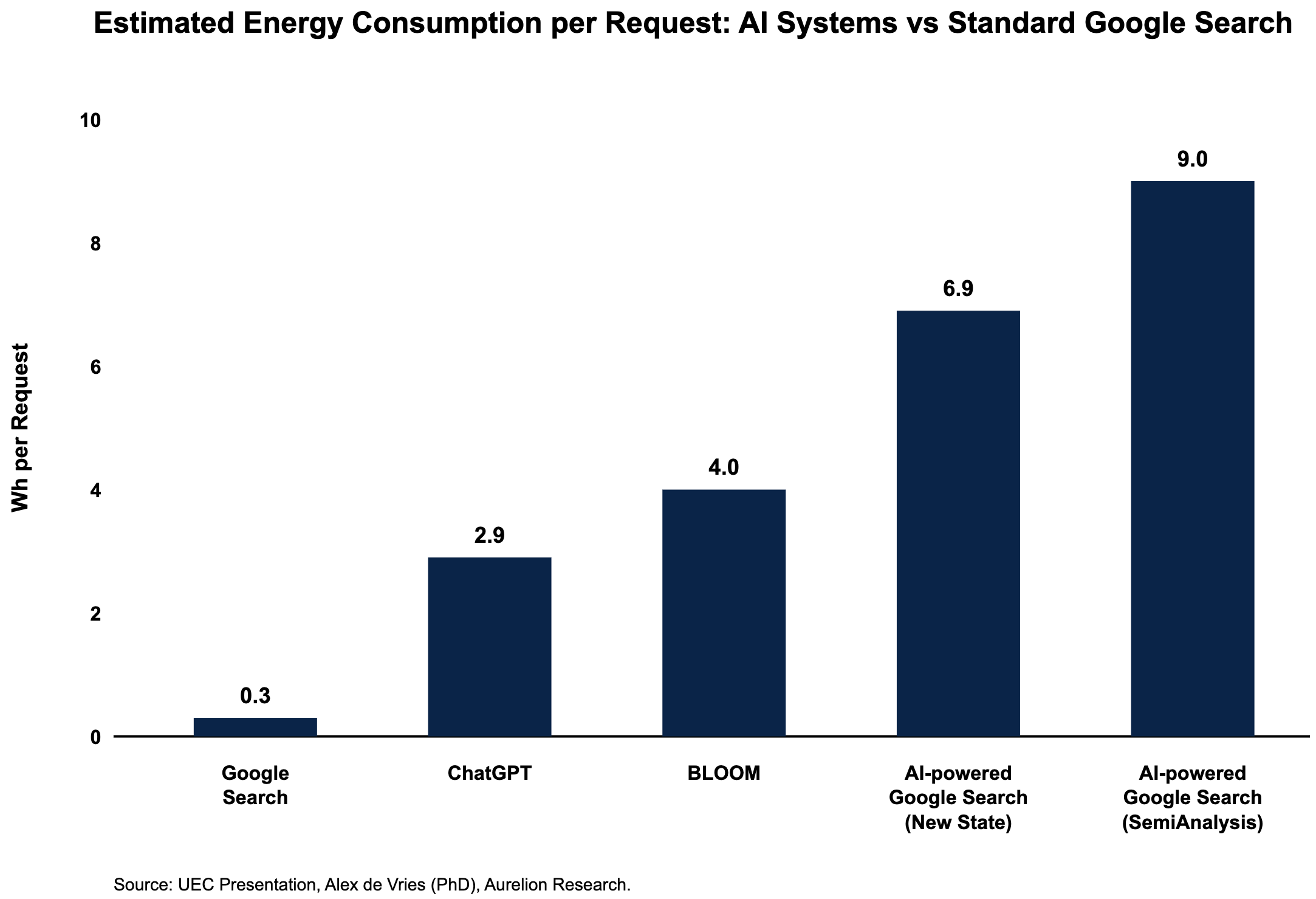
This surge in AI usage is translating into much higher electricity demand.
Data center power consumption alone is expected to rise by around 165% by 2030. Nuclear is one of the few carbon-free sources that can provide consistent output, which is why the uranium supply-demand gap continues to widen.
1.2 Supply Can’t Keep Up With Demand
Nuclear power cannot simply be turned on and off.
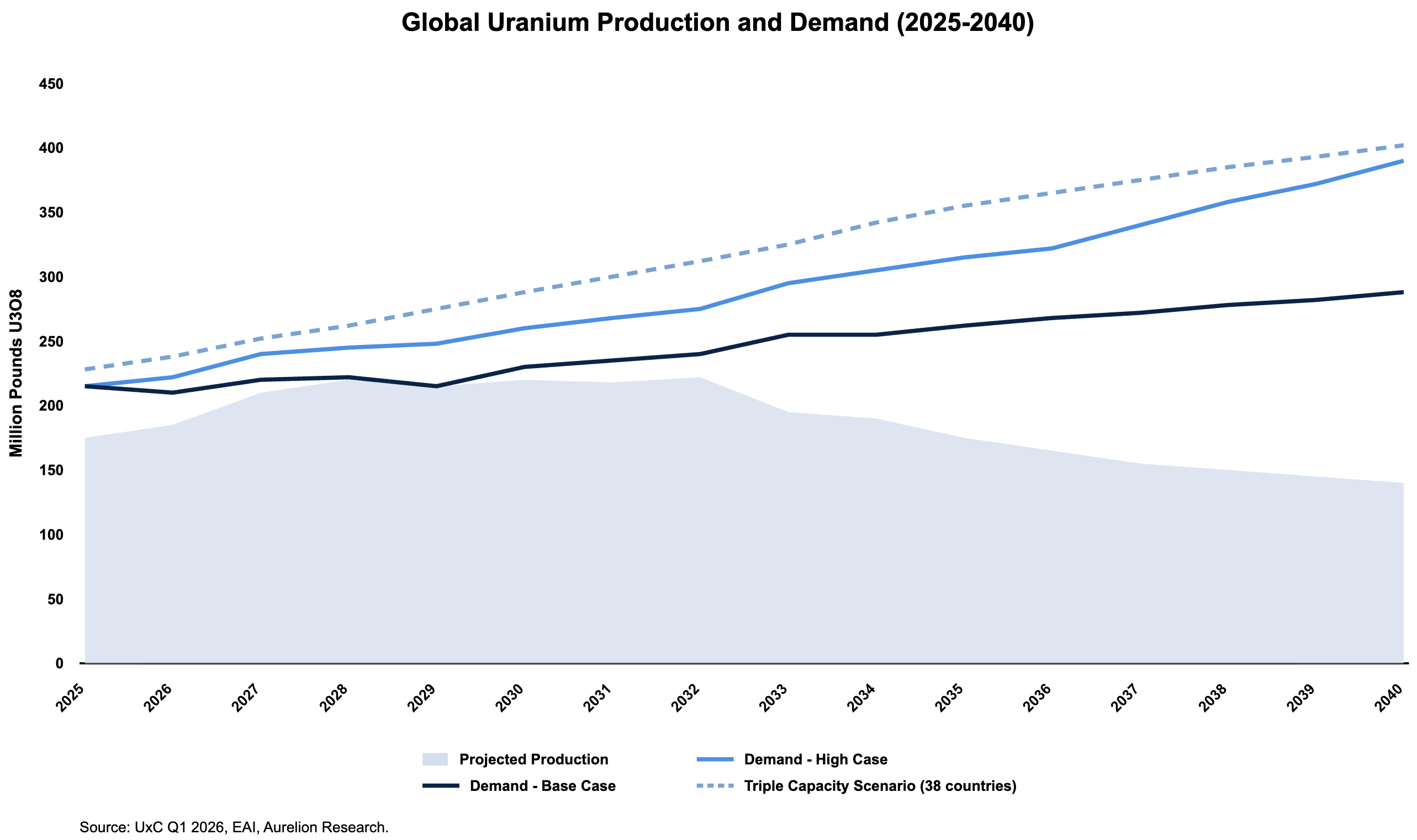
Utilities typically secure their uranium supply years in advance, but a growing share of future demand remains uncontracted.
As utilities return to the market to secure additional volumes, competition for available uranium could increase, putting further upward pressure on spot prices.
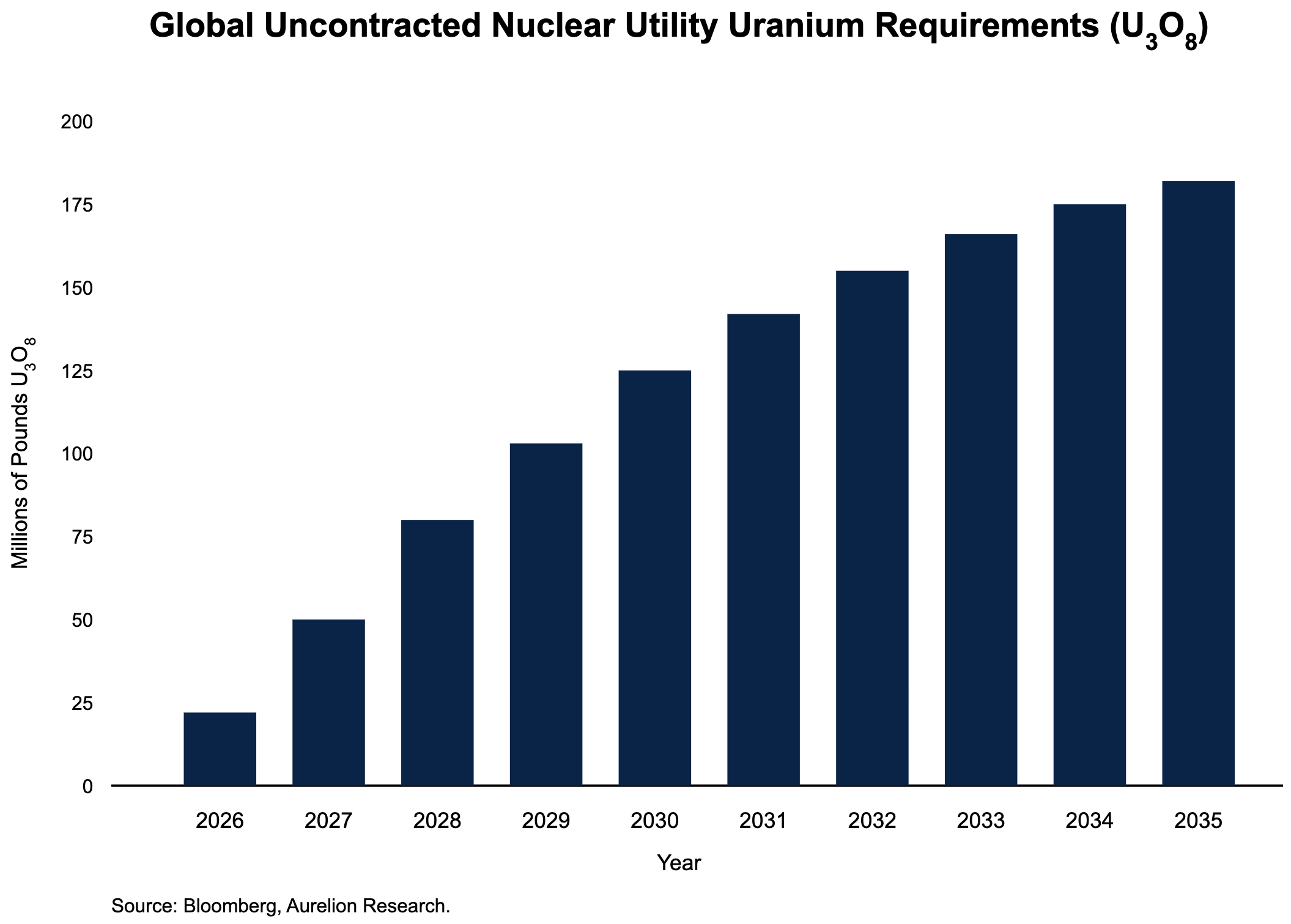
The amount of uranium countries will need to purchase, especially the US, is growing faster than supply.