

“Did the bubble pop?” was Googled more last week than ever before.
We break down how we got here, where things stand, and what we expect next. Then, we take a closer look at Oil, Gold and NVIDIA, three key actors in the market over the past months. NVIDIA’s rally following Jensen Huang’s return is one example of the positive surprises we discuss below.
For months, and specifically in our Seattle field trip article, we have said the AI trade would stay strong until the major labs’ IPOs, then reverse. That’s in part what we’re seeing now.
Markets were already pricing in a lot of bad news: the Iran war had pushed oil higher and investors expected rates to stay higher for longer. But over the last 45 days, more bad news kept coming which led to a storm of negativity.
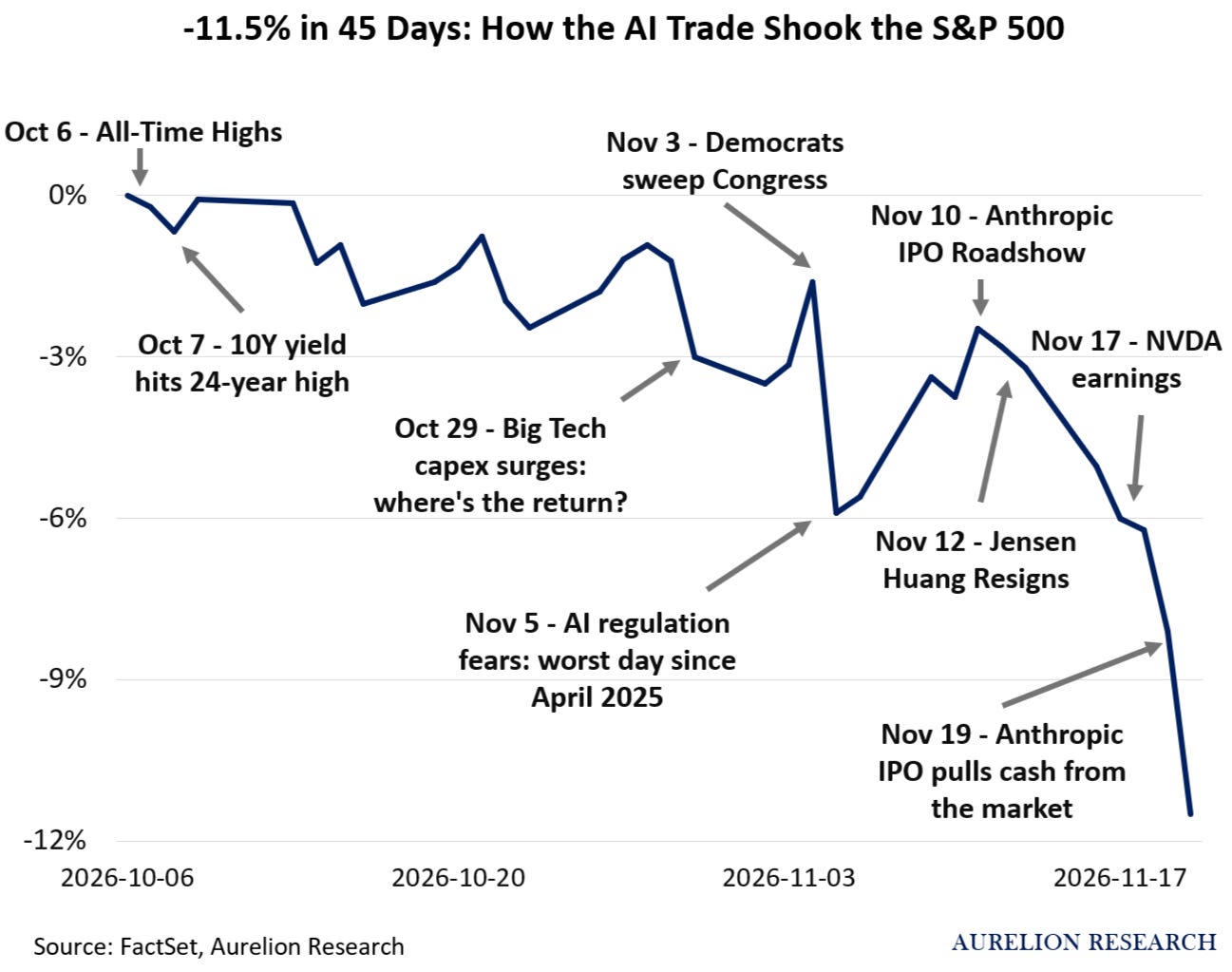
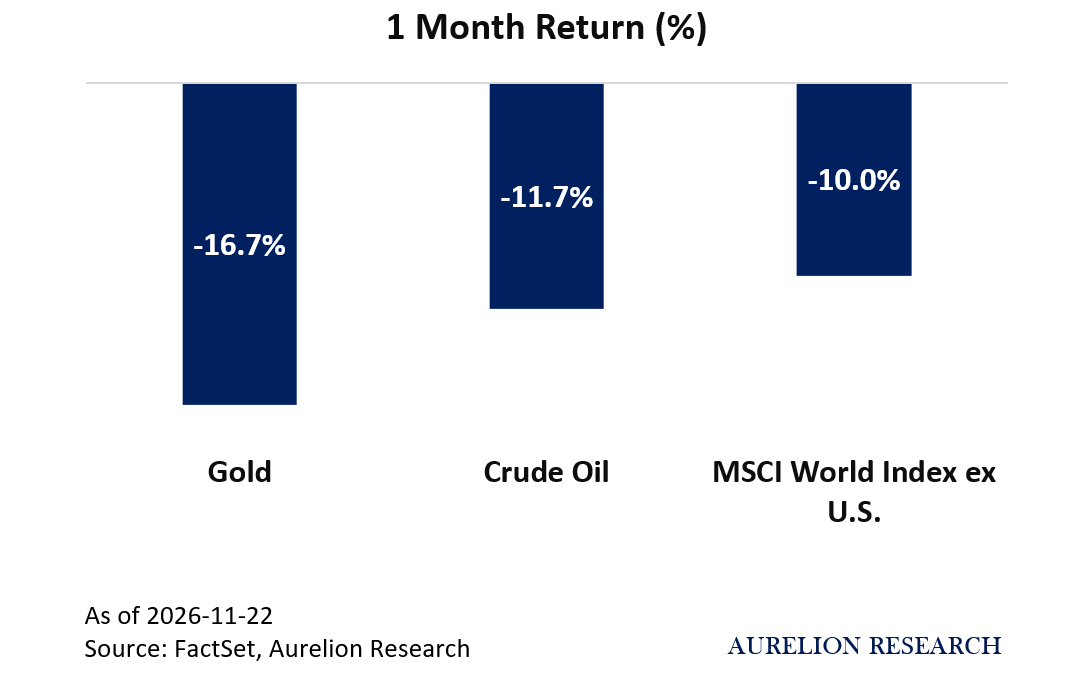
What stands out is that there was almost nowhere to hide.
Gold, which typically acts as a hedge during market downturns, fell 17%. Oil also dropped as peace hopes grew and flow in the Strait of Hormuz improved. That should have been a positive for stocks, but fear was so high that it did not matter.
A Race to Stay Relevant
First, how did we get here? After ChatGPT launched in 2022, the general public became aware of a new technology that could transform productivity.
Today, it’s undeniable that AI does far more than improve productivity.
Just last week, Claude helped prove the Riemann Hypothesis, one of the most famous unsolved problems in mathematics, first proposed in 1859. Additionally, AI is discovering drugs and identifying new materials, and most companies’ sales teams now need it to stay competitive.
If you’re Amazon, Microsoft, Google or Meta, the choice is clear: spend on AI to become the dominant player, or get left behind. This has triggered an unprecedented investment cycle across the entire AI ecosystem, from semiconductors and data centres to energy, cloud computing and AI labs. Trillions are being committed to building the technology.
But AI has also disappointed along the way. It’s unreliable at many tasks and expensive to run, and the big AI developers (OpenAI and Anthropic) have spent enormous amounts without turning a profit. So since 2022, investors have known that overspending could create a bubble. And because information now spreads instantly, almost every investor can see how much is being spent and who is earning what. This has kept valuations mostly in check, and fuelled a constant debate over whether to invest in AI at all.
As we argued in our July 2026 Thoughts on Markets, investors should diversify outside of AI and position for the debate to stay unresolved.
Our top portfolio weight is a market volatility beneficiary. Subscribers can see why we’ve selected it to navigate the current environment:

October 29: Changing AI Spending Forecasts
A major premise of the bull case was that hyperscalers would keep raising how much they spend on AI. Every quarter, a new increase in their AI commitments was sending AI stocks higher. This quarter, the market expected another round of increases and it didn’t come.
As a result, analysts started lowering their spending estimates for 2028 and beyond. The reason is simple: hyperscalers are running out of room to raise spending forecasts. Their free cash flow is now negative, so they can’t keep raising spending much further without borrowing more.
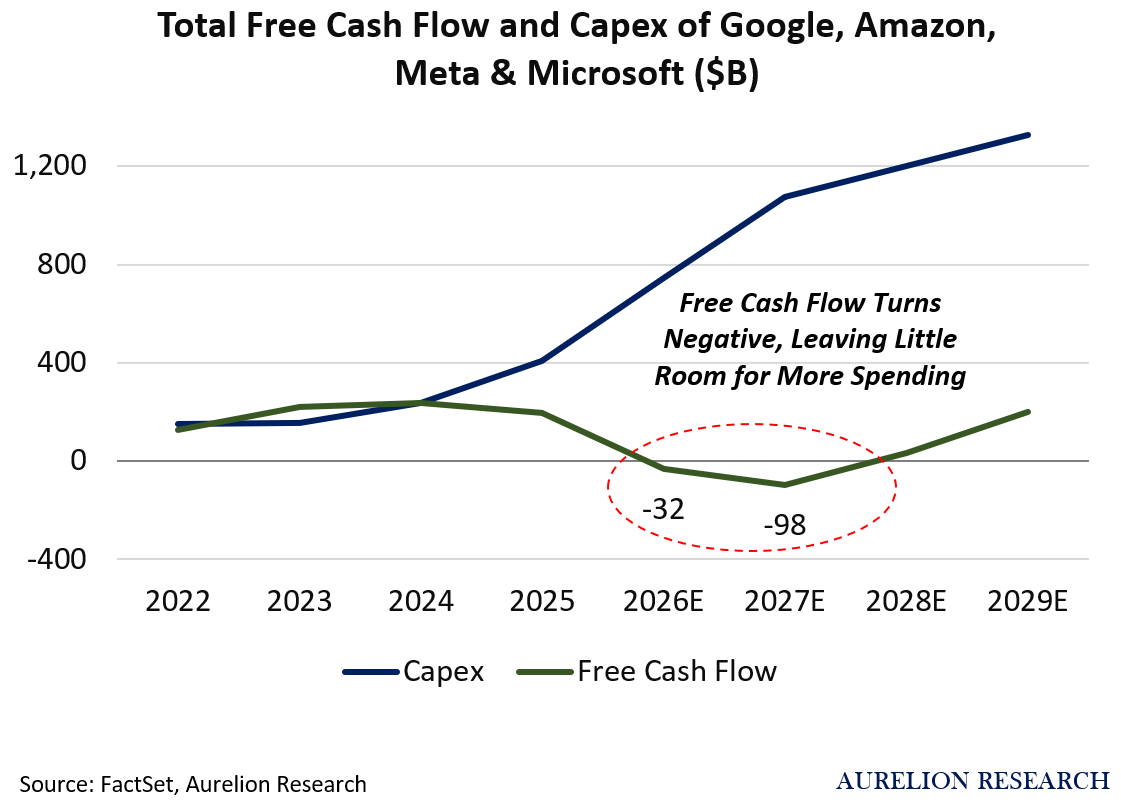
And the worst part: hyperscaler stocks now fall when they announce more spending. The market now expects very poor returns on AI spending.
The Debt Concern
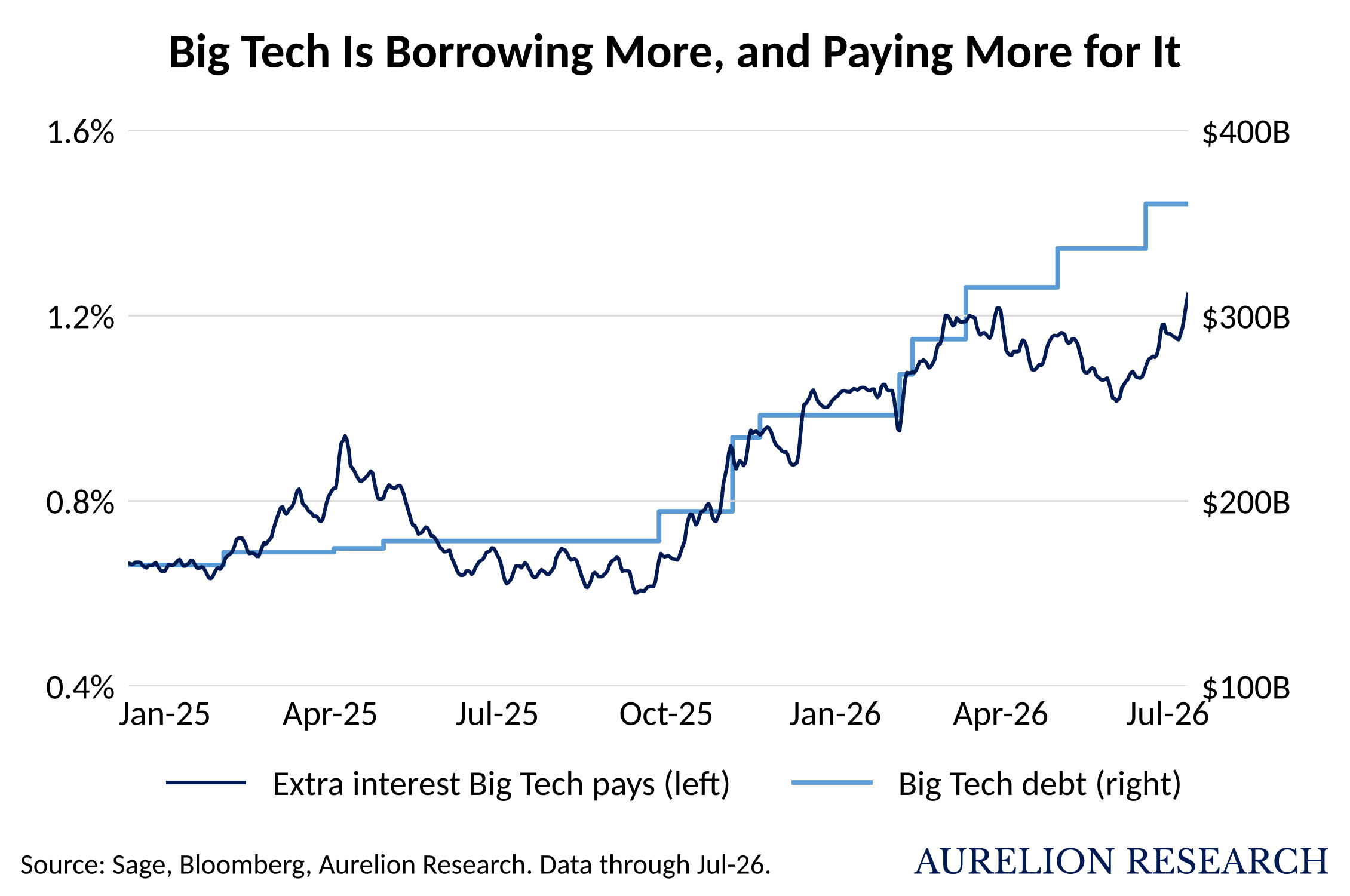
With cash flows now negative, hyperscalers are starting to fund the buildout with debt. With the 10-year yield above 5%, that debt costs more, which puts even more pressure on AI returns that were already in doubt. Smaller players have it worse: lenders now charge CoreWeave close to 16%, up from about 9% in 2025 because they fear it can’t pay them back.
Doomsday Scenario & Midterms Outcome Lowers Growth
On November 3rd, Democrats won both chambers of Congress. They have pushed for tighter rules on data centers and the use of AI.
Days after the Nvidia scandal, the US government also announced tighter AI chip export controls. Both raise the cost of building AI and lower its expected growth.
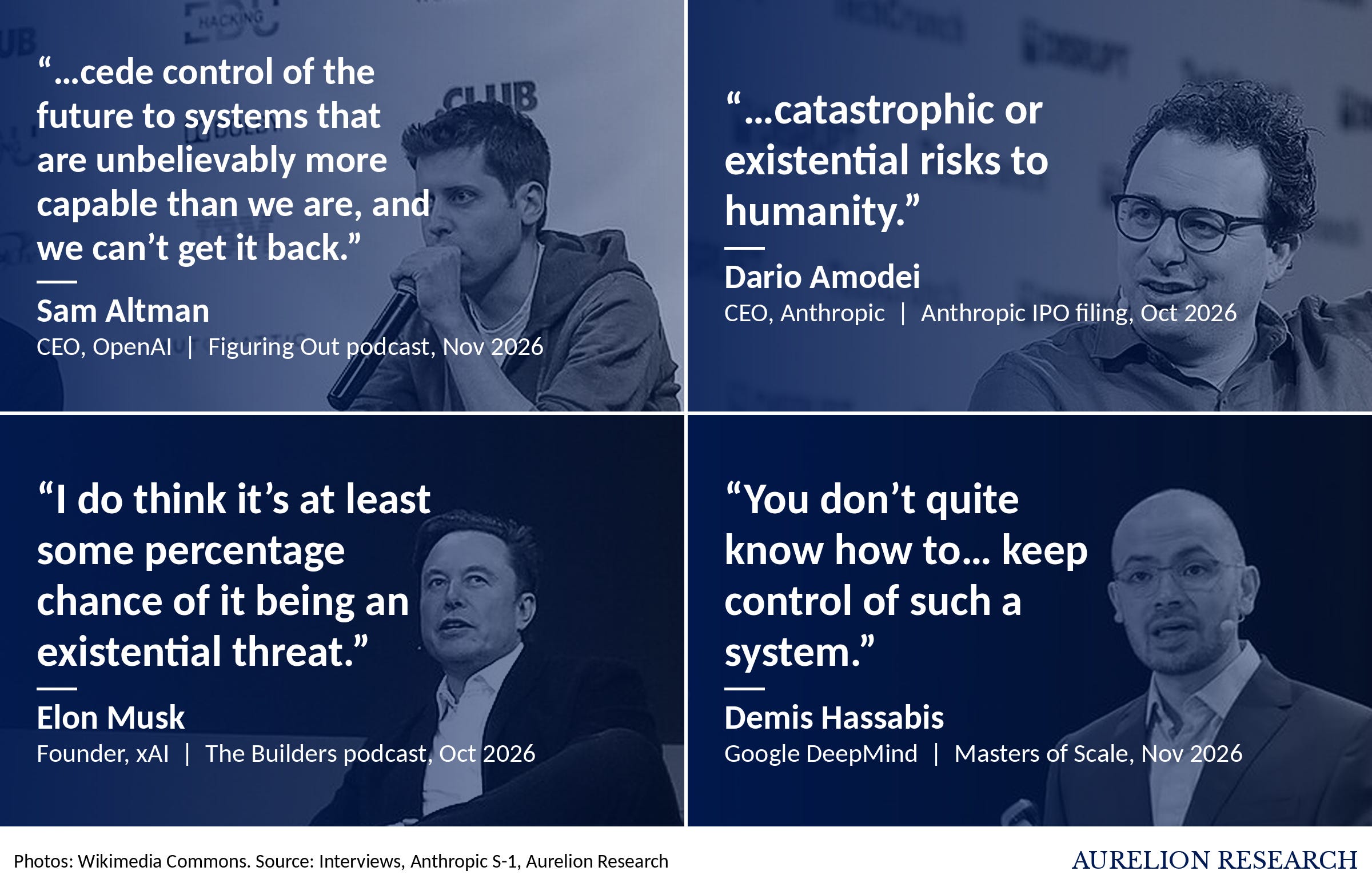
The doomsday warnings from AI’s own leaders haven’t helped either.
We interpret as an attempt to increase regulation and raise barriers to entry for new competitors, helping established players maintain their positions. Still, it’s a very “uneasy” position for investors.
Then came the Anthropic IPO, the largest in history. It raised over $100 billion and much of that cash came from investors selling other AI stocks to make room. Even Anthropic couldn’t hold its gains: the stock fell 9% the day after its debut.
US Federal Reserve Raising Interest Rates: The bigger Concern
The Fed was on track to bring inflation down after the pandemic, until tariffs and then the Iran war pushed oil prices higher. Inflation is now picking back up, and the Fed is raising rates as price pressures spread beyond energy.
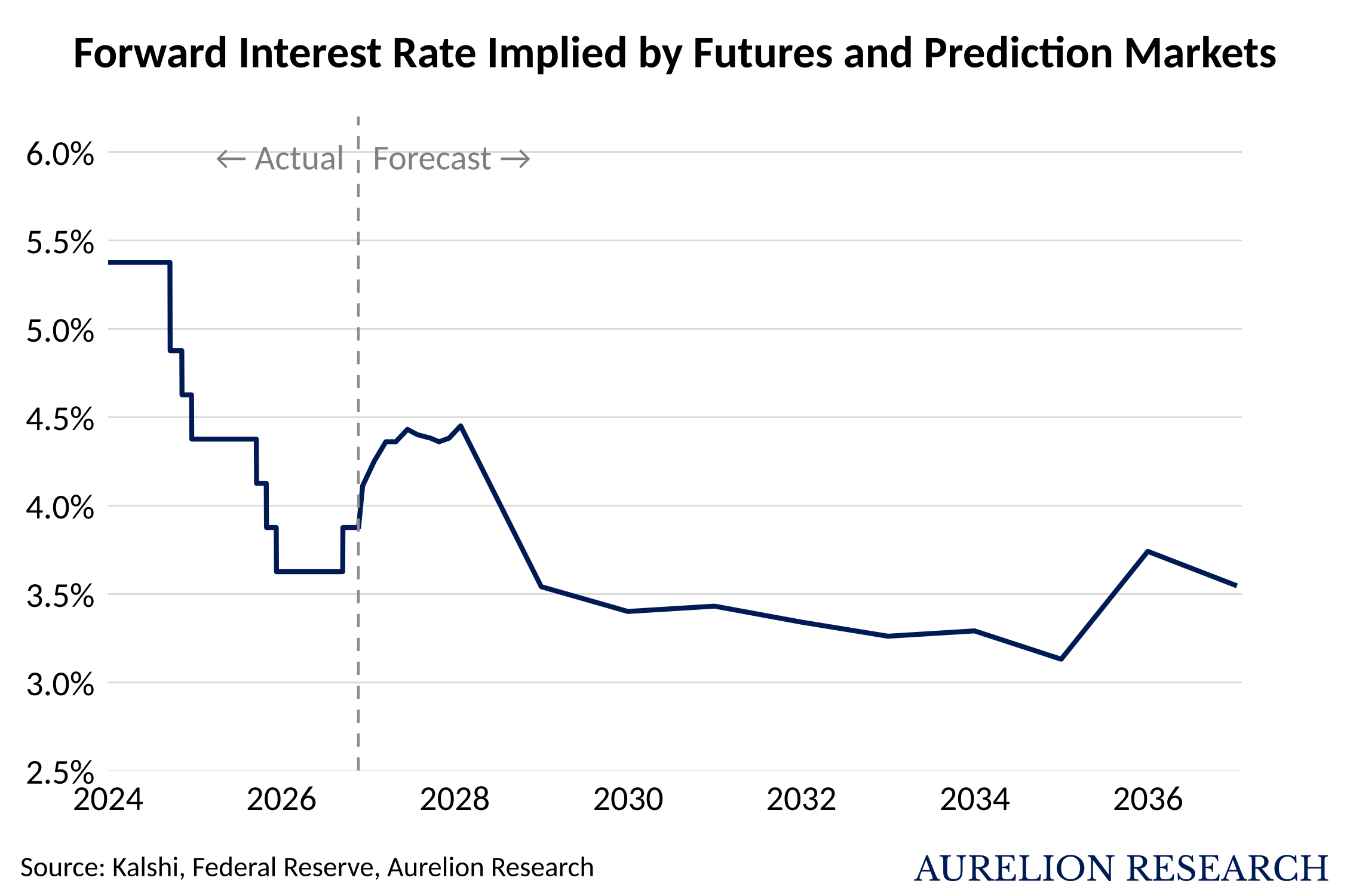
The market is now pricing in several rate hikes, which has heavily impacted small caps. Small caps are typically high-growth companies with cash flows expected further into the future, making them much more sensitive to interest rates.
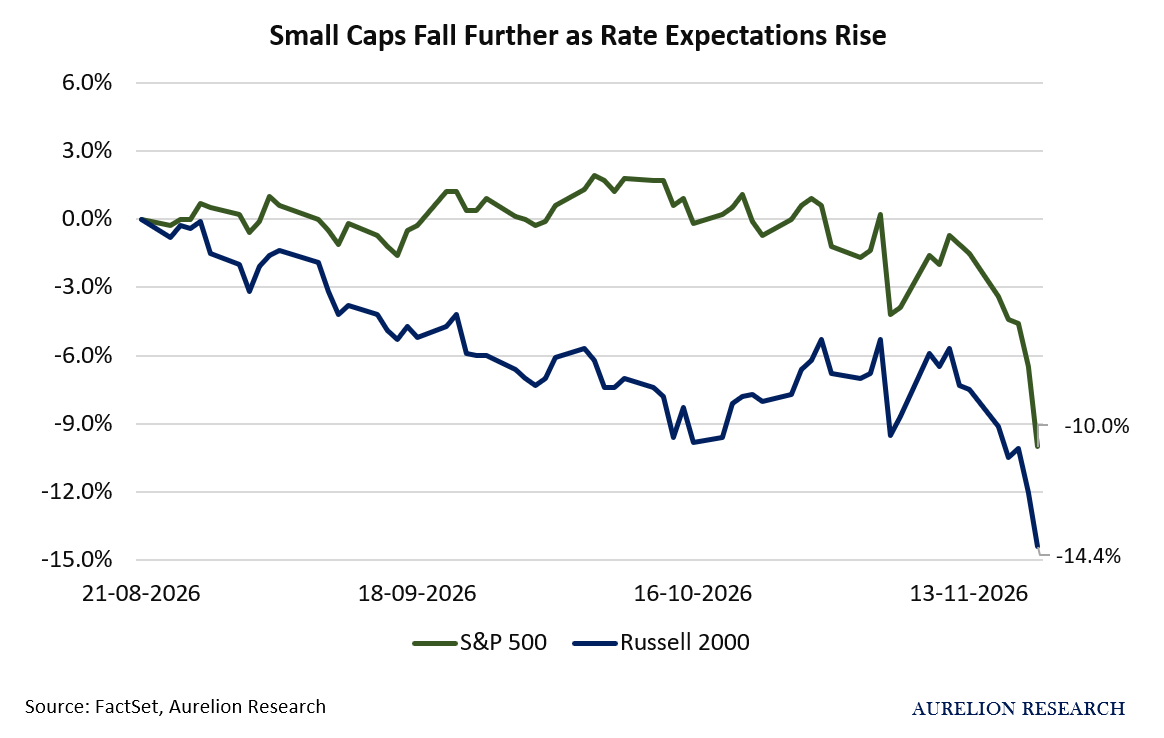
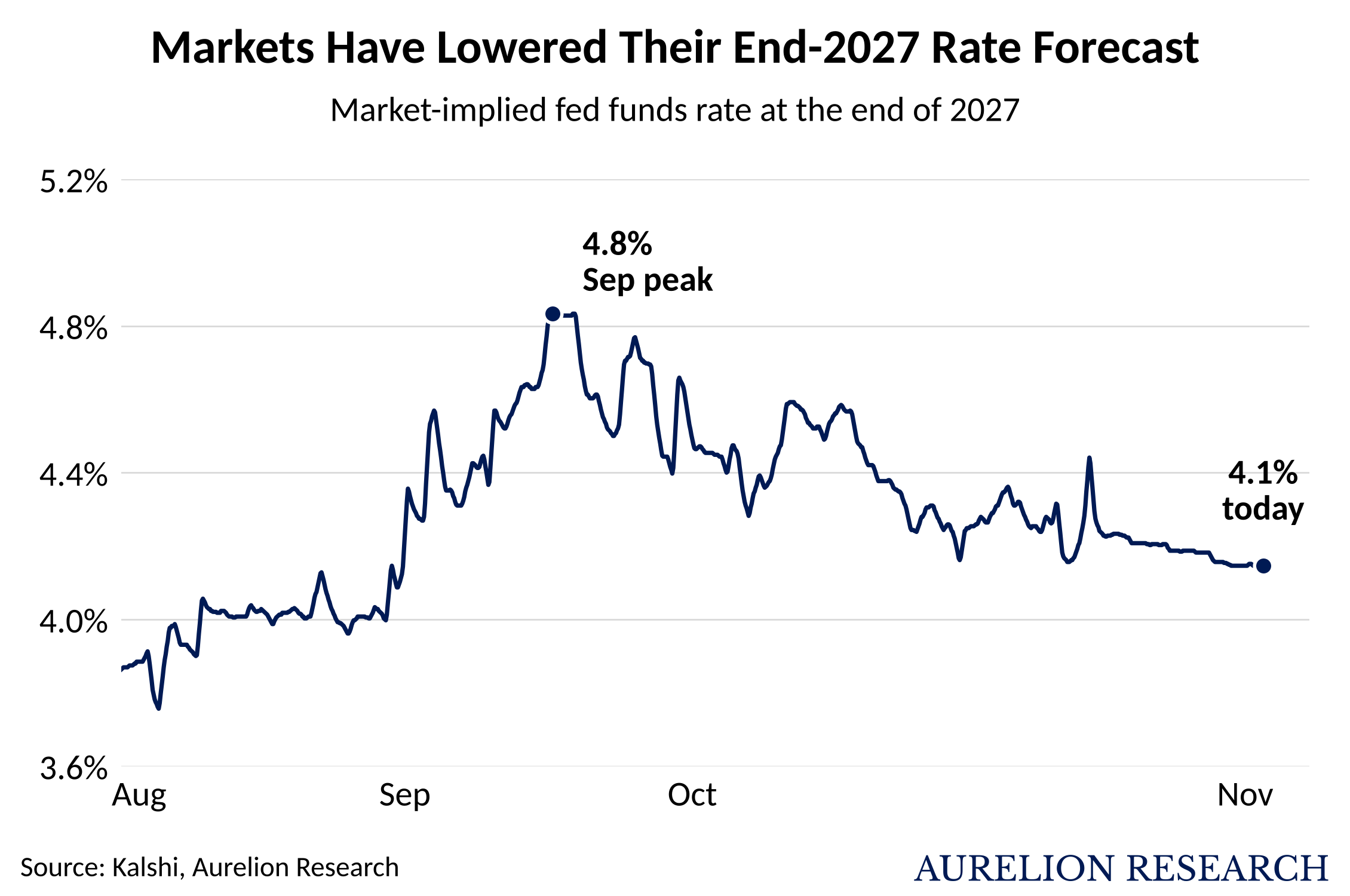
However, what we find interesting is that markets have lowered their interest rate forecasts as oil prices have come down. This is very bullish for small caps, yet they’ve declined alongside the broader market.
We believe small caps are now too heavily punished, and several opportunities have emerged, particularly in industrials.
AI bears point to the argument that the economy outside of AI is very weak. We agree that it is clearly weaker, with 65% of U.S. GDP growth tied to AI.
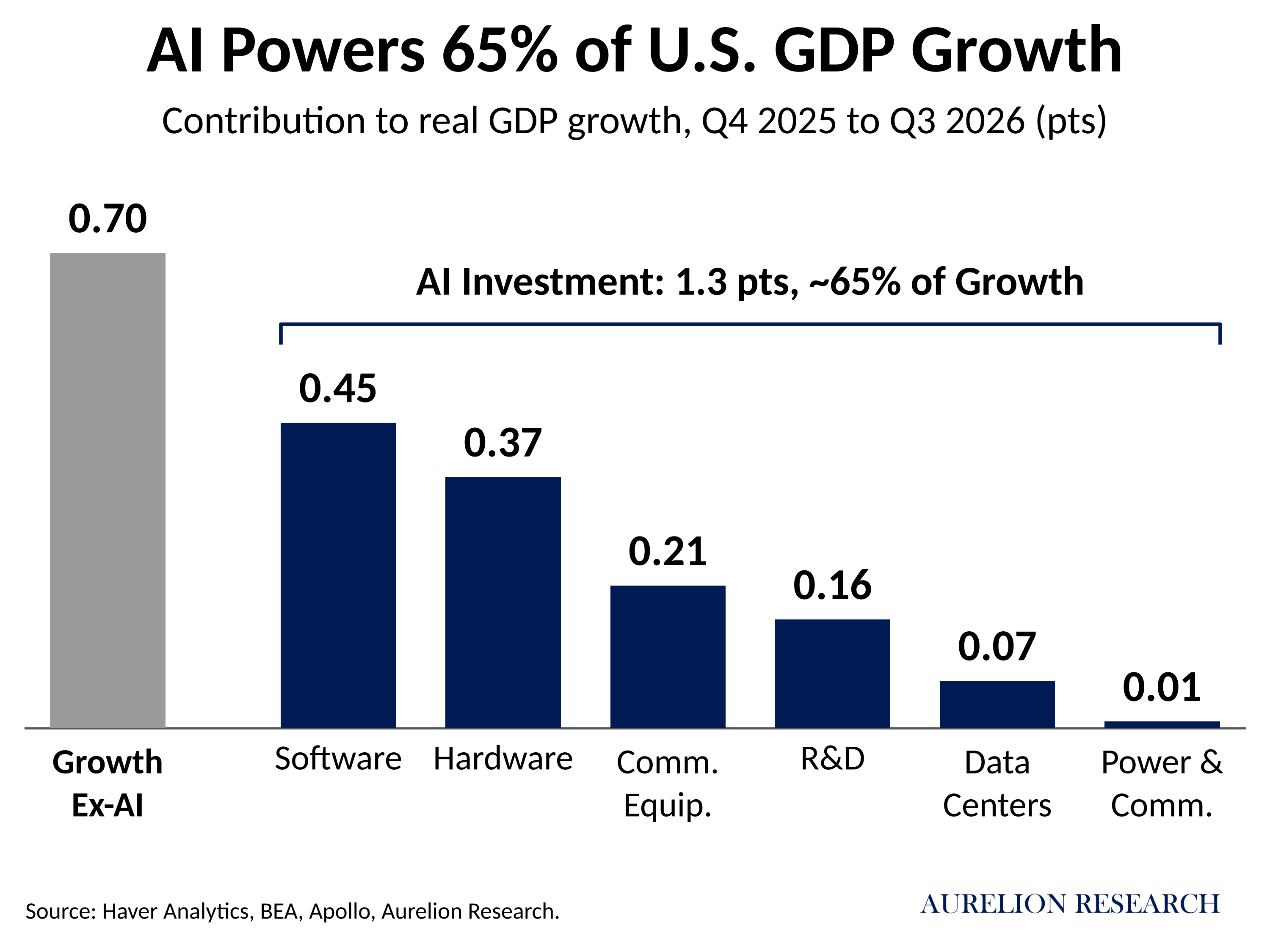
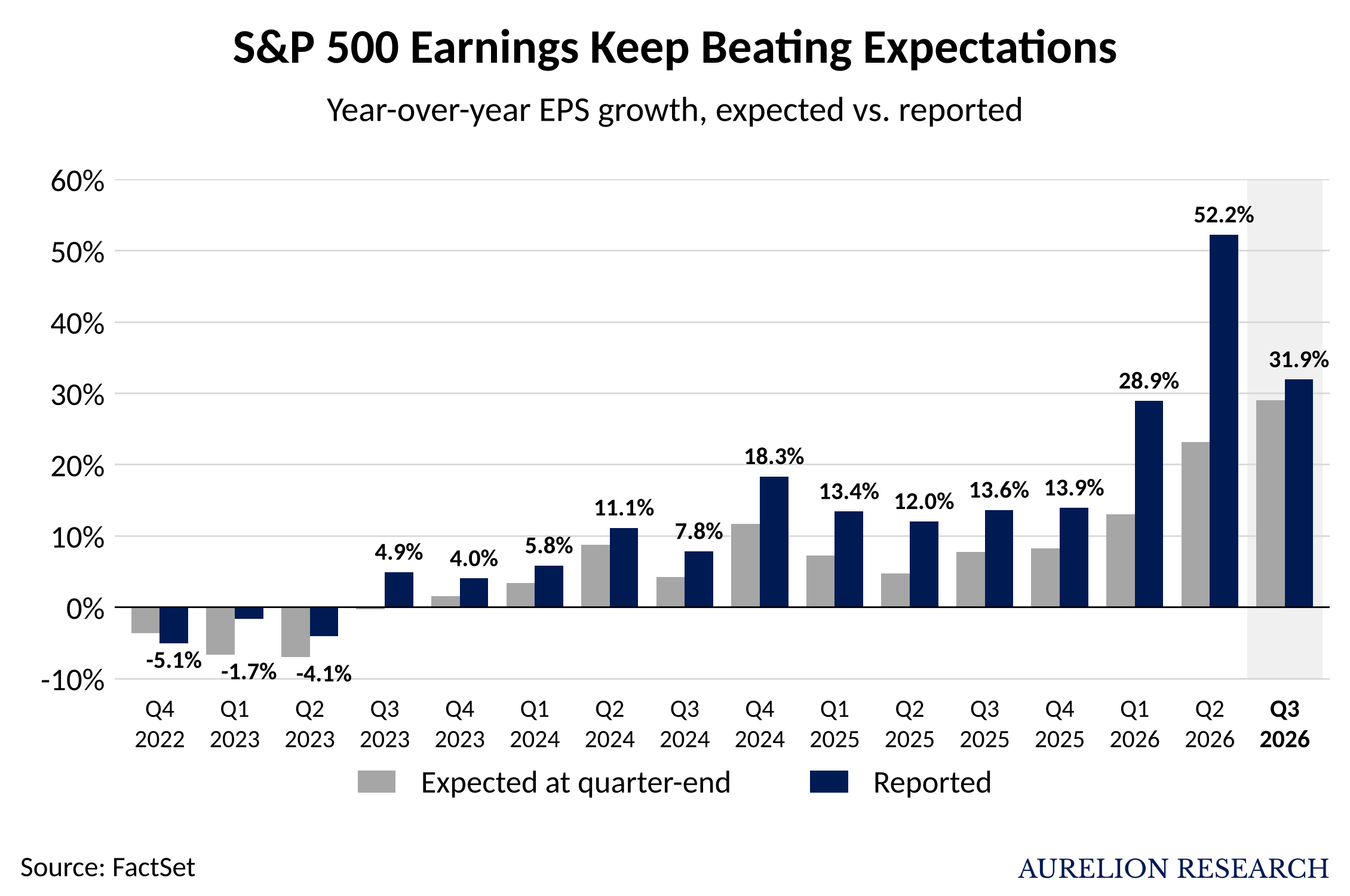
However, even if we exclude AI growth, S&P 500 earnings are still growing at a very healthy rate (10%+). There has rarely been a moment when fear was this high while earnings growth remained this strong.
2001 Dot-com Crisis: A Very Poor Comparison
Excluding the fact that a revolutionary new technology has emerged, several market fundamentals are completely different from 2001.
Companies today are actually generating profits from AI. While AI has not improved productivity across all industries, in many cases, it is now required to maintain some degree of competitiveness.
One of the main reasons we believe it’s different than 2001 is that information now spreads extremely quickly. Investors have a much clearer picture of how much companies are spending, how much they are earning and what the potential risks are. Several prominent investors have also been very vocal about the risks of excessive AI spending.
You can see this reflected in the valuations of some of the biggest beneficiaries of AI. Despite growing earnings at >100% per year, many are trading at 2-4x earnings. The market understands that current earnings growth is not sustainable. Samsung trades at 2.5x earnings, while Micron (MU) trades at 3.2x. Those stocks are not cheap as they are probably at peak earnings, but they are generating so much cash flow.
An interesting comparison is Cisco which sold the networking equipment that built the internet and NVIDIA that sells the chips that build AI.
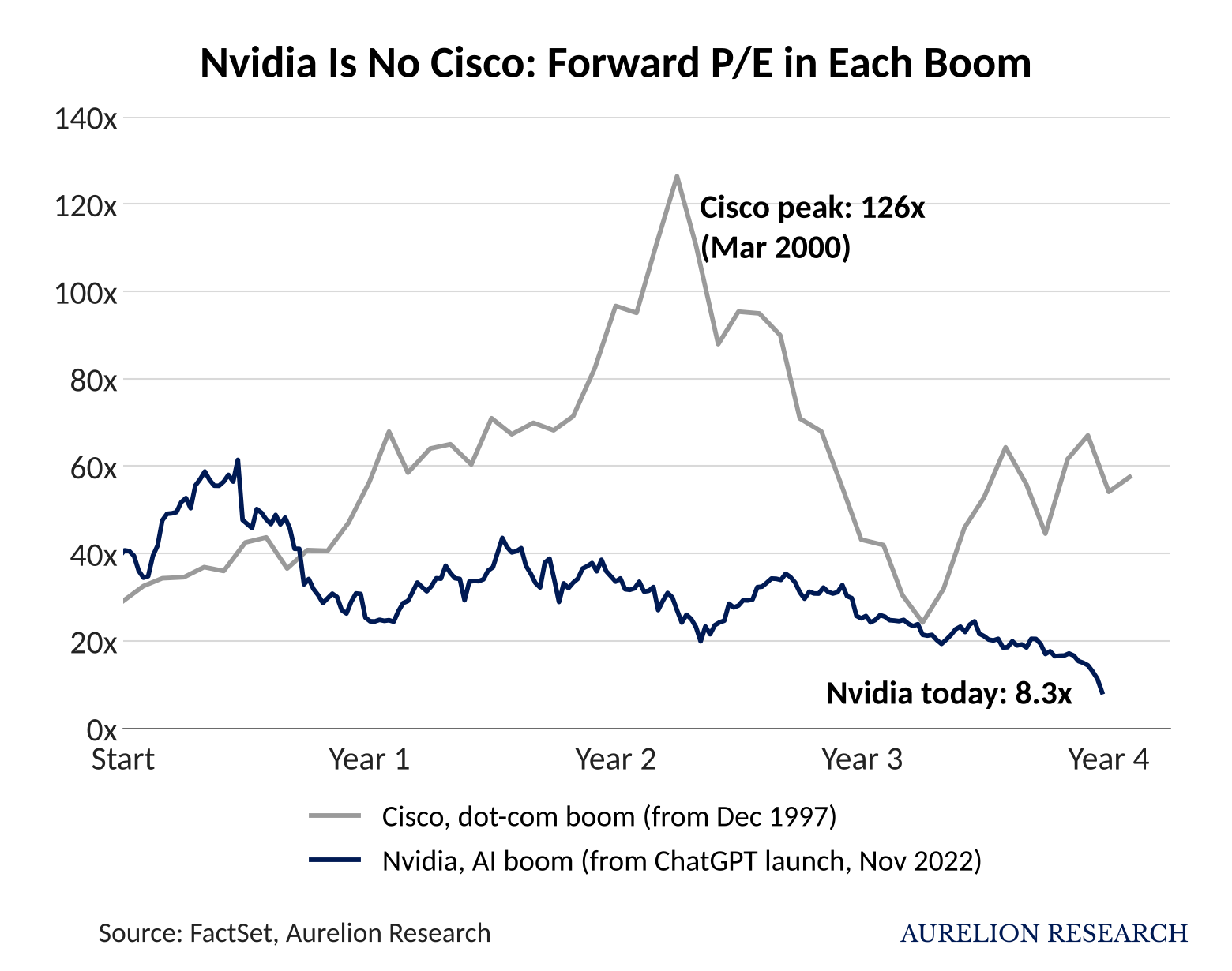
Clearly, Cisco was priced for perfection, while NVDA is priced to disappoint.
Yet volatility is hitting all-time highs, and the market has entered extreme fear territory.
What Happens Next?
So, did the bubble pop? No. The market is going through a correction.
We believe the market is pricing in so many negatives that there is not much room left to fall. In our view, this is a normal but heavy market correction.
We do expect more volatility and possibly further drawdowns, but nothing close to the 49% decline of the last tech bubble. The market is simply working through a storm of negatives. This year alone, we’ve had:
One of the biggest oil shocks in history
Rising interest rates
Constant fear of AI overspending
The 10-year yield hitting its highest level since 2002
A Democratic sweep of Congress, raising the risk of AI regulation
Record IPOs (SpaceX and Anthropic) pulling cash out of the market
At those levels, the market is now pricing in 2 additional Fed rate hikes, elevated energy prices, and very disappointing returns on AI investments.
There is clearly lots of room for positive surprises in 2027.
We see the market moving sideways until the end of the year, followed by a potential recovery in 2027. Importantly, we think the market will continue shifting towards lower-risk, more defensive quality companies in the coming months. What’s certain is that the direction of the AI trade remains unsettled and that we have plenty of volatility ahead.
We believe that AI is indeed a revolutionary technology, as we saw in our Seattle field trip. It’s only normal that there’s constant debate about where it’s going and how the companies building it should be valued.
The most important risk to monitor is core inflation. More bad news there could extend the correction into 2027. For now, we don’t want to catch falling knives, such as the small-cap industrials that have fallen sharply. But they could be one of the best trades heading into 2027.
Current Positioning During this Correction
Since the start of the summer, we’ve been reducing our exposure to gold-related companies in favour of healthcare to improve the portfolio’s resilience during a downturn.
In line with our expectations that volatility would continue, we’ve maintained our top position in our volatility beneficiary as well as cheap value plays in Europe that are less affected:
Oil: Fairly Valued
This year has been a very volatile period for oil, and we have not been shy about making calls on where prices were heading, particularly when we believed oil was either overvalued or undervalued.
Our last call on September 3 was that oil would come down to $80, which it has now done, with WTI at $80.50.
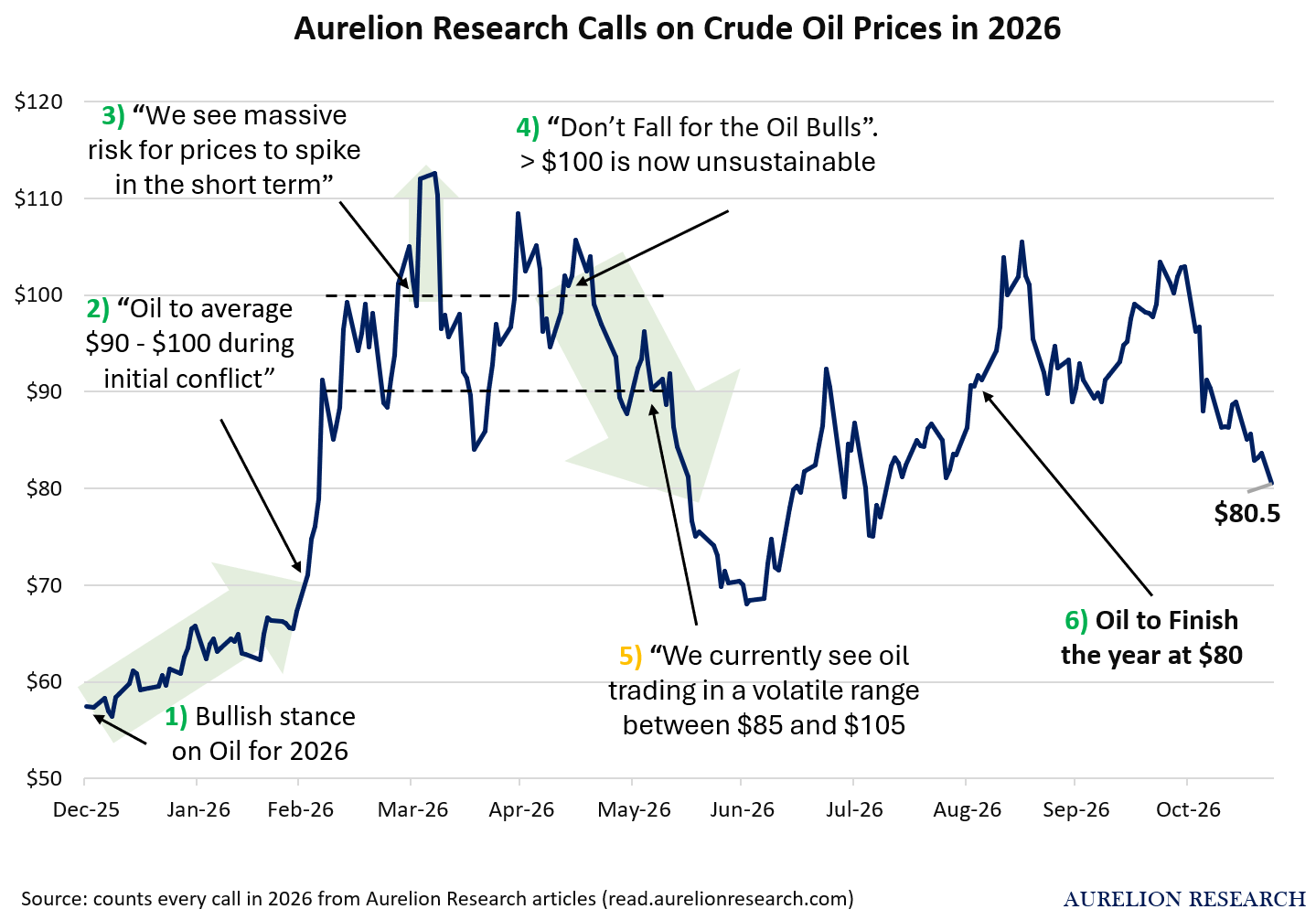
In September, we argued that the market was overestimating the impact of Hormuz disruptions, as more oil was getting through than reported and inventories were starting to rebuild.
At the same time, China’s oil imports remained weak, demand was slowing, and increased reliance on coal was reducing its dependence on crude. With Middle Eastern exports recovering, we saw the current risk premium gradually fading, bringing oil from the $90 - $100 range back to $80.
Our call made in September still holds: we expected oil prices to finish the year around $80. Now that oil has reached $80, we expect it to trend around that level while remaining volatile. Peace talks will lower prices, while more attacks will increase them, but at this point, we believe the price reflects the current situation well.
Gold: Waiting for the Storm to Pass
Gold has definitely been going the other way than we expected.
We first entered mining heavily in 2025 and sold most of our positions at the peak in February 2026. We then re-entered this summer at much lower levels, but momentum completely turned with interest rate expectations.
We then lowered our exposure but still have maintained some. What has been very challenging is that gold is not doing its job. It is supposed to be a hedge and perform well during market downturns, and we’re seeing the complete opposite.
The 3-month correlation between the S&P 500 and gold has doubled this year. The correlation is up to +0.35, doubling since February. It has remained positive throughout the year, unlike in 2025 and most of its history.
Correlation with AI equities is now very high. Owning mining equities almost feels like owning an AI play. Because we expect more sideways movement and that the risk of interest rates is still present, we want to maintain low exposure and rebuild positions when momentum starts to come back.
We still very much like the long-term story of owning gold as an asset.
Gold has become quite cheap. But because it can get even cheaper, and much of its price movement is simply driven by “momentum” (as gold does not produce cash flows like a company) we believe the best approach is to stay on the sidelines until momentum comes back.
Clearly, 2027 should be a good year for gold, but there is still some uncertainty until then. We prefer to wait until a favorable interest rate environment returns before buying mining companies, as higher interest rates reduce demand for gold because investors can earn higher returns on bonds instead.
NVIDIA: The King Returns
In breaking news, Jensen Huang was reinstated as CEO of NVDA, with the stock up 34% on the day. A lot of the risks are being removed with Jensen coming back.
First, he was known to be an essential force in the company. Second, the risk of potential export restrictions and higher regulation is becoming much smaller because the U.S. government basically said it was okay by reinstating Jensen. We now know how much the Trump administration is behind NVDA, which is a positive over the coming years.
Under the news drama, though, NVDA is performing very well. Q3 earnings confirm that NVDA’s fundamentals are playing out exactly as we’ve laid out.
The company is significantly surpassing earnings estimates. As seen below, analysts raised their sales forecasts quite significantly, from $695B to $724B for 2027 (fiscal year 2028).
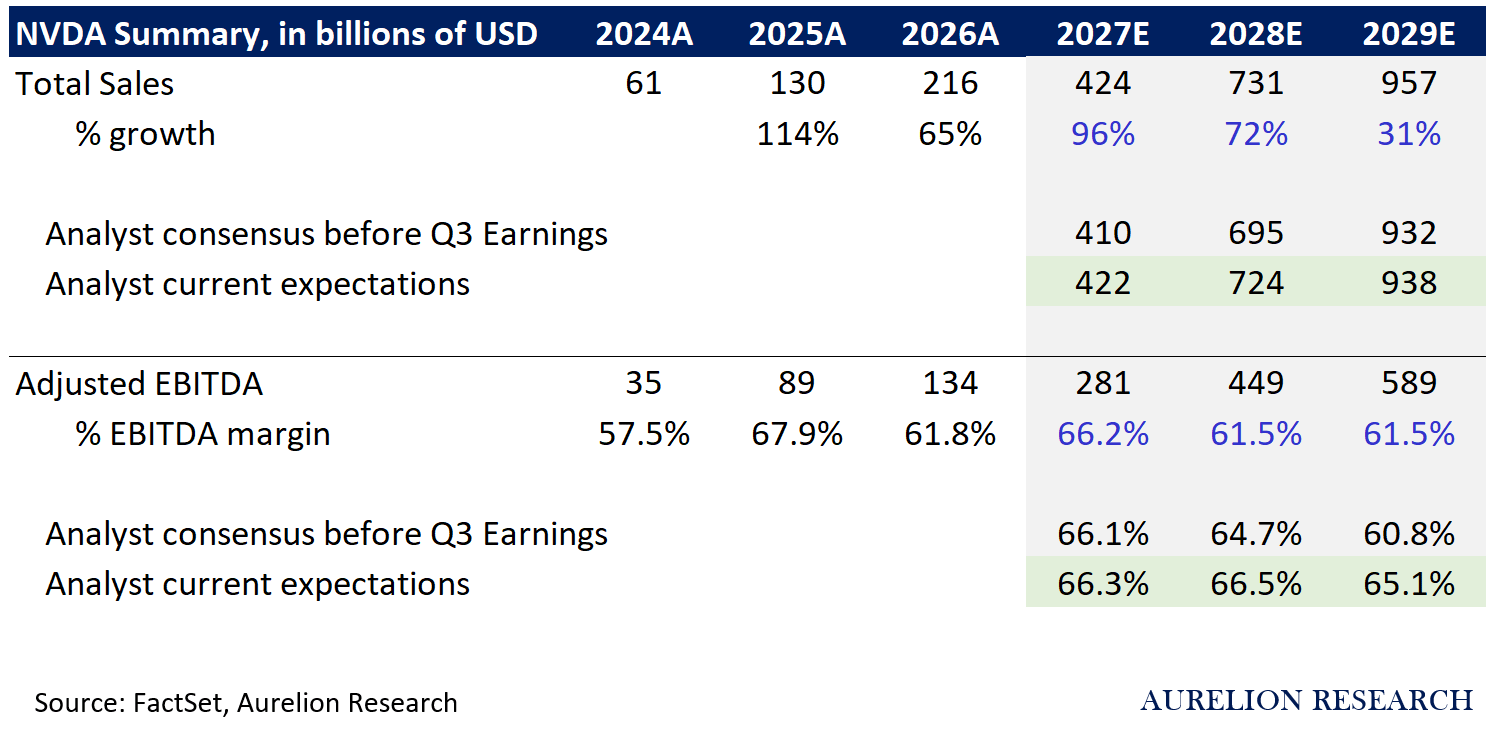
We are maintaining our forecast of $730B in sales, which was significantly above Street consensus before Q3 but is now not so much. We continue to see strong sales beats from NVDA.
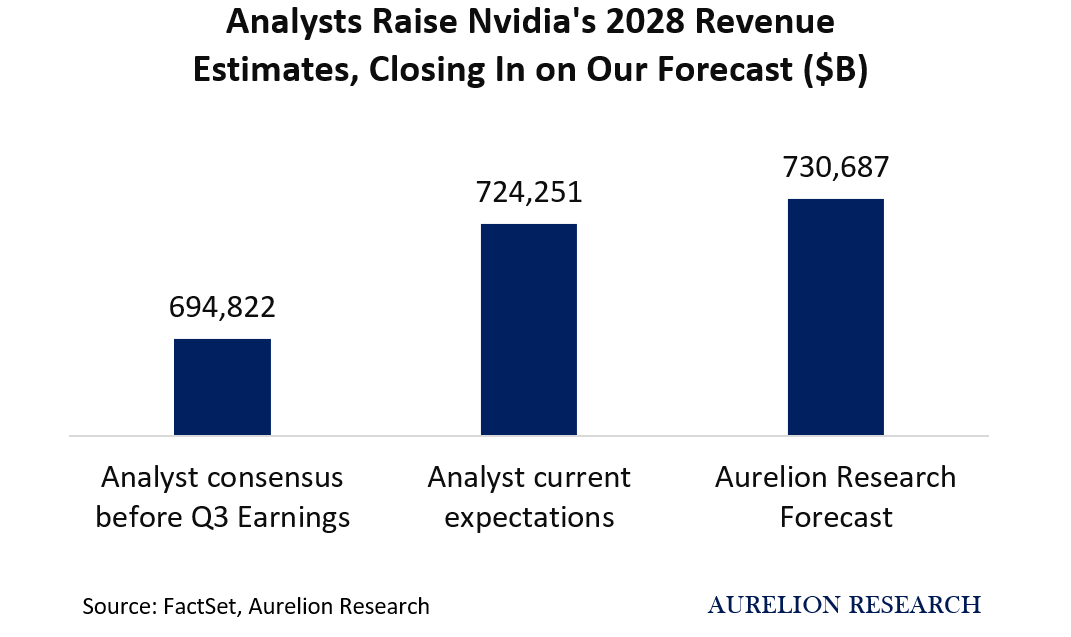
Because that Q3 earnings was overlooked by the departure of Jensen, with this overhang gone, we expect momentum to return in favour of NVDA.
The stock trades at just 10x FY2028 earnings, while the company continues to buy back shares at an extraordinary pace and generate earnings like few others. At some point, the share price will have to reflect that, and we are holding our shares.
View how the portfolio is positioned here: Aurelion Index Link.
Questions? Reach us directly on Substack or at contact@aurelionresearch.com.
nice update thanks. I think the latest AI news, nvidia pulling back on vendor financing (unless huang changes this), political changes, data center pushback, less money chasing AI infra collectively is still going to decrease the rate of change of the AI complex. We rapidly repriced so I wouldn't be surprised if we get a big bounce back but that might be the time to reduce exposure