

The past few months have been challenging for the commodity sector, with weakness in mining spot prices weighing on mining equities.
As you probably know, it is one of the most challenging areas of the market to analyze. You can pick the best stock, have the strongest thesis, and produce the most in-depth analysis, but if your timing is wrong, none of it matters.
Which brings us to today’s piece.
It has been a while since we last covered mining, and even longer since we took a deeper look at metals. Today, we will dive into gold, silver, and copper.
First of all, we are in the middle of a commodity race.
But what does that mean exactly?
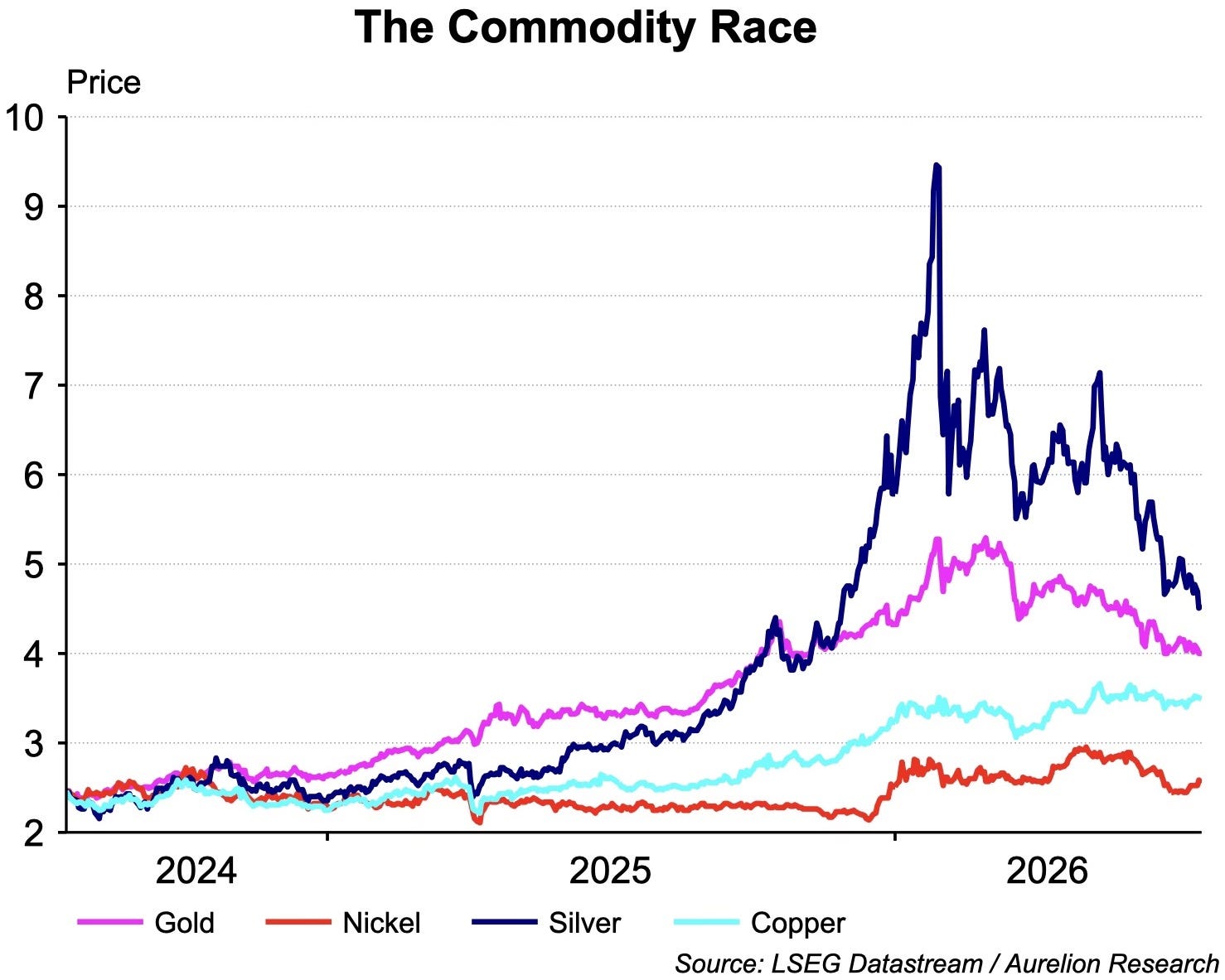
It means we are witnessing a race between different metals, each competing for a role in the next wave of demand. Every critical mineral, along with major base metals such as gold, silver, aluminum, copper, tin, and zinc, is competing for capital, investment, and a place in the evolving industrial landscape.
There is also meaningful demand growth expected for metals like nickel and lithium, but today we are focusing on gold, silver, and copper, three metals that we believe offer some of the most interesting dynamics within the mining sector.
Each is influenced by different fundamental trends, from monetary uncertainty and investment demand to energy infrastructure, electrification, and the expansion of AI-related infrastructure.
Among them, copper has emerged as one of the metals receiving the most attention heading into the next industrial cycle, given its critical role in power generation, grid expansion, data centers, and broader electrification trends. However, the outlook remains dependent on factors such as supply growth, demand timing, and capital investment across the industry.
Copper: The Key Drivers of Future Demand
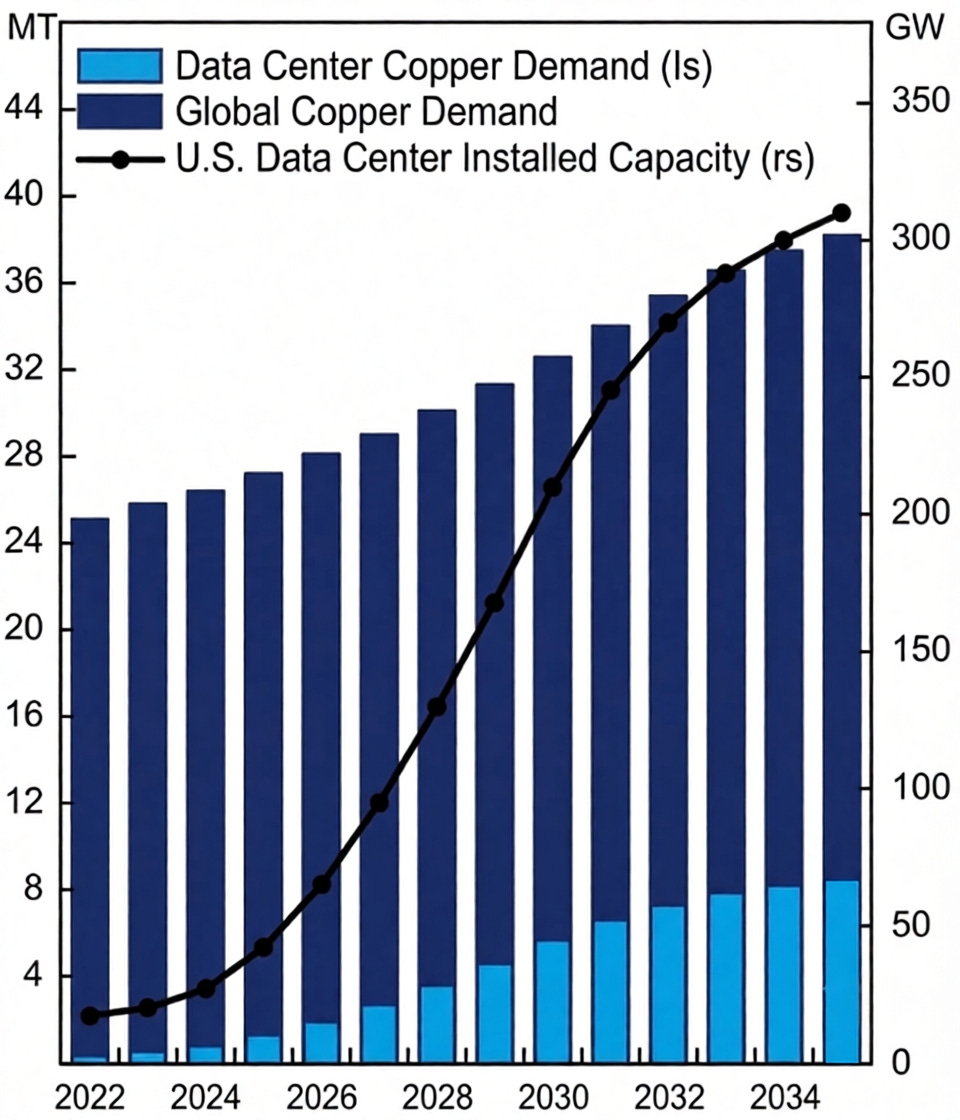
As data centers, power grids, and energy infrastructure continue to expand, copper demand is expected to benefit from these long-term trends. At the same time, supply growth remains constrained by long project timelines, declining ore grades, and a limited pipeline of major new discoveries. This combination of rising demand and constrained supply dynamics is creating a market that will likely require significant investment and new capacity over time. As a result, copper remains one of the key commodities to watch in the years ahead.
Table of Contents
1. Looking Back at What Happened in Mining
2. Gold & Silver: Time for a Comeback?
3. Copper: Does China Still Hold the Key?
4. Our Final Thoughts
1. Looking Back at What Happened in Mining
Right now, several different market dynamics are evolving at the same time, making the commodity landscape increasingly complex. But we always welcome a challenge. To make things as simple as possible, let’s start with what happened.
Before March 2026, the mining sector was performing well. Most metals were moving in the same direction, with prices trending higher across the board.
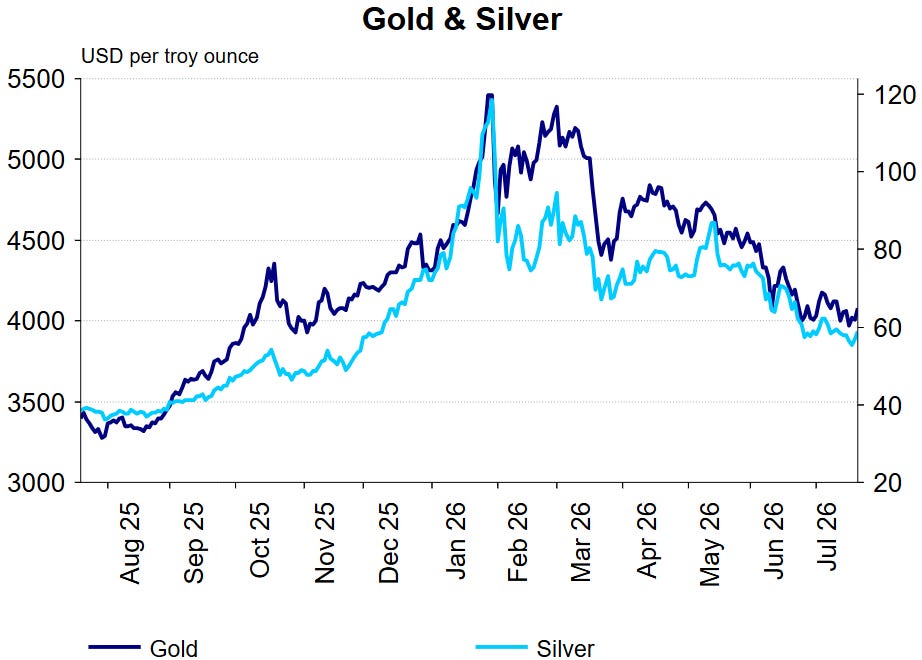
But then, a major geopolitical event emerged unexpectedly: the Iran-US conflict, which eventually led to the closure of the Strait of Hormuz.
This significantly changed the market environment. Following these developments, expectations shifted toward a more hawkish Federal Reserve outlook, with markets pricing in higher real rates and fewer potential rate cuts.
At the same time, stronger-than-expected U.S. economic data added further pressure on precious metals. A resilient economy reduced expectations for aggressive monetary easing, pushing interest rates higher and providing additional support to the U.S. dollar.
Since gold and silver do not generate cash flows or pay interest, they become relatively less attractive compared with yield-generating assets when real rates rise, increasing the opportunity cost of holding precious metals.
Together, we believe these factors explain a significant portion of the recent weakness across gold, silver, and other metals. However, it is important to distinguish between short-term price movements and longer-term fundamentals, as some of the forces weighing on metals may prove temporary.
The key question now is whether these headwinds are temporary or here to stay. That’s exactly what we aim to determine in this piece.
2. Gold & Silver: Time for a Comeback?
Right now, the dynamics in the mining space are unusual.
Gold & silver are being pulled in several different directions at the same time.
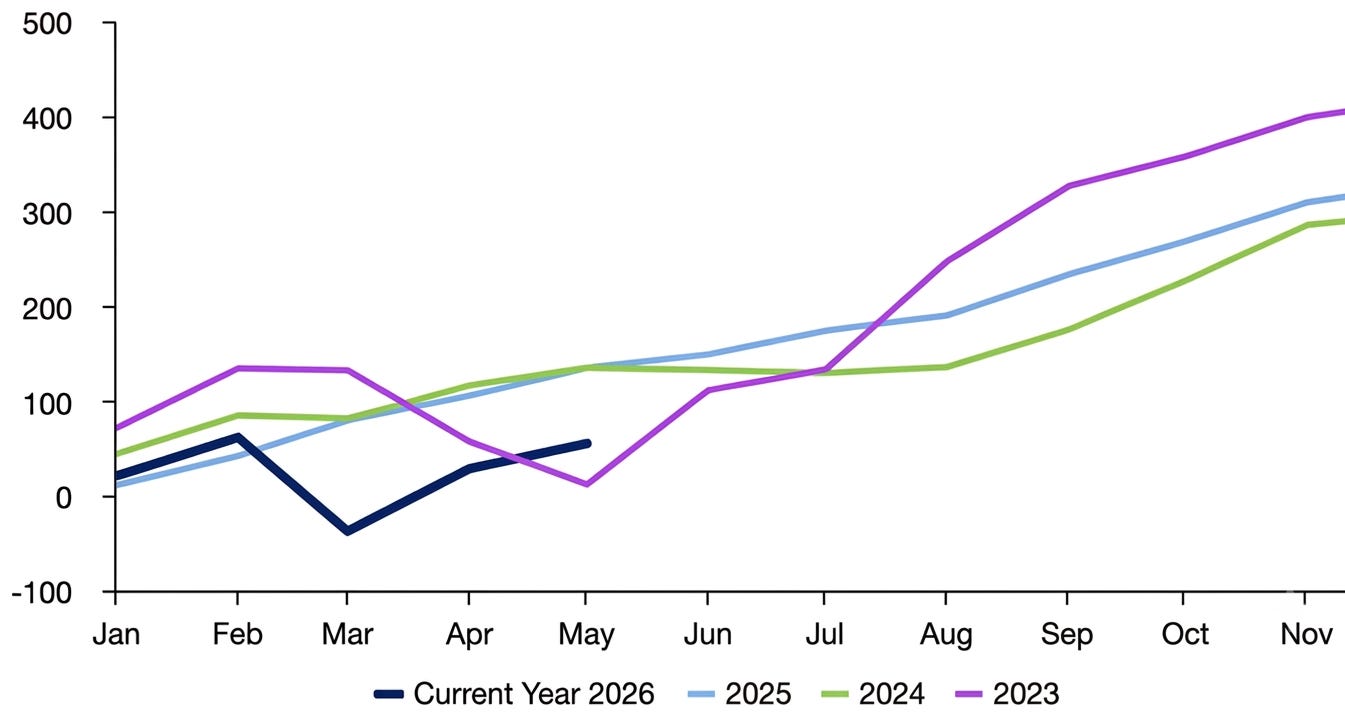
Gold’s traditional relationship with oil has become more difficult to interpret, the higher interest rate environment continues to create pressure, and central bank gold buying has moderated as stockpiles have increased. This creates a more complex environment. Historically, rising uncertainty and market stress have often supported gold, but the current cycle has played out differently so far.
Central Bank Net Cumulative Purchases (Tonnes)
Recently, oil prices have swung in both directions, while gold and silver have largely failed to follow. We think this divergence is what makes the current setup particularly interesting. Several forces are influencing the market at the same time, and our goal is to determine which factors are temporary and which could represent a more lasting shift in the mining landscape.
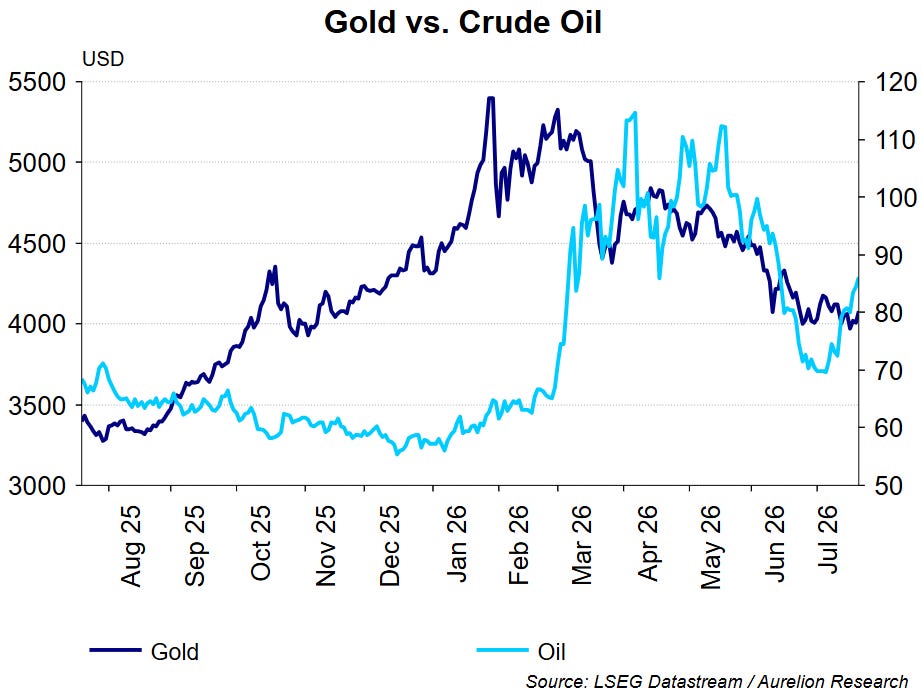
We know this may sound bearish at first, but there are also reasons to remain optimistic. More recently, we have seen several trading sessions where both gold and silver moved higher alongside crude oil prices.
This is the type of price action we want to see, as it could suggest that the relationship between these markets is beginning to evolve. Historically, gold has been primarily driven by interest rates and movements in the U.S. dollar, but recent price action suggests that other factors may be starting to play a larger role.
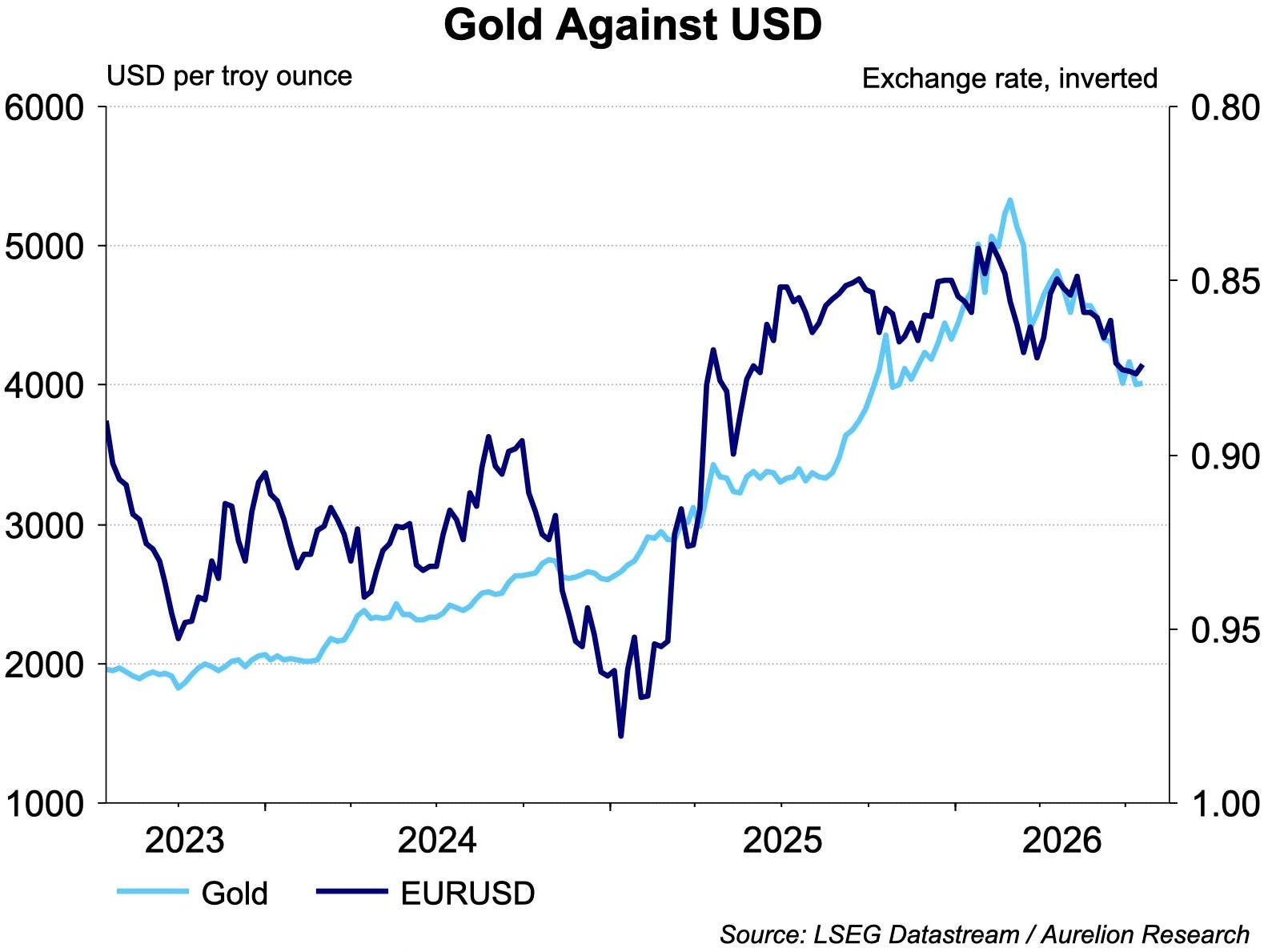
While gold & silver have been trading differently compared with previous cycles, we believe the setup could represent an important moment for precious metals.
The relationship between interest rates, currencies, and gold remains a key factor. However, the market may be entering a phase where these traditional drivers become less dominant, while other forces such as central bank demand, fiscal concerns, and broader commodity trends play a larger role.
If this shift continues, it could signal a change in how precious metals respond to the broader economic environment, with performance increasingly influenced by a wider range of factors beyond traditional macro drivers.
But this also highlights one key lesson from history:
Traditional drivers do not always hold. That is exactly what we are seeing today. While speculative positioning remains high and short-term moves in interest rates or currencies can continue to create volatility, we believe broader forces will play an increasingly important role over the long term.
Over time, one of the most important driver for gold is the continued expansion of U.S. government debt. As debt levels continue to rise, this remains a key factor supporting the long-term case for mining.
What makes us think gold could be approaching an important moment?
One indicator we always watch closely is CFTC positioning data from the U.S. Commodity Futures Trading Commission. By tracking how different market participants are positioned in the futures market, this data provides valuable insight into investor sentiment and potential shifts in market behavior.
Gold CFTC Managed Money
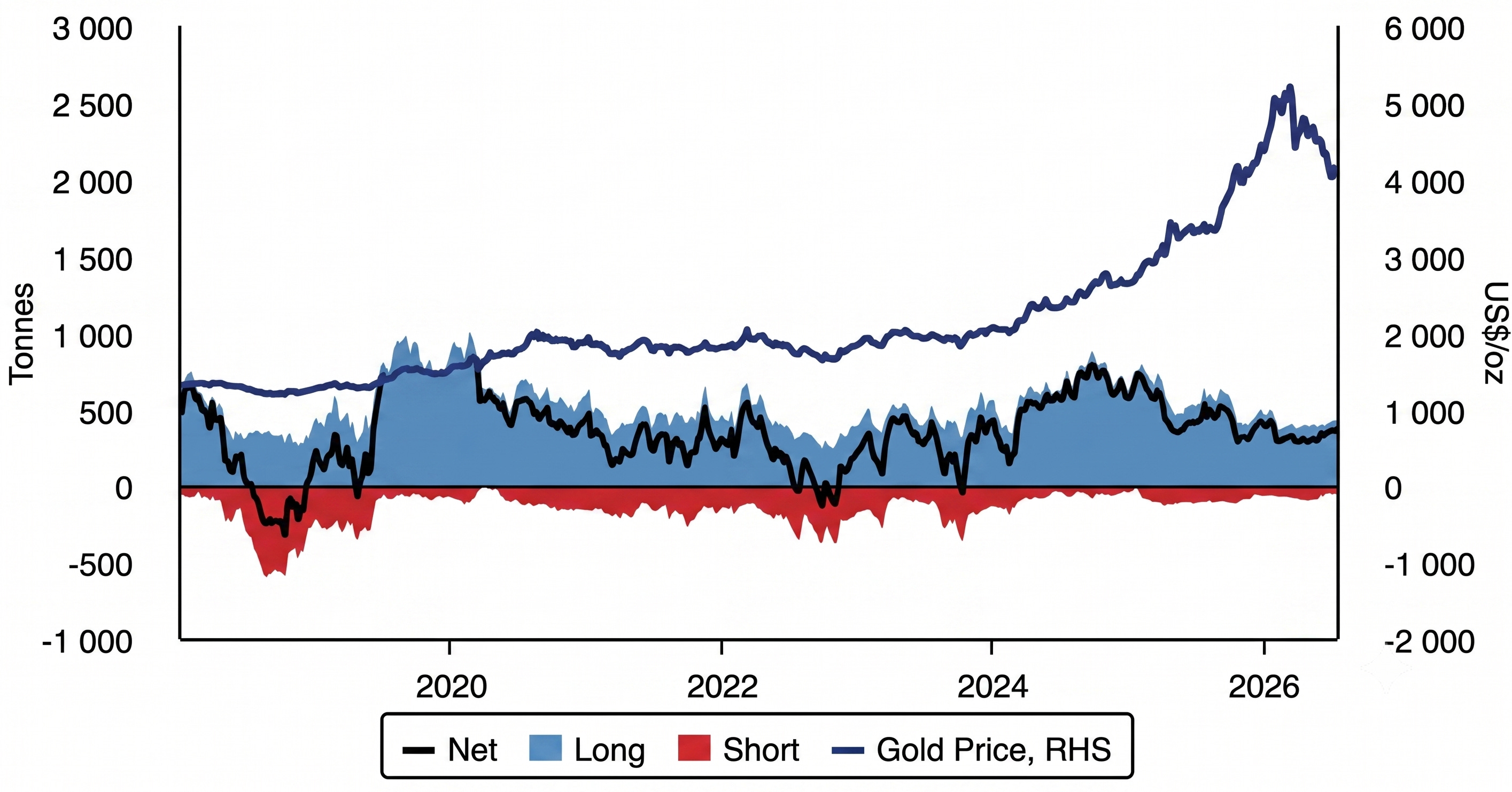
Right now, despite the recent volatility in gold prices, managed money is holding little to no short positions in 2026. In simple terms, this means investors are not aggressively betting against gold despite uncertainty across markets. This also suggests bearish sentiment remains limited, with fewer investors positioned for a decline and potentially less downside pressure from new short selling.
However, we do not think CFTC data should be viewed as a standalone timing indicator. While limited short interest reduces potential downside pressure from bearish bets, it also means there is less fuel for a potential short squeeze to accelerate gains. Overall, current data suggests that investors remain willing to maintain exposure to gold despite recent volatility.
The key question is whether improving fundamentals can attract additional demand and support a sustained move higher in gold.
Another indicator we monitor closely is gold ETF flows, which are showing a more positive picture than recent price action suggests. Despite volatility in gold prices, ETF holdings have continued to see net inflows, suggesting that investor demand for gold exposure remains resilient. While ETF flows are not a perfect short-term timing tool, sustained inflows can signal continued investor interest and provide an additional source of demand over time.
Gold ETF Monthly Flows
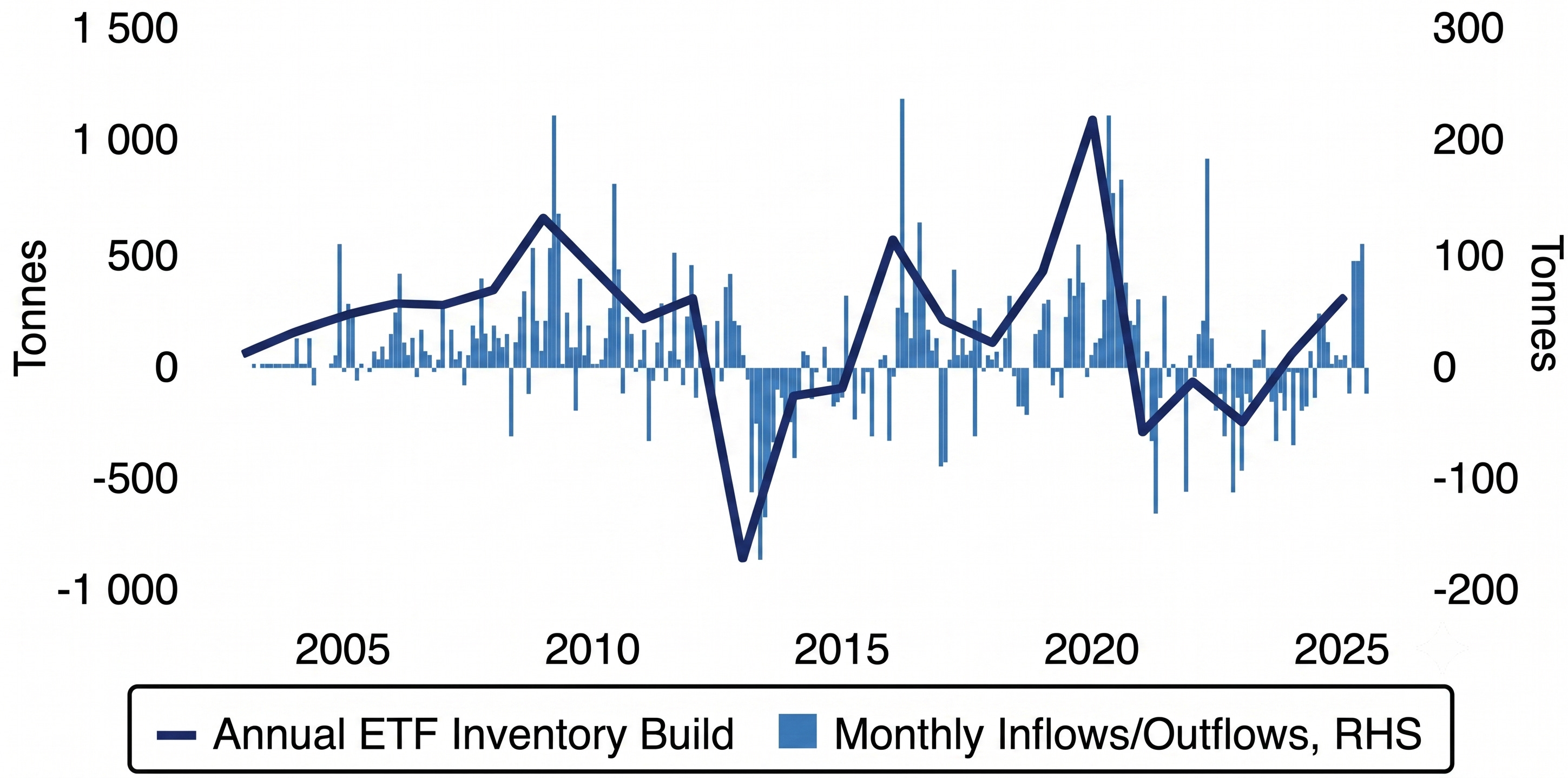
On the inventory side, gold ETF holdings have continued to increase, suggesting that investors are gradually rebuilding exposure to gold. While these flows alone do not determine prices, they provide an important signal that demand remains present despite recent volatility. Looking ahead, we believe the balance between supply and demand could become more favorable if interest rates decline and broader market conditions continue to improve. However, the timing and magnitude of any potential move will depend on how these factors develop.
Overall, we remain positive on the long-term outlook for gold and silver, while recognizing that the path higher will be uneven. We believe the current setup is more favorable than recent market sentiment suggests, with improving fundamentals likely to become increasingly reflected in prices over time.
We are not buying gold mining equities at the moment, as we believe the timing is not yet right. Historically, gold has often moved inversely to oil, and we would become more positive on gold if oil enters a sustained decline. For now, we are waiting for a full and lasting reopening of the Strait of Hormuz before changing our view, as the previous reopening was short-lived.
3. Copper: Does China Still Hold the Key?
Despite concerns that an AI-driven equity sell-off could weigh on copper prices in the short term, we believe the long-term fundamentals remain firmly intact.
LME Copper Price Performance
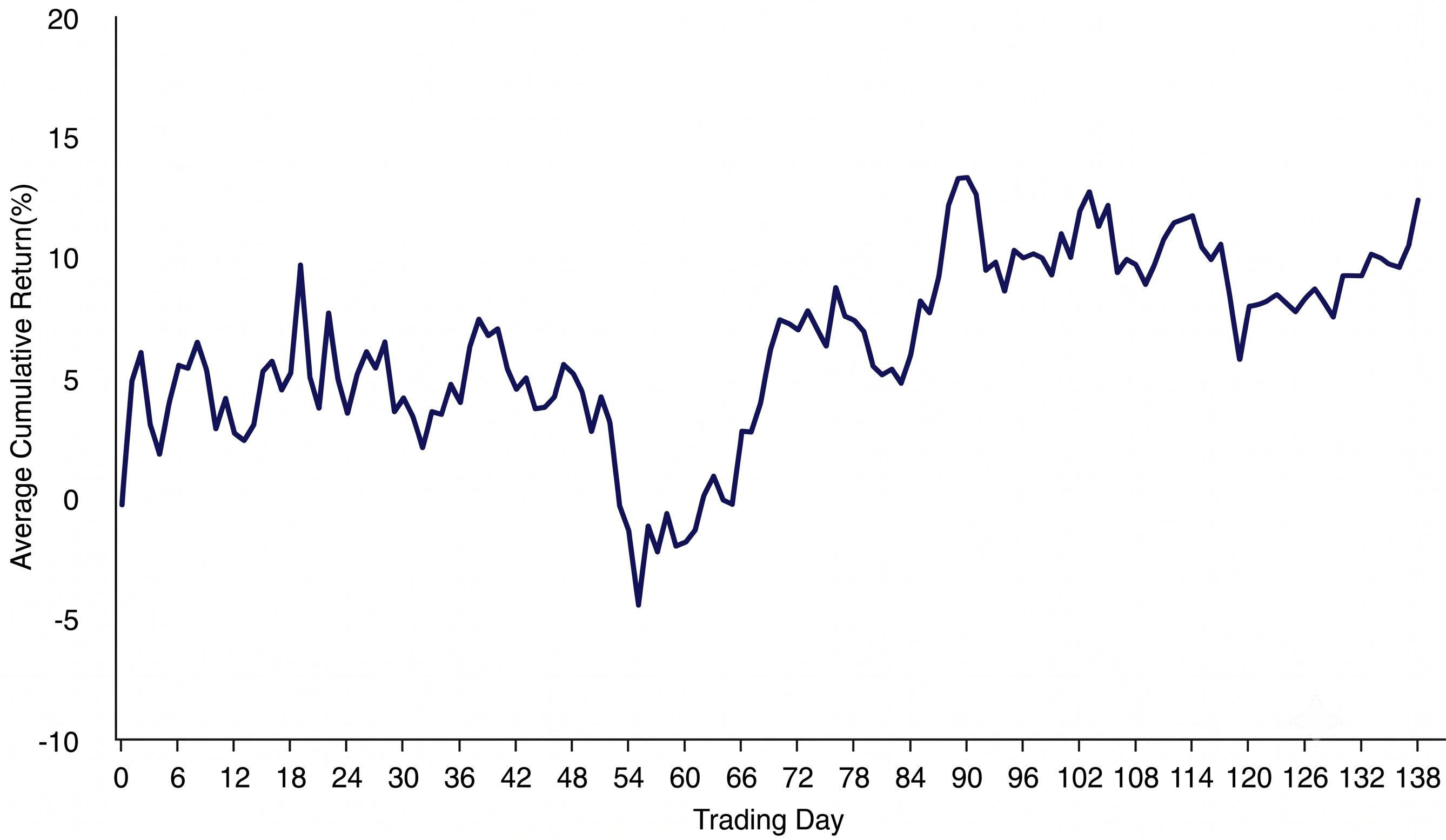
As shown above, copper prices are on the right path, with the overall trend still pointing higher. While we do not know exactly what the future holds for copper, we believe the 2026-2027 outlook remains easier to analyze. Looking much further ahead becomes increasingly difficult and would require more speculation.
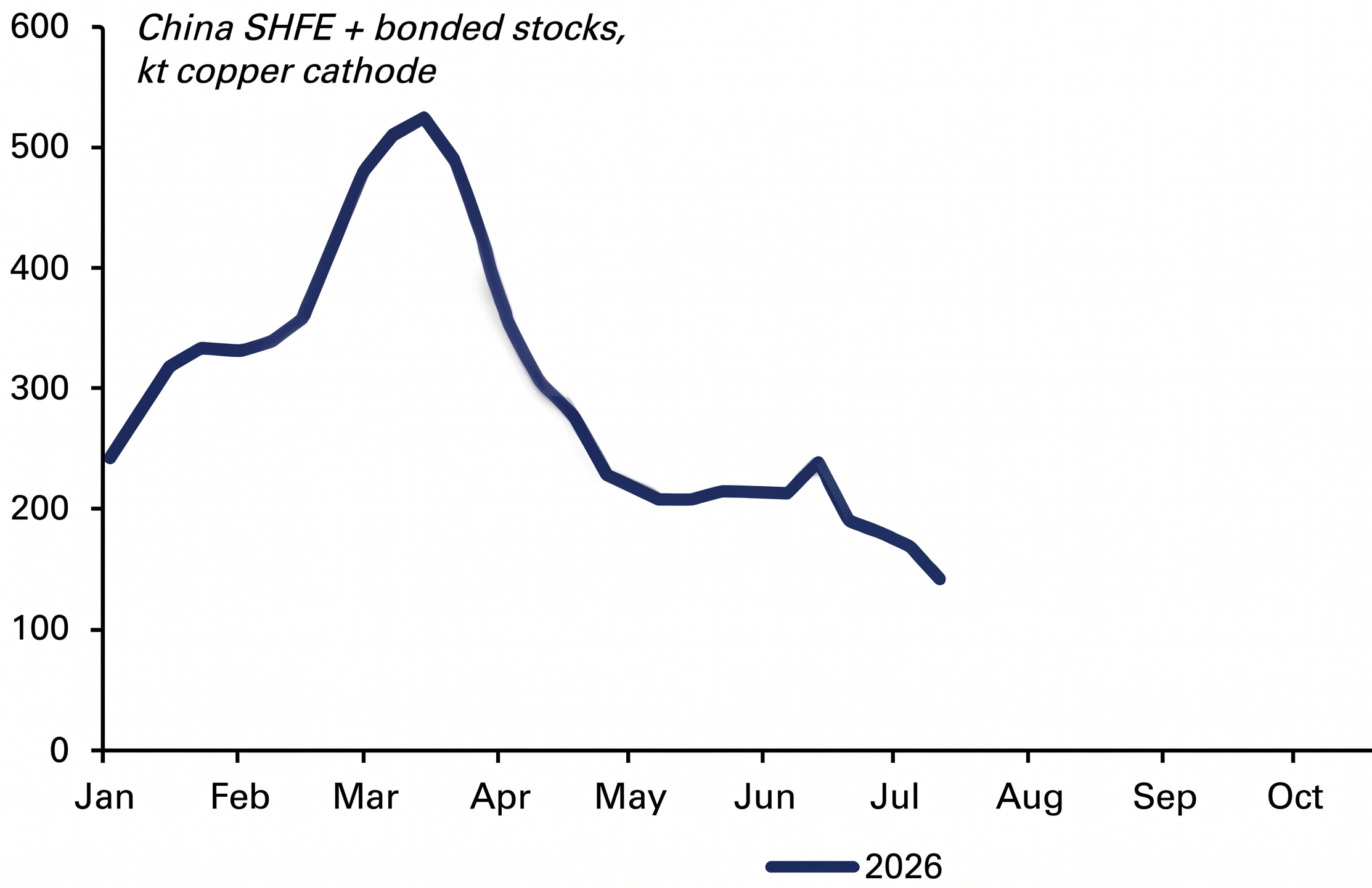
Currently, copper inventories are declining so far in 2026, with stockpiles trending lower across major exchanges. While inventory levels can fluctuate, we believe the ongoing drawdown is an important indicator to monitor.
Global Copper Inventories
One important point to clarify is that while data centers have become one of the fastest-growing sources of copper demand, they still represent only a small portion of total electrification-related consumption. The much bigger drivers remain the expansion of power grids, electric vehicles, and the broader shift toward electrification, which is something that is often overlooked.
Grid Investment: A Key Copper Demand Driver
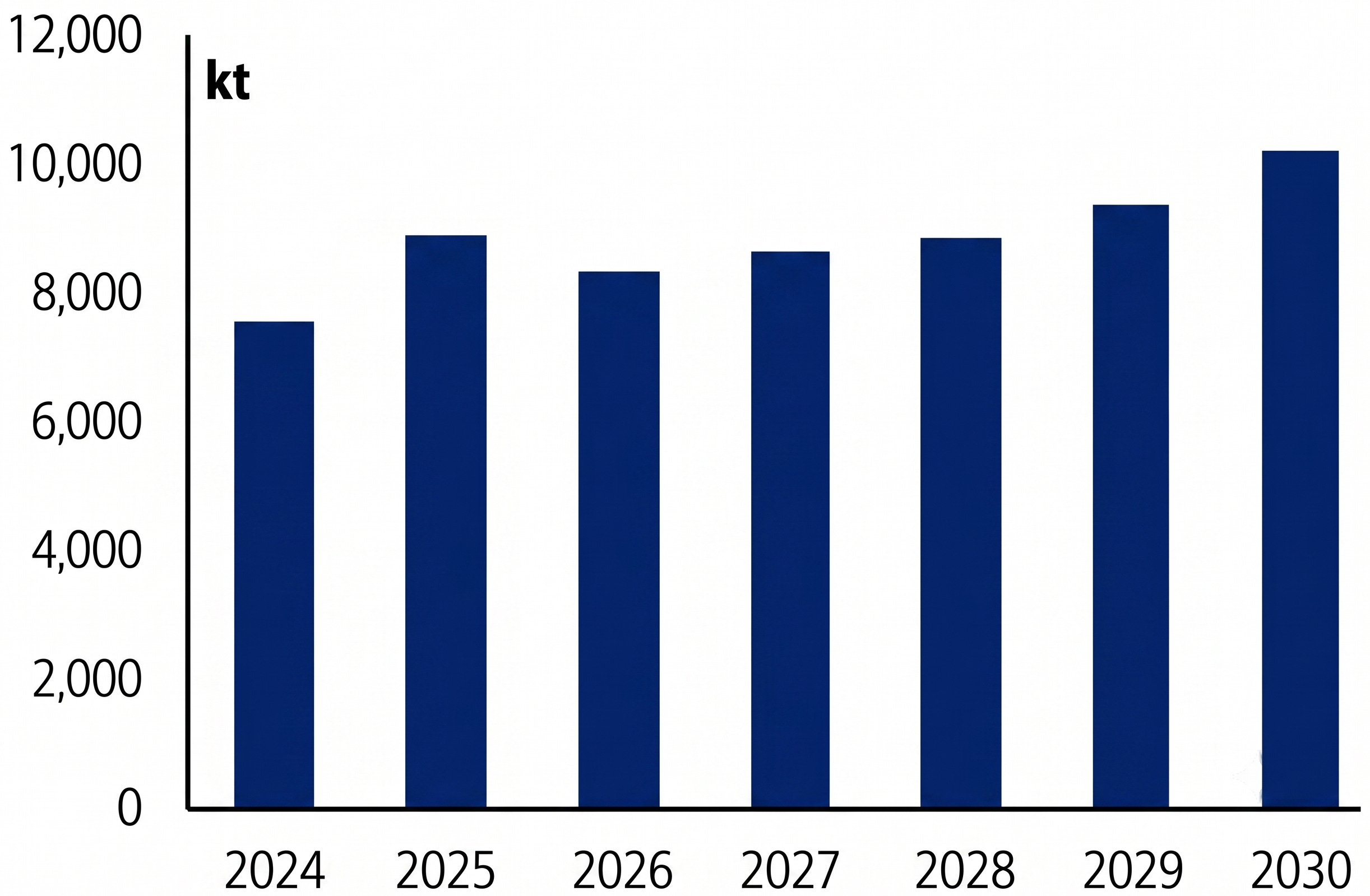
In our view, what makes this cycle different is that copper demand is not being driven by just one industry. Multiple sectors are requiring more copper at the same time. Data centers require significant amounts of power and connectivity infrastructure, but the energy transition is also creating massive demand for transmission networks, renewable energy, and electric transportation.
Projected Global Copper Demand by Sector
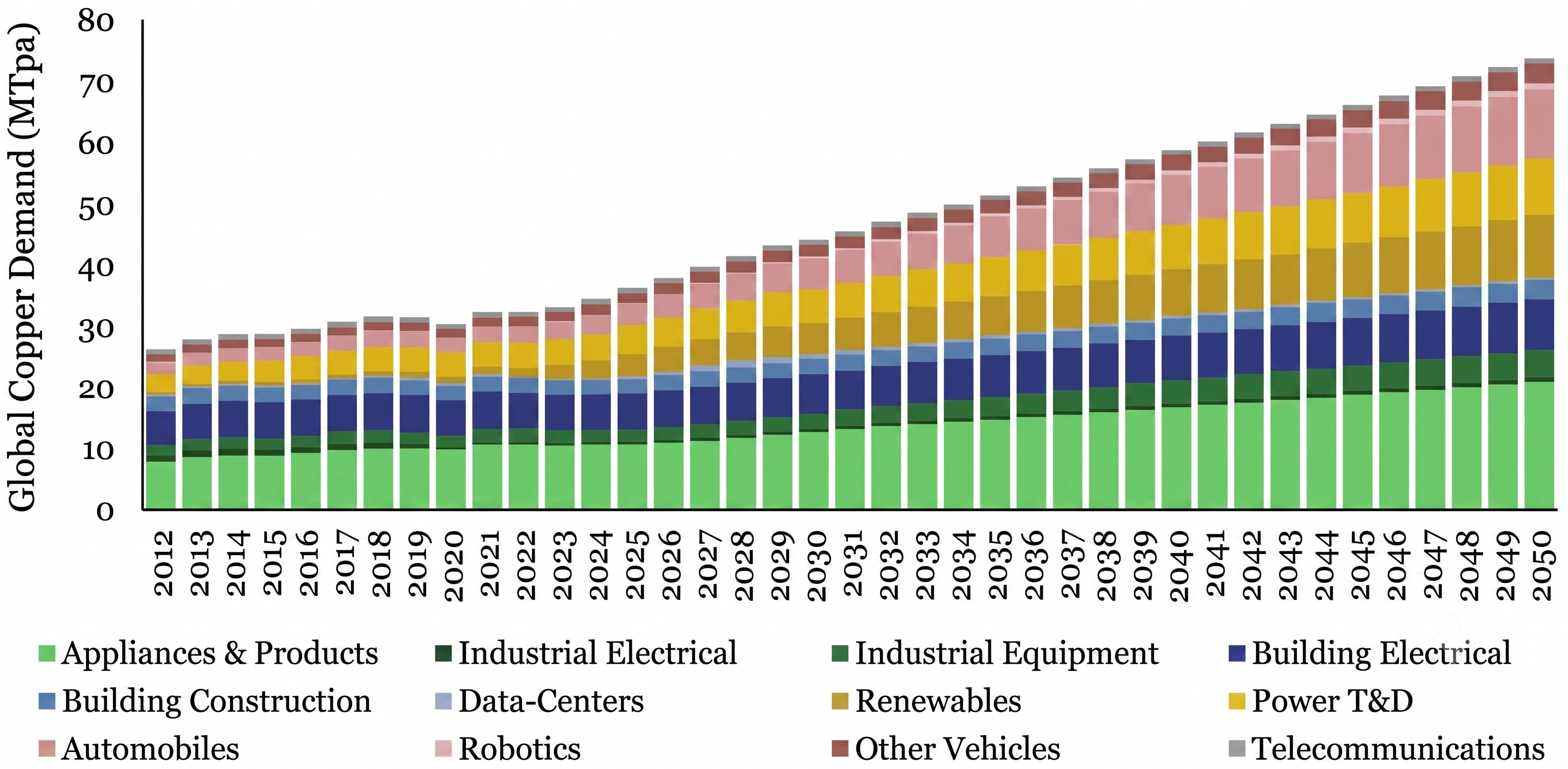
This combination of growing demand and limited supply is what makes copper one of the most important commodities to watch in the years ahead.
Then there is China.
As with many Chinese markets, it is important not to take every data point at face value. We reached a similar conclusion in our oil research. While China remains a major driver of global copper demand, we believe the market often overestimates how much additional demand is actually coming from the country.
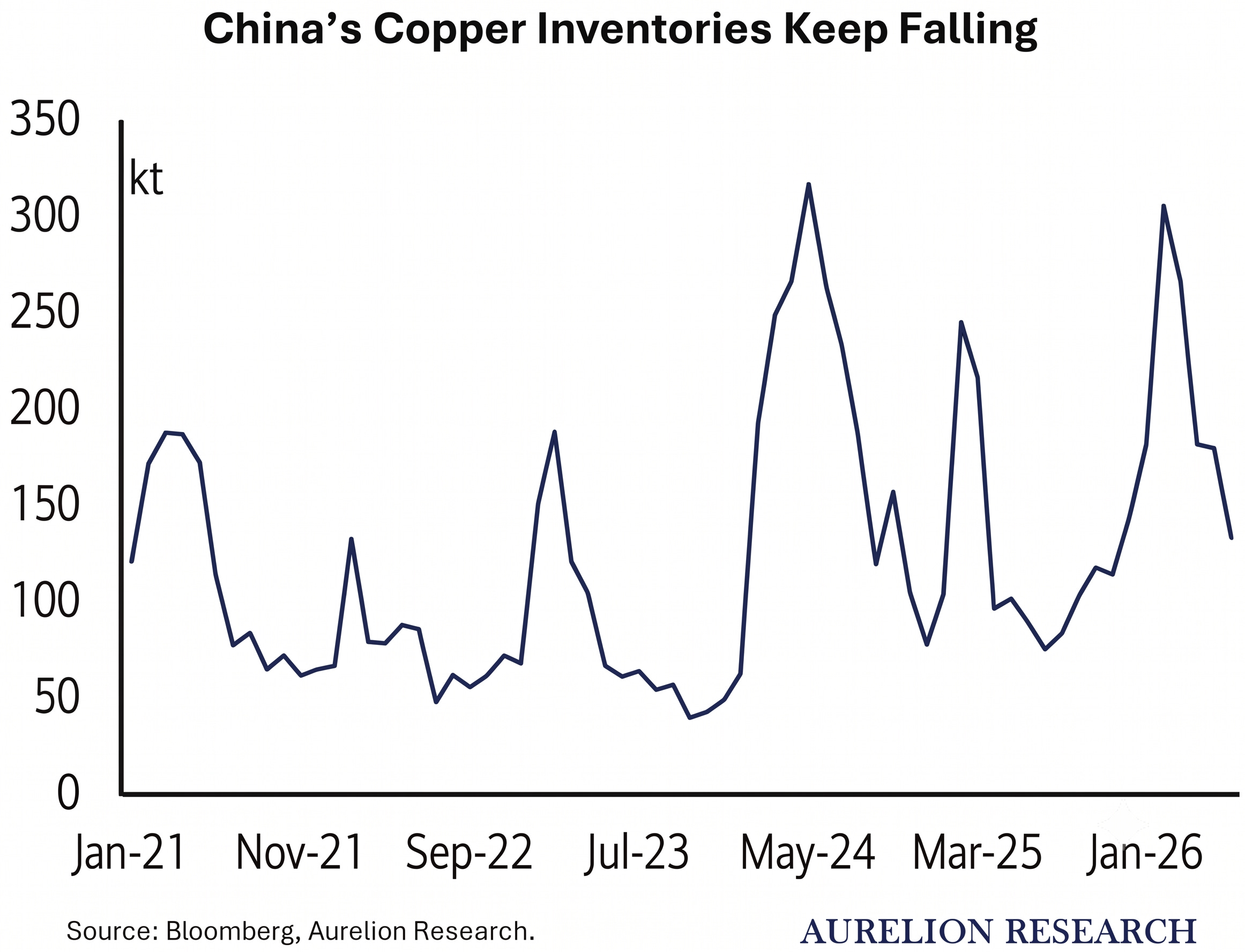
So far, copper demand in China has remained relatively resilient despite a slower economy. Operating rates at cable and wire manufacturers have improved, while inventories have continued to decline. However, we do not expect demand to move in a straight line. A weaker property market, slower industrial activity, or softer renewable energy investment could temporarily weigh on demand.
Overall, we remain positive on China’s role in the copper market, but we believe a broader view is needed rather than focusing on any single data point. While the path may not be linear, the long-term outlook remains supported by continued investment in electrification and power infrastructure.
While new wind and solar installations may slow this year, China is shifting more attention toward upgrading its electricity grid. Investment in transmission networks, grid modernization, and energy storage remains a key priority as the country continues to increase electrification. The impact is already visible.
Capacity utilization at cable and wire manufacturers has recovered, while copper inventories have continued to decline, suggesting that demand remains resilient despite weakness in some areas. Overall, China’s copper demand story is evolving instead of weakening, with grid investment and electrification remaining key long-term drivers.
Regardless of the final outcome, we believe the fundamental challenge remains unchanged: copper supply growth is constrained, while demand continues to expand across electrification, power infrastructure, and the next industrial cycle.
Another important point is that the copper forward curve is positive, suggesting the market expects tighter supply conditions in the future.
1 Year Copper Forward Curves
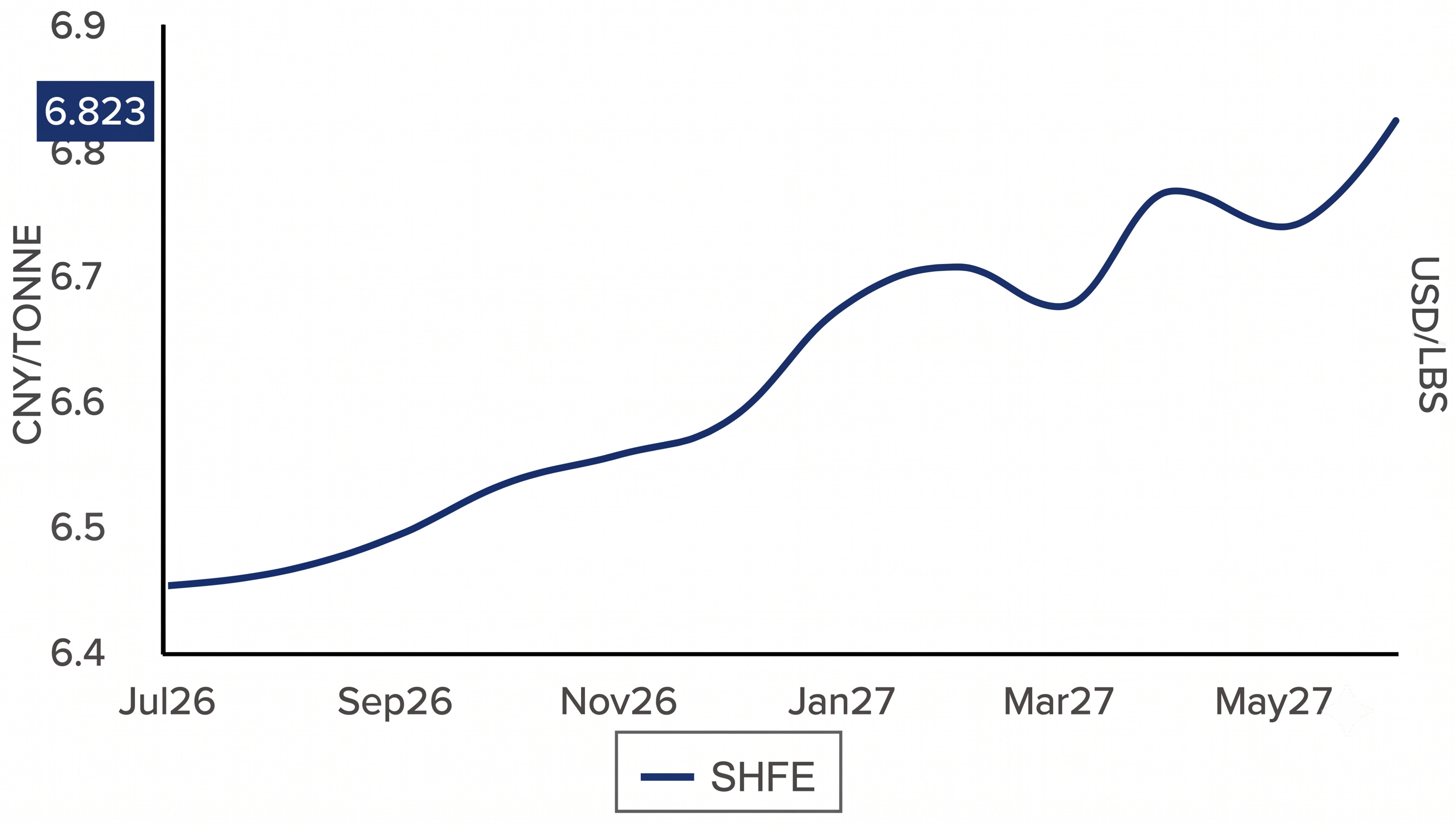
In our view, short-term policy decisions may impact prices, but the long-term supply and demand dynamics remain the key driver of the copper market.
4. Our Final Thoughts
Metals are never easy to forecast, analyze, or, most importantly, time.
That is one of the key reasons why we wrote this piece: to provide our readers with the tools needed to better navigate the commodity market and understand the metals that could play an important role in the next AI infrastructure wave.
While we are positive on the long-term outlook for gold and silver, we do not expect a major move higher in the near term. For now, we are comfortable staying on the sidelines and not owning these assets, while continuing to monitor how fundamentals develop.
On copper, we see a stronger long-term setup. As a key metal supporting the global infrastructure buildout, copper is expected to benefit from rising demand linked to power generation, data centers, and electrification. At the same time, supply growth remains challenging due to long project timelines and limited new capacity, creating the potential for a tighter market over the coming years.
Latest article on commodities:

View how the portfolio is positioned here: Aurelion Index link.
The Aurelion Team
Questions? Reach us directly on Substack or at contact@aurelionresearch.com.
Informative read! So no target stocks for the copper thesis at this time?
We are still in the early-to-middle stages of what appears to be a multidecade commodity supercycle.