

We are always looking for the next “big trade,” and we think we’ve found it: offshore drilling.
The current setup reminds us a lot of the oil tanker trade we identified in April 2025. These opportunities don’t come around often, and when they do, you need to be opportunistic. So why do we think this is the right time to get in?
The industry uses platforms to drill for oil and gas at sea. Many of these rigs are getting old, more are being used, and very few new ones are being built.
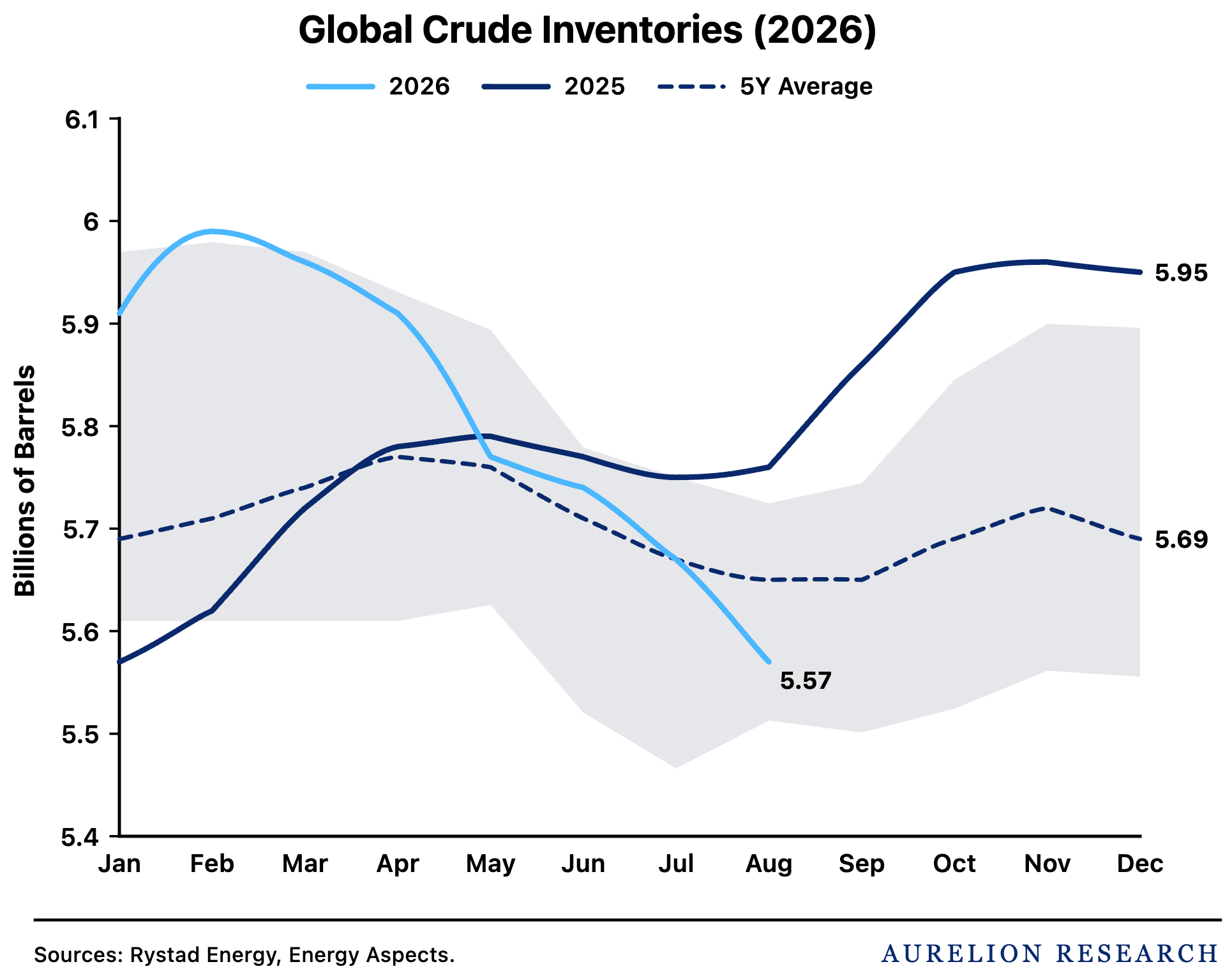
Moreover, strategic oil reserves are approaching critical lows. Even with plenty of Middle Eastern oil still flowing despite the closure of the Strait of Hormuz, countries will need to replenish their reserves quickly. They will have little choice but to turn to offshore oil to secure reliable, long-term supply.
The industry knows it, but Wall Street doesn’t seem to have it priced in yet. On our end, we won’t be late to the party. We’re not waiting for the upcycle to fully play out.
We expect rates to increase, directly benefiting drilling companies. When rates rise, drilling companies make more money from the same rigs, directly benefiting the share price.
We’re adding to the portfolio an offshore drilling company that is both well positioned to benefit from higher rates and is one of the best operators in the industry.
Table of Contents
A Bull Cycle in Its Early Innings
Understanding the Offshore Industry
Offshore Drilling Market Outlook
Offshore Drilling Equity Universe
New Addition: Our Top Idea
Key Industry Risks to Watch
Our Final Take
Offshore Drilling Terms Glossary
Jack-ups: Rigs used to drill for oil in shallow waters.
Offshore Oil Rigs: Structures or vessels used to drill for oil offshore.
Dayrates: Daily fees paid to use a drilling rig.
Orderbook: New rigs ordered but not yet built.
Backlog: The value of contracts a company has yet to complete.
Utilization Rate: The percentage of rigs currently working.
Fleet: The total number of rigs owned by a company.
Newbuilds: Newly built rigs.
Scrapping: Removing old rigs from service.
1. A Bull Cycle in Its Early Innings
Readers new to the industry may read Section #2 below, “Understanding the Offshore Industry.”
Why now? Being early is great, but waiting too long for a thesis to play out isn’t something we want to do. Oil reserves need to be replenished, yet replacing them is becoming increasingly difficult, especially given the challenges surrounding oil supply from OPEC and the Middle East.
With that said, let’s get straight into the thesis and the key factors we see developing that make us believe a new bull cycle is emerging in offshore drilling.
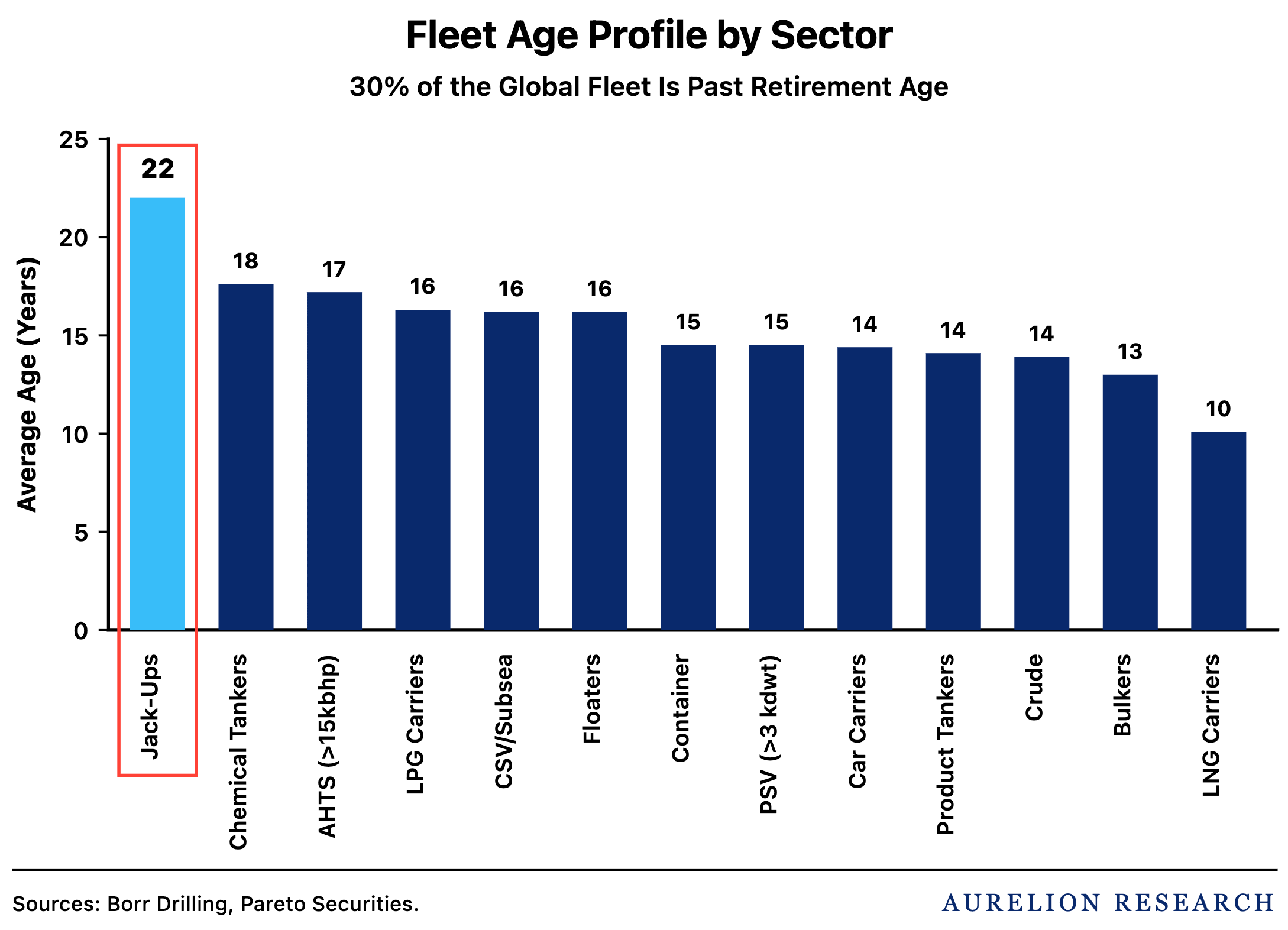
First, you need a fleet of ageing rigs that are due for retirement.
We have that. The offshore drilling fleet is getting older, and jack-ups are no exception. Many have been operating for decades, and very few new rigs are being built to replace them. As older rigs leave the market and demand stays strong, fewer rigs will be available, which will keep pushing dayrates higher.
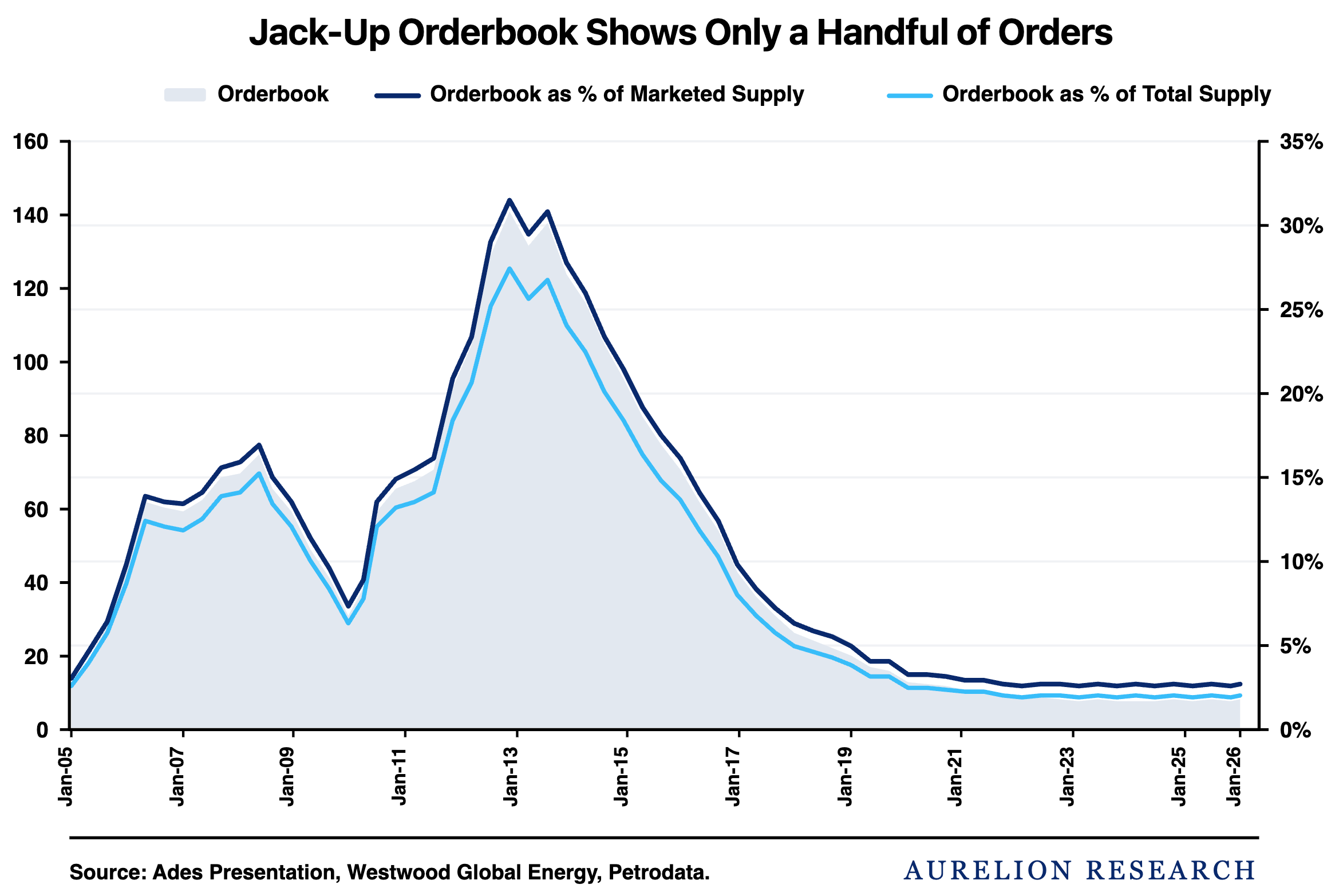
Second, you need an orderbook that is as low as possible.
We have that too. The fleet is ageing, but the orderbook is very low, which means there aren’t enough new rigs being built to replace older ones. This pushes up the value of existing rigs and makes new ones more expensive, as shipyards have limited capacity and buyers compete for available slots.
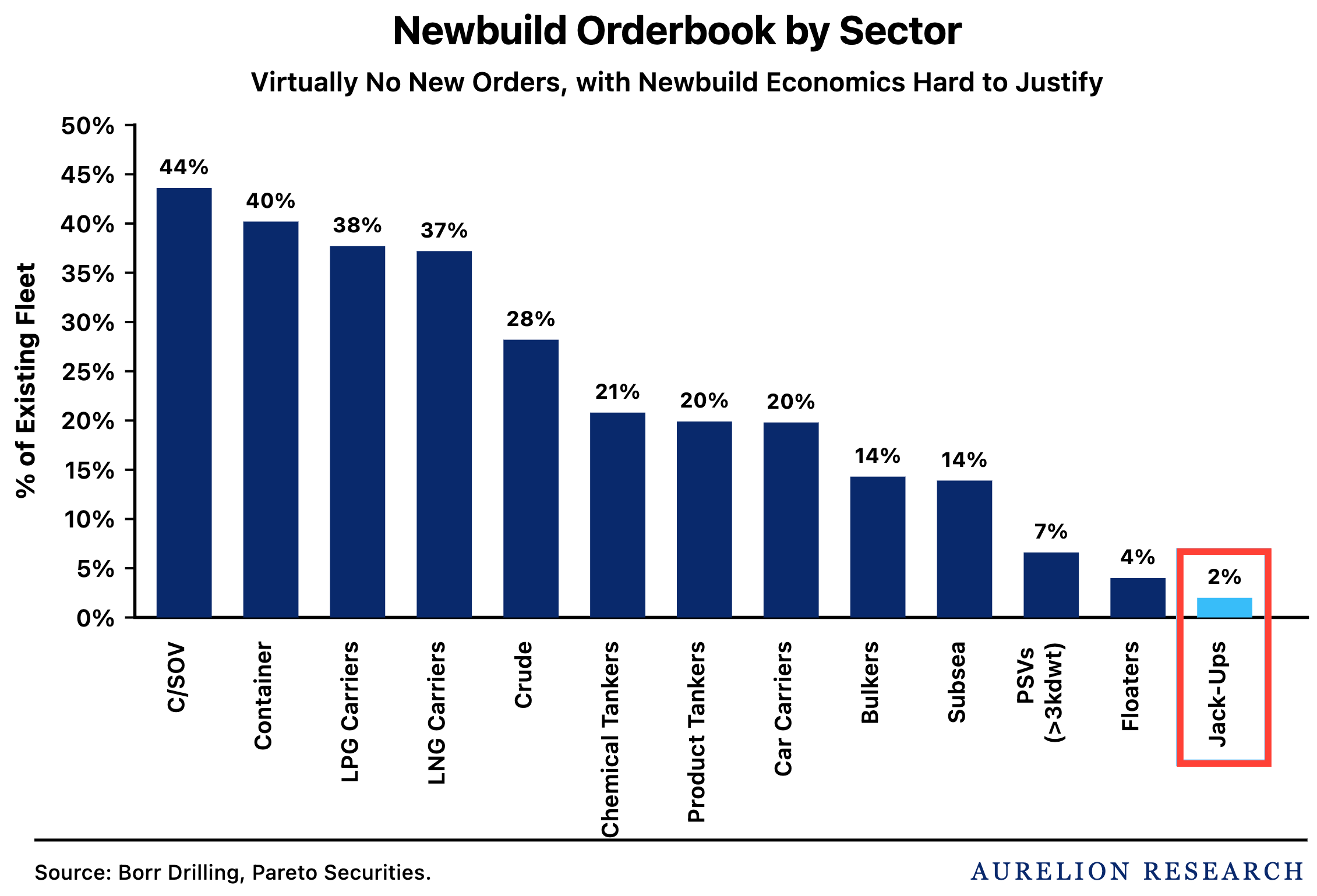
The jackup orderbook is particularly low because shipyards are prioritizing container ships, LPG and LNG carriers, and increasingly, tankers.
Lastly, an ageing fleet + a low orderbook = soaring dayrates.
Offshore drilling will likely be one of the last sectors to see a recovery in new orders, keeping supply tight for years. This sets the stage for higher dayrates, and we’re already seeing it happen as new contracts come in at higher rates.
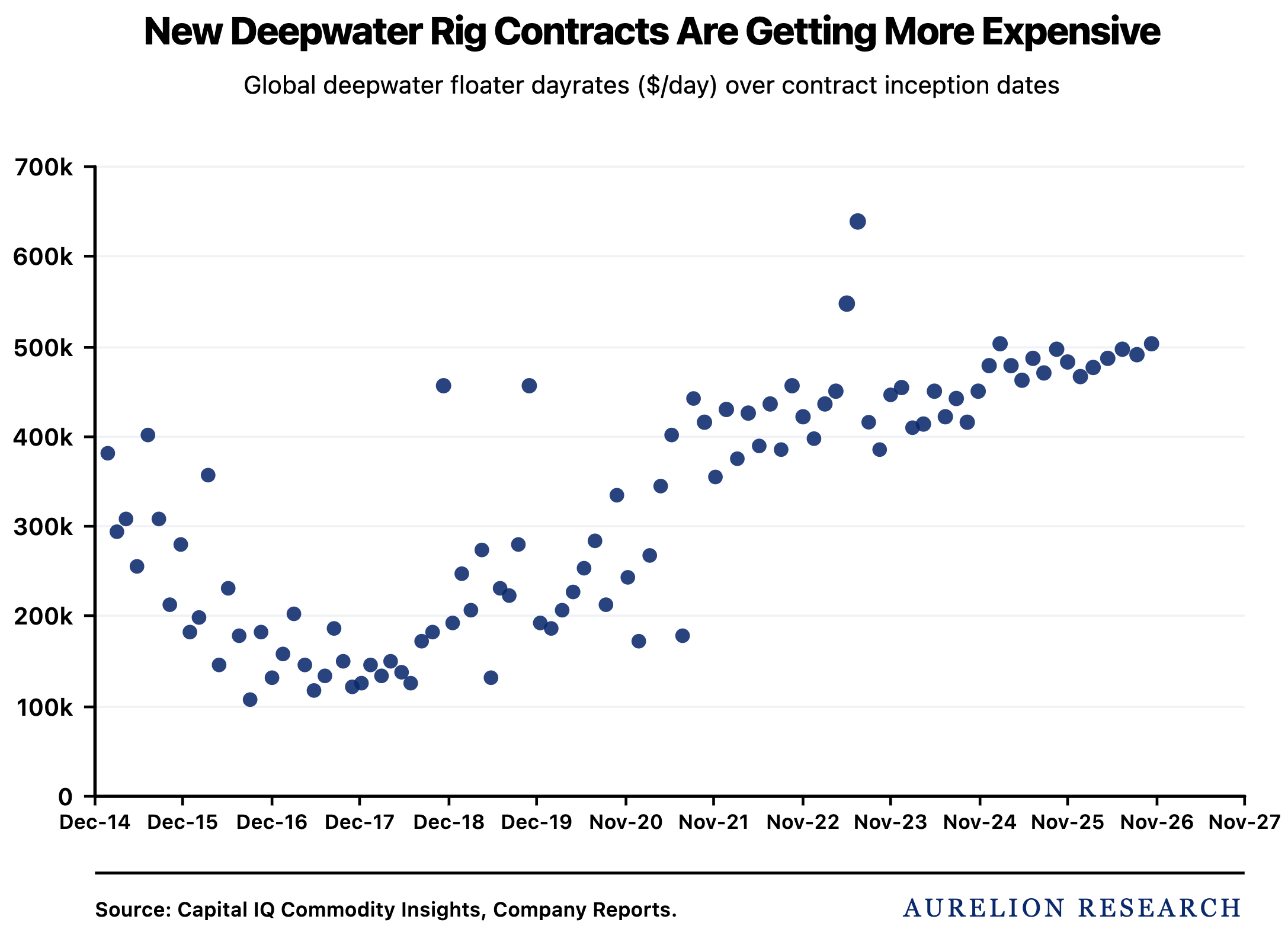
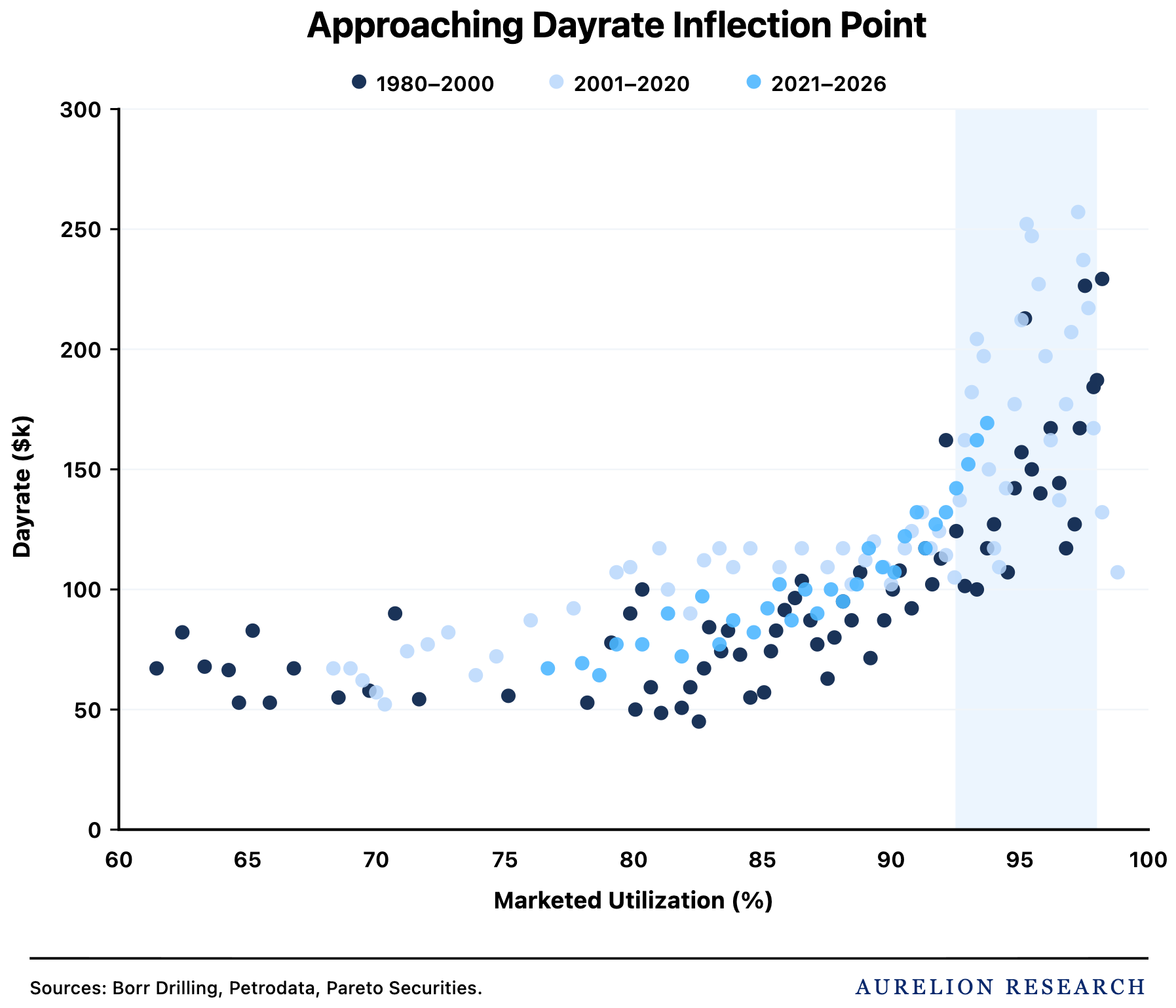
Another sign that the sector is approaching an inflection point:
Jack-up utilization is nearing 90–100%, leaving little spare capacity to meet additional demand. With oil supply already disrupted, we see a strong chance that dayrates will continue to rise, as they did in the oil tanker market.
2. Understanding the Offshore Industry
Offshore drilling is a business with a simple model. Oil companies need drilling rigs to reach oil and gas reserves beneath the seabed. Instead of owning all the equipment themselves, they hire specialized drilling contractors that own and operate the rigs. These contractors earn revenue by renting their rigs to oil companies at daily rates, known as dayrates. Their profitability depends largely on how much each rig earns and how often it is working.
1. What Drives Dayrates?
A dayrate is the daily fee an oil company pays to use a drilling rig.
For example, a rig earning $300,000 per day can generate $109.5M in annual revenue, assuming it operates every day of the year.
Dayrates are mainly driven by supply & demand:
Higher demand: When oil companies increase drilling spending, they need more rigs, supporting dayrates. (That’s what is happening currently)
Limited supply: When few suitable rigs are available, contractors have more bargaining power. (This is driven by an aging jack-up fleet)
Too much supply: If too many rigs compete for contracts, dayrates fall.
Oil prices: Higher expected oil prices generally encourage investment in new projects, while lower prices can lead to delays and cancellations.
2. Why Utilization and the Orderbook Are Important
Utilization measures the percentage of available rigs that are working. The higher the utilization, the better for contractors. The more rigs are being used, the fewer are available, creating scarcity and allowing contractors to charge oil companies higher dayrates.
The orderbook represents rigs that have been ordered but are not yet built. A large orderbook can eventually increase supply and pressure dayrates. A small orderbook limits how quickly new capacity can enter the market.
Together, high utilization and a limited orderbook can create favorable conditions for drilling contractors, provided demand remains strong.
3. Who Benefits When Dayrates Rise?
Drilling contractors benefit directly. Higher dayrates and more rigs working can significantly increase revenue and cash flow, especially because many operating costs remain relatively fixed. It also helps them pay down the debt they took on to buy or order new rigs, which they need to replace their aging fleet.
The opposite is true during a downturn. Lower dayrates and rigs that are not working can quickly hurt profitability, particularly for highly indebted companies.
Oil producers benefit from lower dayrates because drilling becomes cheaper, reducing costs. When contractors gain pricing power and dayrates rise, producers face higher drilling costs. However, if oil prices also rise, they can offset some costs with higher revenue from selling oil. This depends on market conditions, as higher drilling costs are not always matched by higher oil prices.
2.1 Types of Offshore Oil Drilling Rigs
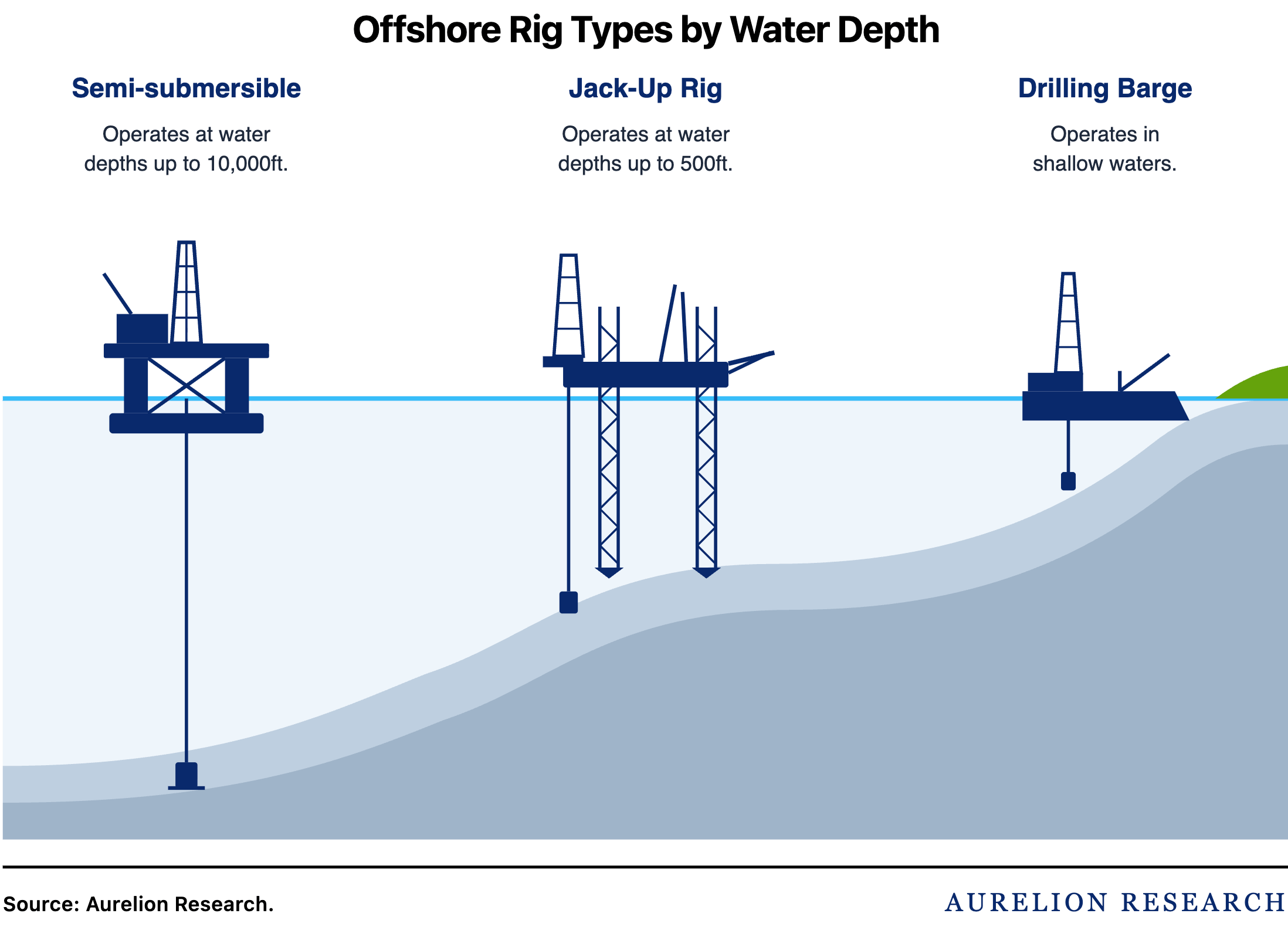
There are several types of offshore drilling rigs, depending mainly on water depth and drilling conditions. Some can move between drilling sites, while others are designed to stay in place during drilling.
1. Drilling Barges
They are floating platforms used to drill in shallow, sheltered waters, such as lakes, swamps and some coastal areas. Their lower hulls are filled with water to lower the rig onto the seabed and provide stability while drilling. They are not suited to rough seas, which limits where they can operate.
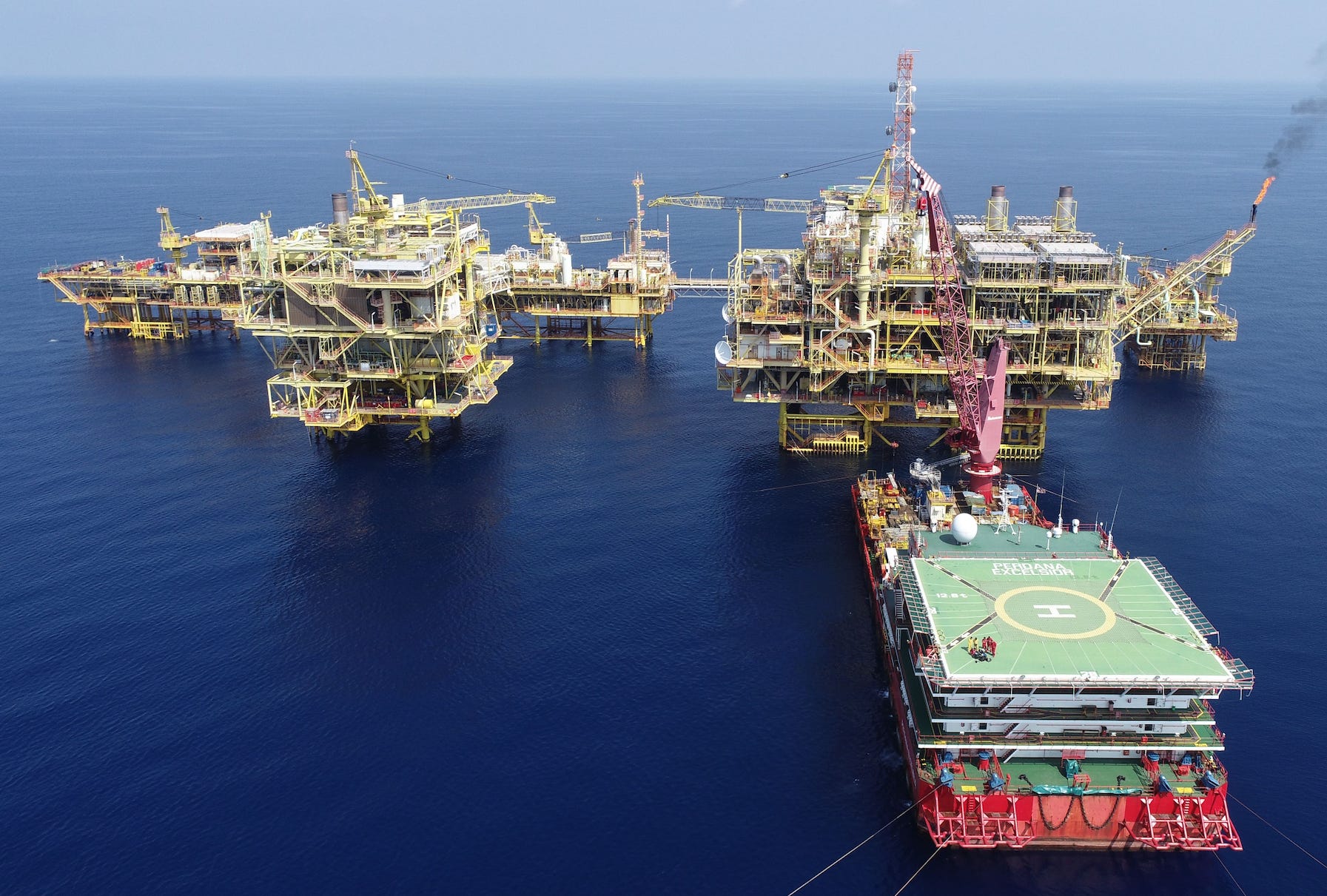
2. Jack-Up Rigs
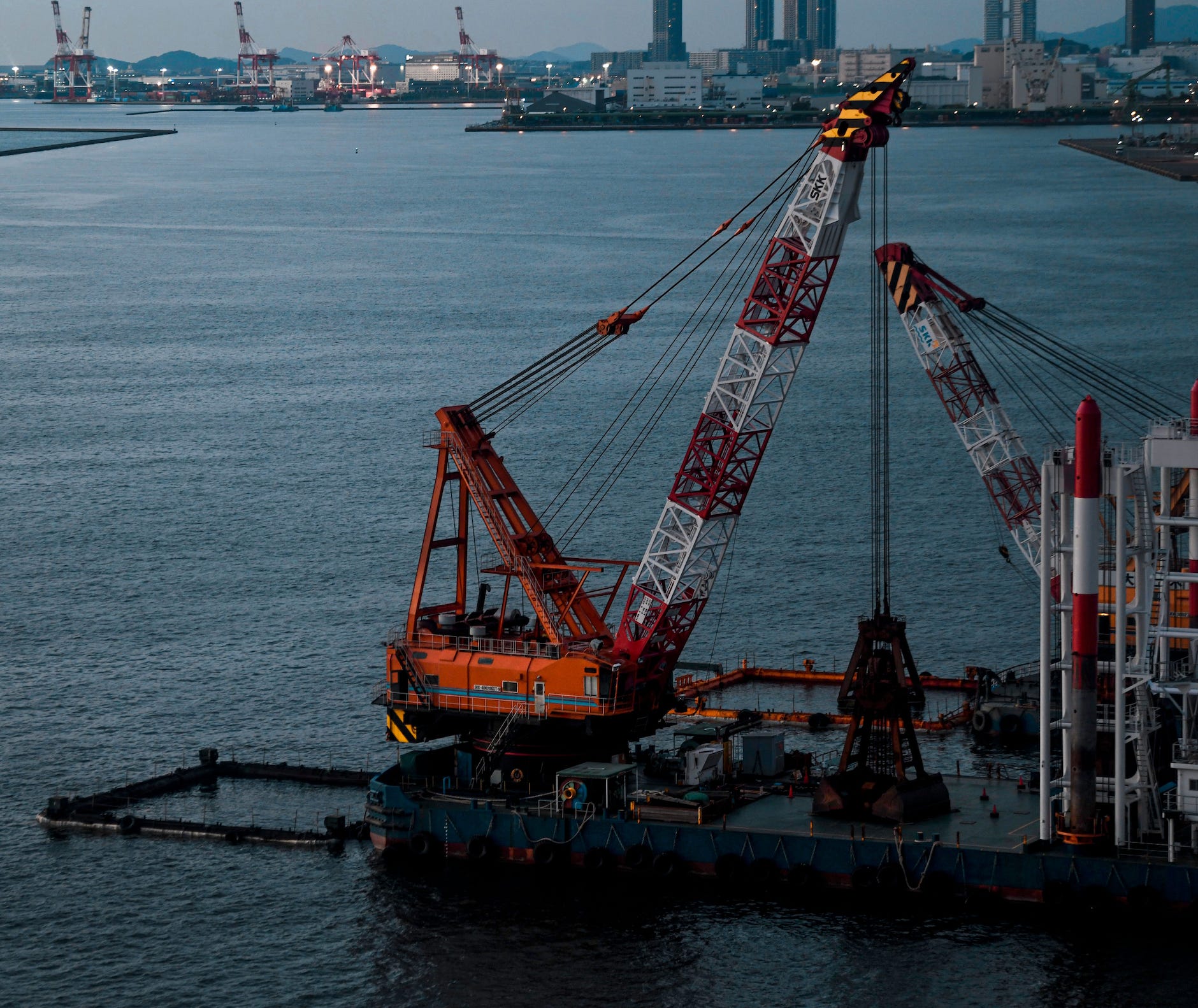
They are used for shallow-water drilling. They are towed to a drilling site, where their three or four legs are lowered to the seabed. The legs then lift the platform above the water, creating a stable working area. Unlike submersible rigs, which rest on the seabed using their lower hulls, jack-ups stand on long legs. They are generally cheaper to operate than deepwater rigs.
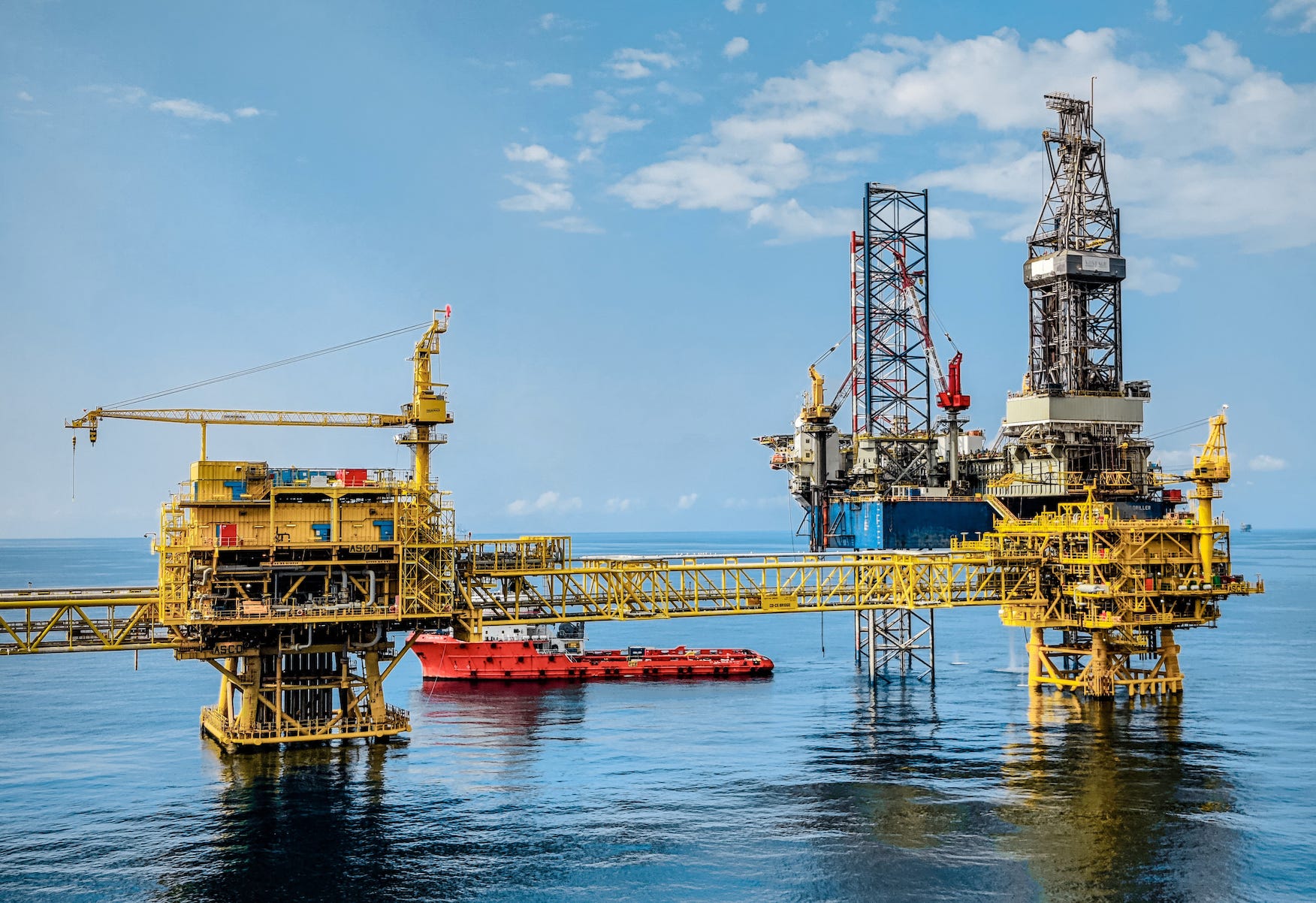
3. Submersible Rigs
They are designed for shallow waters, where the sea is not very deep. Water is pumped into their lower hulls to lower the rig onto the seabed and keep it stable during drilling. Once drilling is complete, air is pumped into the hulls to raise the rig so it can be moved to another location.
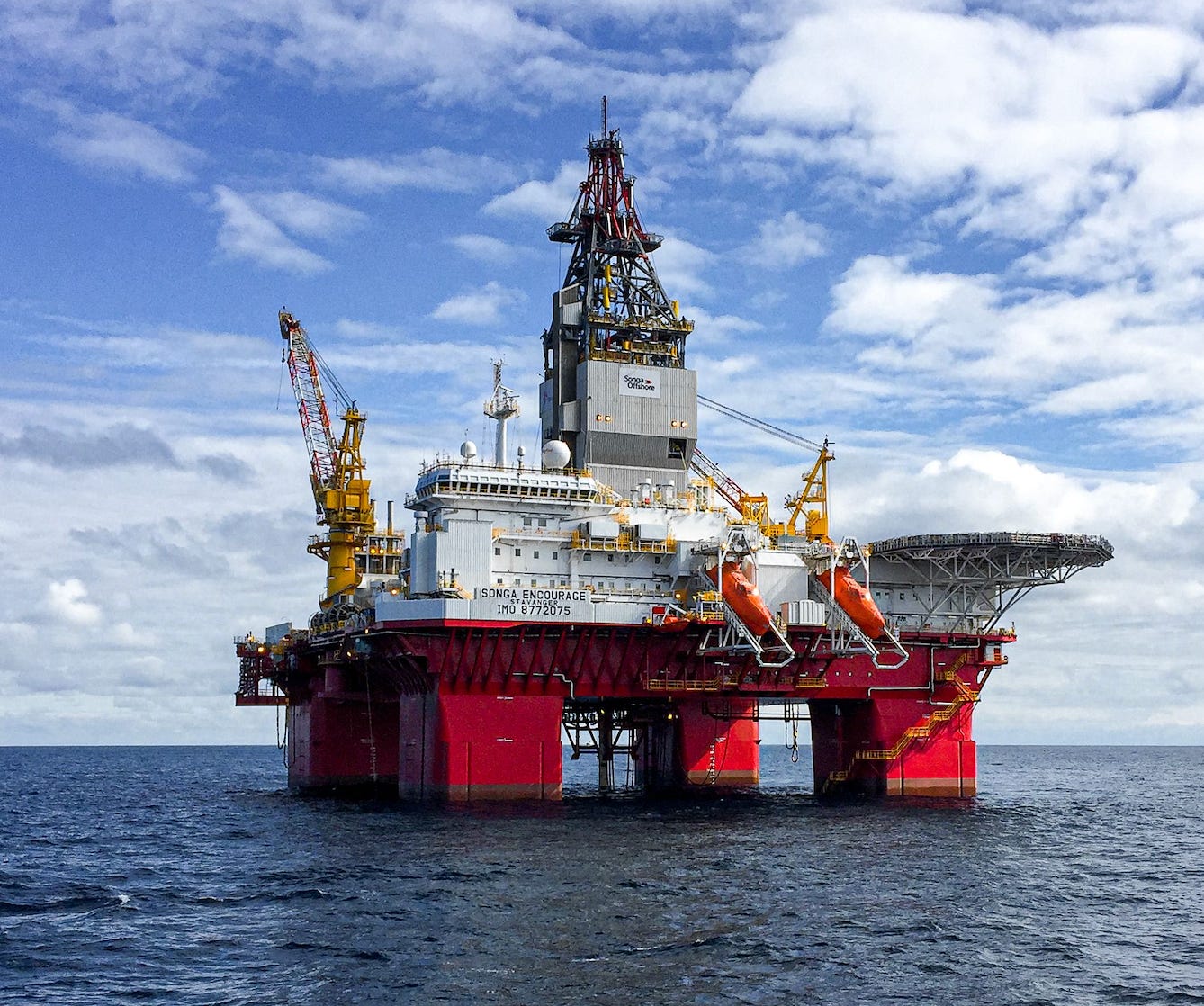
4. Semi-submersible Rigs
They are floating drilling platforms used mainly in deep waters. Their pontoons sit below the water’s surface, helping keep them stable in rough seas. Anchors or dynamic positioning systems keep them in place while they drill.
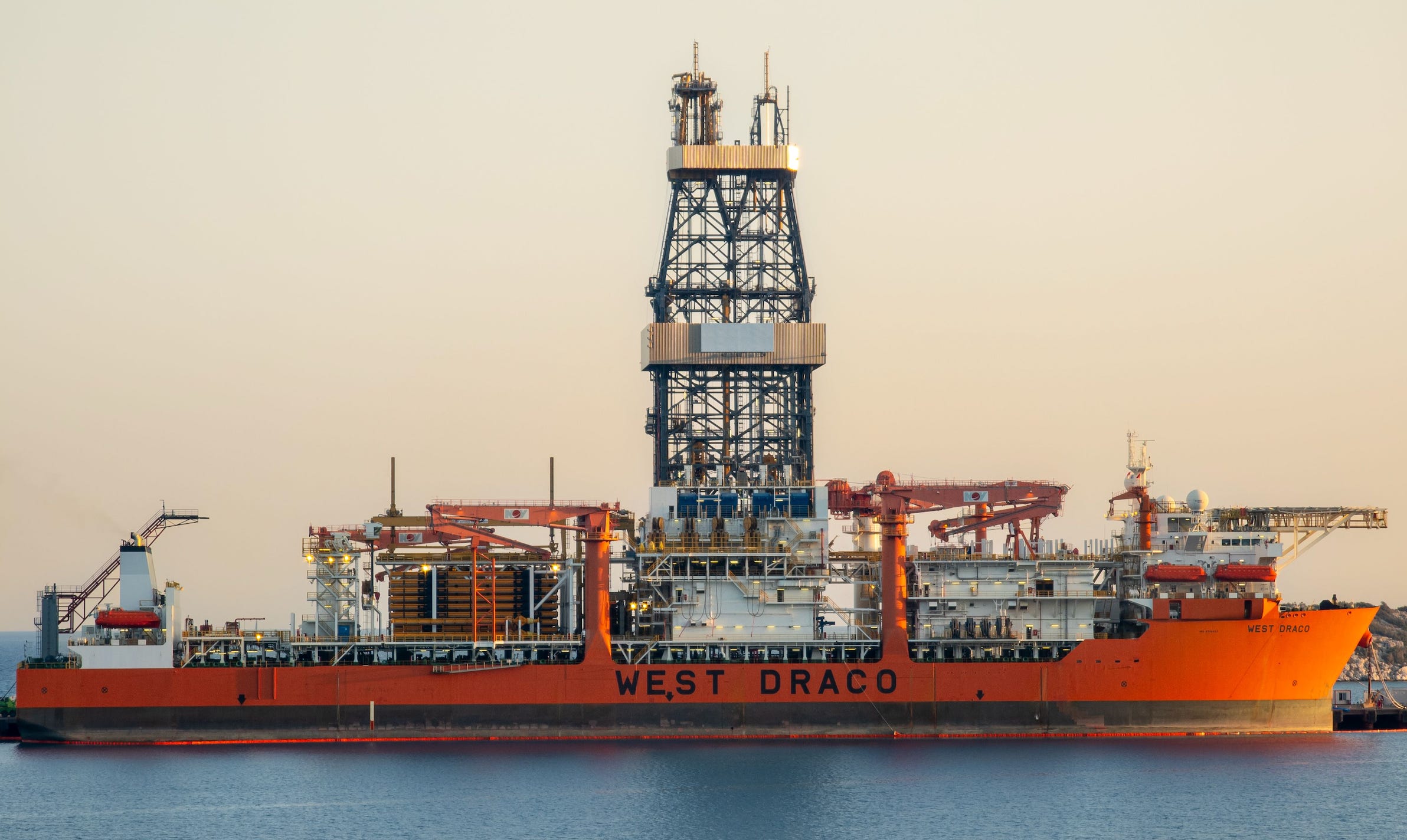
5. Drillships
They are ships equipped with drilling equipment that can move between drilling sites on their own. They use dynamic positioning systems to stay in place while drilling through an opening in the hull called a moon pool. They are commonly used in deep and ultra-deep waters.
Each type operates in a different part of the offshore market. Jack-ups, semi-submersibles and drillships have different fleet sizes, orderbooks, utilization rates and dayrates, all of which influence the profitability of the companies.