

US-Canada trade talks broke down after both sides disagreed over what had been agreed to. The US then announced new tariffs, and Canada quickly followed with retaliatory tariffs on US goods.
Which means: here we go again. Another trade war.
What We Know:
The US is set to impose 50% tariffs on $20B of Canadian goods.
Canada will respond with retaliatory tariffs starting September 8.
Steel, aluminum, and lumber face 50% US tariffs.
The new tariffs rely on Section 338 of the Tariff Act of 1930, which has never been used before.
Oil, potash and critical minerals are not included in the latest tariffs. Canada sends more than 4M barrels of oil to the US every day.
The auto sector could be next. Trump says tariffs on Canadian cars, trucks and auto parts will rise to 50% on January 1, 2027, from the current 25% tariff on the non-US portion of vehicles.
Trump has warned that more tariffs could follow if Canada retaliates.
What Happens Next?
There is clearly important uncertainty, and it is difficult to predict what Trump will do next. However, there are clearly companies benefiting from these tariffs, as we highlight below.
We know that auto manufacturers and parts, steel, aluminum, and lumber will likely be among the most affected sectors at first, based on what has been said and our analysis.
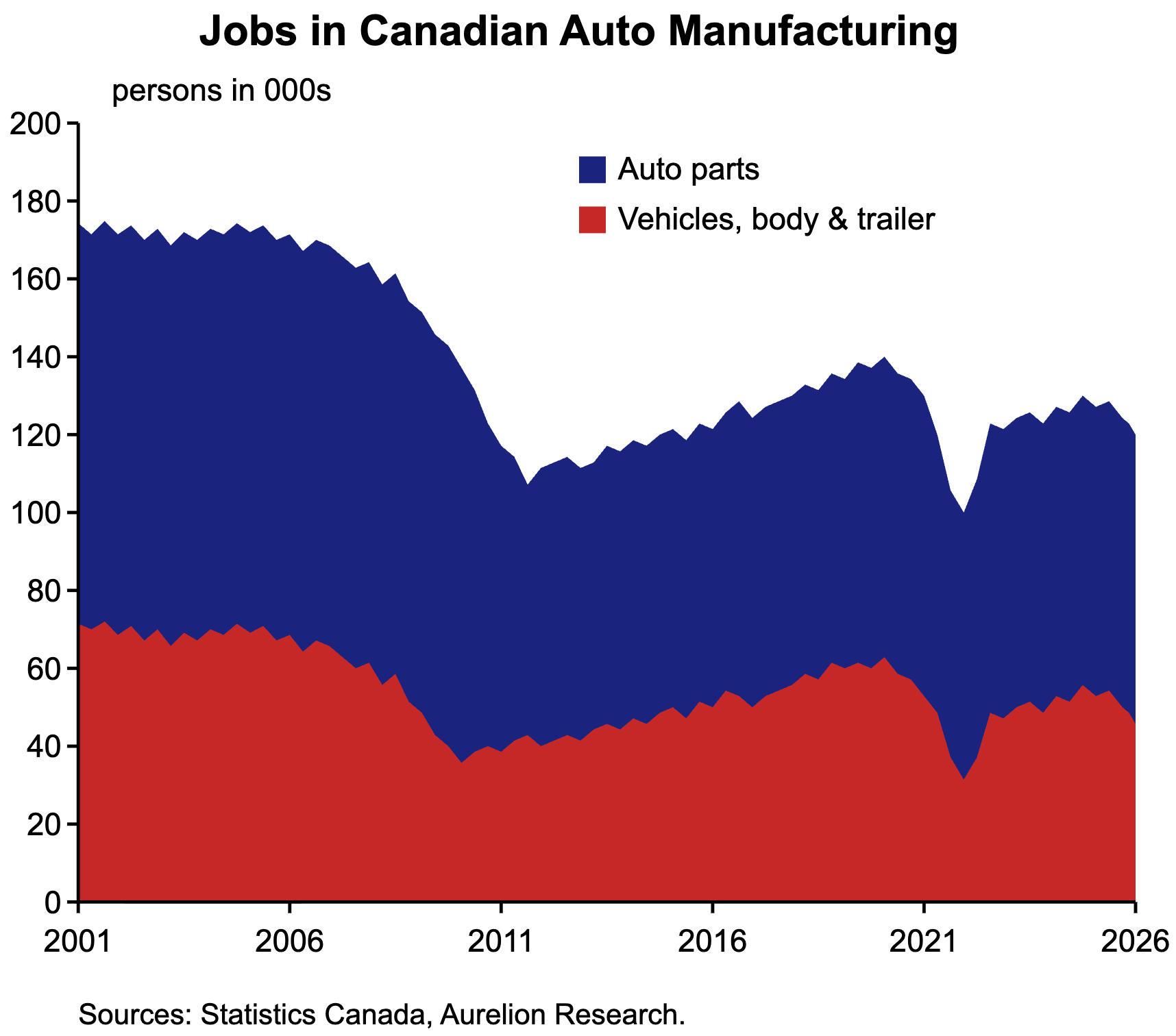
We already have a good idea of what the new norm could look like.
US steel companies Steel Dynamics (STLD) and Nucor (NUE) were the S&P 500’s best-performing stocks this morning, rising as much as 6.6% and 5.1%, respectively. Meanwhile, Canadian steel producer Algoma Steel fell 8.2%.
Since then, all three have moved sideways, showing just how volatile the market is right now. Nobody really knows what comes next, so the market is reacting quickly to every new headline. We also saw USA Rare Earths (USAR) fall nearly 6%, even with the mention that critical minerals would not be affected by tariffs.
Now let’s look at Canada.
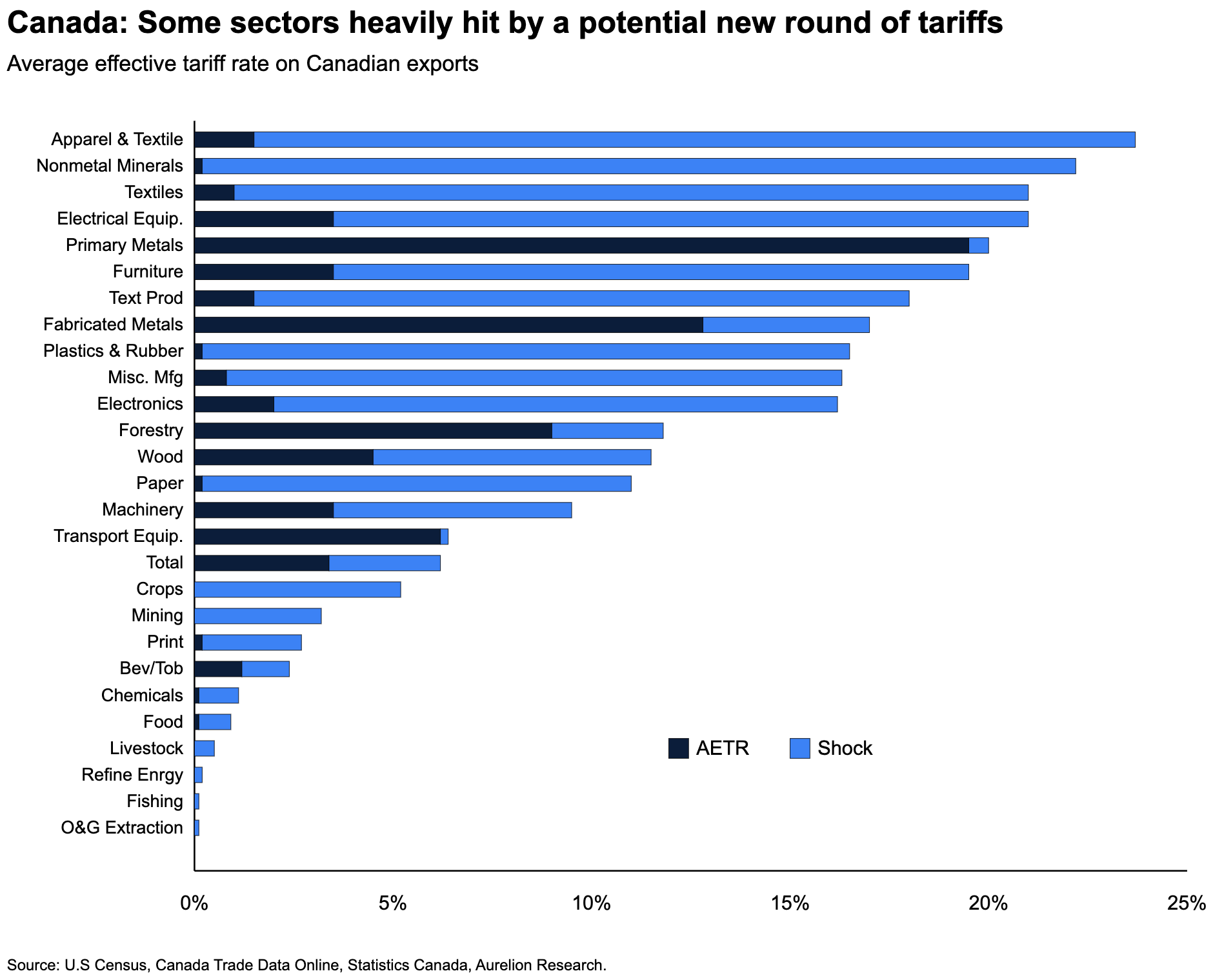
The impact will vary a lot by industry and province. Primary metals, fabricated metals, and forestry already face some of the highest tariff burdens, which helps explain their recent weakness. Under the new measures, apparel and textiles, non-metallic minerals, and electrical equipment could face even higher tariffs.
Companies that rely heavily on the US market will likely feel the pressure first, especially in steel, aluminum, forestry, machinery, and electrical equipment.
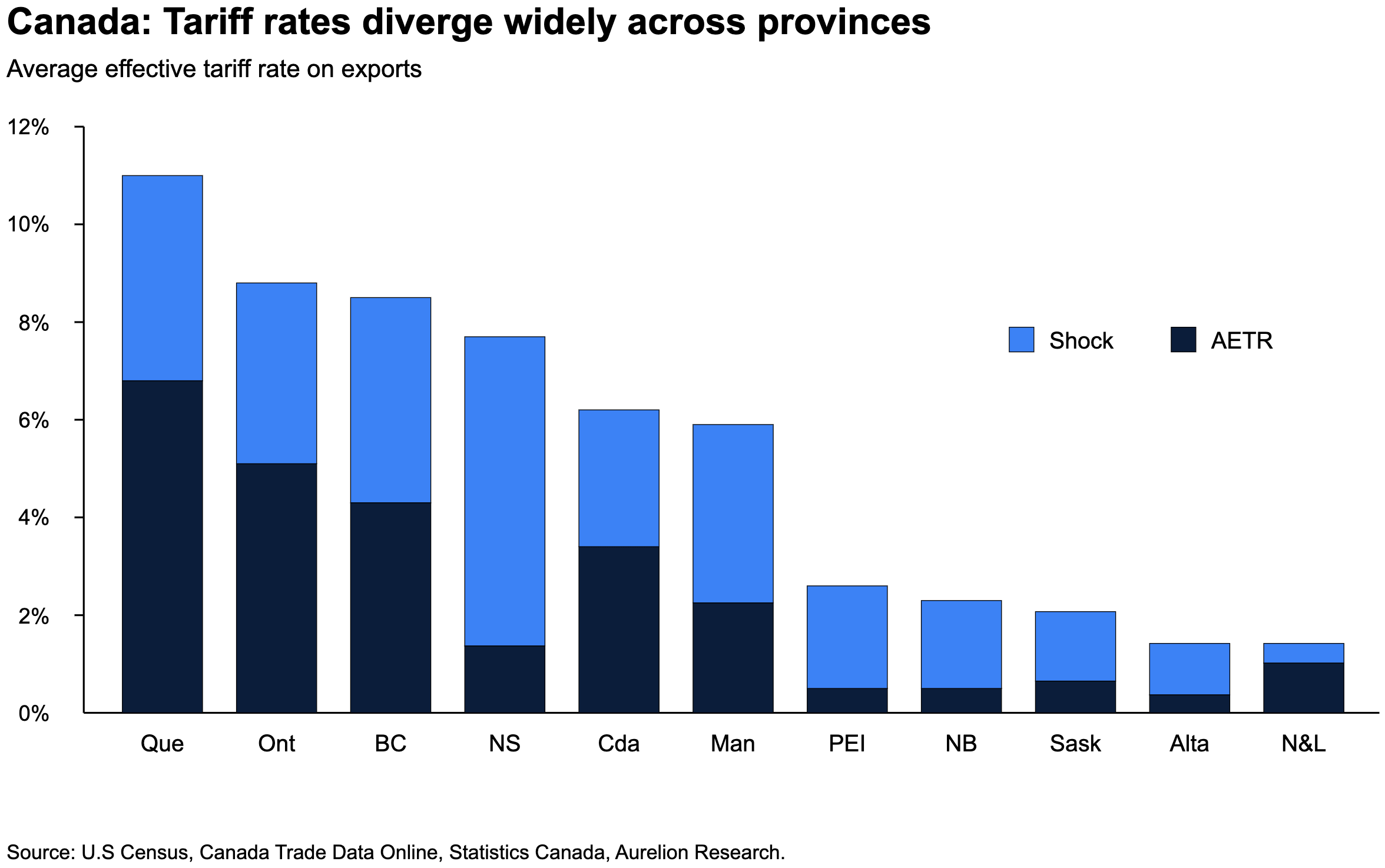
Quebec and Ontario are the most exposed, with average tariff rates of roughly 11% and 9%, largely because of their large manufacturing bases. British Columbia, Nova Scotia, and Manitoba could see some of the biggest increases from July levels, while Alberta and Newfoundland and Labrador should be less affected.
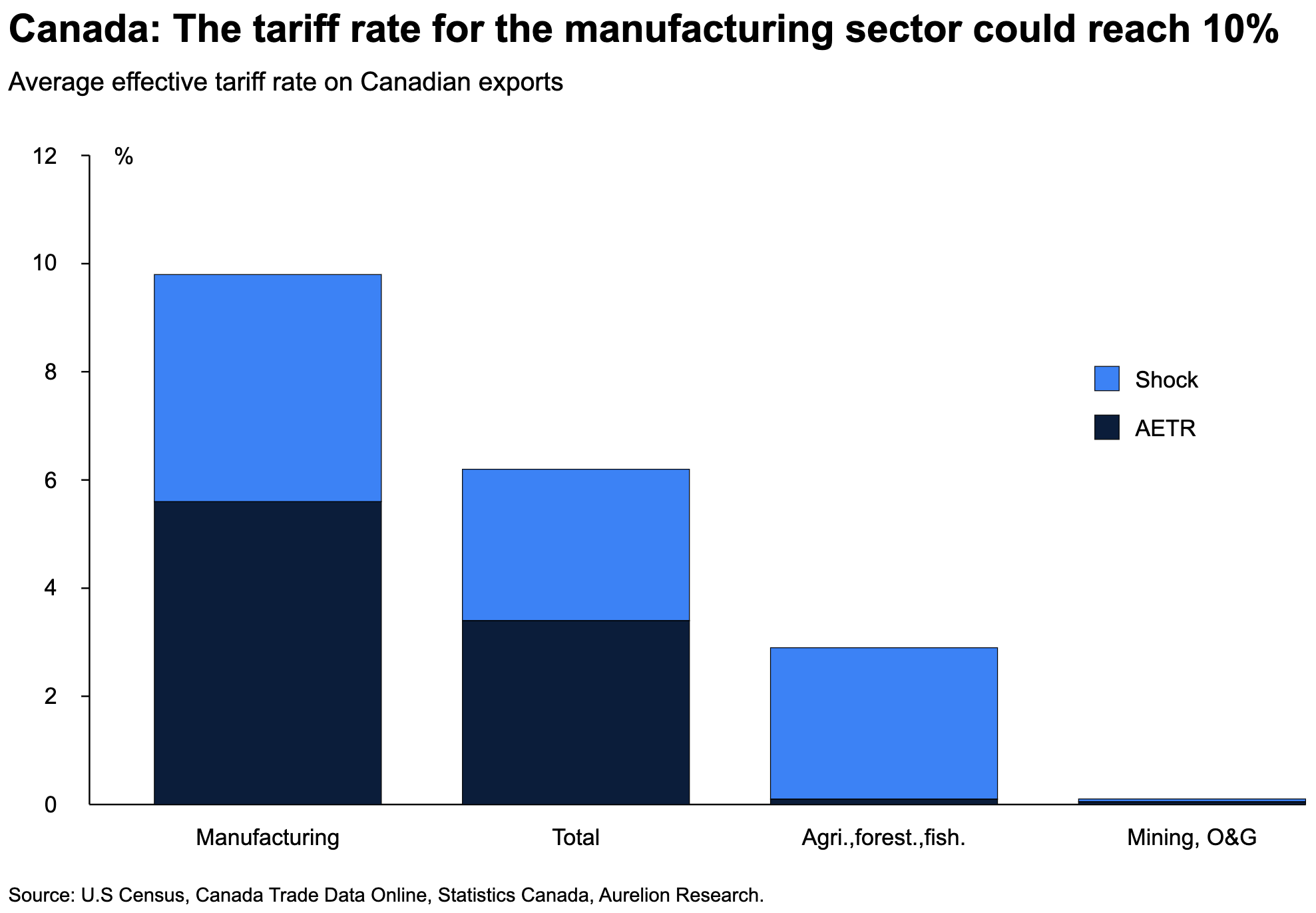
For companies, the biggest factor will be where they produce and where they sell. Canadian companies that rely heavily on US sales could take a major hit, while those with US production may be better positioned. US companies competing with Canadian imports could also gain market share.
This creates opportunities on both sides of the border. That’s what we’re focusing on in this piece: stocks that could benefit from the tariff war.
Table of Contents
The US-Canada Trade Relationship
One Electricity Company That Could Benefit
Two Aluminum Companies That Could Benefit
Two Steel Companies That Could Benefit
Our Final Thoughts