

While we do believe Ecopetrol is trading at an attractive valuation, it will not be added to the Aurelion Index at this stage, as we think a deeper analysis is required before taking a position.
So, you’ve seen the title, today we’re diving into Ecopetrol.
The year 2026 marks a defining moment for Ecopetrol as Colombia enters a critical election cycle that will shape the future of its largest corporations.
The stock has already demonstrated strong momentum, surging over 25% in U.S. dollar terms and outpacing both regional and global competitors. Investors appear willing to look through near-term volatility and focus instead on the possibility of a more market-friendly political outcome.
That shift has not happened yet, but the latest primary result was an encouraging first step. The candidate we believe would give Colombian equities the best chance to perform well, Paloma Valencia, won more than 55% of the vote, which is a strong result.
As David Austerweil, emerging-markets deputy portfolio manager at VanEck, put it, “Having a center-right candidate is much more appealing in a general election.” He also noted that “turnout was very high” and that “the market underestimated potential votes for center-right.” That helps explain why markets may already be starting to price a more constructive political path.
Colombia Bonds Rebound After Presidential Primaries
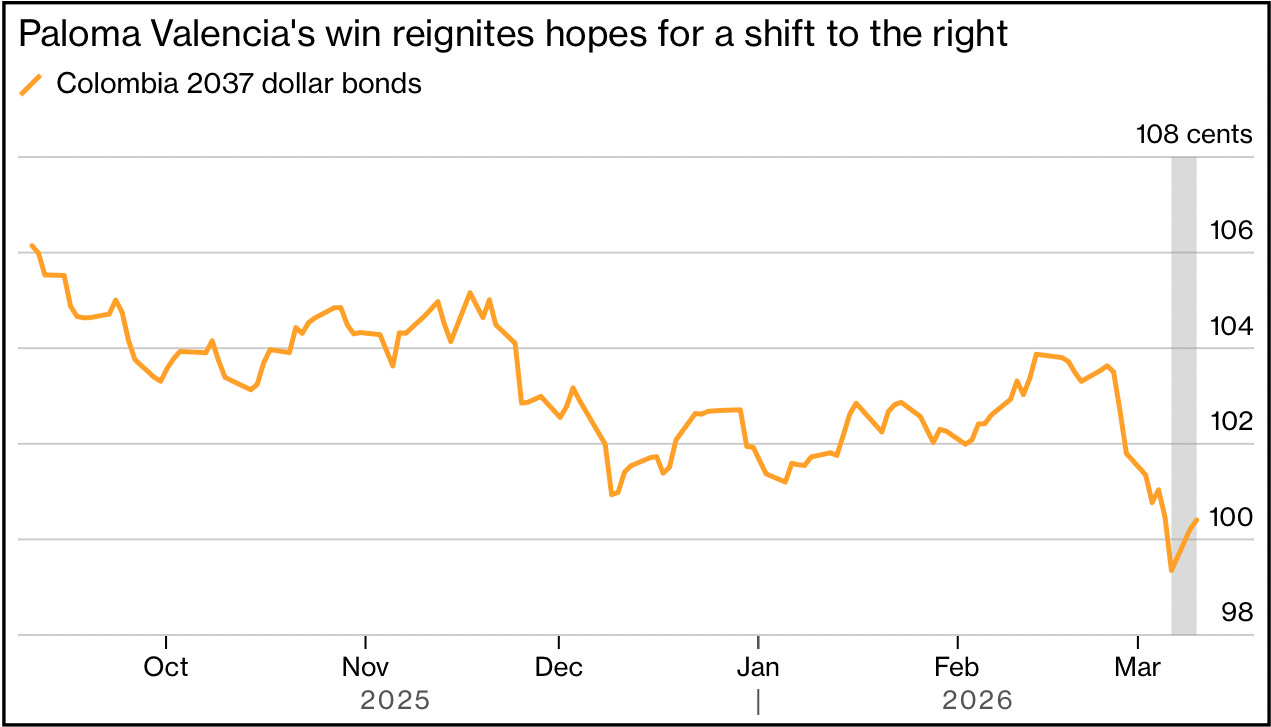
Following the primary result, Colombian bonds rebounded as investors began to price in the possibility of a more market-friendly political outcome. The market is now watching the election more closely, with growing attention on whether a more traditional administration could improve the outlook for Colombian assets and help restore confidence.
Ecopetrol at a Glance
As a vertically integrated giant, Ecopetrol remains the dominant force in Colombia’s energy sector with operations extending both locally and abroad.

The Colombian government maintains tight control over the organization, holding an 87% stake. The company produces around 750,000 barrels of oil equivalent per day and manages two major refineries with a combined capacity of nearly 400,000 barrels per day. The company’s historical trajectory has shifted significantly over the last two decades.
Following its 2008 listing, Ecopetrol was recognized as one of the fastest growing large cap oil companies in the world for nearly five years. However, that rapid expansion slowed after 2013. In the years since, the company has struggled to regain its momentum due to disappointing exploration results and various operational challenges.