

Aurelion Research
Current Price: $36.80 | Market Cap: $5.35B
Executive Summary & Investment Thesis.
Bruker Corporation (NASDAQ: BRKR) is a global leader in scientific instruments and analytical solutions used in life sciences, pharmaceuticals, and advanced materials.
Its technologies power the tools behind drug discovery, molecular diagnostics, and semiconductor innovation. Bruker has a clear moat: it dominates highly technical niches, generating about 70% of revenue from markets where it ranks #1.
Today, investors face what we call a textbook double whammy: temporary margin pressure from recent acquisitions and near-term weakness in U.S. research funding.
These short-term headwinds have created a low valuation versus its long-term earnings power. Our management meetings have strengthened our conviction that these issues are temporary, and that Bruker’s fundamentals remain solidly intact.
Beneath the surface, the company continues to expand market share, compound free cash flow, and execute one of the most productive innovation pipelines in life sciences.
At $36.8 per share, BRKR 0.00%↑ trades at a significant discount to its intrinsic value, offering ~200% upside to our 5-year PT of $105. In our view, this setup represents one of the most compelling opportunities in the life science tools sector today.
TLDR? scroll to the end of the report for a concise and easy-to-understand recap!
Diversified End-Markets Supports Growth
Unlike peers that depend on pharma budgets, Bruker operates across academia, defense, semiconductors, food safety, and diagnostics. This mix provides multiple growth drivers, smooths funding cycles, and has enabled it to outperform the industry by 200–300 basis points in the last 2 decades. With expected margin expansion, earnings per share should grow close to ~15% per year.
Management Alignment & Capital Discipline
Over the past decade, Bruker has doubled operating margins, reduced share count, and maintained returns on invested capital above 20%. With CEO Frank Laukien owning nearly 30% of the company, shareholder alignment is strong. The current margin pressure from integrating NanoString, Phenomex, and ELITech is temporary, and management’s plan points to a return to normal profitability by 2026.
R&D Leadership & Innovation
Bruker consistently invests over 10% of revenue in R&D, fueling breakthroughs like the TimsTOF proteomics platform and the world’s first 1.3 GHz NMR. These innovations significantly expand Bruker’s addressable market and reinforce its position as a technology leader in high-growth scientific fields.
Company Overview
The company developed steadily from a family-run physics business to a diversified global leader in scientific instrumentation. Founded in 1960 by Dr. Günther Laukien, Bruker began as a niche manufacturer of nuclear magnetic resonance (NMR) systems.
Under the leadership of CEO Dr. Frank Laukien, the founder’s son, Bruker has broadened its scope to a full portfolio of solutions. Today, it employs more than 11,000 people across North America, Europe, and Asia, serving customers in over 100 countries.
Four Operating Divisions
Bruker’s operations are organized into four complementary divisions:
1. Bruker BioSpin ~20%
Focuses on nuclear magnetic resonance (NMR) and spectroscopy, essential tools for analyzing molecular structures in pharmaceuticals, chemicals, and advanced materials. Bruker commands roughly 90% of the global NMR market, making it the undisputed leader in this high-barrier field.
2. Bruker CALID ~25% Includes mass spectrometry, microbiology, and molecular diagnostics platforms. This division drives Bruker’s growth in proteomics: the large-scale study of proteins. In scientific research, this is expected to be the next phase of research and drug discovery. The recent acquisition of ELITechGroup has extended its reach into infectious-disease diagnostics, adding a recurring and more defensive revenue stream.
3. Bruker Nano ~25%
Provides nanoscale imaging and metrology solutions used in materials science and semiconductor manufacturing. Its X-ray and atomic-force microscopy systems are key to advanced packaging and AI-chip production.
4. Bruker Energy & Supercon Technologies (BEST) ~10%
Develops superconducting materials and cryogenic systems for MRI, fusion energy, and quantum computing. BEST also manufactures the high-field magnets used in Bruker’s NMR instruments.
The first three divisions form the Bruker Scientific Instruments (BSI) segment, which accounts for about 90% of revenue.
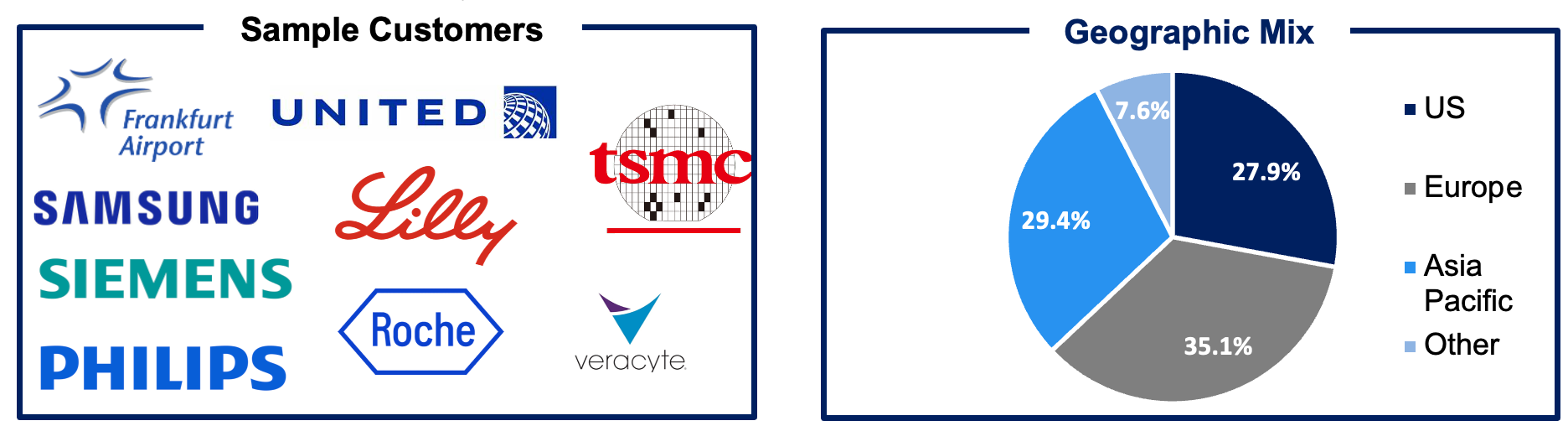
A High-Value, Recurring Revenue Model
Bruker’s instruments are typically large-ticket purchases, often priced between $500,000 and $1 million. Each sale creates a long-term relationship. Customers rely on Bruker for maintenance, software updates, and consumables.
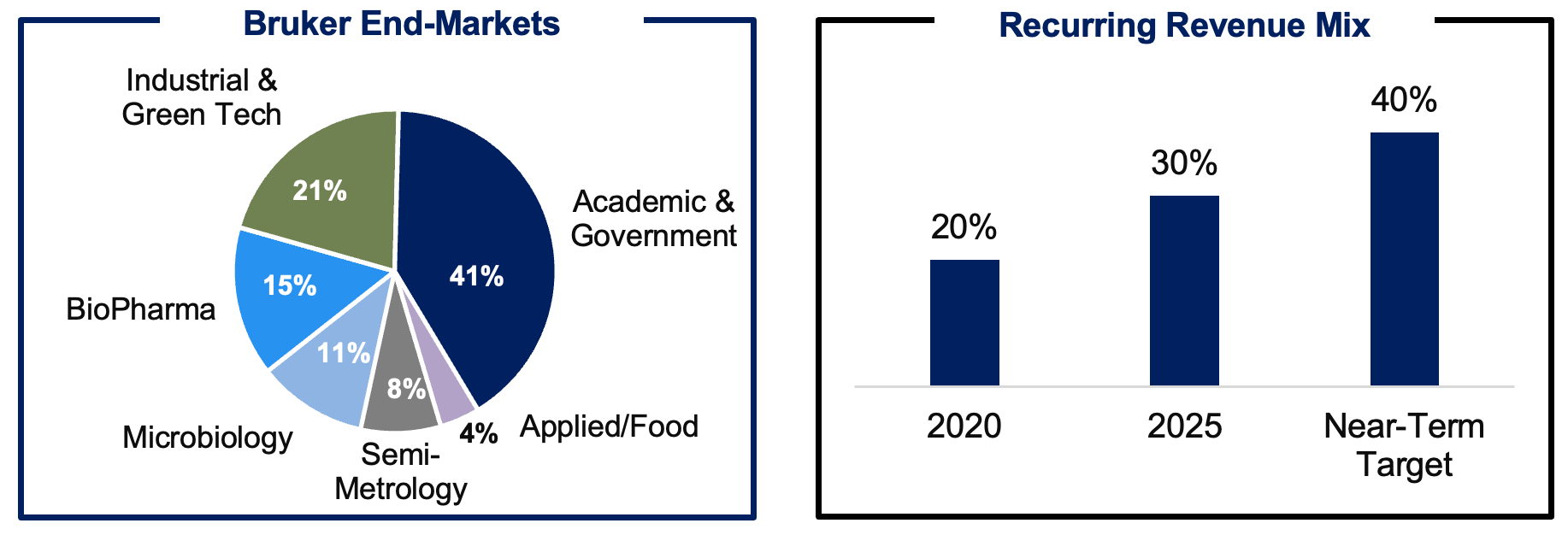
Roughly 30% of total revenue is recurring from service contracts, consumables, and software, and management aims to lift that figure toward 40% through its Accelerate 2.0 program.
These high-margin aftermarket revenues provide stability through economic and funding cycles.
Pricing Power
BRKR 0.00%↑ demonstrates strong pricing power underpinned by a durable competitive moat. Its systems are frequently the most efficient or the sole solutions offering certain capabilities. Vendor substitution carries significant costs, including staff retraining, data revalidation, and loss of access to its integrated software ecosystem.
These dynamics create durable switching costs and long product lifecycles. Bruker’s instruments have become the reference standard in their fields, with researchers often preferring its systems given their frequent citation in academic publications and strong association with scientific credibility.
Manufacturing Footprint
BRKR operates manufacturing facilities in the US, Europe, and Malaysia. It has no direct manufacturing exposure to China, which limits tariff risk.
However, it does have tariff risk exposure if the US would impose tariff on Europe, especially Switzerland. With certain costs, management tells us they can shift production between regions as trade conditions change. CEO: “If necessary, Bruker could re-establish additional U.S. capacity within months”.
Financial Overview
Earnings Growth: Compounding Through Cycles
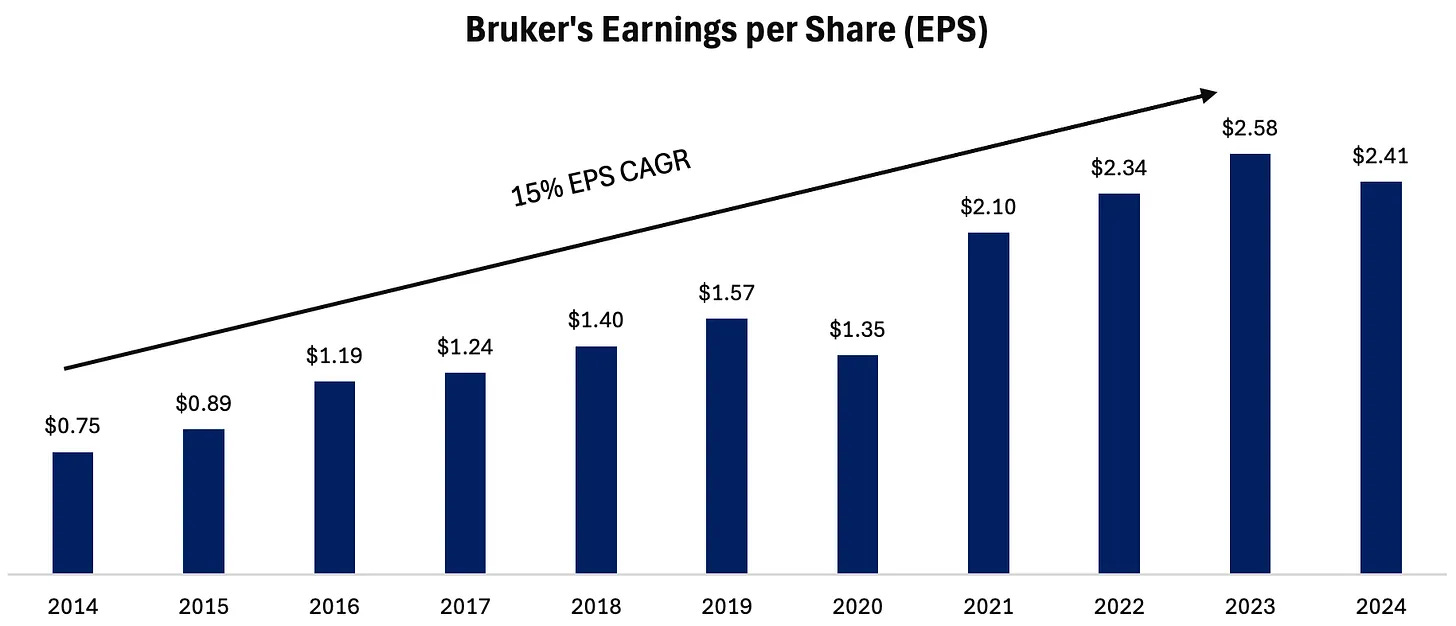
Before the recent temporary margin pressure from acquisitions, Bruker’s earnings performance had been exceptional. Over the past decade, earnings per share (EPS) compounded at 15% annually, driven by revenue growth and margin increases.
Management’s strategy has remained consistent: invest in R&D to maintain a technological edge, expand into new instrument niches, and leverage operating scale to enhance margins. Nothing in the current environment suggests a change to this playbook.
Revenue Growth: Balanced & Sustainable
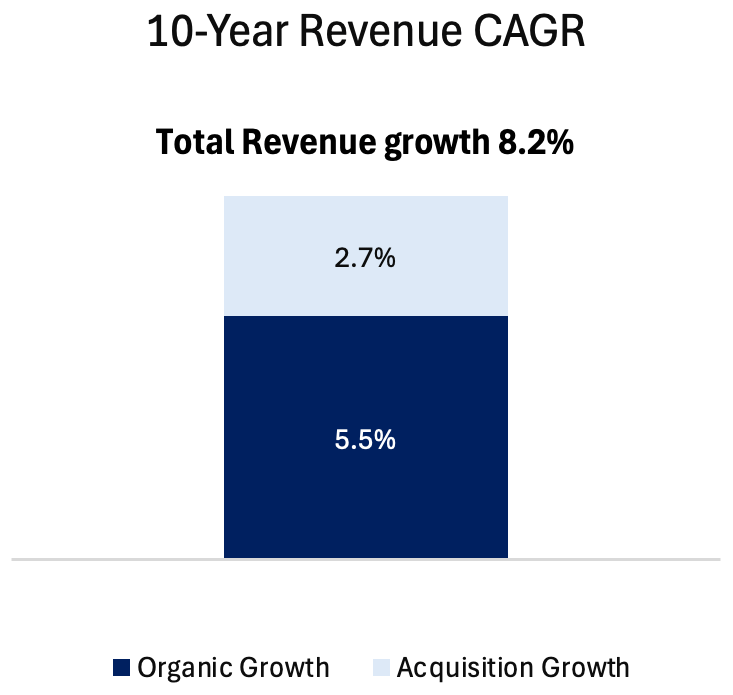
Bruker’s top line has grown from $1.6B in 2015 to $3.4B in 2024, representing an 8% compound annual growth rate (CAGR). Growth has been driven by a combination of innovation-led product launches, strategic acquisitions, and market share gains across life sciences and advanced materials.
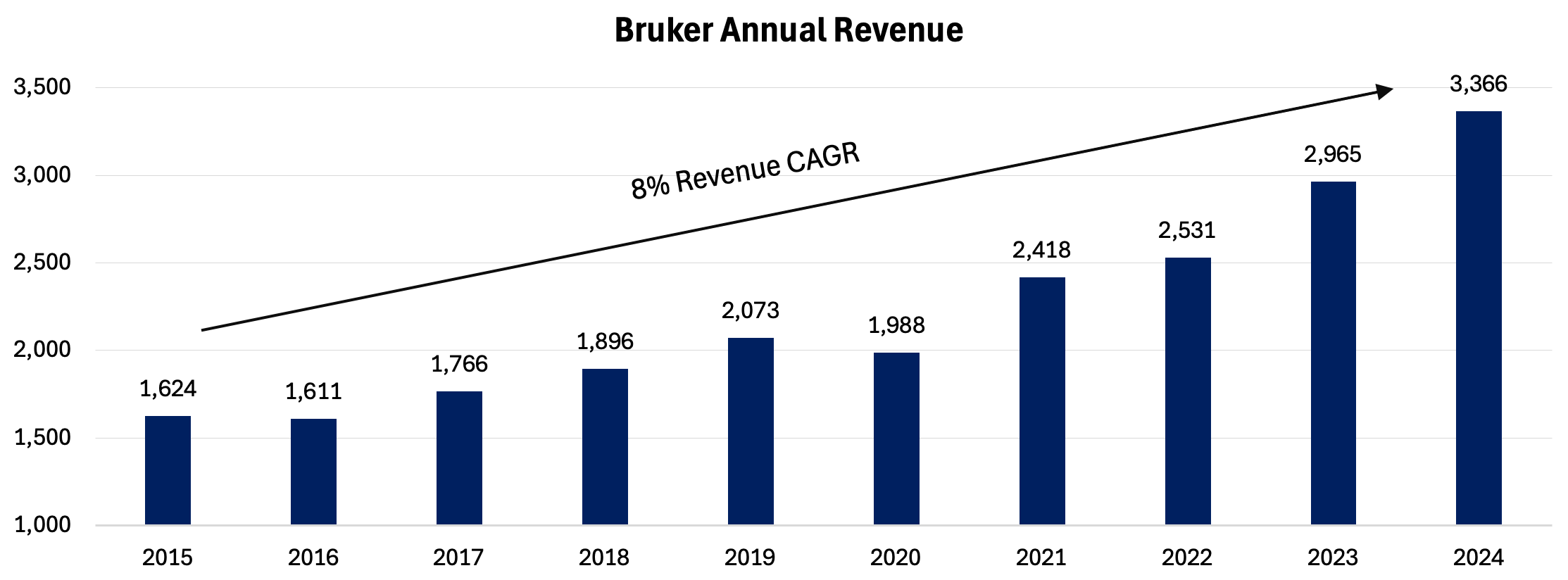
Breaking this down, organic growth contributed roughly 5.5%, while acquisitions added another 2.7% to the long-term CAGR. Most of the acquisitions were made in 2024 due to an opportunity in the instrument market (read more below).
Margins & Profitability
Bruker’s pricing power and entrenched position in high-end markets have historically allowed it to offset inflation through selective price increases, while maintaining gross margins above 50%.
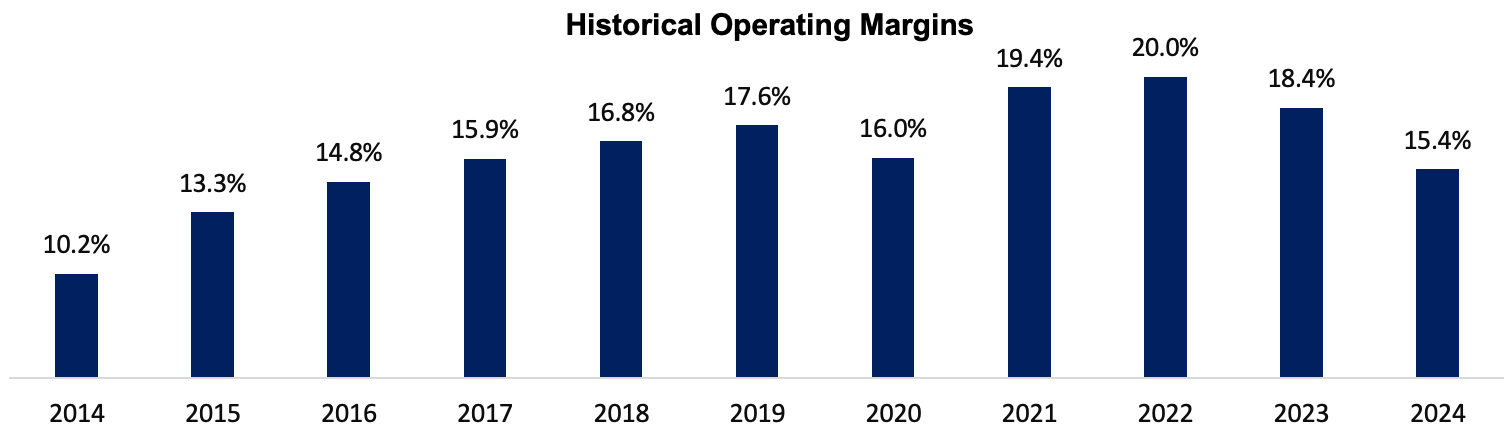
Operating margins expanded meaningfully over the last decade as the company scaled its recurring revenue base and improved manufacturing efficiency. Between 2015 and 2023, operating margin nearly doubled from ~10% to over 20%, reflecting cost leverage and product mix improvement.
However, Bruker is expected to be back to 12.7% operating margin in 2025. Temporary contraction in 2024 - 2025 stems from short-term impact from acquisitions, US government funding cuts & some small tariff impacts. All of which are expected to normalize, we explain our confidence in our investment thesis below.
Returns & Cash Generation
Bruker consistently delivers >20% return on invested capital (ROIC), a level rarely achieved in the industrial technology sector. It uses its cash flow for a balanced mix of share repurchases, dividends, and acquisitions, without compromising financial flexibility. Its leverage ratio (net debt / EBITDA) is expected to be at 2.5x at the end of the year, meaning we can conservatively say the company is not at risk of defaulting on its payments.
Key Financial Takeaway
Bruker’s financial profile reflects the hallmarks of a high-quality compounder:
15% EPS CAGR over the past decade
8% revenue CAGR, with two-thirds organic
20%+ ROIC
A proven record of margin expansion and cash discipline
We view the recent softness in profitability as temporary, supported by its strong positioning and long-term earnings growth potential.
Industry Overview
Understanding the Landscape
Bruker operates in the scientific instruments and life science tools industry, a sector that provides the essential technologies used by researchers, engineers, and clinicians. Nowadays, these instruments are behind almost every major discovery.
Industry Growth
The global scientific instruments and analytical tools market is estimated at roughly $100B, growing at a steady 4–5% per year. Growth is powered by expanding R&D budgets, the globalization of research infrastructure, and increasing demand for high-quality data in both healthcare and industrial applications.
Unlike cyclical manufacturing sectors, this industry has shown resilience through economic downturns. Government and academic research funding tends to remain stable, while pharmaceutical and semiconductor R&D investment continues regardless of short-term market conditions.
Industry Trends: Where Momentum Is Building
1. Proteomics Takes Center Stage
After two decades dominated by genomics, the focus of biological research is shifting toward proteomics: the study of proteins and how they function in the body. Proteins are the true workhorses of biology, and understanding them opens the door to better drug targets and earlier disease detection.
Bruker’s TimsTOF platform is becoming the gold standard in this field, helping researchers analyze proteins at unprecedented speed and precision. The proteomics market alone is forecast to grow 10–12% annually through 2030, outpacing the broader life science tools industry (4–5%).
2. AI and Automation in the Lab
Artificial intelligence is transforming research. Scientists increasingly rely on machine learning to analyze molecular data, identify biomarkers, and speed up experimentation. Instruments are now designed with built-in analytics and automation. BRKR has embraced this trend, integrating data processing and software intelligence into its systems to enhance reproducibility and efficiency.
3. Expansion into Applied & Industrial Markets
Beyond academic labs, advanced analytical tools are now used in semiconductors, materials engineering, food safety, and environmental testing. These sectors also require precision, which expands the market for companies like Bruker that operate across disciplines.
Total Addressable Market (TAM)
Bruker participates in an industry with a TAM of roughly $60–70B according to management, covering life science research, diagnostics, and industrial applications. Because the TAM is so big our focus should be on competitors.
Competitors: Scale vs. Specialization
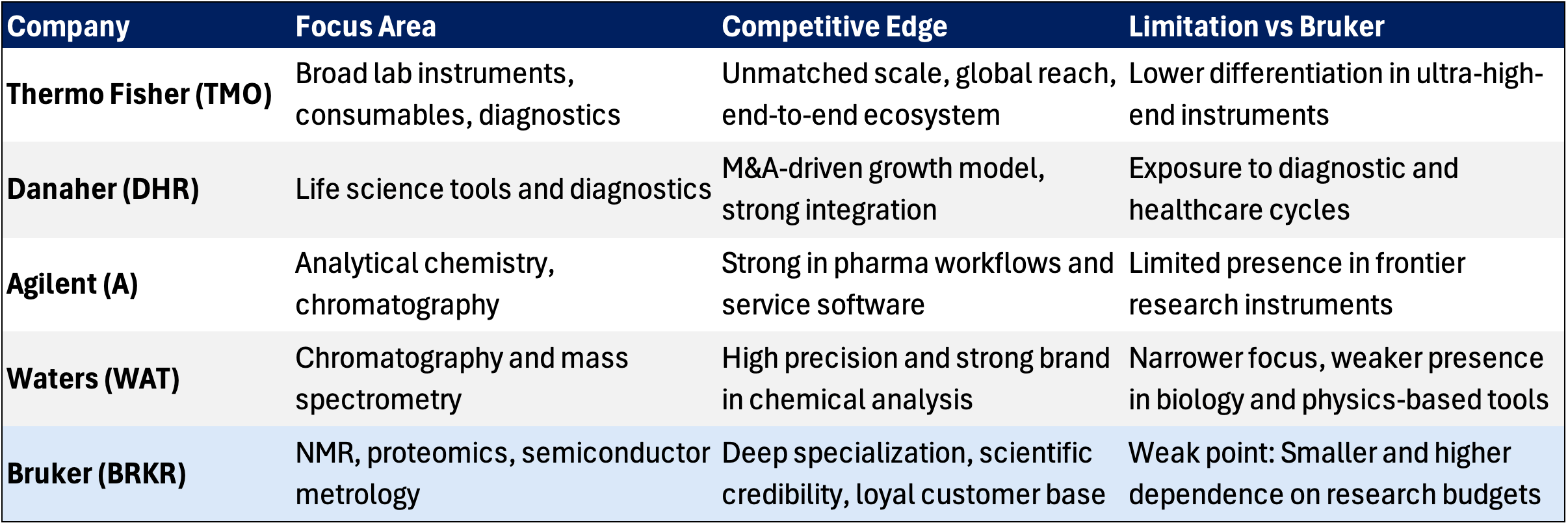
The life science tools industry is concentrated among a few large players, but competition varies widely by technology. While the large conglomerates compete on breadth and scale, Bruker and other smaller peers compete on technology and differentiation.
Favorable Industry Economics
The scientific tools sector enjoys attractive economics: high gross margins (typically 50–60%), strong customer loyalty, and long product lifecycles that often exceed 10 years. Scaled peers operate at margins of roughly 25%, compared with Bruker’s current 12.7%.
While we note that we expect BRKR to continue spend more on R&D and not reach 25% in the short-term, there is a significant gap to fill. Good margins and good industry growth have led to high valuation multiples in the space (P/E ratio of ~30x).
Long-Term Investment Thesis
These are the reasons to hold the company for the long term as a consistent compounder (outside of the additional short-term opportunity).
Diversified Engines of Growth
Bruker’s end-market mix, spanning academia, defense, semiconductors, food safety, and diagnostics gives it higher resilience and long-term visibility than direct peers. Over the last decade, it has proven more resilient and has grown faster than its peers.
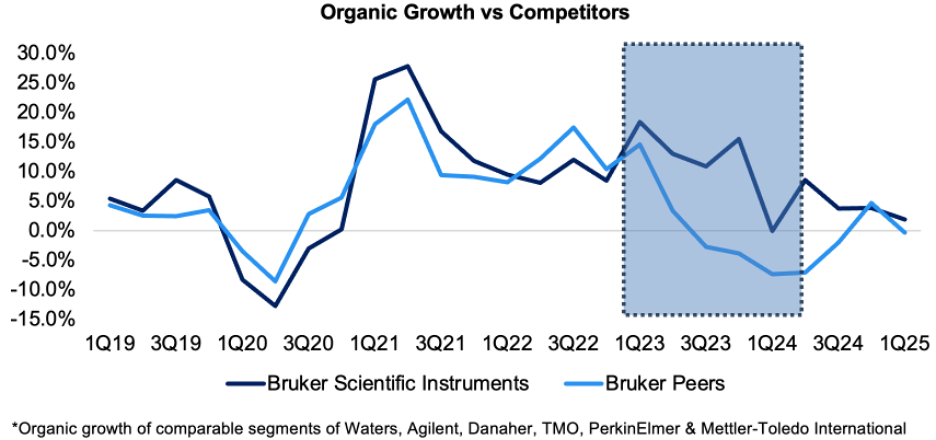
Bruker’s performance is driven by two key factors:
Gaining market share, achieved through innovation in R&D and strategic acquisitions.
Exposure to high-growth end-markets within the life science industry.
This diversification has allowed it to outgrow the broader life science tools market by 2–3% annually, steadily gaining share in applied and high-value research segments.
Emerging verticals such as semiconductor metrology (AI chip packaging, quantum materials) and homeland security detection are poised to become new growth drivers.
Management expects the defense detection business alone to double from $50M to $100M by 2028, supported by rising European R&D and defense budgets.
This breadth enables Bruker to compound earnings even during research funding downturns a key differentiator versus pharma-exposed peers.
R&D Leadership
Bruker consistently invests around 10% of revenue into R&D, outspending most peers. This sustained commitment has enabled the company to develop superior technology in its niches and maintain its #1 position.
Following years of heavy investment in TimsTOF, Bruker is now entering the commercialization phase. Management believes this platform could double the company’s addressable market, potentially reaching $200M if Bruker captures a 20% market share.
While Bruker’s margins are temporarily lower than peers, we believe its decision to prioritize innovation and market share gains over short-term cost optimization will generate stronger long-term compounding.
Founder-Led Execution & Capital Discipline
Bruker’s transformation over the past decade reflects the execution of a company led by both a scientist and a disciplined capital allocator: CEO Dr. Frank Laukien, a Harvard Ph.D. Operating margins have doubled, ROIC remains above 20%, and share count has declined by 12%.
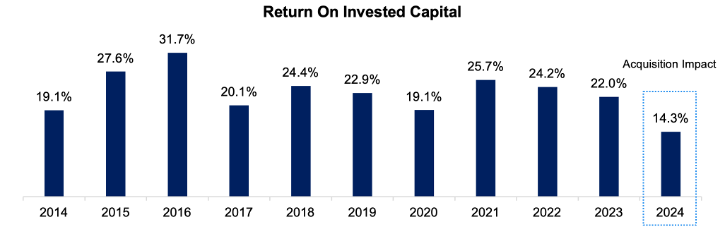
In our view, the two most important financial drivers of long-term compounding are high earnings growth & high ROIC; Bruker delivers both.
Investment Opportunity: Temporary Margin Weakness
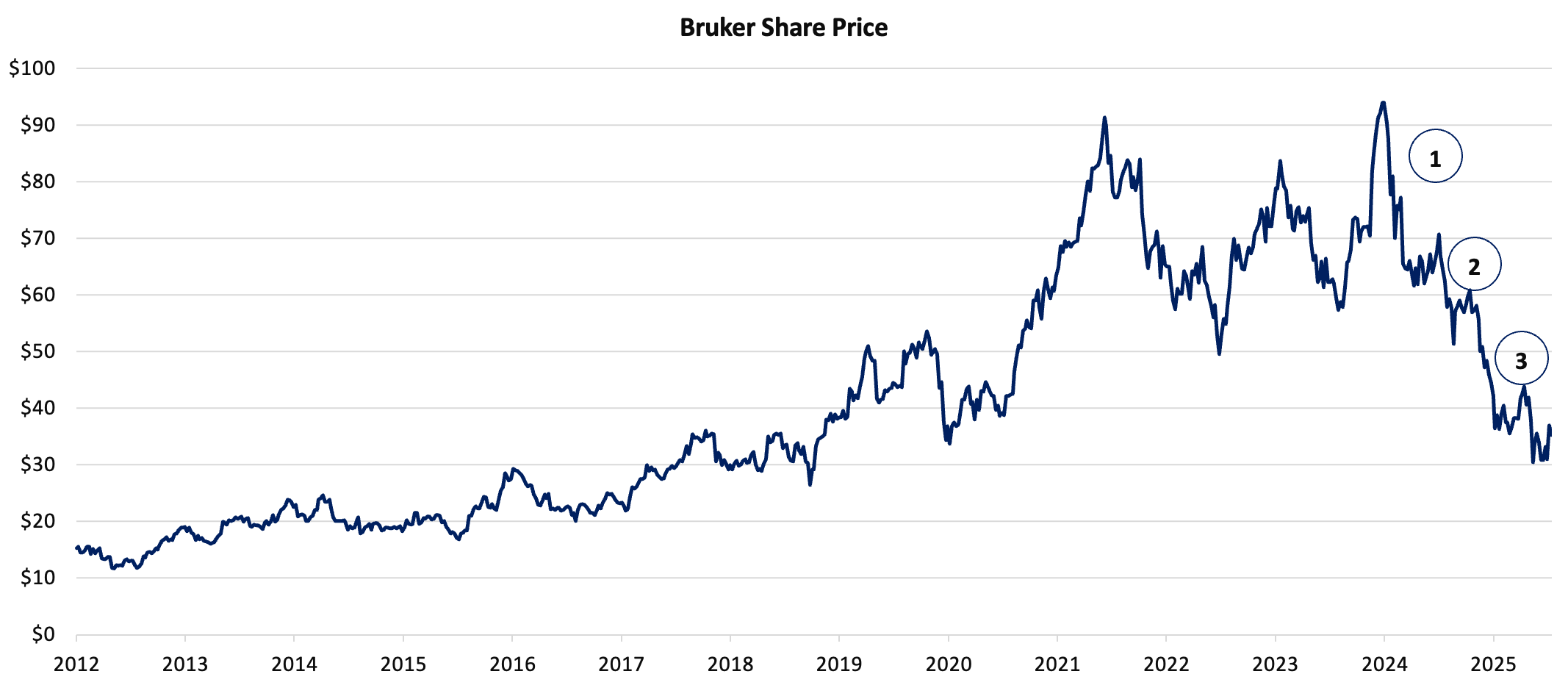
Bruker has compounded its earnings and share price effectively over the past decade. However, 3 factors have led to lower expected earnings for 2025 and decreased the valuation multiple (P/E ratio), significantly reducing the share price.
These 3 negative points appears very worrisome at first, but we believe they will impact financials for a short period of time allowing for a perfect entry in this high-quality compounder.
Announcement of large acquisition of unprofitable companies.
National Institutes of Health cuts, severely impacting demand in US Academia
US Tariffs
1. Acquisitions Impacting Margins
Bruker’s recent margin compression is clearly temporary and linked to recent sizeable acquisitions. We have discussed acquisitions with industry experts and Bruker’s management and have been able to model and gain knowledge in each of their direction. We have forecasted their financials and calculated what Bruker’s financials would look like without them to see if the core business is still intact as we are preaching.
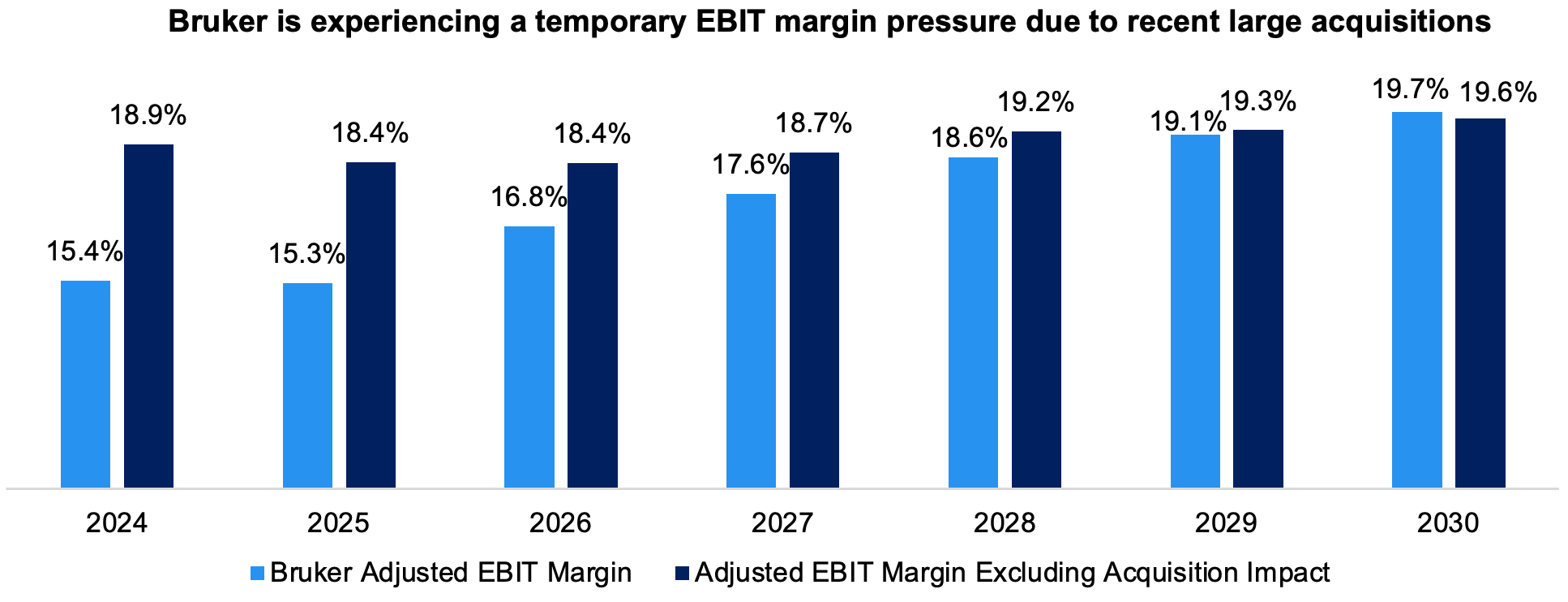
Our analysis shows that margins excluding acquisitions are intact. Adjusted operating margins declined from 18.4% in 2023 to 15.4% in 2024, but the company’s normalized EBIT margin excluding acquisition-related impacts remains much higher at 18.9%.
This spread highlights the short-term nature of integration costs. Over the next several years, EBIT margins are expected to steadily recover, reaching ~19.7% by 2030, as synergies are realized and one-time costs fade.
1.1 Acquired Companies
Now that we know that the core business is still healthy we have to gain confidence on the improvement of margins in acquired companies:
NanoString develops spatial transcriptomics and proteomics instruments used for high resolution tissue analysis in oncology research. Growth is supported by increasing adoption of spatial biology tools in academic and biopharma.
Bruker is driving margin improvement through major cost reductions by cutting headcount, consolidating sites, insourcing manufacturing which improves gross margins by ten percent, and exiting expensive leases. The business is expected to reach breakeven in 2026.
The Nanostring acquisition was well timed, completed at roughly 3.3× sales, a significant discount to the company’s prior trading multiples near 10× sales.
Phenomex offers single cell analysis systems, notably the Beacon platform, for rapid functional profiling of cells for drug development. The platform is gaining traction in biopharma given its speed and flexibility in screening. Bruker is accelerating efficiency by laying off 60% of the workforce and exiting facilities, positioning the business for breakeven in 2026.
Bruker also acquired Phenomex at an opportune time, paying roughly 1.5× sales versus its prior trading levels near 50× sales.
Chemspeed is a Swiss based lab automation provider with broad compatibility across vendors. Growth is driven by demand for automated workflows in pharma and chemical research, particularly as labs seek efficiency gains. It was near breakeven at acquisition, and Bruker expects operating leverage and scale to gradually expand margins over time without needing deep restructuring.
Elitech specializes in molecular diagnostics, providing automated sample to answer solutions for infectious disease detection. Growth is underpinned by global expansion of clinical diagnostics and demand for decentralized testing. It expects the acquisition to be highly accretive with cost synergies from SG & A optimization and new distribution leverage across its installed base.
Takeaway: margins are currently more than 350 basis points lower due to the recent acquisitions, but this impact should diminish as the acquisitions are integrated.

In summary, the acquisitions’ higher growth profile and clear path to profitability improvement should deliver around 20% ROIC over the next 5–10 years. While they are impacting short-term profitability, they could represent a double whammy, in our opinion: both a tailwind to earnings growth and a potential driver of multiple recovery as they perform.
2. National Institutes of Health (NIH) Cuts: What You Need to Know
Much can be said on this topic. We acknowledge that it should negatively affect investor sentiment and impact 2025 financials. However, we believe the market reaction is overblown for two reasons:
The percentage of Bruker’s revenue affected is small.
Funding cannot be reduced much further, and Bruker should grow past this headwind by 2026.
2.1 What Happened
On February 7, 2025, the Trump administration pushed the NIH to introduce a 15% cap on indirect cost (overhead cost) for public US funded research
Indirect costs cover lab infrastructure, administration, utilities, IT, compliance, etc. Many institutions previously negotiated overhead rates of 25-50% of grants awarded, now they are being reduced to only 15%
Immediately, legal pushback followed: lawsuits by states and District Judge Angel Kelley issued a nationwide injunction blocking the cap
The policy is currently in place on paper, though enforcement across jurisdictions remains subject to ongoing legal review.
2.2 What’s the Impact on US Academia & Research
Many institutions face tens to hundreds of millions in funding gaps.
The effect is already causing hiring freezes, delayed equipment purchases (Bruker!), and uncertainty in research planning.
Some institutions may cut or consolidate programs, delay grants, or shift costs to institutional budgets.
2.3 Bruker’s Exposure
Bruker’s management has stated that NIH exposure is less than 8% of total revenue. We calculate the same number.
2.4 What Management Says & Actions
As of Q2 2025: management expects organic revenue decline of 2-4% in 2025 and growth in 2026. This is nothing out of the ordinary for an instrument manufacturer.
Bruker tries to offset U.S. academic headwinds with growth in biopharma, Chinese stimulus, and applied end markets.
Despite these headwinds, it continues to win NIH-funded orders, e.g., an October 2025 NMR order was revealed in a press release.
3. US Tariffs
In mid-2025, new U.S. tariffs on European scientific instruments added temporary pressure to Bruker’s margins. The biggest concern came from potential 39% duties on Swiss exports, where Bruker produces its high-end NMR systems.
However, management now expects the effective rate to be closer to 15%, similar to other European countries. While the impact on 2025 earnings is negative, it remains manageable. BRKR estimates a margin drag of roughly 80–100 basis points from tariffs and related supply-chain costs.
To mitigate this, the company plans to shift more manufacturing to Germany and France (regions not affected by the same tariff rate) and to rebalance component sourcing toward the U.S. and Asia.
Importantly, it has no manufacturing exposure to China. It also aims to achieve 300 bps improvement in operating margin by 2026, supported by its $100–120M cost-reduction plan and pricing increase.
Our Financial Forecast
All in, we expect earnings per share (EPS) to grow 14.3% over the next 5 years, driven by organic growth, the dilution from recent acquisitions fading, slightly lower intangible amortization, and reduced interest expense.
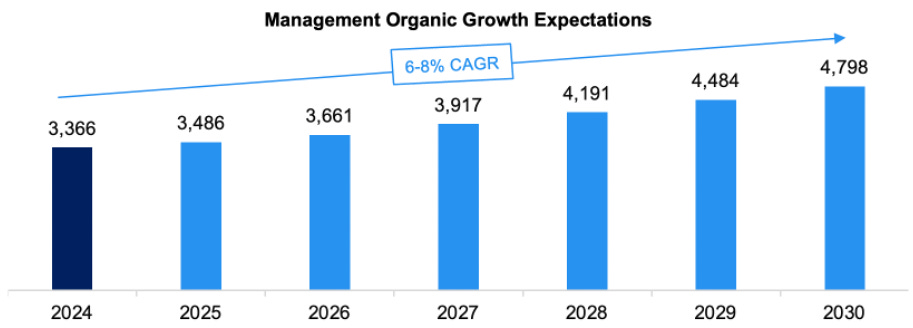
We forecast revenue to grow at 6% (low end of management’s target of 6-8%)
We forecast margin to reach a normalize level in 2030 at 19.7%. Below is why we have confidence in such a strong improvement
The margin expansion does not rely on external recovery (e.g., biopharma spending) or macro factors, they are in control of Bruker.
Good visibility on cost-cutting: significant restructuring in manufacturing (Bruker will integrate some of the manufacturing from acquisitions), internalized sales teams, divestment of expensive headquarters.
Management has a proven track record of margin improvement.
Management made the conscious decision to acquire these companies and was aware these deals would be dilutive initially. On an aggregate basis, they are tracking in line with expectations.
Valuation is Extremely Attractive
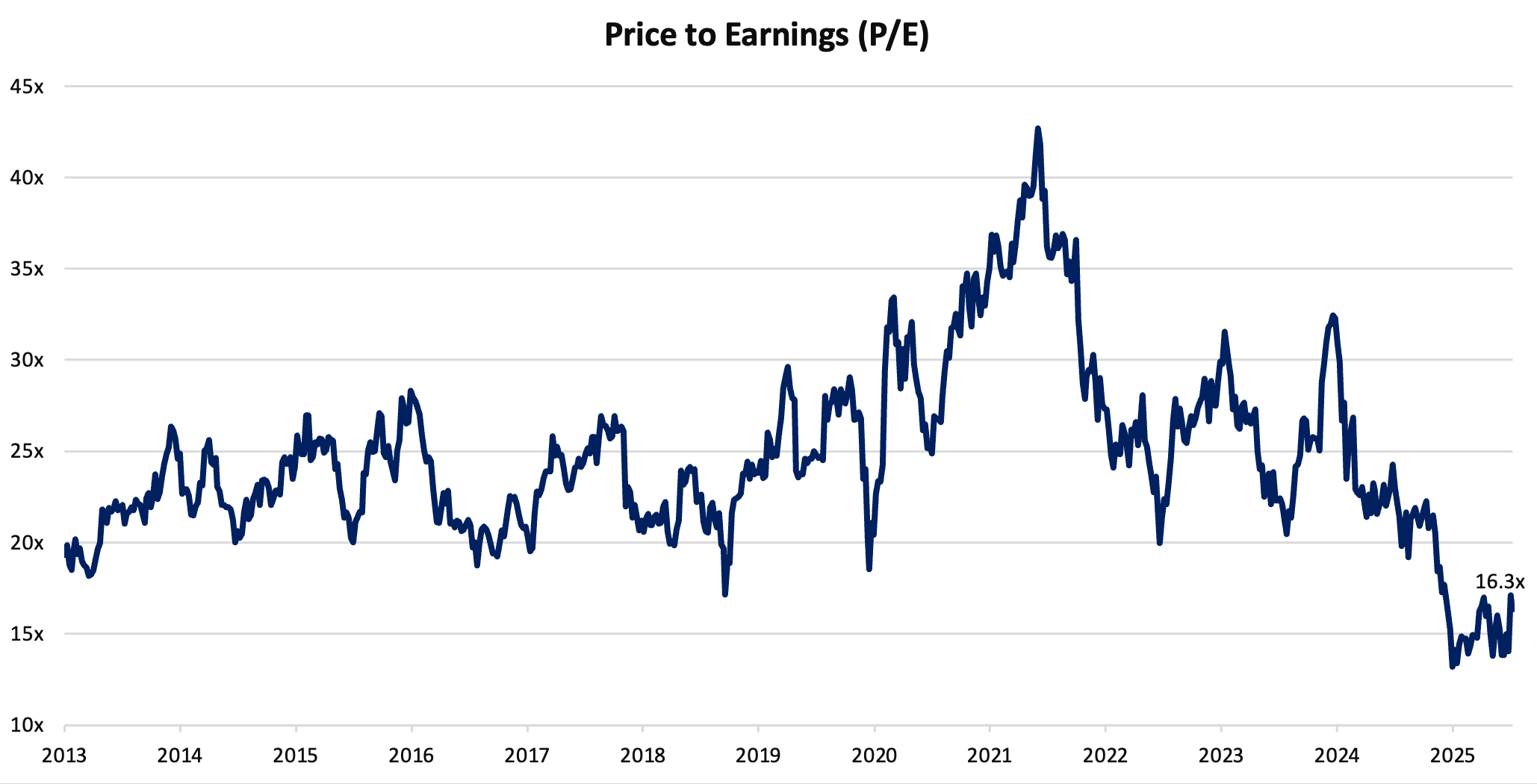
We believe that once Bruker’s earnings begin to recover in 2026 and investors recognize the clear path for growth, the valuation will rebound as well (double whammy!).
Price Target:
Our $103 5-year PT is based on $5.41 of EPS in 2030 and a 19x P/E. We believe our forecast and P/E multiple to be conservative. The multiple could comeback to its average historical range at 25x. However, above this 25x multiple we would be sellers.
This PT implies ~200% upside (25% CAGR over five years).
Our valuation work indicates a fair value of ~$55 per share, implying Bruker is undervalued by roughly 36% relative to our estimate.
In short, if our thesis plays out, there is a lot of money to be made.
Potential Positives to Monitor
1. Breakthrough Developments in Core Markets
Major scientific breakthroughs in Bruker’s core technologies such as proteomics, spatial biology, or ultra-high-field NMR could rapidly re-rate the stock, as seen in April 2025 when the 1.3 GHz NMR launch drove a 6% share surge.
2. Accelerated Proteomics Adoption
A faster-than-expected adoption of proteomics across pharma and diagnostics for example, if protein biomarker testing becomes standard in drug R&D could trigger a higher demand instrument demand and valuation.
3. Increase in Defense and German Innovation Spending
Germany’s proposed €500B innovation and defense funding plan, including investment in fusion research, could materially benefit Bruker’s BEST and homeland-security detection businesses.
Main Risks
NIH Funding Cuts: Bruker is sensitive to news and further negative comments by the NIH could impact the stock.
Global Macroeconomic Factors: A mix of higher interest rates, tariffs, and slower global demand has created a ~$100M organic revenue headwind for 2025. However Bruker’s disciplined cost control and strong backlog help cushion the effect.
Key Man Risk: Obviously, CEO Dr. Frank Laukien’s is key to the story and could be a negative for the stock if leadership changes unexpectedly, though his 30% ownership support his tenure.
Our Final Take
Why we believe its Mispriced
Market overreacted to short-term headwinds (NIH, tariffs).
Acquisitions look messy but are margin-accretive by 2026.
Investors ignore that Bruker’s R&D moat is compounding earnings at > 10%.
The market prices Bruker like a traditional industrial, yet its profile is that of a scientific leader with dominant niches, sustained innovation, and long-term earnings compounding.
Yes, 2025 is looking messy: acquisitions, tariffs, and U.S. funding cuts are short-term noise. But the underlying business remains one of the strongest in the life sciences industry. Once management shares more light into 2026 we believe investors will realize this disconnect and be buyers.
Summarized & More Concise Recap
Bruker (NASDAQ:BRKR) builds some of the world’s most advanced scientific instruments: the tools behind new drug discoveries, protein research, and next-generation materials.
Its systems are used in top universities, government labs, and semiconductor facilities worldwide. Few competitors can match its precision or scientific depth, and Bruker holds #1 positions in several specialized markets like nuclear magnetic resonance and spectroscopy.
Right now, the stock looks cheap because of short-term headwinds: cuts to U.S. research funding, new tariffs on European equipment, and temporary margin pressure from integrating four recent acquisitions.
But the underlying business remains strong, revenues continue to grow, R&D investment is steady, and Bruker still earns over 20% returns on invested capital. The company’s founder-CEO, Dr. Frank Laukien, owns nearly 30% of the stock and recently bought more shares, signaling confidence in the long-term outlook.
We believe 2025 will mark the bottom for margins, with a clear path to recovery in 2026 as costs are absorbed and new product cycles kick in. Once that happens, the market should re-rate the stock. In our view, this is a rare opportunity to make both short-term returns and enter in this long-term compounder.
In short: this is a high-quality, founder-led science company that’s temporarily mispriced, and our forecast expect it could deliver easily 200% upside over 5 years.